| ACTINIC
KERATOSES |
 |
 WHAT ARE ACTINIC KERATOSES? WHAT ARE ACTINIC KERATOSES?
Actinic keratoses (actinic
keratosis, solar keratosis,
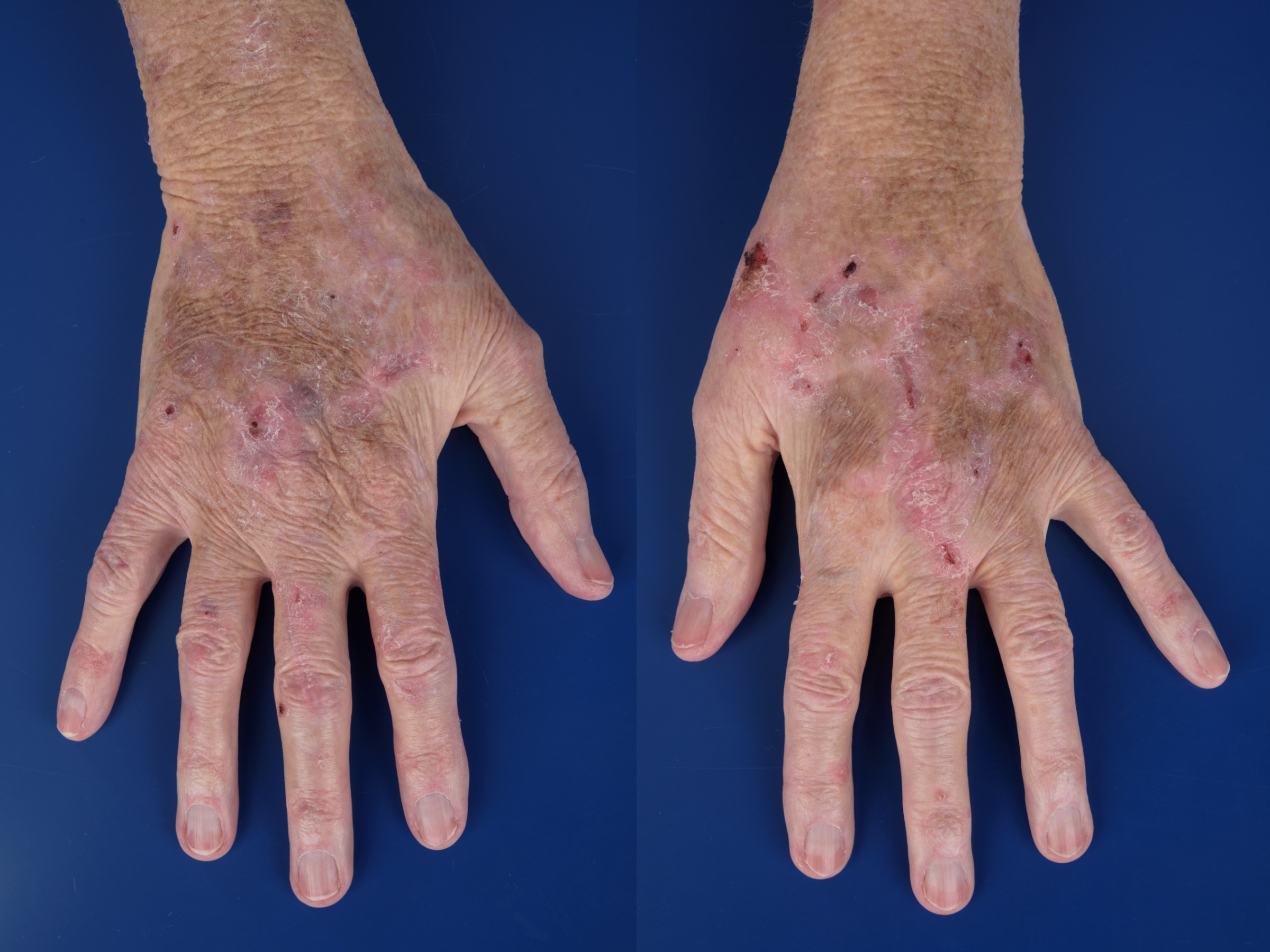
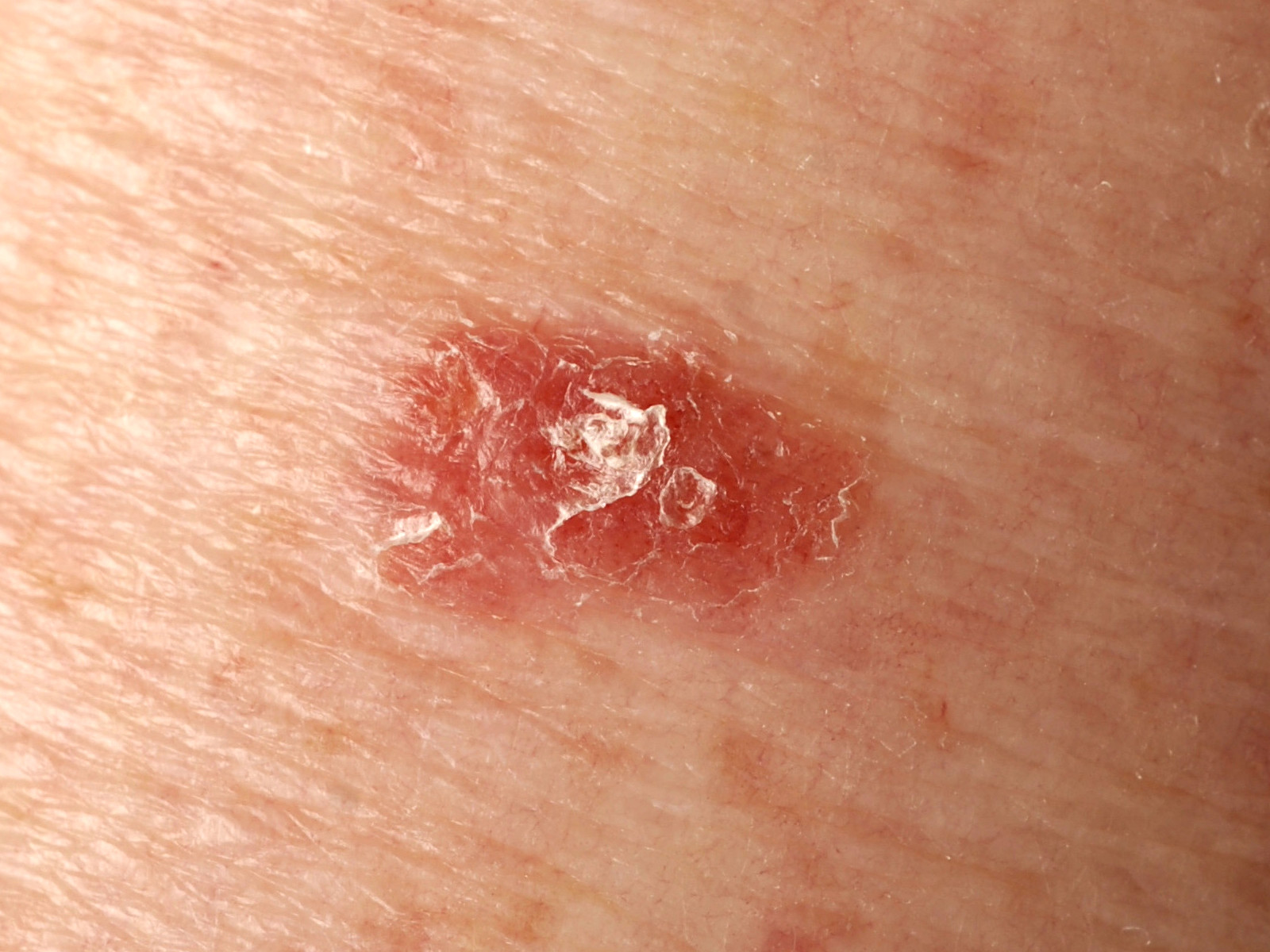
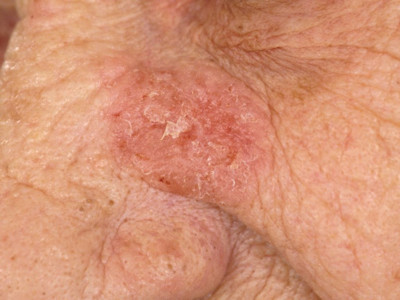
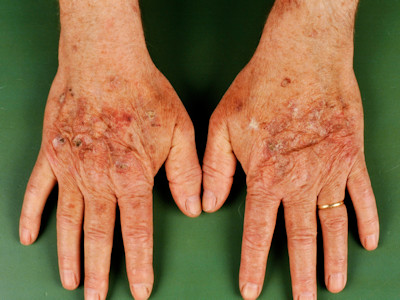
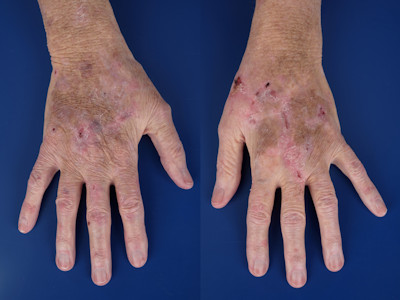
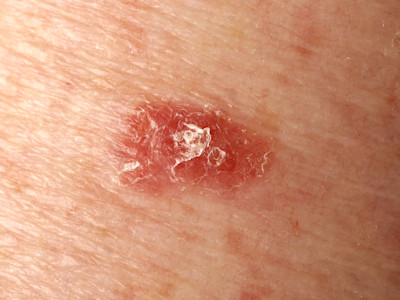
keratosis actinica) are small, rough-feeling spots on the skin, often light brown in color. The top layer of the skin, the stratum corneum, is thicker in this area, which is why it feels rough. This thickening occurs because the skin cells do not grow normally, and the reason for this is that they have been damaged by years of excessive sun exposure. Actinic means: caused by sunlight, and keratosis is the term for a keratinization disorder of the skin (Greek: aktis =
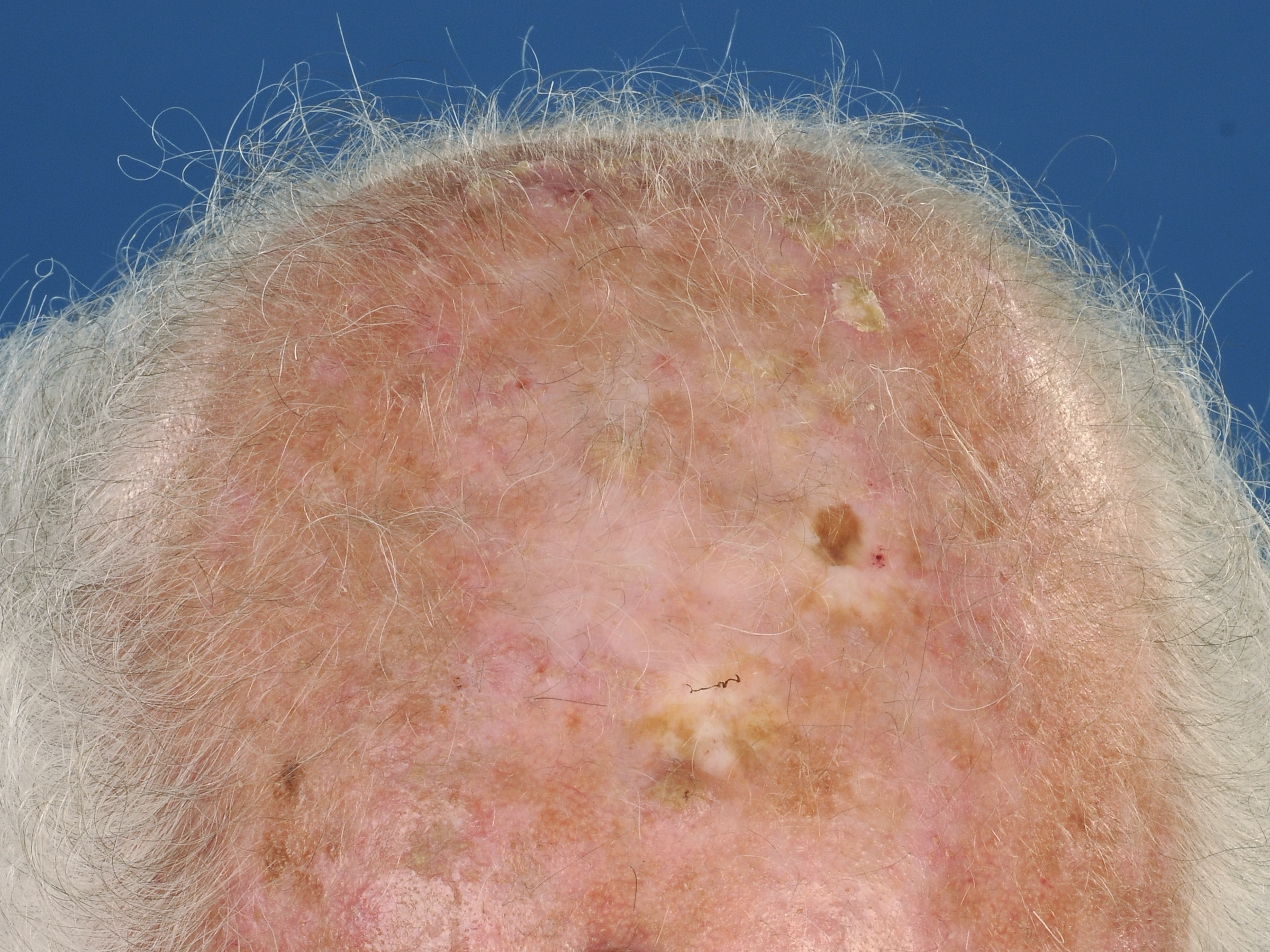
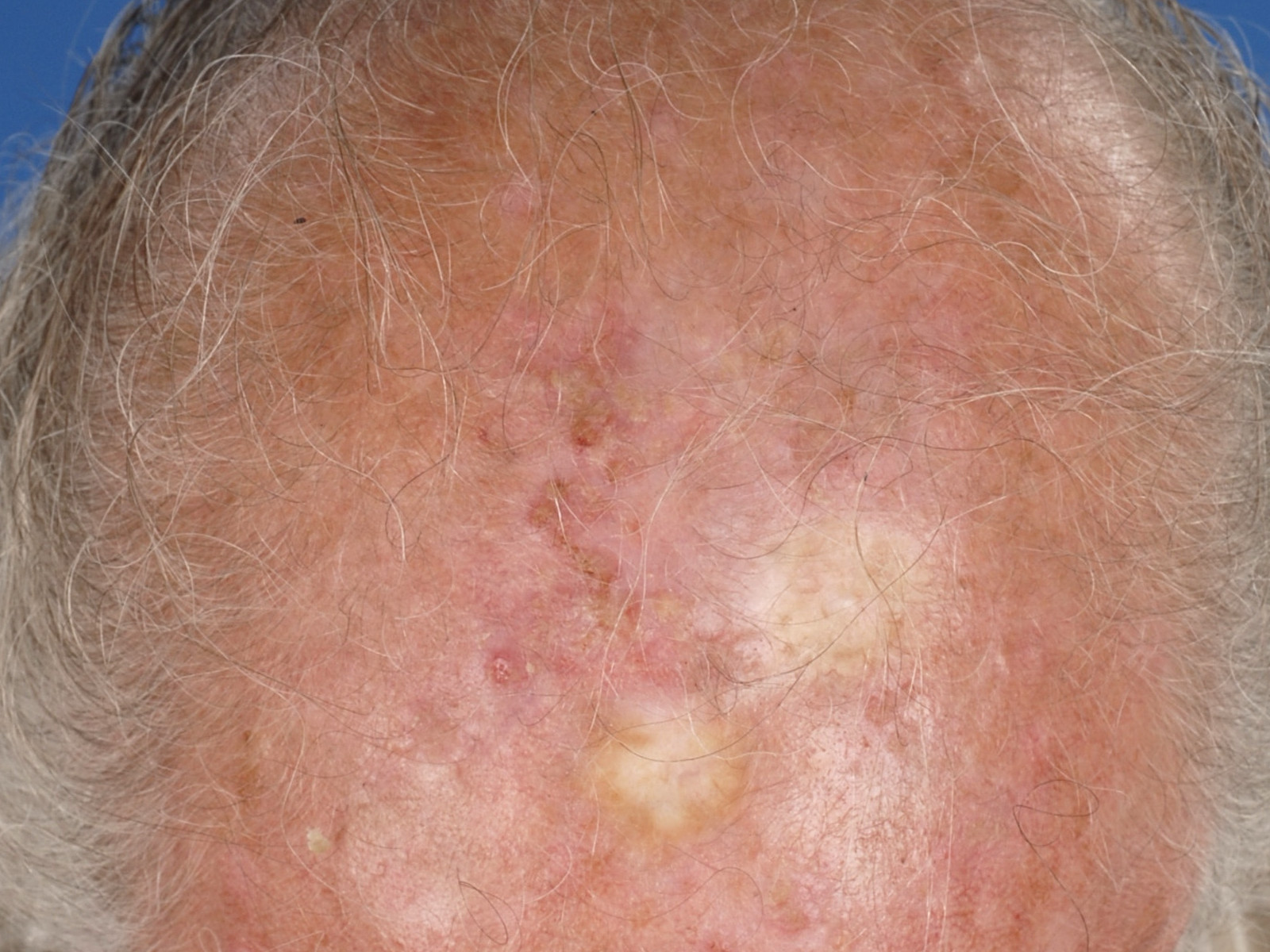
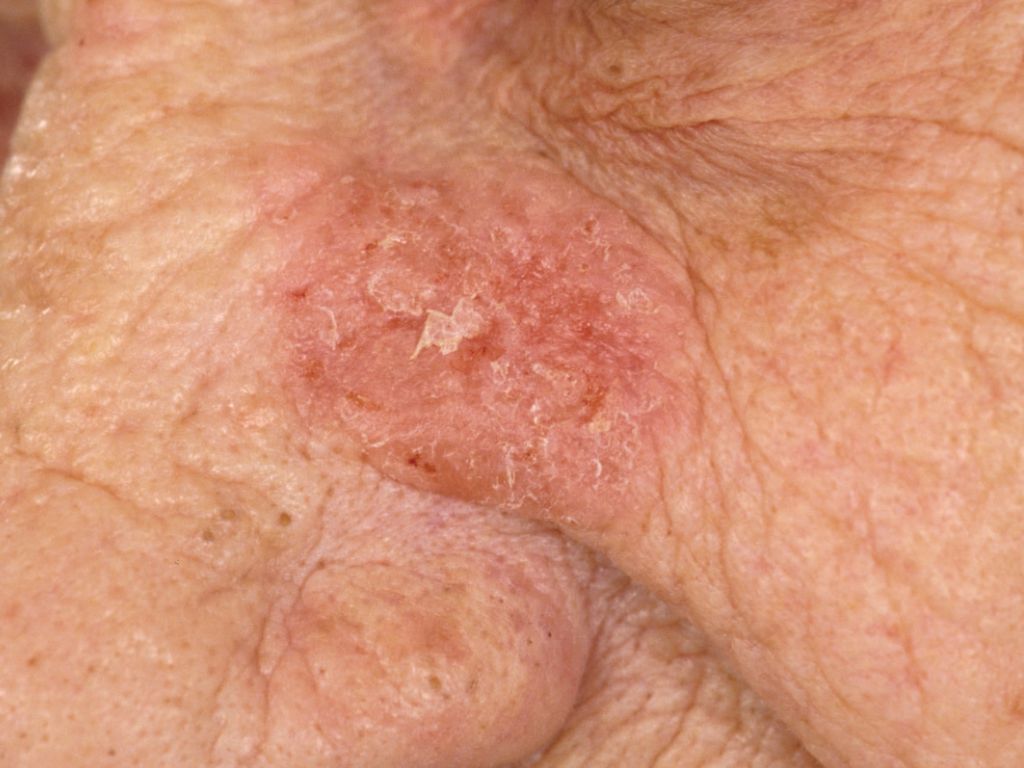
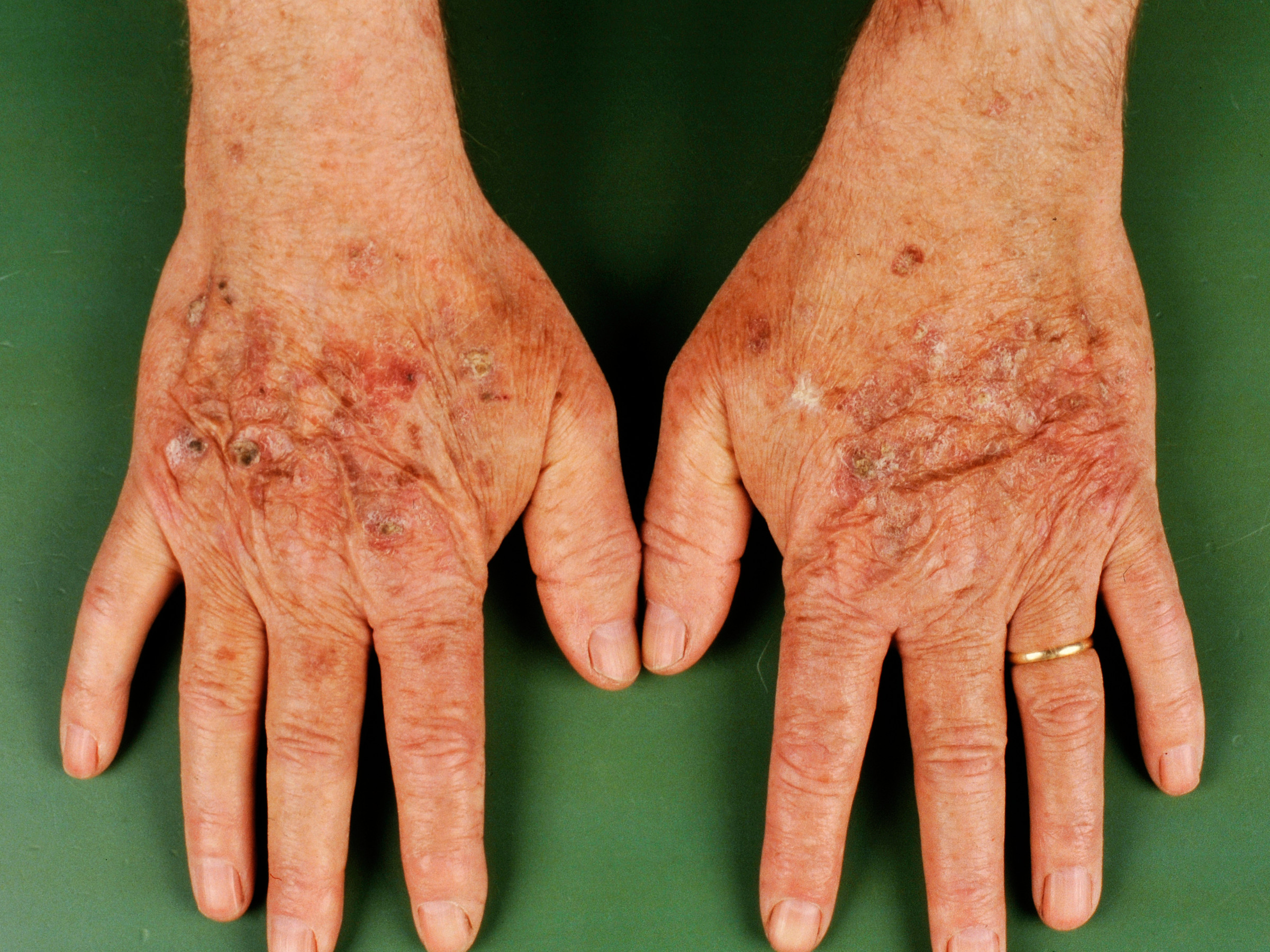
ray; keratosis = keratinization of the skin). The color varies from skin-colored to light brown. These skin lesions develop on sun-exposed areas of the body, especially on the face and the backs of the hands.
Actinic keratoses are mainly seen in older people, in people who have spent a lot of time outdoors. However, in recent years, they have also become increasingly common at a younger age. This is because our lifestyles have changed: we take more and more vacations, enjoy being outdoors, seek out the sun (sun vacations, winter sports), travel to tropical countries, appreciate a tan, and some even regularly use tanning beds. All this exposure to sunlight damages the skin.
Those who have lived in the tropics for a long time, have fair skin, or have used medications that suppress the immune system for a long time are at greater risk of developing actinic keratoses.
Actinic keratosis is common over the age of 40, and the incidence increases with age: half of 50-year-olds have them, and 80% of 60-69 year-olds with fair skin (blonde hair and blue eyes) have actinic keratoses. Actinic keratoses are caused by (excessive) ultraviolet radiation and should be considered a potential precursor to skin cancer.
Other names used for actinic keratosis are solar keratosis, keratosis actinica,
dyskeratosis actinica, keratosis solaris, and
keratosis senilis.
HOW DO ACTINIC KERATOSES DEVELOP?
Sunlight, whether artificial or not, has both positive and negative aspects for humans. One positive aspect is the production of vitamin D in the skin. Many people also find sunbathing pleasant. It has a positive effect on our mood, and a tan makes us feel healthy. However, the sun also has negative aspects. An example of a direct harmful effect is sunburn, where the skin becomes red and swollen, and sometimes blisters develop. The long-term effects of ultraviolet radiation include premature skin aging (the skin becomes dry, wrinkled, patchy, pale yellow to brown in color, and feels leathery) and the development of skin cancer and its precursors.
Actinic keratoses develop when the genetic material (DNA) in the skin cells is damaged by prolonged exposure to sunlight. As a result, the cell can no longer divide and grow normally, and an abnormal keratinization (keratosis) develops on the surface of the skin. The development of these actinic keratoses depends on skin type and the total amount of ultraviolet radiation a person has been exposed to over the course of their life. The fairer the skin, the greater the risk of developing this skin condition.
WHAT ARE THE SYMPTOMS?
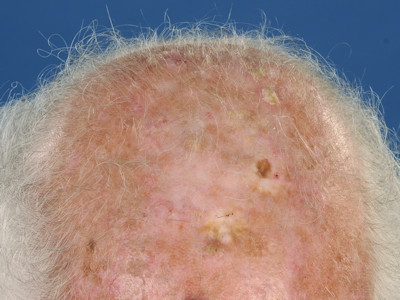
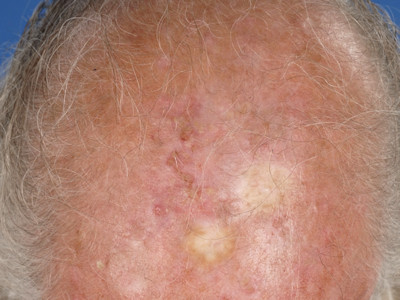
Preferred locations are the backs of the hands,
forearms, face, and scalp. Initially, the skin
condition is easier to feel (as a rough spot) than
to see. Sometimes they are slightly painful to the
touch. Their size can vary from a few millimeters to
several centimeters. Often, multiple spots are
present, and other signs of prolonged sunlight
exposure can be seen on the skin, such as patchy
discoloration, wrinkles, and thinning.
 |
 |
 |
|
actinic keratosis |
actinic keratosis |
actinic keratosis |
 |
 |
 |
|
actinic keratosis |
actinic keratosis |
actinic keratosis |
HOW IS THE DIAGNOSIS MADE?
The diagnosis can usually be made visually. If there is any doubt about the diagnosis, or if the lesion is concerning (for example, due to redness, non-healing wounds, excessive horn formation, or an increase in size), further examination can be performed by taking a small skin sample (skin biopsy) to establish the diagnosis with greater certainty.
WHAT IS THE TREATMENT?
Treatment for actinic keratoses is necessary because there is a chance that the lesions will develop into a form of skin cancer. Actinic keratoses can be treated in various ways:
| - |
Superficial
freezing with liquid nitrogen.
This is the first choice. During freezing, a
painful, tingling sensation occurs, which
then subsides. If necessary, a painkiller
(paracetamol) can be used. Immediately after
freezing, redness or swelling occurs, and a
blister may develop later. This blister may
be punctured if necessary. The areas
eventually heal (usually within two weeks)
like a superficial abrasion. A bandage is
not necessary; air drying is best. The
abnormally keratinized skin is removed by
freezing, and then gradually replaced from
the edges and depths by normally regenerated
skin. |
| |
Curettage
(scraping away the spots with a sharp spoon
under local anesthesia), followed by
electrocoagulation (burning away the tissue
and cauterizing the blood vessels). |
| - |
Removal via
chemical peeling. This
involves applying acids to the skin,
creating a superficial etch. |
| - |
Surgical
removal. Sometimes it's
necessary to remove the entire lesion. This
is usually done on an outpatient basis under
local anesthesia. |
| - |
Self-treatment
with a cell growth-inhibiting cream
(Efudix, 5% 5-fluorouracil)
is also possible, especially for large areas
of skin. This cream should be applied thinly
once or twice a day to the entire
sun-damaged area. An irritation reaction
will then develop precisely where the
actinic keratoses are located. The skin will
eventually break in these areas, creating a
superficial wound. The treatment is then
continued for another three days and then
stopped. The treatment lasts two to four
weeks in total, with an average of three.
Afterward, the skin heals without scarring,
and the actinic keratoses often disappear
for a long time. Even small new spots,
previously invisible to the naked eye, are
removed with this treatment. Because it is a
cell growth-inhibiting agent, avoid contact
with mucous membranes and eyes and wash
hands thoroughly after use. Pregnant women
should not use it. The maximum area that can
be treated at a time is 500 square cm
(approximately 23 x 23 cm). See the
Efudix brochure for more information. |
| - |
Laser
treatment. A new form of
treatment, especially for extensive lesions,
is laser treatment. This essentially
vaporizes the top layer of skin. It's
important to do this carefully and with
specialized lasers that can treat very
superficially, otherwise scarring will
occur. Suitable lasers include Silk Touch
CO2 lasers. |
| - |
Aldara
(imiquimod) is a cream
originally intended for the treatment of
genital warts. It is also effective against
actinic keratoses. This treatment is applied
three times a week for several weeks. Aldara
may cause skin irritation. |
| - |
Photodynamic
therapy involves applying a
cream containing a special chemical compound
(usually aminolevulinic acid) that does not
cause any damage on its own, but can do so
after exposure to intense light. The
substance is applied to the actinic
keratoses and is primarily absorbed by
dividing cells. The area is then illuminated
with a special lamp, killing only the
abnormal cells that have absorbed the
light-sensitive substance. The treatment can
be painful. |
| - |
Tretinoin cream
(vitamin A acid) can somewhat counteract
signs of skin aging and also has some effect
on actinic keratoses. However, the cream
works slowly and must be applied daily for
extended periods. |
| - |
Solaraze gel
(3% diclofenac) is a new
product, currently registered in the United
States for actinic keratoses. |
WHAT CAN YOU DO NEXT?
It's important to prevent further skin damage from ultraviolet radiation as much as possible. While it's not necessary to avoid the sun completely, you should use it sensibly and ensure you don't suffer too much UVB damage. This can be achieved by limiting sun exposure, wearing protective clothing and a hat, limiting tanning bed use, and protecting your skin with sunscreens with a high SPF. In the Netherlands, a SPF of 15 or higher is usually sufficient; in more southern regions or with intense sunshine, a higher SPF (SPF 30 or higher) is required. Naturally, your skin type also plays a role in choosing the right strength sunscreen. It's also important to remember that sunscreen isn't intended for prolonged sun exposure, but rather to protect your skin while you're still in the sun.
It's also advisable to monitor your skin and have it checked by a doctor if any new spots appear.
WHAT IS THE PROSPECT?
Over the years, as mentioned, skin cancer can
develop in actinic keratoses. The types of skin
cancer that can develop are
squamous cell
carcinoma and (less commonly) basal cell carcinoma. The exact risk of developing skin cancer in an actinic keratosis is unknown. It is estimated that 0.25 to 1% of actinic keratoses develop into squamous cell carcinoma each year. This means that for patients who do not seek treatment, the risk of developing skin cancer can still rise to around 10% after many years. The types of skin cancer that develop from actinic keratosis are usually not very aggressive, they are easily treated, and the risk of deep growth and metastasis to other organs is small.
The presence of actinic keratoses should be considered a sign that the skin has suffered sun damage during life. Skin cancer can develop in sun-damaged skin, not only in actinic keratoses but also in other sun-exposed skin. Therefore, it's wise to regularly inspect your skin yourself and, if new spots appear, consult your doctor or dermatologist.
|