You have been asked to come in for a screening for AIN.
What is AIN? AIN (Anal Intraepithelial Neoplasia) refers to a change in the mucous membrane in and around the anus. AIN involves abnormal cells in the mucous membrane. These abnormal cells can potentially develop into anal cancer, and for this reason, AIN is considered a precursor to anal cancer. AIN is caused by the human papillomavirus (HPV), the same virus that causes cervical cancer in women. AIN and anal cancer are more common in HIV-positive men who have sex with men than in heterosexual men.
Cancer doesn't develop overnight. It usually develops over several years. As long as there is no cancer, but abnormalities are found, it is considered precancerous. The abnormal cells are considered precursors that can develop into cancer. It's common for precancerous cells to disappear spontaneously. The number of people with AIN who experience this is not yet known. The chance of spontaneous disappearance of precancerous lesions is probably lower in people who are HIV-positive. Precursors of anal cancer are found in approximately half of the men who come to the AIN clinic, and these are diagnosed through High Resolution Anoscopy (HRA). Generally, AIN does not cause any symptoms.
It has not yet been scientifically proven that screening for precancerous lesions of anal cancer will actually prevent anal cancer in the future. We offer this screening because we believe it will reduce your risk of developing anal cancer in the future.
What are the precancerous lesions?
There are three different precancerous lesions of anal cancer. The diagnosis of AIN is made through tissue examination. If visible abnormalities are found, biopsies (samples of anal mucosa) are taken during the examination. The differences in precancerous lesions are as follows:
AIN 1:
Only the superficial mucosal layer contains abnormal cells. AIN 1 is called low-grade AIN.
AIN 2:
The abnormal cells are seen deeper in the mucosal layer. AIN 2 is called high-grade AIN.
AIN 3:
The abnormal cells are seen throughout the entire thickness of the anal mucosa. AIN 3 is called high-grade AIN.
Checking for AIN:
AIN Check-up How can you prepare for the examination? We ask that you:
- Refrain from anal sex
- Refrain from anal douching (this will negatively impact the examination)
- Refrain from inserting any objects into your anus
- Refrain from consuming spicy food
It is not necessary to stop taking blood-thinning medication.
The visit
The appointment lasts 30 to 45 minutes. First, the examiner will ask you a few questions, including about any anal complaints and your sexual activity over the past 6 months. You will then be asked to remove your pants, underwear, and shoes in the changing room. You will be given a towel to cover your genitals. The examiner is always assisted by a second person.
The examination
You will sit in a specially designed chair with your legs in the leg rests. The chair will be raised and tilted slightly backward so that the examiner has a clear view.
1. Outside of the anus (perianal)
The examiner will examine the outside of the anus, where any abnormalities may be found. Acetic acid is applied, a dye needed to better visualize the abnormal skin. This may feel cold, wet, and sometimes slightly burning. The examiner then examines the anus with a microscope to examine any abnormalities in detail. This is called High Resolution Anoscopy (HRA).
2. Digital Rectal Examination
The examiner will then perform a digital rectal examination. The examiner will feel the inside of the anus with a finger because some abnormalities are easier to feel than to see.
3. Internal Anus Examination (Intra-anal Examination)
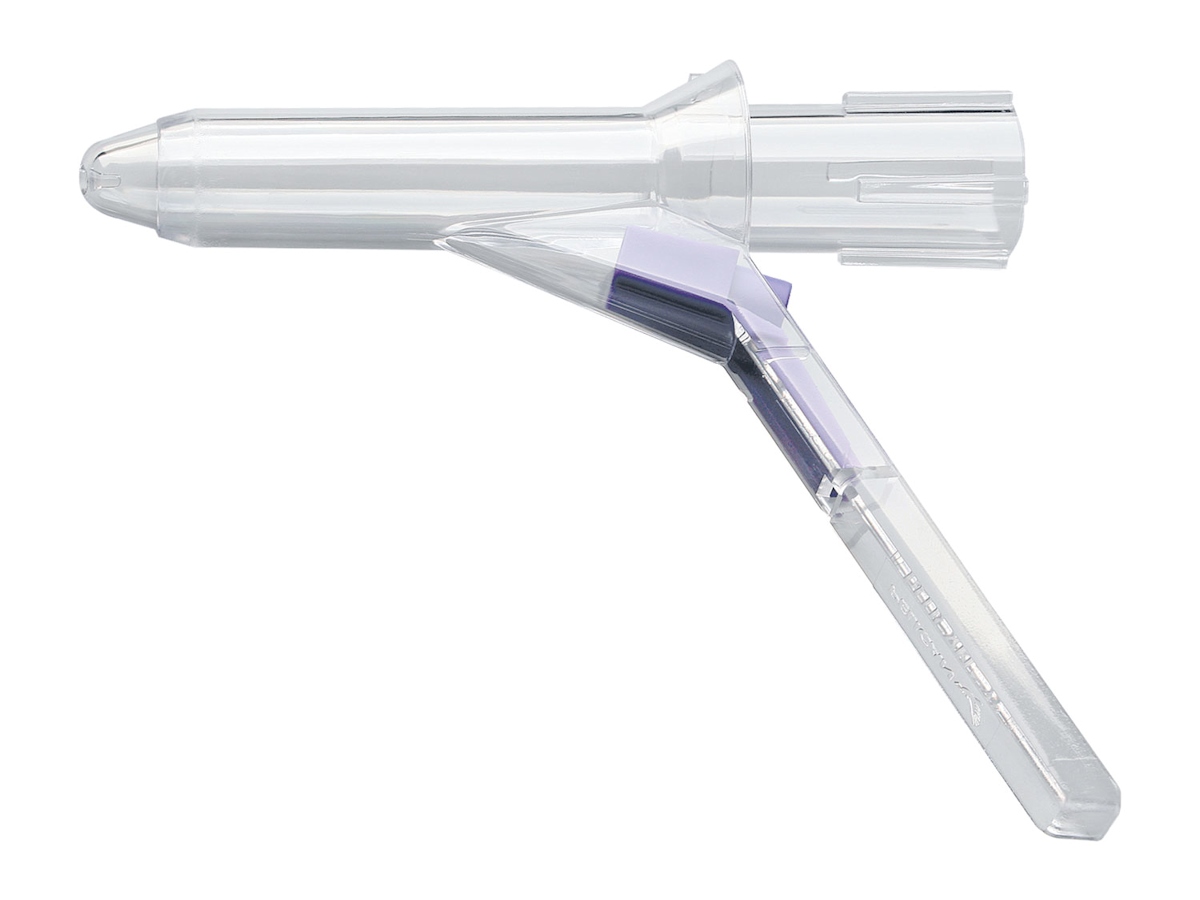
To examine the anus, the examiner inserts a proctoscope into the anus (see Figure 1). This proctoscope is pre-lubricated for easy insertion. Once the proctoscope is inserted, the examiner inserts a cotton swab with gauze soaked in acetic acid. Acetic acid is a dye needed to better visualize the abnormal skin. This may feel cold, wet, and sometimes slightly burning. The proctoscope is removed from the anus, leaving the gauze with the acetic acid to work. After about a minute, the cotton swab and gauze are removed, and the proctoscope is reinserted. Another MRI scan is performed to examine any abnormalities in detail. The anal mucosa is folded, and to properly assess all folds, the proctoscope will be inserted and removed several times.
Both peri- and intra-anal, photographs are taken in the event of any abnormalities. These photographs are used to locate a potentially abnormal spot and to compare the results before and after treatment.
Abnormalities:
If the examiner detects a peri- or intra-anal abnormality, a tissue biopsy approximately 3 mm in size is taken. One biopsy is taken for each suspicious abnormality.
Biopsy on the outside of the anus (perianal):
If a biopsy is taken from the outside of the anus, the skin is first anesthetized. This is done with an injection. After the anesthetic, you will still feel some pressure, but no pain. An external biopsy is performed with a punch biopsy device, which is a small apple corer. This device loosens a piece of skin, which can then be painlessly removed with tweezers and scissors.
Biopsy on the inside of the anus (intra-anal):
A biopsy on the inside of the anus is performed with a biopsy device. This is a pair of forceps with a small cutting section at the end. The mucous membrane inside the anus has no pain nerves. Therefore, you will feel virtually no pain during the biopsy. It is rarely necessary to numb the inside of the anus for a biopsy. If this is necessary, it is done with an injection or sometimes with an anesthetic cream or spray.
After the biopsy:
After a biopsy, the skin or mucous membrane may bleed slightly, which can last one to several days. You will be given an absorbent bandage to prevent any blood from getting on your clothes. Blood may be visible in your stool or on toilet paper for a few days. This is normal. Only if there is heavy bleeding should you contact your examiner. You can continue with your normal activities that day. Consult with your examiner if you have any questions. Taking tissue biopsies causes small wounds, so we recommend avoiding passive anal sex for three days after the biopsy. If anal bleeding or other anal complaints persist for a longer period of time, we advise against passive anal sex until these complaints have subsided and to contact the research team.
Pathological examination of the biopsy
The biopsies are placed in a container with preservation solution. This tissue is sent to the pathologist, who examines the biopsy. The pathologist determines whether AIN is present. You will receive the biopsy results by phone after two weeks.
If the diagnosis of AIN is
The detection of AIN does not mean you have or will develop anal cancer. For AIN 1 (low-grade), no treatment is recommended. The condition can disappear spontaneously. You will be called back after a year to be checked for AIN. For AIN 2 or 3 (high-grade), treatment is recommended. See the patient information leaflet: Treatment of Anal Intraepithelial Neoplasia (AIN). To make
or
reschedule an appointment, please call the dermatology outpatient clinic. Tel: 020-5662530. The outpatient clinic is located in building A, floor 0 of the AMC. (A0) |