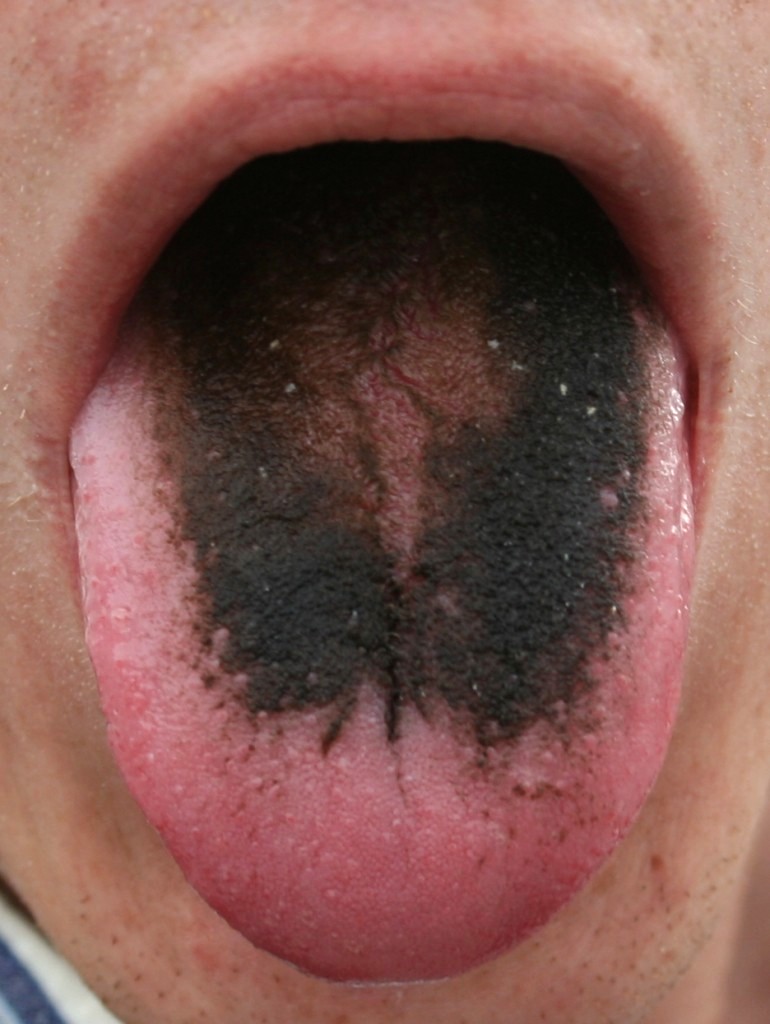
WHAT IS A BLACK HAIR TONGUE?A black hairy tongue (English name: black hairy tongue , medical Latin name: lingua villosa nigra ) is a black or brown discoloration of the tongue, usually on the posterior two-thirds. It resembles a layer of black material (coating) on the tongue, but it cannot simply be wiped or scraped off. It is not actually a coating that has formed; it is the structure of the tongue's lining that has changed. Normally, the tongue is covered with numerous fine, elongated projections, the so-called filiform papillae of the tongue (see the detail photo below). In black hairy tongue, these papillae become much longer, and the lining also becomes thicker. This gives the tongue a hairy appearance. Food residues, nicotine from cigarettes, coffee, or food colorings can cause the hairy tongue to turn yellow, brown, or black.
 |
| black sole |
Photo: Com4 - Wikimedia (Creative Commons License 1.0 - Public Domain Image).
WHAT CAUSES A BLACK HAIRY TONGUE?The exact cause of black hairy tongue is unknown. It is sometimes seen after antibiotic use. It also occurs in people with poor oral hygiene, smoking, alcohol and coffee consumption, and the use of certain mouthwashes such as hydrogen peroxide and chlorhexidine. It is thought that these factors can alter the oral environment, causing the harmless bacteria that always live there to be replaced by other bacteria or fungi that irritate the mucous membrane. Vitamin B3 deficiency is also mentioned, but this only occurs with poor nutrition.WHO CAN GET A BLACK HAIRY TONGUE?Black hairy tongue is common, affecting approximately 0.5% of the population. It is slightly more common in men than women, likely related to smoking. It is also common in newborns and young children. It also frequently occurs in individuals with poor nutrition. In the United States, it is often seen in drug addicts, prisoners, and AIDS patients.WHAT ARE OTHER CAUSES OF TONGUE COATINGS OR DISCOLORATION?A coating on the tongue can also be caused by a fungal infection of the tongue (thrush, Candida infection). This coating is white or yellowish in color and can easily be wiped off with a wooden spatula.
Discoloration of the tongue can also occur due to medications, including antibiotics and antimalarials, and certain diseases such as Addison's disease, which can also cause the palate to turn brown.HOW IS THE DIAGNOSIS MADE?The diagnosis is based on the clinical picture and its appearance. No specific tests are required. Sometimes a fungal infection of the tongue (thrush, Candida infection) is suspected, in which case a small amount of slough is scraped off for examination under a microscope or culture.HOW IS A BLACK HAIRY TONGUE TREATED?If there are underlying problems such as an unhealthy lifestyle, poor nutrition, poor oral hygiene, or possible vitamin B deficiencies, these must be addressed. Stop or reduce smoking, eat healthily. Usually, the problem disappears on its own.
The black coating can gradually diminish by brushing the tongue daily with a soft toothbrush and regular toothpaste, or with one of the better toothpastes such as Zendium or Paradontax. For stubborn coating, special products that soften the top layer of the tongue lining, such as urea or tretinoin solution, can also be used.
If Candida overgrowth is suspected, an antifungal product can be used. |