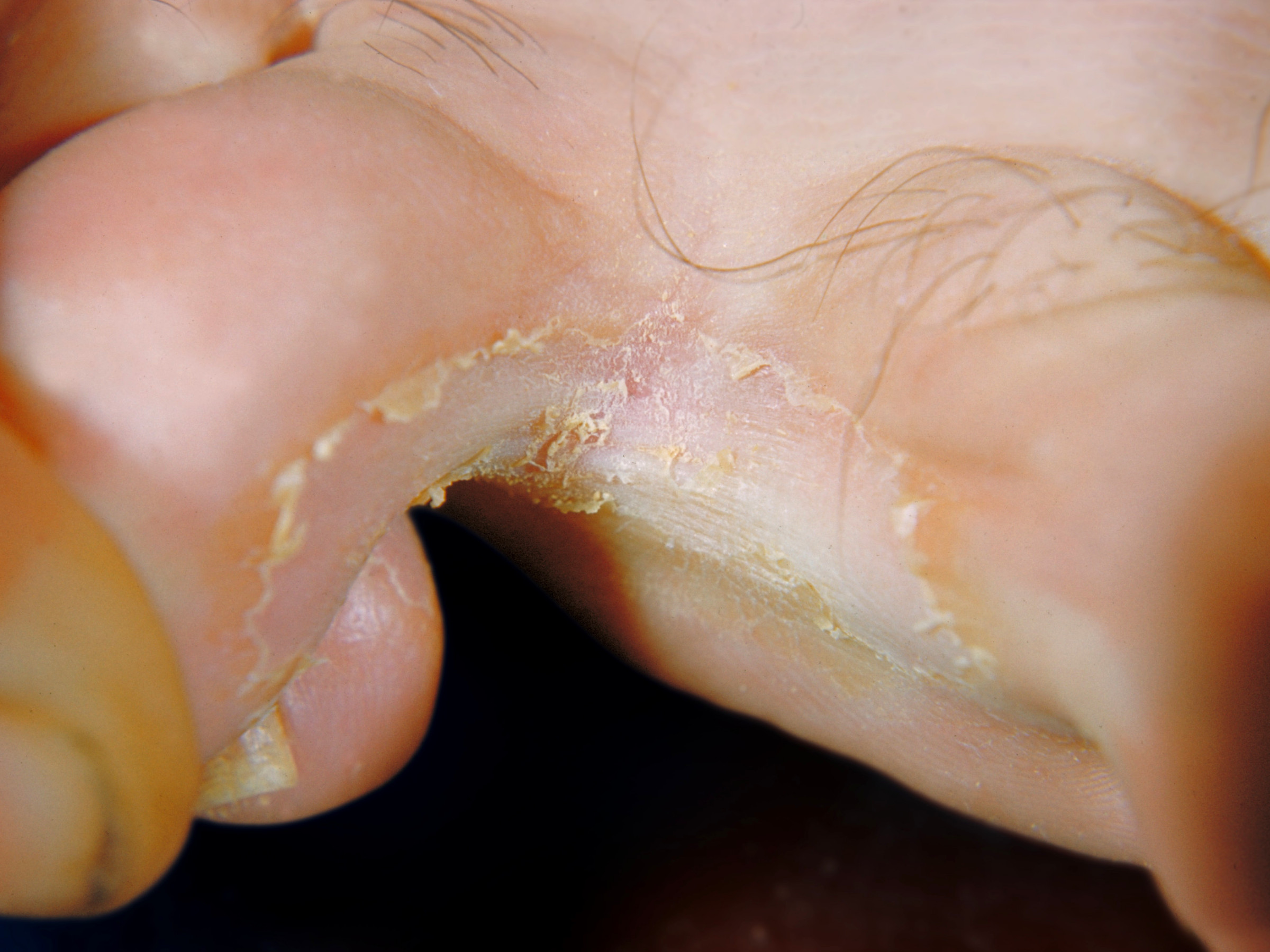
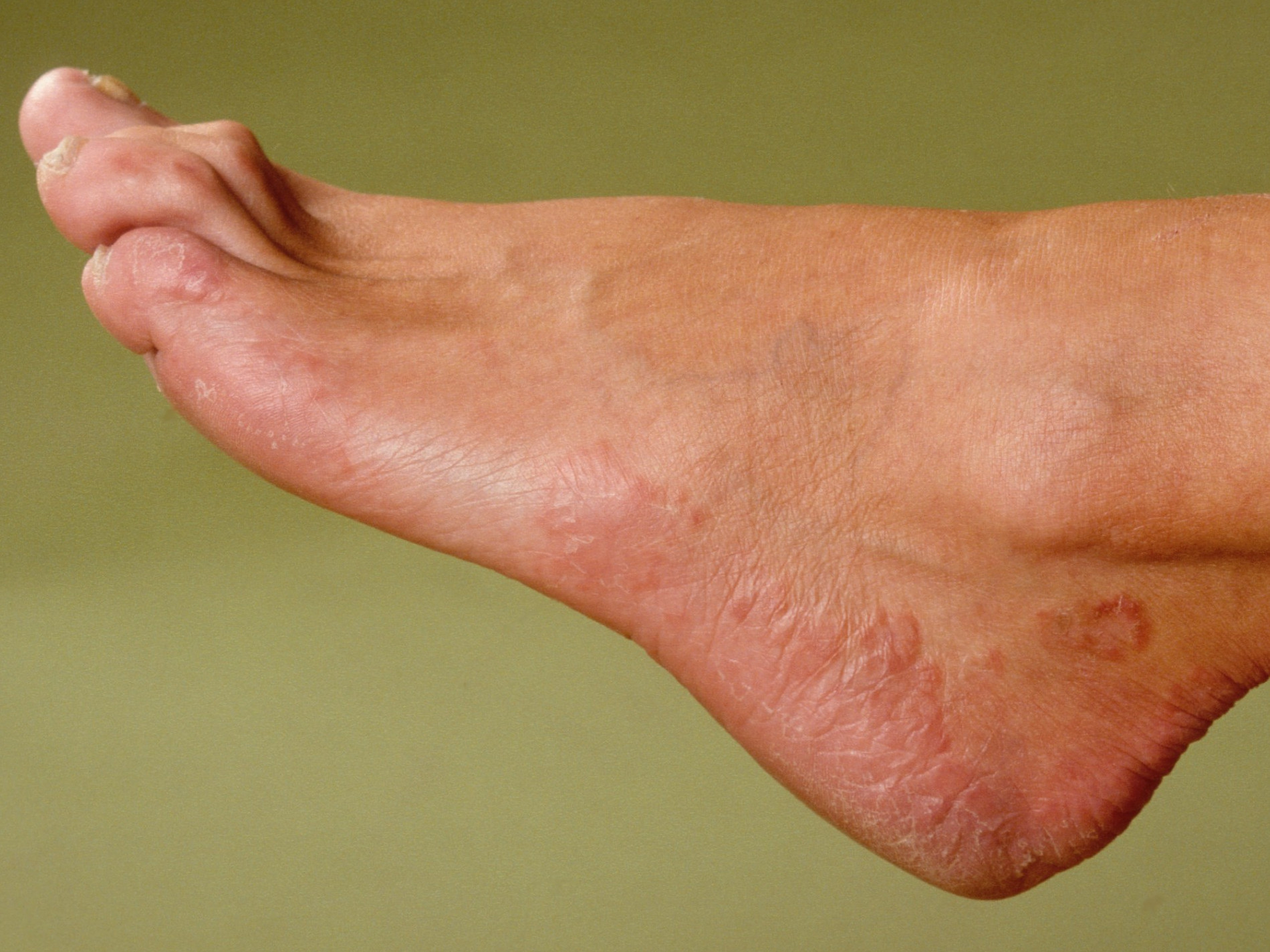
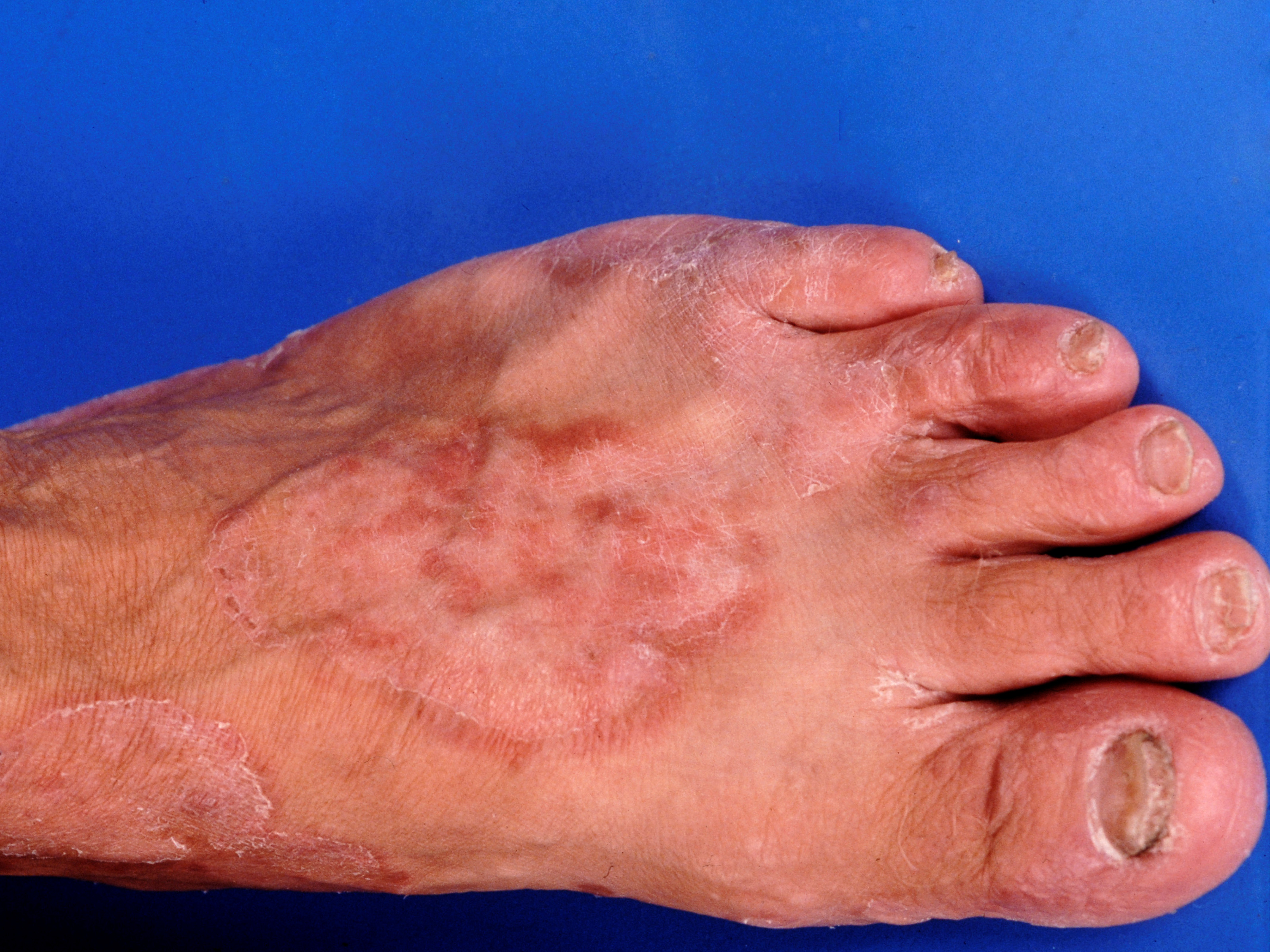
INTRODUCTIONAthlete's foot(medical name: tinea pedis ) is a skin infection caused by fungi ( dermatophytes ) that attack the stratum corneum (the epidermis). The resulting inflammatory reaction causes a skin lesion accompanied by scaling and cracks between the toes, itchy blisters on the soles of the feet, or red, scaly skin lesions that are particularly visible on the edges of the feet. The toenails may also be affected.
The common name for the condition is athlete's foot. This suggests that swimming is the cause, but while swimming is a risk factor for contracting athlete's foot, there are other situations that increase the risk of infection, as you can read later in this brochure.
Athlete's foot is common; at least 10% of the population suffers from it, and even 20% of adult men, while in groups with a high risk of infection, the percentage is even higher. Besides the feet, fungi can also infect the skin in other places. This usually results in the development of conditions known as ringworm, expanding red, scaly patches that heal spontaneously in the center, creating the ring-shaped structure. Ringworm, which is much less common than athlete's foot, will not be discussed further here.
HOW DOES IT COME ABOUT?
Athletes' foot feed on material from the outermost layer of the epidermis, the stratum corneum. Fungal infections are common in nature, not only in humans and animals, but also in plants. Everyone is also familiar with mold, for example, on bread or cheese. Fungi reproduce through spores that can develop into molds under favorable conditions.
The fungi that develop from the spores that infect human skin are called dermatophytes.
FACTORS THAT PROMOTE THE DEVELOPMENT OF ATHLETE'S FOOT.
In a moist and warm environment, spores can easily develop into fungi. That's why athlete's foot infections are so common. Sweaty feet and poorly ventilated shoes and socks promote fungal growth. This explains why, in our climate, athlete's foot mainly manifests in the summer. In the tropics, athlete's foot infections are more common among shoe wearers than among barefooters.
The popular term "athlete's foot" for athlete's foot is easily explained: swimming and showering makes the skin moist and therefore more susceptible to infection. In busy shower and locker rooms, spores will generally be abundant because there will always be people with athlete's foot walking around. Users of these areas are therefore at greater risk of contracting athlete's foot. Wearing shower slippers may prevent athlete's foot infection. Drying your feet thoroughly, especially the spaces between your toes, is also an important measure to prevent infection.
However, contact with fungi cannot be completely avoided. It is often unclear where someone contracted the infection. It must be assumed that dermatophyte spores are present in large quantities in our environment, making infection possible even outside of the aforementioned locations.
WHAT ARE THE PHENOMENA?Four types of abnormalities can result from a fungal infection of the feet, which may or may not occur in combination:
- Whitish scaling between the toes, sometimes with painful cracks. The space between the fourth and fifth toes is particularly often affected. A popular name for this infection is "toe cheese" because of the odor it sometimes produces when bacteria are also present.
- Itchy blisters, especially on the soles of the feet, which later dry up into brown spots or scabs, after which the skin peels off. Occasionally, larger blisters develop and the skin may become moist.
- Redness and flaking of large areas of the soles and edges of the feet.
- Yellow discoloration and brittleness of the nails (fungal nail infection, also called onychomycosis).
In a severe acute fungal infection of the feet, reactive, non-contagious blisters or flaking can occasionally develop on the hands. In these cases, no fungus is present on the hands. It is important to know that the skin lesions described are not always caused by a fungus. The same skin lesions are caused by other conditions in about half of the cases. To be certain, skin flakes should be examined under a microscope or cultured for fungal growth.
HOW IS THE DIAGNOSIS MADE?If the doctor wants to confirm whether athlete's foot or another skin condition is present, they can take skin or nail flakes and examine them under a microscope after processing. This allows the presence of fungi to be detected relatively quickly during the consultation. A second method of testing is culturing fungi from the skin flakes. This test takes several weeks.WHAT IS THE BEST TREATMENT?
Athlete's foot can be treated in different ways.Local treatmentAthlete's foot is generally treated with a cream or ointment containing an antifungal or growth-inhibiting agent, usually applied thinly once or twice daily. This treatment should be continued for some time after the skin lesions have disappeared. A tincture is available for nails. This treatment is generally insufficient for curing nail infections.
Alternatively, a powder containing an antifungal agent can be prescribed. This powder can be sprinkled on the feet and in socks and shoes.
Systemic treatment with tabletsIn severe or persistent cases, your GP or dermatologist will prescribe treatment with special pills. Such treatment often lasts three months, sometimes longer if the infection is persistent. This is especially true if the nails are affected. A fungal toenail infection is more difficult to treat than a fungal infection of the fingernails. In general, internal treatment with pills is necessary in addition to removal of the affected nail. Applying a tincture can also help combat the infection.
SIDE EFFECTS of treatment with tablets.
Oral agents such as terbinafine and itraconazole are primarily developed for extensive fungal infections. A short course of these medications is sufficient. Side effects are minimal.
WHAT CAN YOU STILL DO?- After bathing, feet should be dried thoroughly, especially between the toes.
- Socks should be highly absorbent; cotton socks are preferred; synthetic materials are waterproof and promote perspiration. Socks should be washed regularly, but do not need to be boiled.
- Use a drying powder for perspiring feet.
- Well-ventilated leather shoes are preferable to shoes made of synthetic materials, which cause feet to sweat more. Shoes should be changed daily, if possible, to allow them to dry. Open shoes are ideal, but are only suitable to a limited extent in our climate.
- Do not walk barefoot; wear flip-flops.
- Do not use wooden or cork decking in showers and washrooms, as mold spores can nest in the seams and are difficult to clean.WHAT ARE THE OUTLOOK?Finally, there likely also exists a difference in individual susceptibility to fungal infections. It appears that some people are more susceptible to fungal infections than others. This is reflected in the fact that not everyone will develop athlete's foot under the same circumstances. Treatment may also be more or less effective in each individual, and infections may or may not have a tendency to recur and become chronic. This means that someone who has recovered from athlete's foot has a high risk of reinfection. |