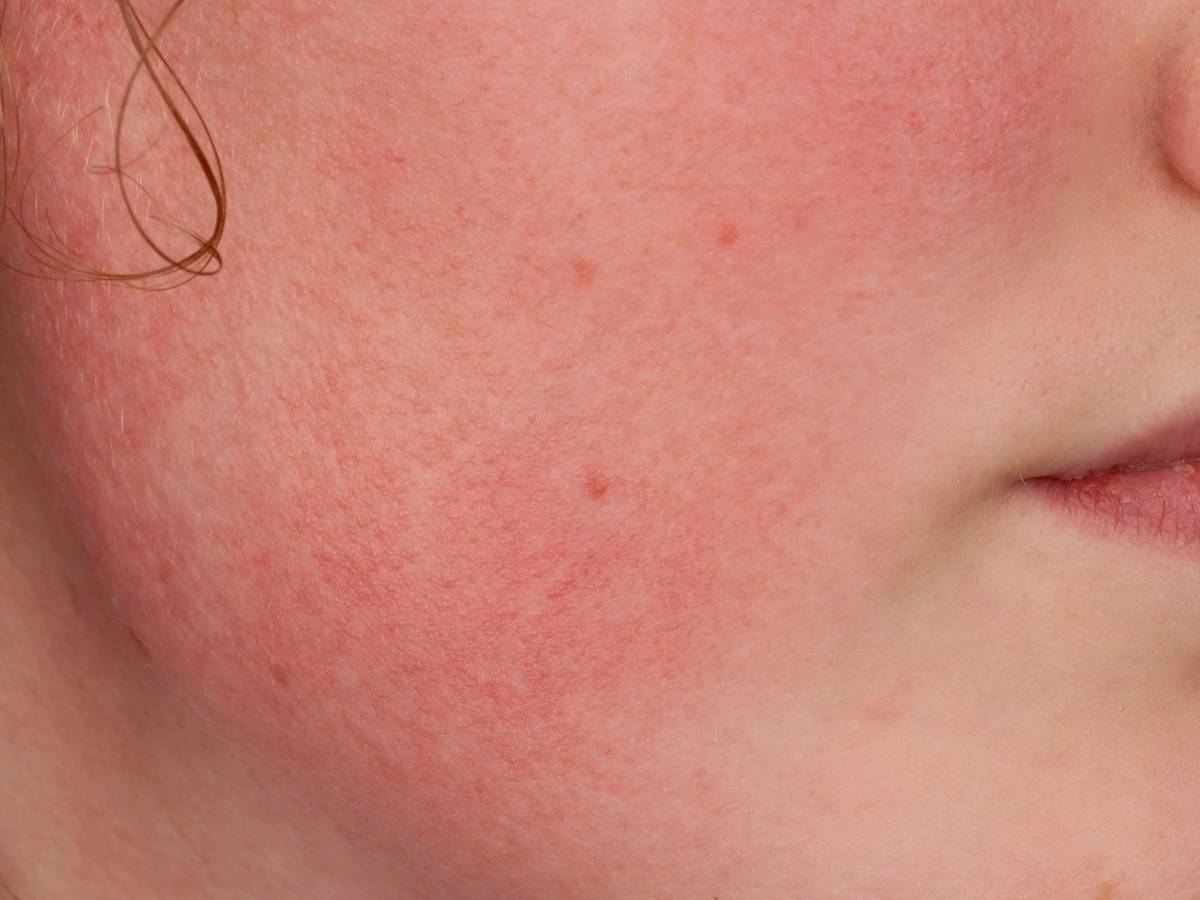
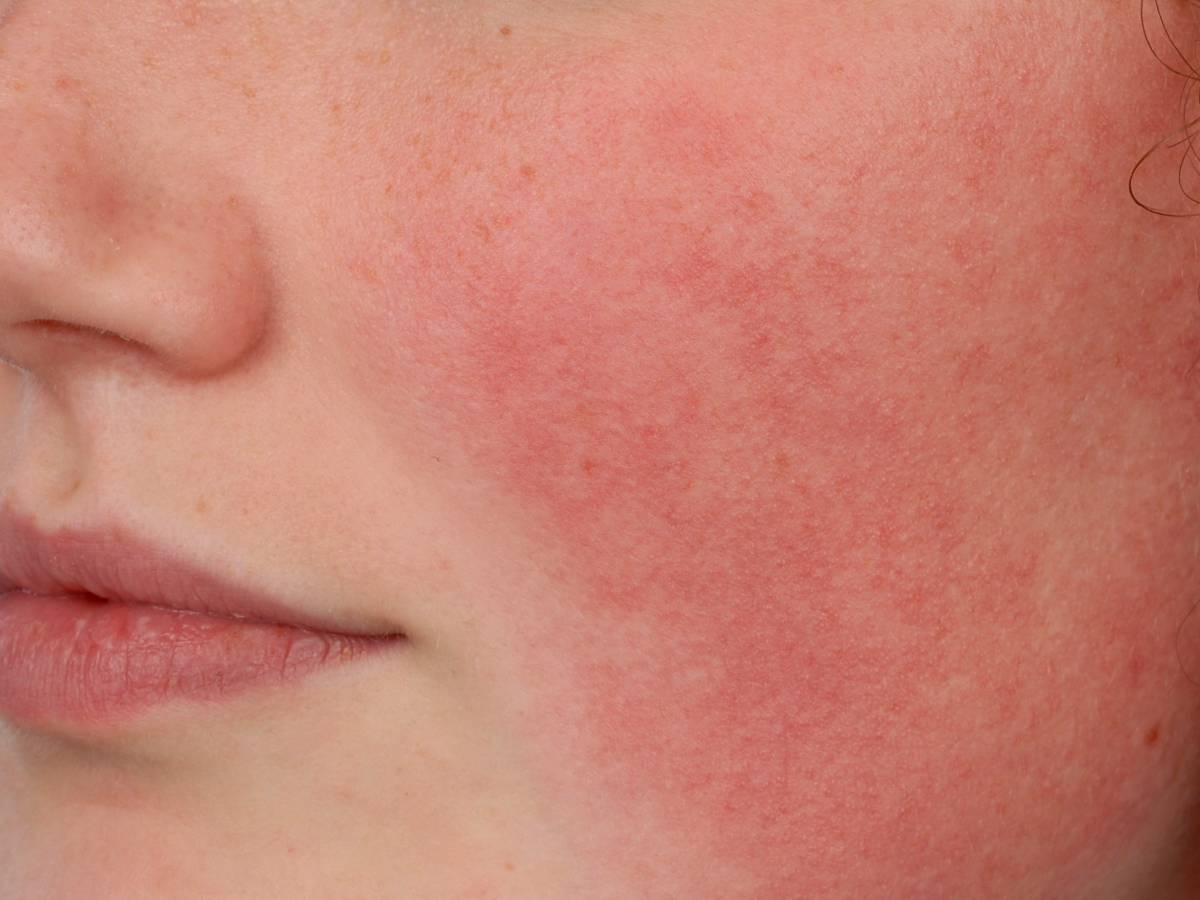
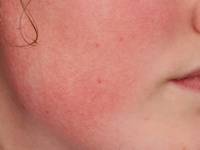
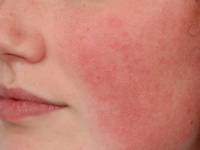
WHAT IS ULERYTHEMA OPHRYOGENES?Ulerythema ophryogenes(synonym: keratosis pilaris atrophicans faciei) is a rare but benign skin disorder, the most noticeable symptom being redness on the cheeks (blushes ).
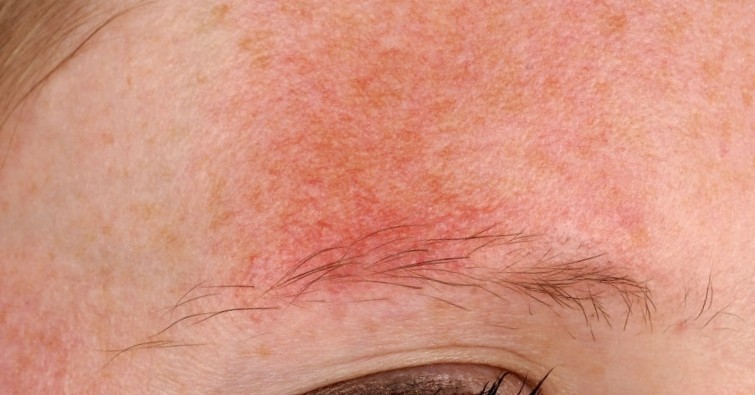
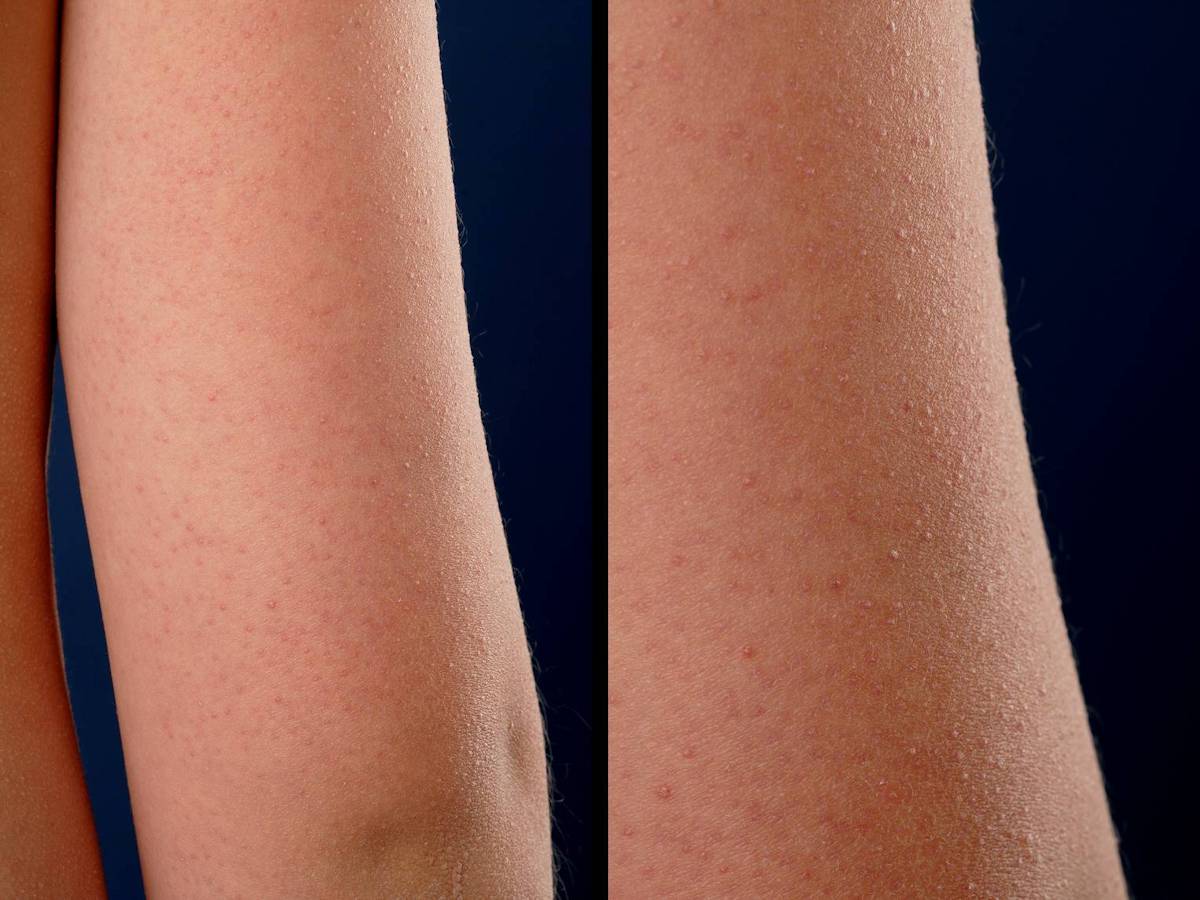
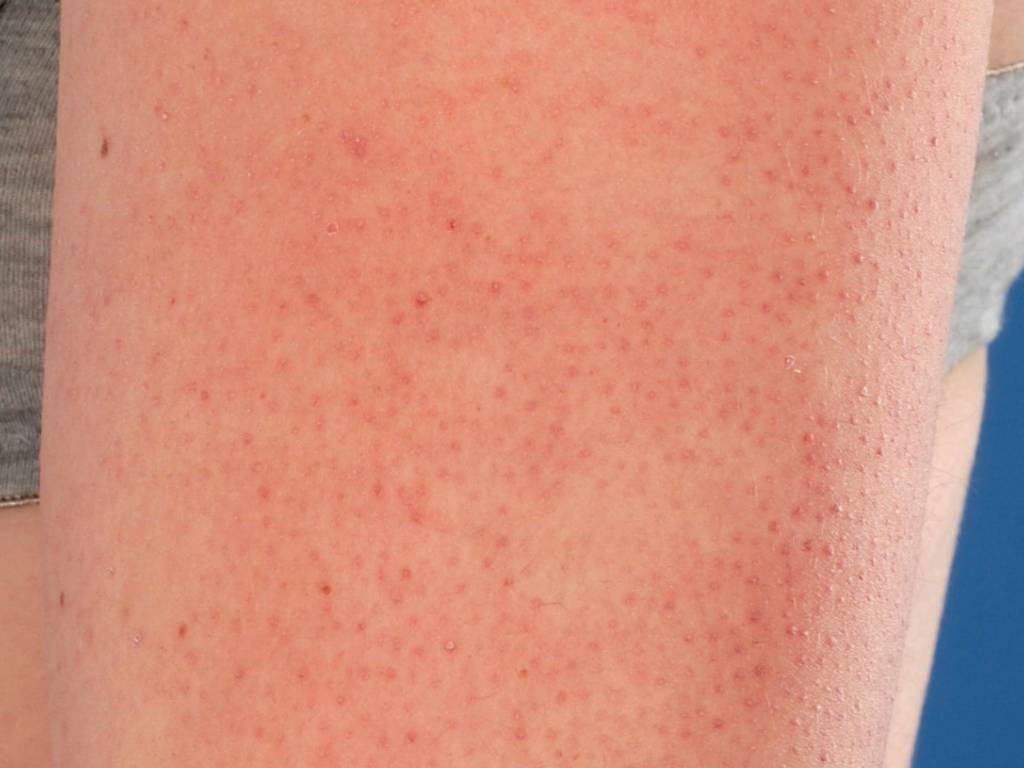
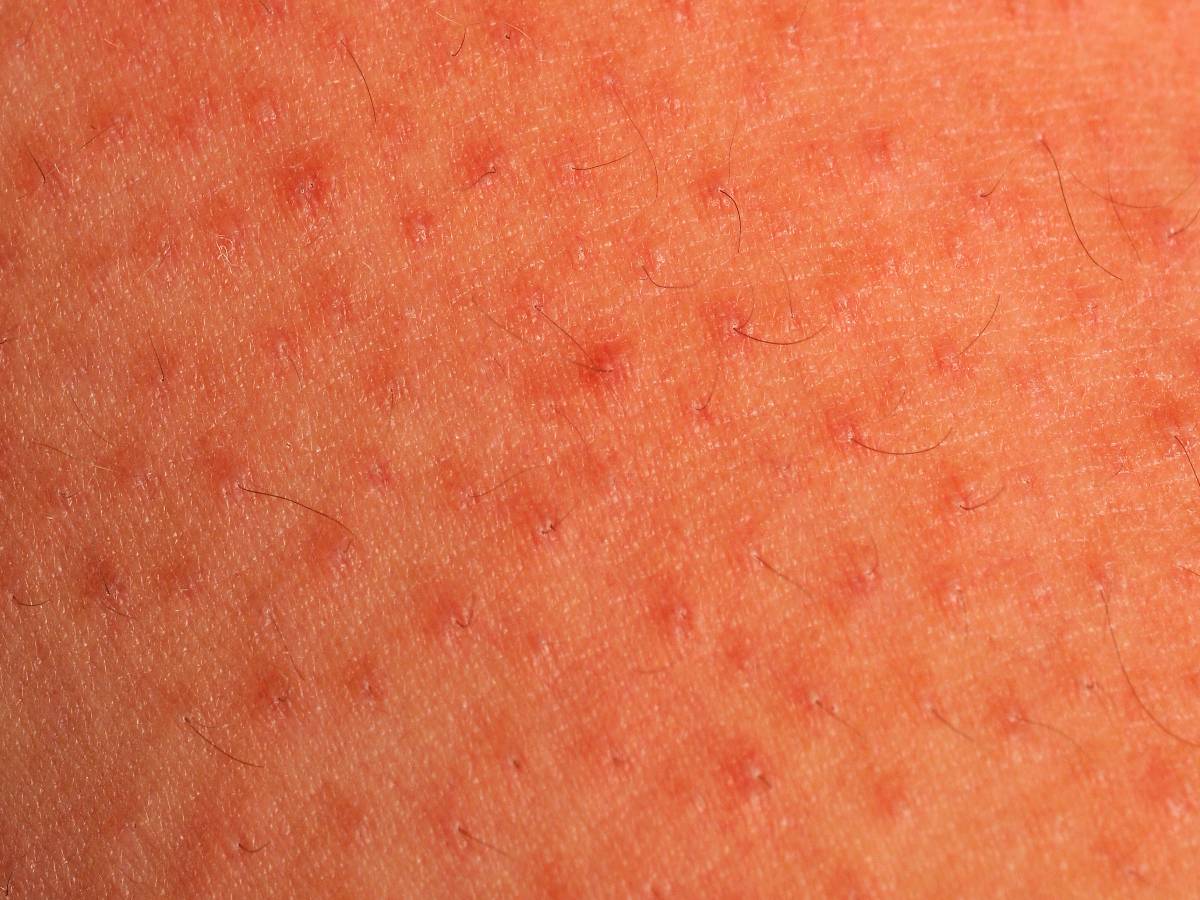
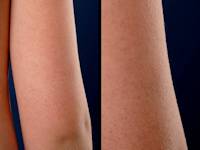
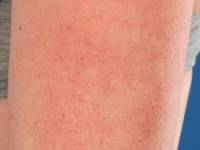
In addition, the skin on the upper arms may feel dry and rough because there is a small bump around each hair follicle. This phenomenon of rough-feeling small bumps or spots on the upper arms is called keratosis pilaris . It resembles goosebumps, but it feels hard and is permanent. The third symptom is the loss of outer eyebrow hairs. The inner eyebrows, on either side of the nose, then appear thicker than the outer eyebrows. The medical term for this is lateral eyebrow loss (and it is also called Hertoghe's sign). The skin around the eyebrows may also be red. Sometimes small lesions, dents in the skin, also appear on the cheeks. At the site of such damage the skin is somewhat thinner, and this is called atrophy .
 |
 |
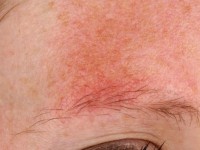 |
| ulerythema ophryogenes |
ulerythema ophryogenes |
eyebrow loss |
WHAT IS THE CAUSE?The cause is unknown. It is likely a genetic (congenital) skin condition. However, in most cases, it occurs without a known family history of the condition.
The skin on the upper arms and cheeks feels rough. This is because the skin around the hairs has thickened. The medical term for this thickening of the outermost layer of skin, the stratum corneum, is hyperkeratosis. If this thickening occurs only around the hair follicles, the medical term keratosis pilaris is used. Keratosis pilaris can also occur in children with atopic eczema. They do not then have the red, rough cheeks.
 |
 |
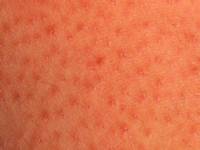 |
| keratosis pilaris |
keratosis pilaris |
keratosis pilaris |
WHO GETS IT?Ulerythema ophryogenes occurs mainly in children and young adults.WHAT DOES IT LOOK LIKE?The most characteristic symptom is a persistent redness of the cheeks (see the photos above). Unlike blushing, this redness isn't fleeting or dependent on stressful or uncomfortable situations, but is persistent. The cheeks may also feel slightly rough because of the thickening of the skin around each hair. Hence the other name, keratosis pilaris atrophicans faciei. It occurs primarily in children and young adults and resolves spontaneously with age. Classically, ulerythema ophryogenes includes redness of the cheeks and the area in and just above the eyebrows, as well as lateral eyebrow loss (Hertoghe's sign) and thickening of the skin around the hairs (keratosis pilaris, most visible on the outer side of the upper arms). In addition, small, sunken scars can sometimes develop on the face. This is called atrophy, or, with the even more appealing name, atrophoderma vermiculatum. Sometimes, in older age, blackheads (comedones) and milia are also seen, this is a consequence of clogged hair follicles and sebaceous glands due to thickening of the skin around the opening.HOW IS THE DIAGNOSIS MADE?The diagnosis is based on the clinical picture and its appearance. Occasionally, a skin biopsy is necessary for further examination.
If only rough upper arms (keratosis pilaris) are present, the condition may resemble atopic eczema. Whether someone is predisposed to this (atopic) can be determined through blood tests for allergies such as house dust allergy.HOW IS IT TREATED?It's difficult to treat. Sometimes it's best to do nothing and wait for it to go away on its own. This is tricky, because although the condition is harmless, having red cheeks all the time can be cosmetically unsightly.
The redness can worsen with excessive sun exposure, so there are things you can do: avoid excessive or prolonged sun exposure and wear sunscreen.
Some patients benefit from creams that have a mild abrasive effect on the skin. These include creams containing urea, lactic acid, or salicylic acid in concentrations up to 5%, possibly in combination with corticosteroids (Calmurid HC), or vitamin A acid creams. The disadvantage of these creams is that they can also irritate the skin if used frequently, causing the redness to increase or the skin to flake.
Attempts have also been made to treat redness with a vascular laser (585-nm pulsed dye laser), but it's difficult to achieve an even result.
Camouflaging with makeup may be the best option. Consult a beautician or cosmetics expert and choose a foundation that matches your skin tone. It should be of good quality, as opaque foundations and creams with excessive preservatives or fragrances can irritate the skin or cause contact allergies. |