|
THROMBOPHLEBITIS (SUPERFICIAL THROMBOPHLEBITIS) |
 |
 WHAT IS THROMBOPHLEBITIS? WHAT IS THROMBOPHLEBITIS?
Thrombophlebitis means
inflammation of a vein.
Superficial thrombophlebitis is an inflammation in and around a superficial blood vessel, usually in the lower leg. This type of vein inflammation is caused by a clot in a superficial vein that drains the leg. The medical term for a clot in a blood vessel is
thrombosis. Thrombophlebitis is also called superficial venous thrombosis. A clot can also develop in veins deeper in the leg, which is called
deep vein thrombosis.
 |
 |
|
thrombophlebitis |
thrombophlebitis |
WHAT DOES THROMBOPHLEBITIS LOOK LIKE?
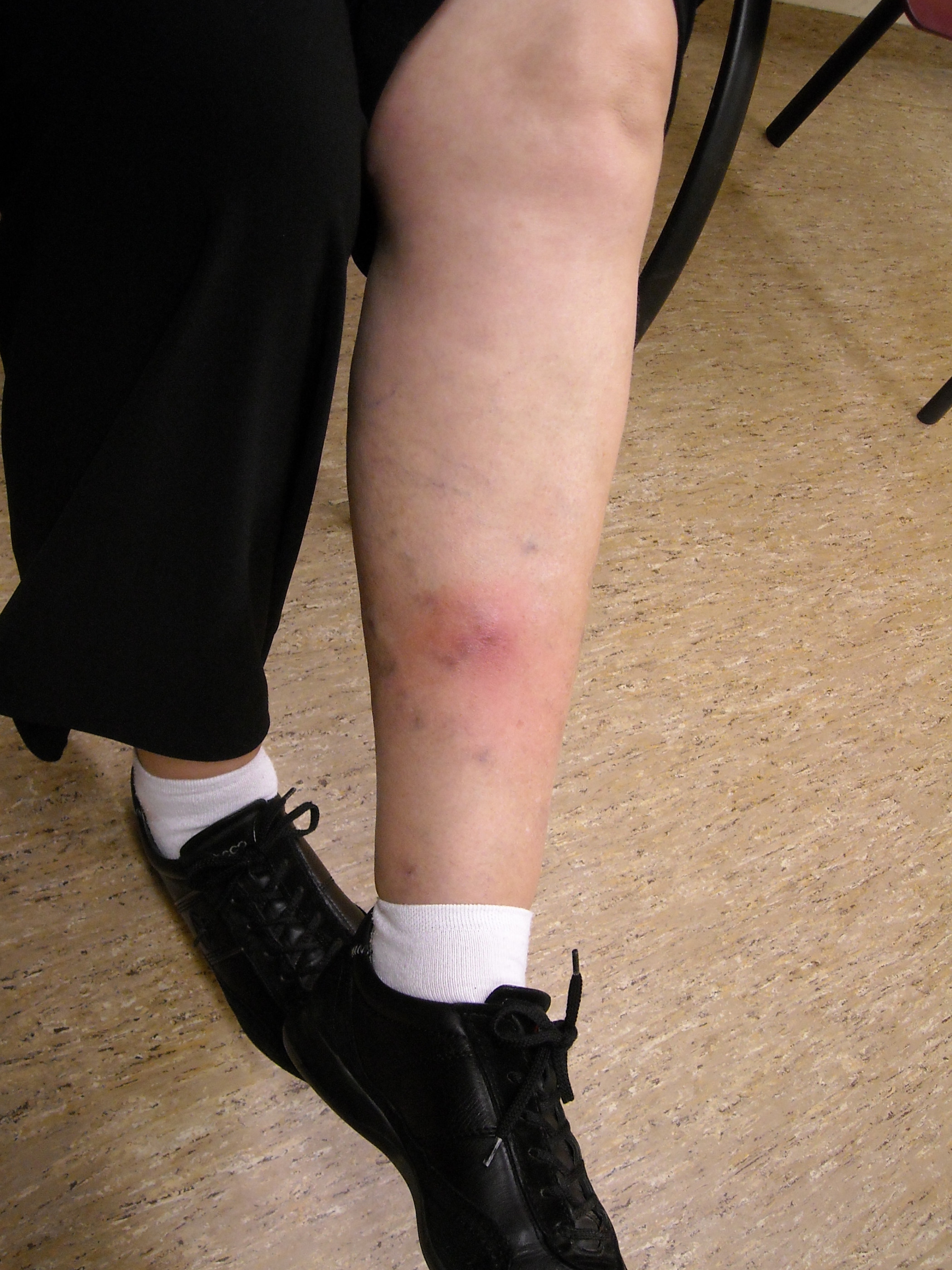
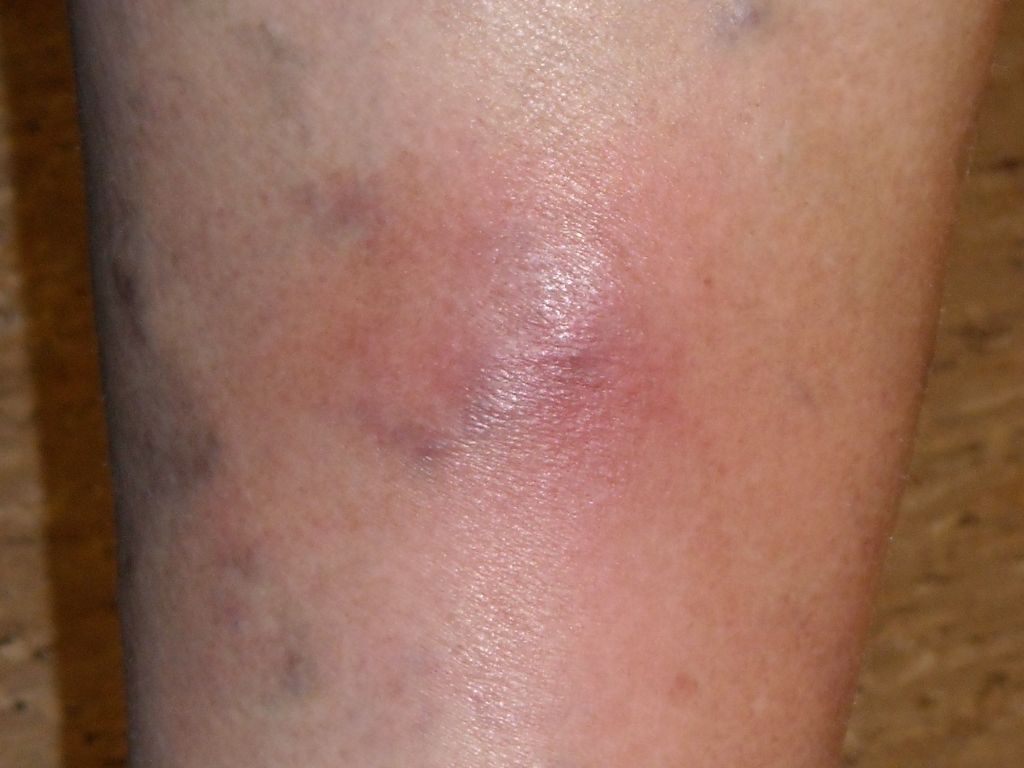
With thrombophlebitis, or superficial vein thrombosis, a painful, red, warm, and hard-to-the-touch cord or spot develops quickly. This usually occurs in a previously present varicose vein. Thrombophlebitis is usually a few centimeters long, but it can also occur that the entire vein is blocked with clotted blood, along the entire length of the lower and/or upper leg. Superficial thrombosis is common, estimated at 30,000 cases per year in the Netherlands, and a similar number of cases of deep vein thrombosis.
HOW DOES THROMBOPHLEBITIS DEVELOP?
Thrombophlebitis is caused by the formation of a clot in a superficial blood vessel. The clot attracts immune cells that attempt to eliminate the blood clot. This causes an inflammatory response around the vessel. The overlying skin becomes red, warm, swollen, and painful.
A clot can form suddenly, without any apparent cause. But sometimes there are clear underlying causes, the so-called risk factors for developing thrombosis. For example, the use of the contraceptive pill. Thrombosis is also more common during pregnancy, in patients who spend extended periods in a hospital bed, around operations, after accidents, and with certain internal diseases where there are high levels of inflammatory proteins in the blood. Thrombophlebitis often occurs in a varicose vein; this is because the blood in a varicose vein doesn't flow properly. A varicose vein is wide, and the valves that normally
help with the return of blood are damaged. As a result, the blood no longer flows properly back to the heart. A clot can easily form in sluggish or stagnant blood. There are also hereditary conditions that increase the risk of clotting.
IS SUPERFICIAL VENOUS THROMBOSIS (THROMBOPHLEBITIS) DANGEROUS?
Superficial venous thrombosis is not dangerous; it is bothersome, but it usually goes away on its own. The vessel is blocked, but there are sufficient other superficial vessels in the leg through which blood can flow back to the heart. There is a 2-10% risk of the clot growing and of a clot forming in deeper vessels. This risk is especially prevalent if the clot is close to a connection to the deeper veins or is longer than 5 cm. Deep vein thrombosis is a problem: these vessels are important for the return of blood to the heart. If they are completely blocked, a swollen, red, and warm swelling of the leg (a deep vein thrombosis) develops. Another risk (in 1-4% of superficial vein thromboses) is that small clots can break free and travel via the heart into the pulmonary vessels. This causes a pulmonary embolism, resulting in blocked pulmonary vessels and shortness of breath.
Clots in blood vessels can sometimes be cleared by the immune system, allowing the vessel to reopen. This clearing process usually destroys the delicate valves in the vessel, or they no longer close properly because the vessel has widened. Consequently, after a previous thrombosis, varicose veins can develop in the superficial or deep veins.
HOW IS THROMBOPHLEBITIS DIAGNOSED?
The diagnosis is based on the clinical picture, i.e., its appearance. A painful, red, and hard cord is visible; few other conditions display this. Only inflammation of a lymphatic vessel (lymphangitis) can mimic this, but that presents with more symptoms (fever, feeling unwell). A duplex ultrasound device can also be used to determine whether a clot is present in the vessel and whether this clot might also extend to the deeper vessels. If deep vein thrombosis (thrombosis of the leg) is suspected, a duplex examination is always performed. If thrombophlebitis occurs frequently, blood tests may be performed to check for hereditary or acquired clotting disorders.
HOW IS THROMBOPHLEBITIS TREATED?
For thrombophlebitis, a compression bandage or elastic stocking is usually applied. You must continue to wear this until the clot has dissolved, which usually takes two weeks. A small clot that has just formed can sometimes be expelled through a small incision. In addition, anti-inflammatory painkillers such as diclofenac or ibuprofen may be prescribed.
If there is a risk of the clot growing deeper, or if the clot is causing significant pain, anticoagulation is also initiated, usually in the form of a subcutaneous injection of fondaparinux 2.5 mg once daily. You can administer these injections yourself. Alternatives include rivaroxaban 10 mg tablets daily, or other anticoagulants for subcutaneous injection such as dalteparin, enoxaparin, nadroparin, or tinzaparin. A high risk of deep vein thrombosis exists if risk factors such as a previous thrombosis, underlying diseases, recent surgery, oral contraceptive use, pregnancy, or clotting disorders are present; or if the clot is longer than 5 cm; or if the clot is within 3 cm of a connection to deeper vessels.
WHAT CAN YOU DO YOURSELF?
There are few things you can do yourself about thrombophlebitis other than wear stockings and take anti-inflammatory painkillers. Exercise is good. Sitting still or lying in bed for long periods increases the risk of developing thrombosis. Treating varicose veins or wearing elastic stockings helps prevent it. Wear elastic stockings during long flights, take occasional walks, and stay active. If you have a known risk of thrombosis, report this when you are admitted to the hospital: precautionary anticoagulation injections can be given to prevent thrombosis caused by bed rest. Applying heparin ointment (a drugstore product) or cold or warm compresses does not help.
WHAT IS THE PROGNOSIS?
Thrombophlebitis usually disappears completely after 2-4 weeks. A dark spot may appear on pigmented skin.
|