| TELOGEN HAIR
LOSS (TELOGEN EFFLUVIUM) |
 |
 WHAT IS TELOGEN HAIR LOSS? WHAT IS TELOGEN HAIR LOSS?
Telogen hair loss (telogen effluvium) is a form of
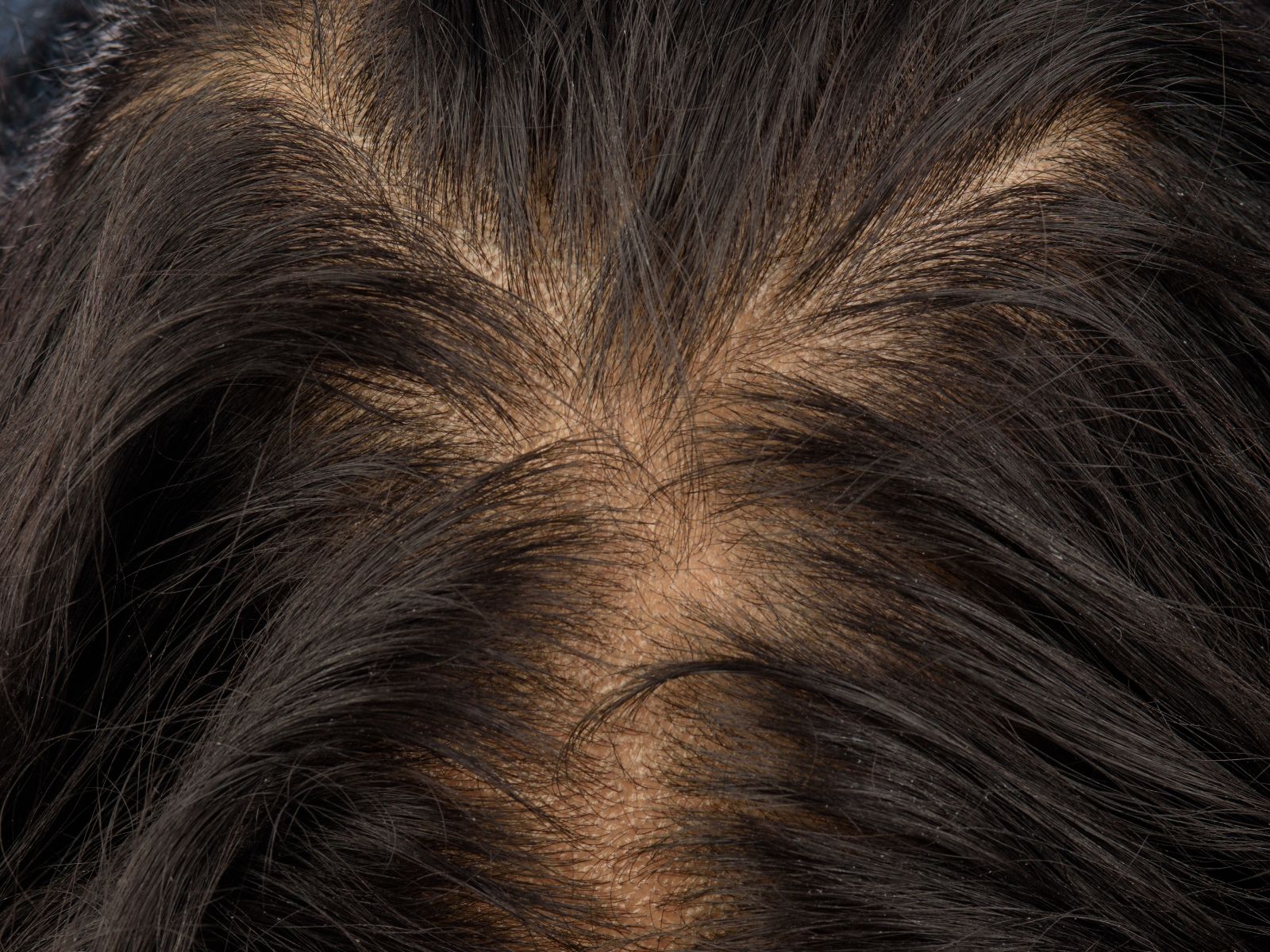
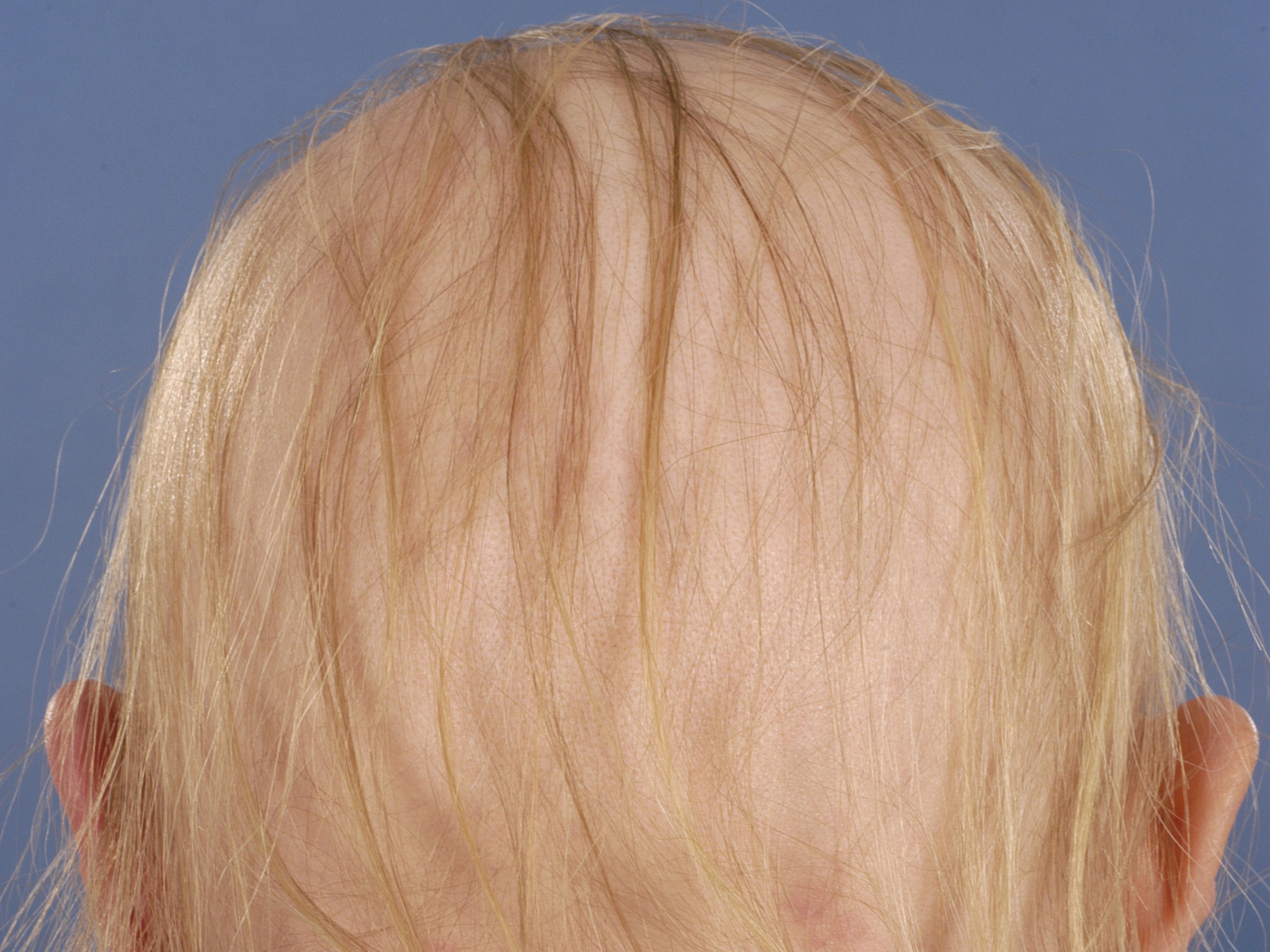
hair loss in which the hair falls out gradually and evenly across the entire scalp, resulting in thinner hair. There are no bald spots, but when combing or washing the hair, it is noticeable that much more hair is falling out than usual. Telogen hair loss is caused by a disruption in hair growth due to a triggering event, such as pregnancy. It will recover on its own.
WHAT ARE TELOGEN HAIRS?
Hair grows from small, tube-like, sac-like pits in the skin,
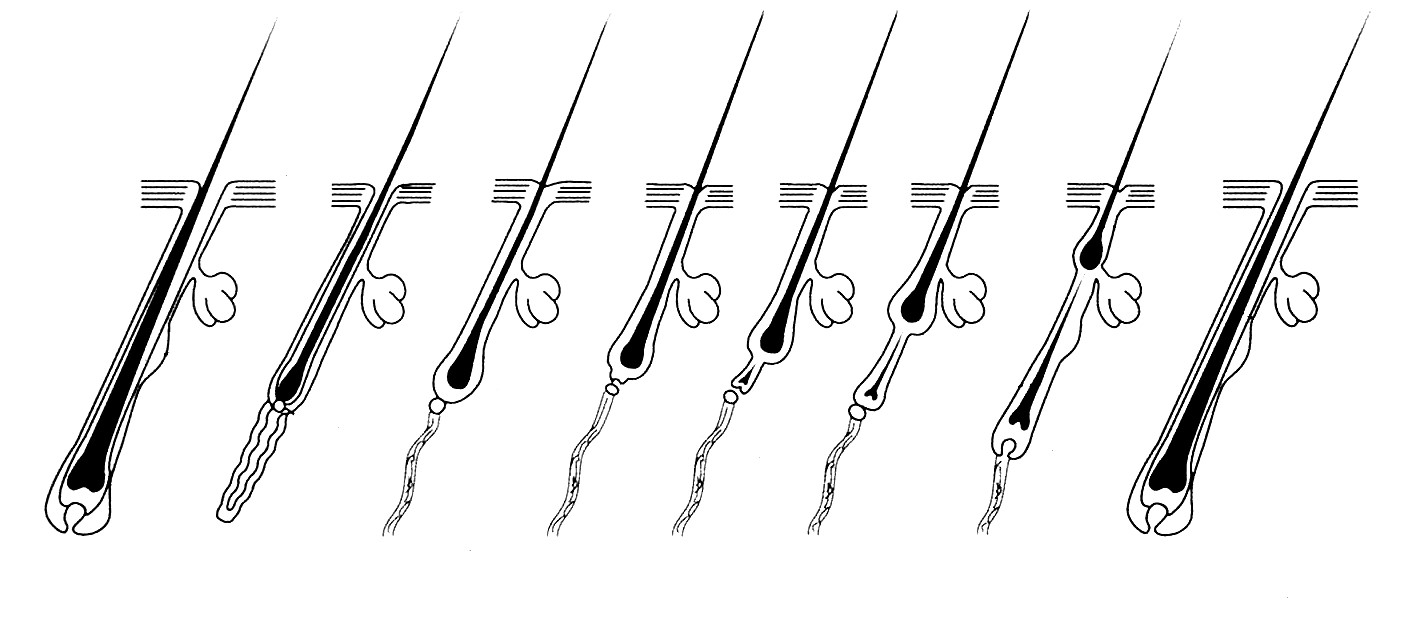
called hair follicles. At birth, there are approximately 100,000 hairs on the scalp, but this number decreases over the course of a lifetime. Hair can grow for years, but at some point it falls out. On average, a person loses 50 to 100 hairs per day. However, a hair follicle can produce new hair again and again. This process of production, growth, and loss is called the
hair growth cycle.
The hair growth cycle has three different phases:
anagen, catagen, and
telogen.
Hair grows during the
anagen phase. This lasts approximately 3-6 years. The hair then enters the
catagen phase, a transitional phase from growth to rest, which lasts several weeks. The hair then enters the
telogen phase or resting phase. In this phase, the hair no longer grows and at the end of the telogen phase, which lasts approximately 3-4 months, the hair falls out. But by that time, the hair follicle has already formed a new, anagen hair to replace the hair that has fallen out. The hair growth cycle then repeats itself. The new hair is initially much thinner than the hair that has fallen out. In adults, approximately 85-90% of the hair on the head is in the anagen growth phase. Hair grows approximately 1 centimetre per month.
HOW DOES TELOGEN HAIR LOSS OCCUR?
A distinction is made between acute telogen hair loss and
chronic telogen hair loss.
Acute telogen hair loss
Acute telogen hair loss is usually triggered by an event that disrupts the hair growth cycle, such as a serious illness. Suddenly, a large number of hairs transition from the anagen (growth) phase to the catagen phase. After a few weeks, all these hairs enter the telogen phase and then fall out more or less simultaneously.
In addition to serious illness, acute telogen hair loss can also occur after childbirth, after a period of high fever, after surgery under general anesthesia, after significant blood loss, and in cases of malnutrition, such as anorexia nervosa. The hair loss usually only becomes noticeable 2 to 5 months after the event. In about one-third of patients with acute telogen hair loss, no cause can be found. Once the triggering event has passed, the hair will recover on its own.
Chronic telogen hair loss
If hair loss persists for more than 6 months, it is called chronic telogen hair loss. Chronic telogen hair loss can be caused by anemia (especially iron deficiency) and underlying diseases such as thyroid disorders, diabetes, kidney disease, liver or pancreatic disease, autoimmune diseases (SLE, dermatomyositis, temporal arteritis), malnutrition, hormonal abnormalities, or deficiencies in zinc, minerals, vitamins, or essential fatty acids.
Medications can also cause hair loss, including cytostatic drugs (chemotherapy), blood thinners, beta blockers, ACE inhibitors, angiotensin II antagonists, cholesterol-lowering drugs, lipid-lowering drugs, antidepressants, retinoids (acitretin, isotretinoin), corticosteroids, sex hormones, NSAIDs, antimycotics, proton pump inhibitors, anti-epileptics, and many others. If you are taking medication, read the package insert carefully and see if hair loss or alopecia is listed under side effects.
The chronic form of telogen hair loss mainly affects women between the ages of 30 and 50. In about one-third of cases, no cause can be found. Stress is sometimes mentioned as a possible cause, but it is not certain whether stress can cause hair loss.
WHAT ARE THE SYMPTOMS OF TELOGEN HAIR LOSS?
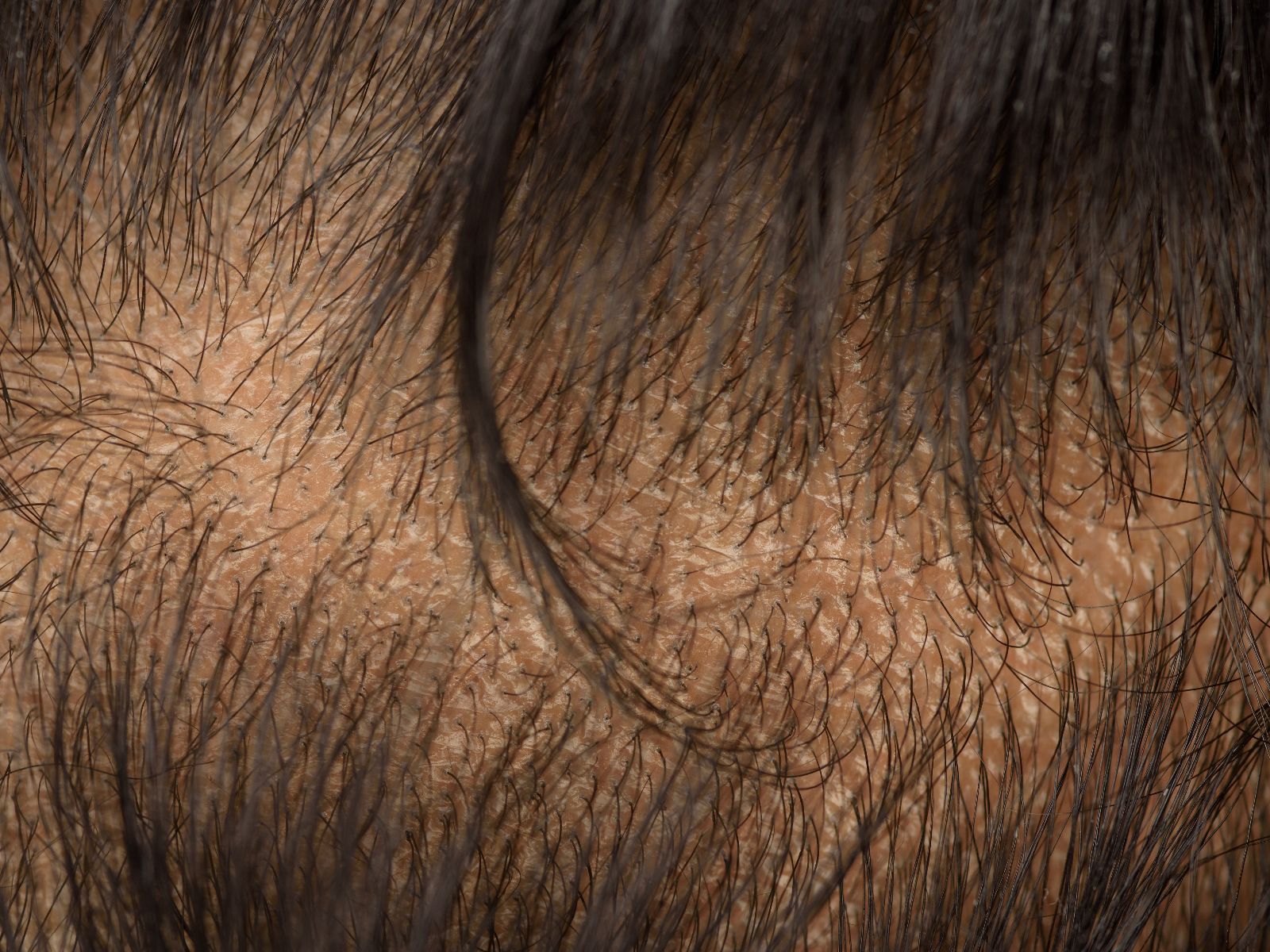
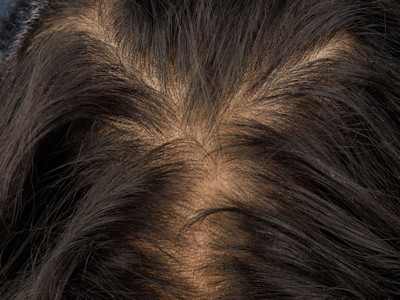
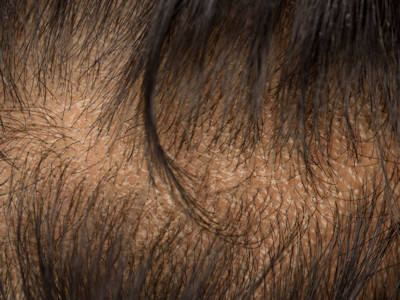
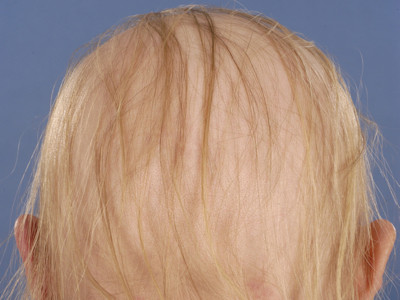
With telogen hair loss, the hair falls out evenly across the entire scalp. There are no other complaints such as skin abnormalities, itching, or pain. A characteristic feature is that when combing or washing the hair, much more hair comes out than usual. For example, you may suddenly find a whole tangle of hair in the shower drain. No actual bald spots develop, but the entire head of hair becomes thinner. At first, it is not easy for people around you, or even your GP or dermatologist, to see that you are losing your hair. Only when 20-50% of your hair has fallen out does it become visible to others. Hair loss can occur suddenly and be so severe that your hair becomes noticeably thinner in a short period of time, but it can also start more slowly and last longer.
 |
 |
 |
|
telogen hair
loss |
telogen hair loss |
telogen hair loss |
HOW IS THE DIAGNOSIS MADE?
The diagnosis of telogen hair loss is based on the clinical picture, on how it looks. If there are no bald spots or skin abnormalities visible, and if the hair loss is even, then there are few other hair diseases that could be the cause. The diagnosis becomes even more certain if something happened 2-5 months prior to the hair loss that could have triggered it. The dermatologist can examine the scalp with a dermatoscope, a powerful magnifying glass with special lighting.
Female pattern hair loss (alopecia androgenetica in women) is a common hair disorder that must be ruled out. With the dermatoscope, very small hairs are visible, and the pattern is different, with thinner hair especially on the top of the head. As a test, the dermatologist may pull out a tuft of hair (hair pull test) and examine it with the dermatoscope or a microscope (trichogram). This will reveal whether there are too many hairs in the telogen phase. In rare cases, if other hair disorders are suspected, a skin biopsy of the scalp may be taken under local anesthesia. Blood tests may also be performed to rule out underlying diseases.
HOW IS TELOGEN HAIR LOSS TREATED?
Acute telogen hair loss always resolves on its own. There are no known treatments that can accelerate the recovery of hair growth. There is also no treatment for chronic telogen hair loss, unless a cause for the hair loss is found that can be treated. If a medication is a possible cause of hair loss, it must be discontinued for at least 3 months or replaced with a medication from a completely different group. It takes at least 3 months before hair growth recovery becomes visible. In cases of severe hair loss, for example due to chemotherapy, wearing a wig temporarily is an option.
WHAT IS THE OUTLOOK?
The outlook for patients with acute telogen hair loss is good. Once the event that triggered it is over, hair loss usually stops within 3-6 months (up to a year), after which the hair will recover completely. In cases of chronic telogen hair loss, gradual recovery will occur once the cause has been identified and treated, or, if medication was the cause, once it has been discontinued. If no clear cause can be found, the course of is variable. Hair loss is often present to varying degrees over a longer period (years), but even in this group, hair growth often recovers completely in the end.
|