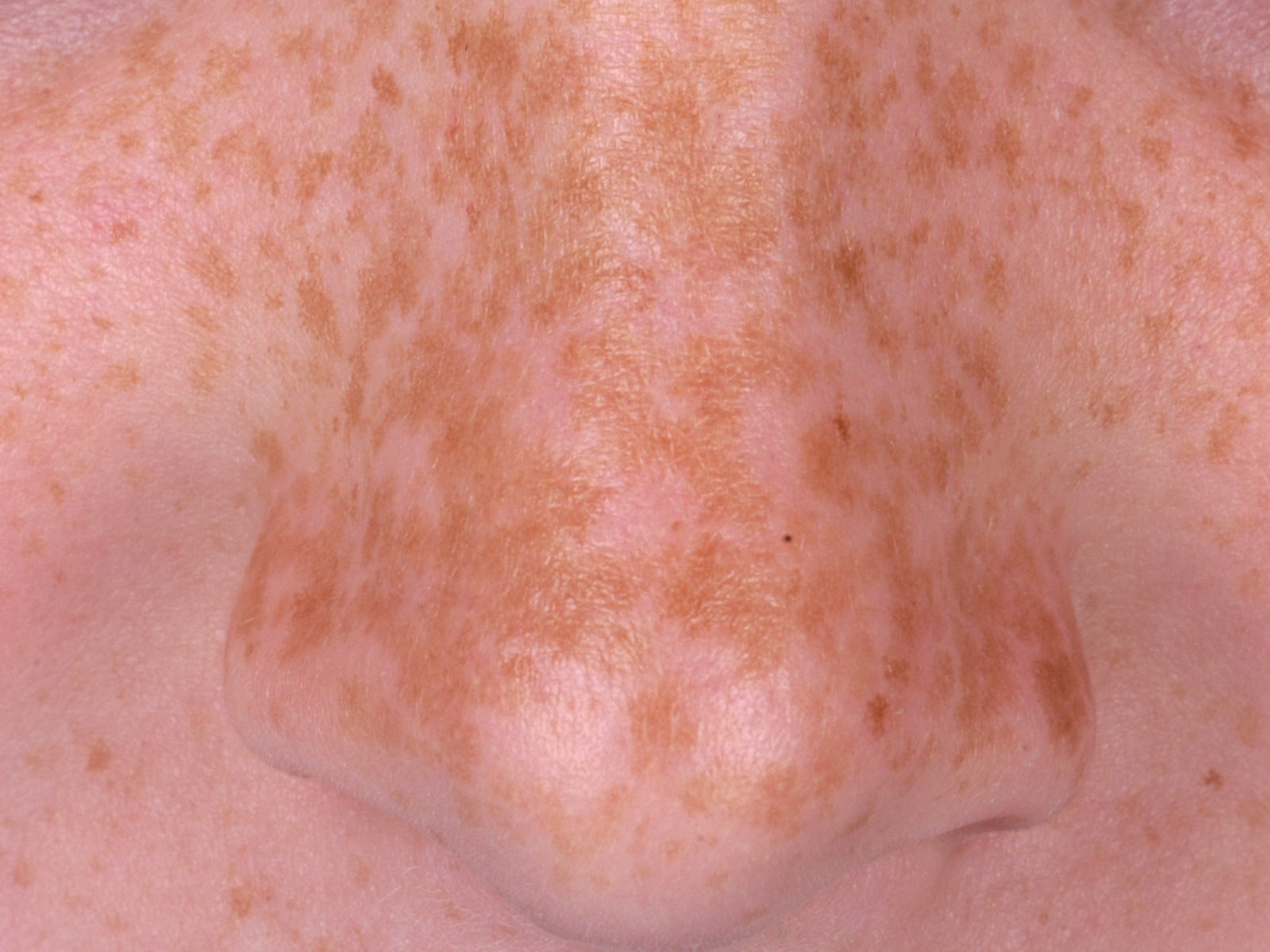
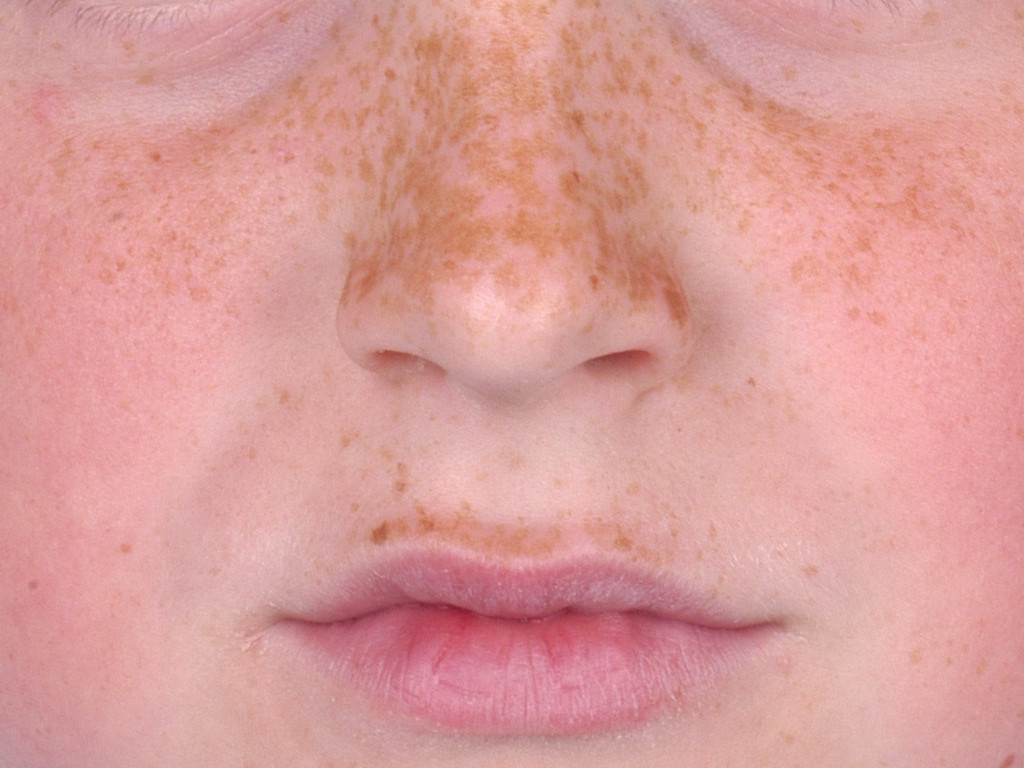
WHAT ARE FRECKLES?Freckles are benign light brown to dark brown spots, usually on the face or in sun-exposed areas, that develop under the influence of sunlight . They mainly appear in people with fair skin, which is often associated with blond or red hair . It begins in childhood, from the moment children start playing outside. Freckles develop because the pigment cells in the skin start producing pigment in response to sunlight. Freckles therefore mainly appear in the summer and disappear again in the winter. Freckles can run in families. This naturally also depends on skin type and hair color, but there are families with a large number of freckles. The medical term for freckles is ephelides or ephelides, and in English they are called freckles .
 |
 |
| freckles |
freckles |
ARE FRECKLES DANGEROUS?Freckles aren't dangerous; they're benign pigment spots, and they can't develop into skin cancer. However, having many freckles is a sign of excessive sun exposure, and it's questionable whether that's wise if you have a fair skin type with blond or red hair. With a fair skin type, you can easily burn and suffer sun damage. This results in skin aging and a risk of skin cancer later in life. Freckles can be prevented by properly protecting your skin from the sun (applying sunscreen). This is especially wise for children. These days, people are less concerned about the damaging effects of the sun; sunlight also has many positive effects. The bottom line is that you should try to avoid burning.
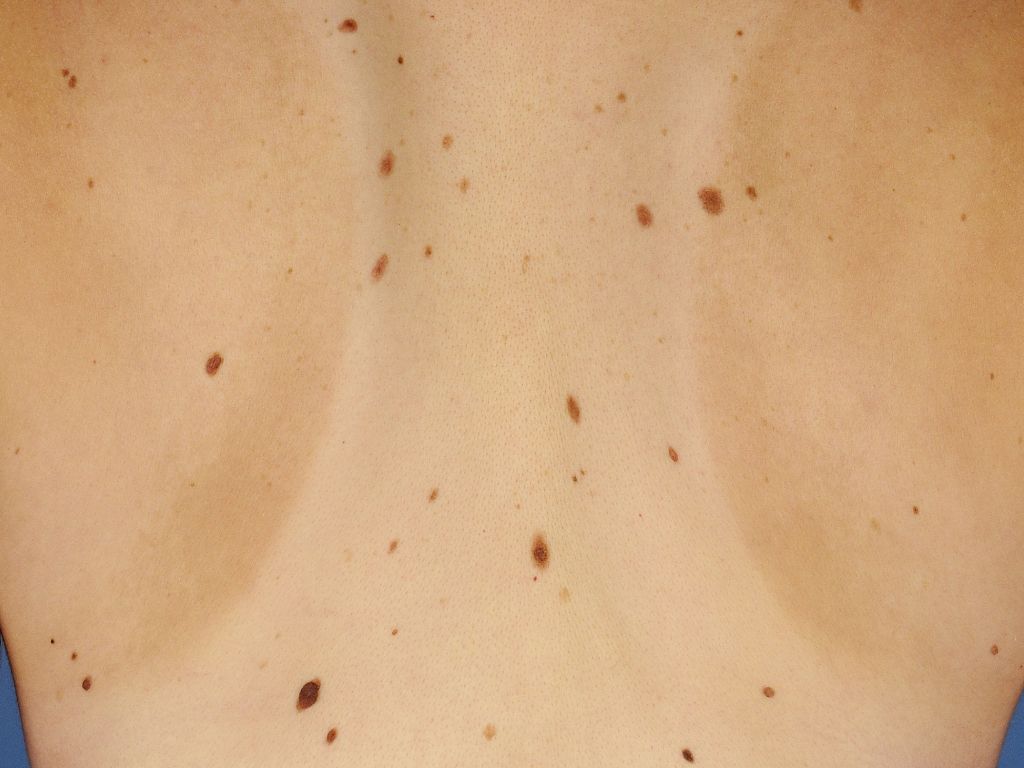
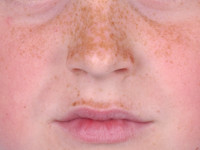
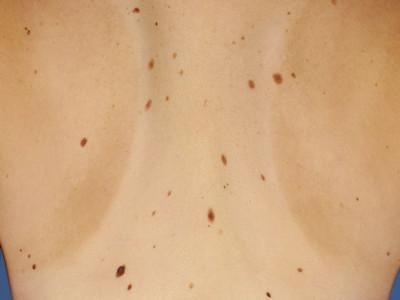
If you have an excessive number of pigment spots all over your body, they might not be freckles but lentigines . Lentigines are a different type of pigment spot; they often develop later in life and can be familial or part of a syndrome with pigment disorders.WHAT IS THE DIFFERENCE BETWEEN FRECKLES (EPHELIDES), LENTIGINES AND MOLES?Sometimes these skin abnormalities are difficult to distinguish; a brown spot could be a freckle , a lentigo , or a mole . The differences are visible under a microscope. With a freckle, the number of pigment cells in the skin is normal; they simply produce more pigment. With a lentigo (plural lentigines), there are more pigment cells and they also contain more and larger pigment granules. The pigment cells are in their normal position, evenly distributed across the lower layer of the epidermis. And with a mole, there are more pigment cells, and they are unevenly distributed in clumps under the skin.FrecklesFreckles are often found on the face and are easy to recognize. Most people know what freckles look like. They darken in the sun and lighten in the winter.LentiginesThese are brown spots that also increase with sunlight, increasing in number over the course of life but not disappearing completely. The variant with multiple small pigment spots that increase from puberty onwards is called lentigo simplex . There is also a variant in which a single brown spot develops at an older age (over 50 years), usually on the face or the back of the hand, called lentigo solaris or lentigo senilis (age spot, liver spot).BirthmarksThey also increase with age and can be any color from skin-colored to black, and of various sizes, and are often raised or convex. However, a mole can also be simply a light brown spot and is then visually indistinguishable from a lentigo or freckle.
 |
 |
 |
| freckles |
lentigines |
moles |
HOW IS THE DIAGNOSIS MADE?The diagnosis is based on the clinical picture. A skin biopsy is not necessary.HOW ARE FRECKLES TREATED?Freckles don't need to be treated, as they're not a skin condition or abnormality, but a natural phenomenon, a temporary skin reaction to sunlight. Freckles aren't usually considered a problem, but they're simply a characteristic of blondes and redheads. They're considered a beauty sign (one of the classic seven female beauties). You can protect your skin from the sun with good sunscreen or avoid direct sunlight. For excessive freckles that are considered bothersome, a pigment laser can be used. Camouflage is also an option. |