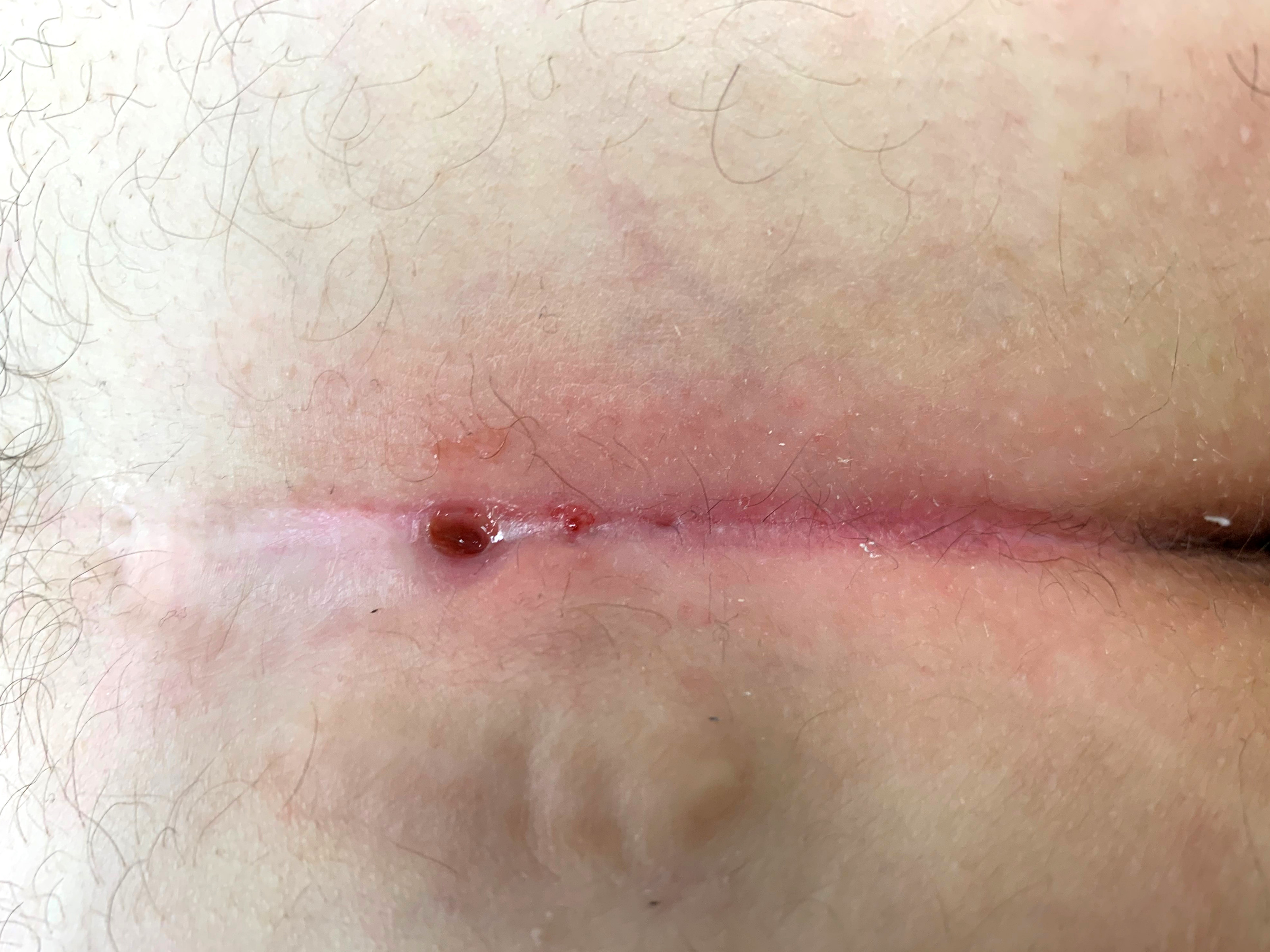
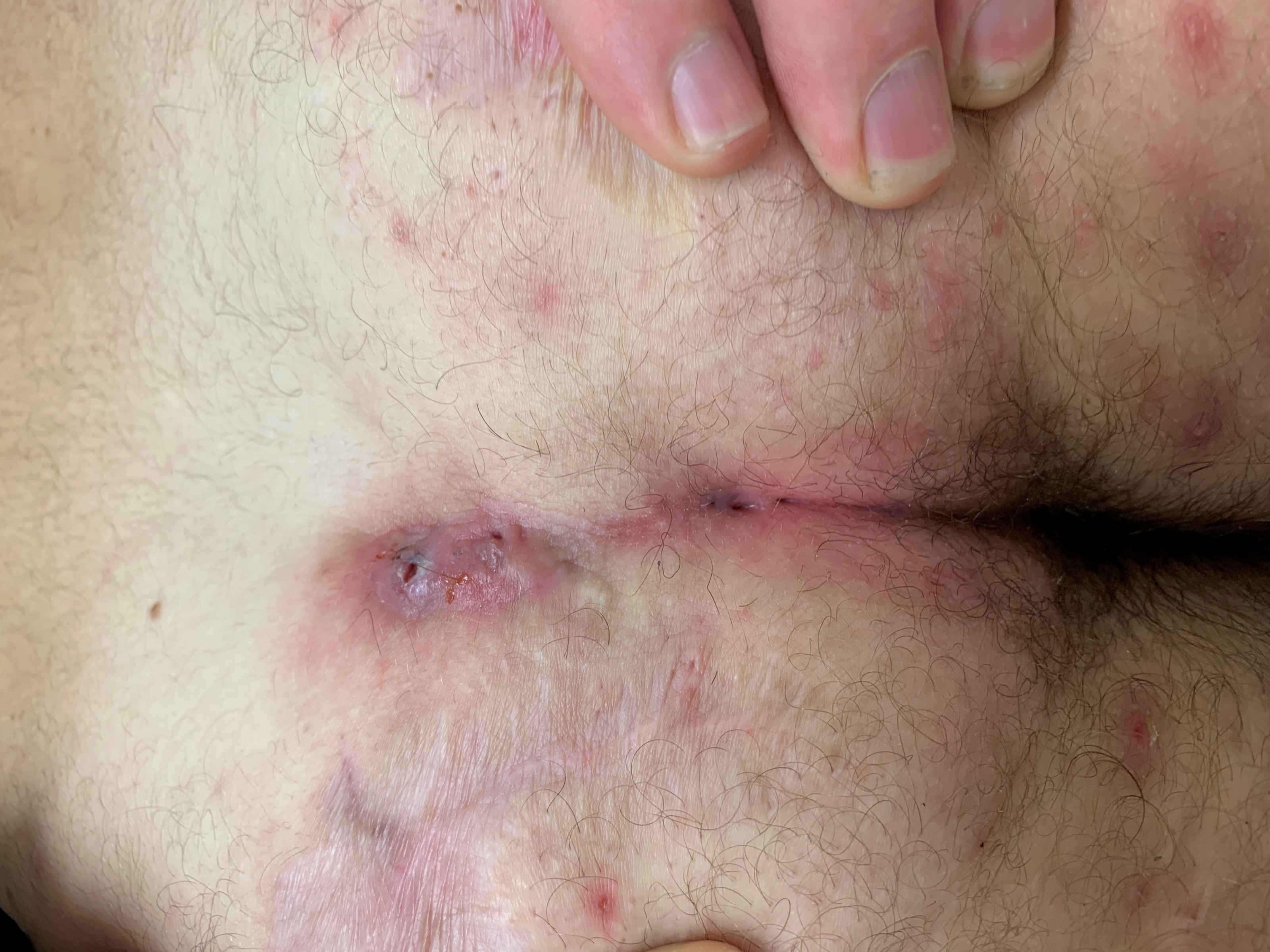
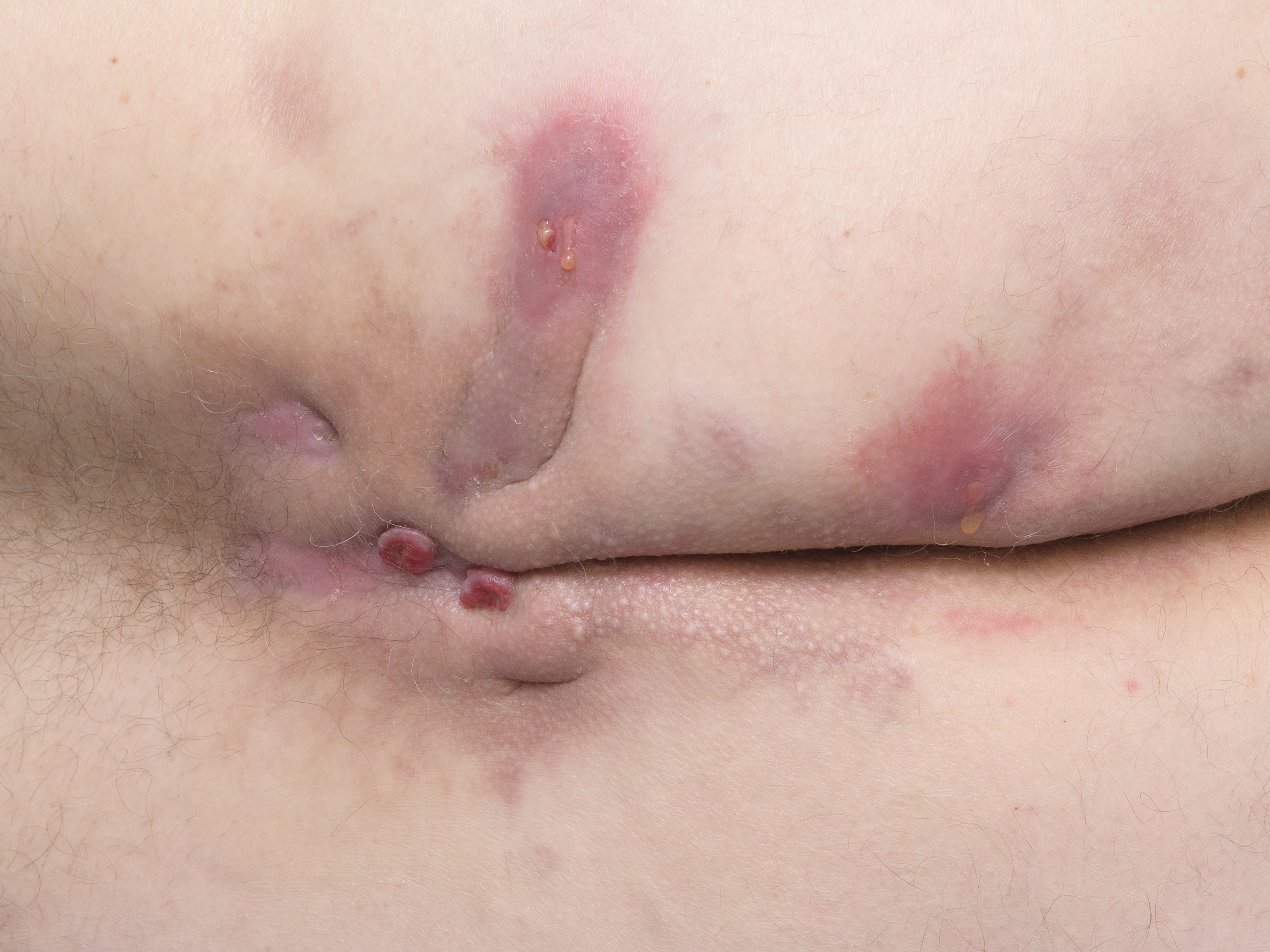
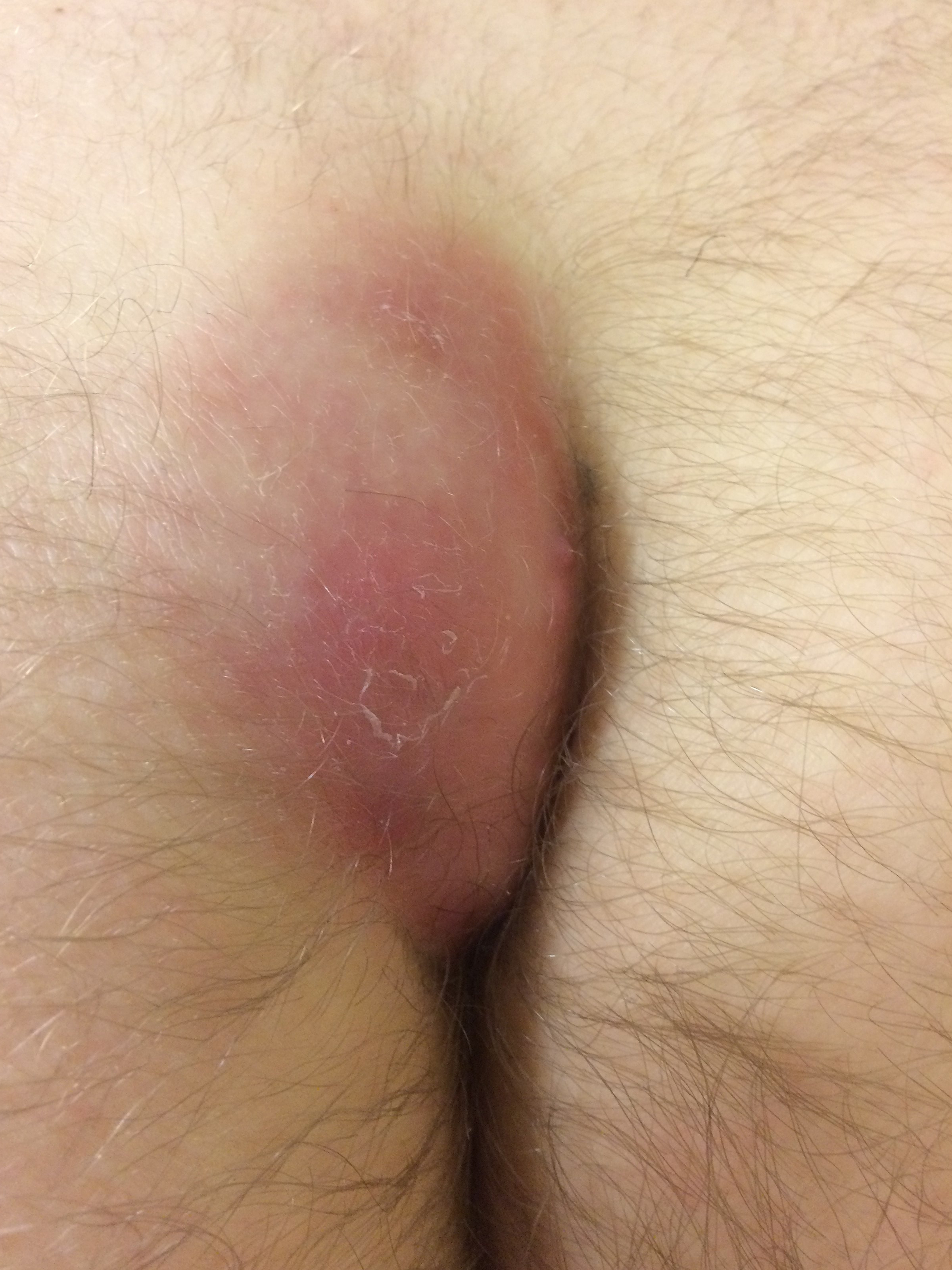
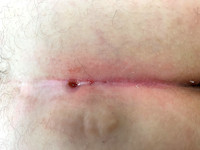
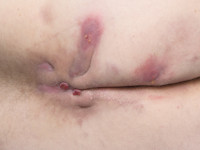
INTRODUCTIONHere you'll find a general overview of the symptoms and causes of a pilonidal cyst, as well as the most common treatment options. It's important to remember that when diagnosing a condition, the situation can be different for everyone.WHAT IS A HAIR NEST CYST?A pilonidal sinus (sinus pilonidalis) is usually located in the cleft of the buttocks. It's a cavity beneath the skin, which connects through the skin to the outside. This connection can be seen as a small hole or a small indentation in the skin. A pilonidal sinus can contain hair and can easily become infected (a pilonidal abscess).
 |
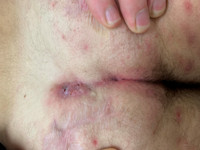 |
| pilonidal sinus |
pilonidal sinus |
 |
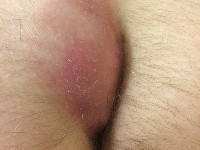 |
| pilonidal sinus |
pilonidal abscess |
Besides inflammation, a pilonidal cyst can also cause pain and discharge of fluid and/or blood. Depending on the symptoms, surgical treatment may be recommended. After surgery, a pilonidal sinus can recur. This usually occurs within three years. The condition is virtually non-existent after the age of forty.HOW DOES A SINUS PILONIDALIS DEVELOP?The cause of the condition is not yet entirely clear. In some patients, it is related to excessive hair growth in the intergluteal cleft. Hair can also be found in a pilonidal sinus, but this is not always the case. It is thought that these hairs grow in from outside, because microscopic examination of removed pilonidal cysts does not reveal any hair follicles in the cyst wall. If excessive hair growth is a factor, hair removal in the area can be helpful. Laser hair removal is now also available. This can prevent the condition from spreading and/or recurring. In some patients, excessive hair growth is not a factor at all. In that case, hair removal cannot prevent the condition.WHAT ARE THE TREATMENT OPTIONS?If the pilonidal cyst is calm and there are no or virtually no symptoms, the area can usually be kept calm with regular shaving and good hygiene.
If symptoms are bothersome, surgery may be considered. This can be performed under general anesthesia, as the extent of the condition is not always easy to assess externally. For a small pilonidal cyst, surgery can be performed under local anesthesia.
We will discuss with you how the procedure will be performed in your specific case. We will also discuss whether the treatment will be performed as an outpatient clinic or whether it would be wiser to admit you to the hospital for a few days.THE OPERATIONDuring the surgery, the pilonidal cyst is removed. An operation for a pilonidal cyst takes approximately thirty to forty-five minutes.
Depending on the extent of the condition and the degree of inflammation, the surgical wound care will be determined. The wound may be left completely open, partially closed, or sometimes completely. In any case, wound healing will be monitored on an outpatient basis.POSSIBLE COMPLICATIONSNo procedure is without the risk of complications. This procedure also carries the usual risks of surgical complications, such as thrombosis, pneumonia, postoperative bleeding, and wound infection.
Because the wound is often left open, the area can sometimes leak blood. In the event of significant postoperative bleeding, you should contact the hospital.
An advantage of leaving the wound open is that wound infections are unlikely, if at all. However, wound healing can be slow due to the formation of "proliferative tissue" (hypergranulation).THE AFTERTREATMENTDue to the location of the wound, some problems are expected in the first few days after surgery. These will primarily be pain, especially when sitting or lying on your back. Mild painkillers (such as paracetamol) can relieve the pain. The pain will gradually disappear.
Starting the day after surgery, you may rinse the wound in the shower two to three times a day, after which you can pat/dry it with gauze. Then, cover the wound with gauze and secure it with adhesive bandages. The nursing staff will instruct you so that you can easily care for the wound yourself after just a few days.
Upon discharge from the hospital, you will be given an appointment for a check-up at the outpatient clinic and a prescription for dressings.
Hair removal and good hygiene are very important. You should begin this from the start of treatment until at least after the wound has healed, but preferably longer. These measures are necessary to prevent recurrence of the condition. |