|
SEBORRHEIC DERMATITIS |
 |
 WHAT IS SEBORRHEIC DERMATITIS? WHAT IS SEBORRHEIC DERMATITIS?
Seborrheic dermatitis (seborrhoeic eczema, eczema
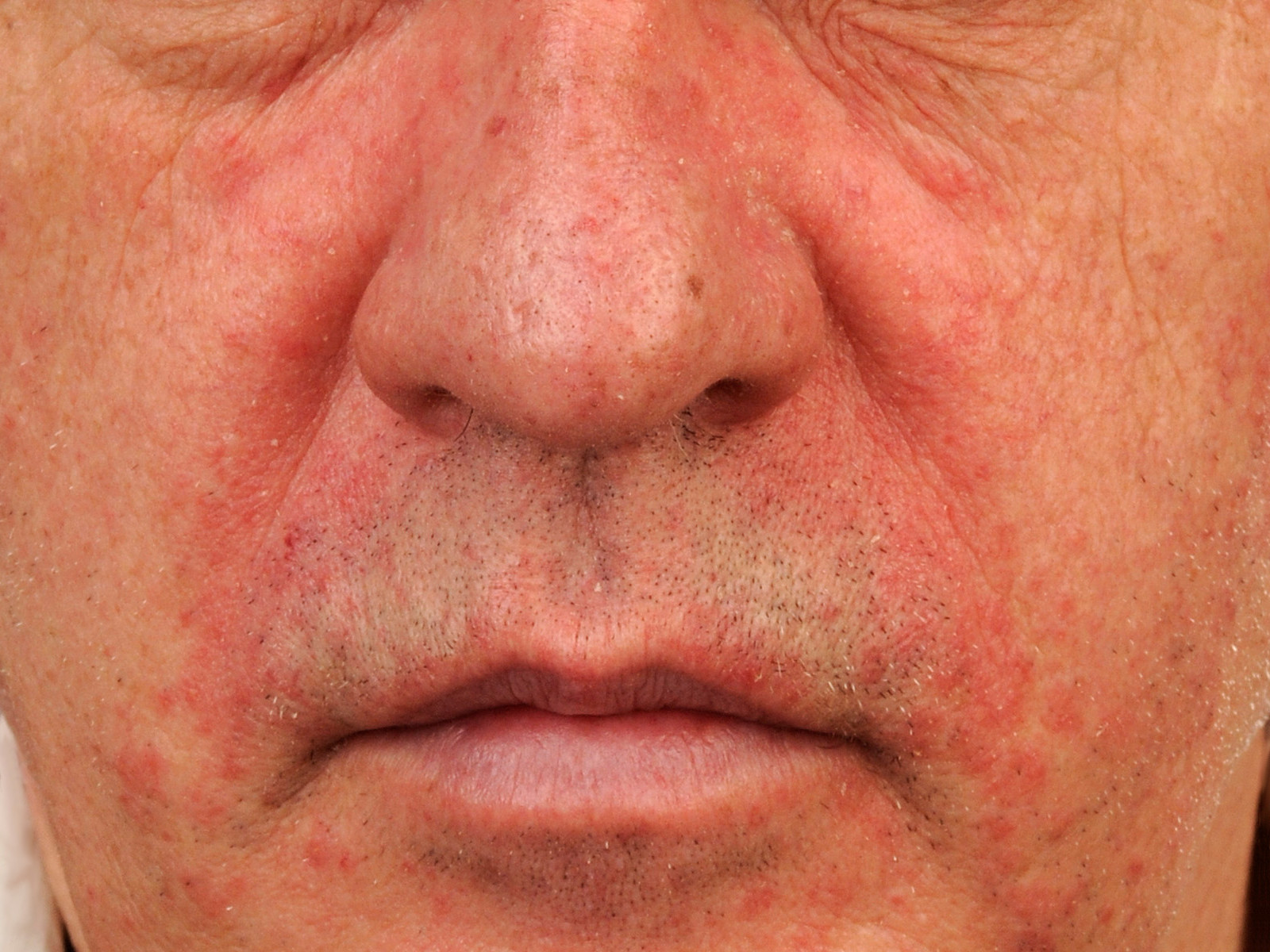
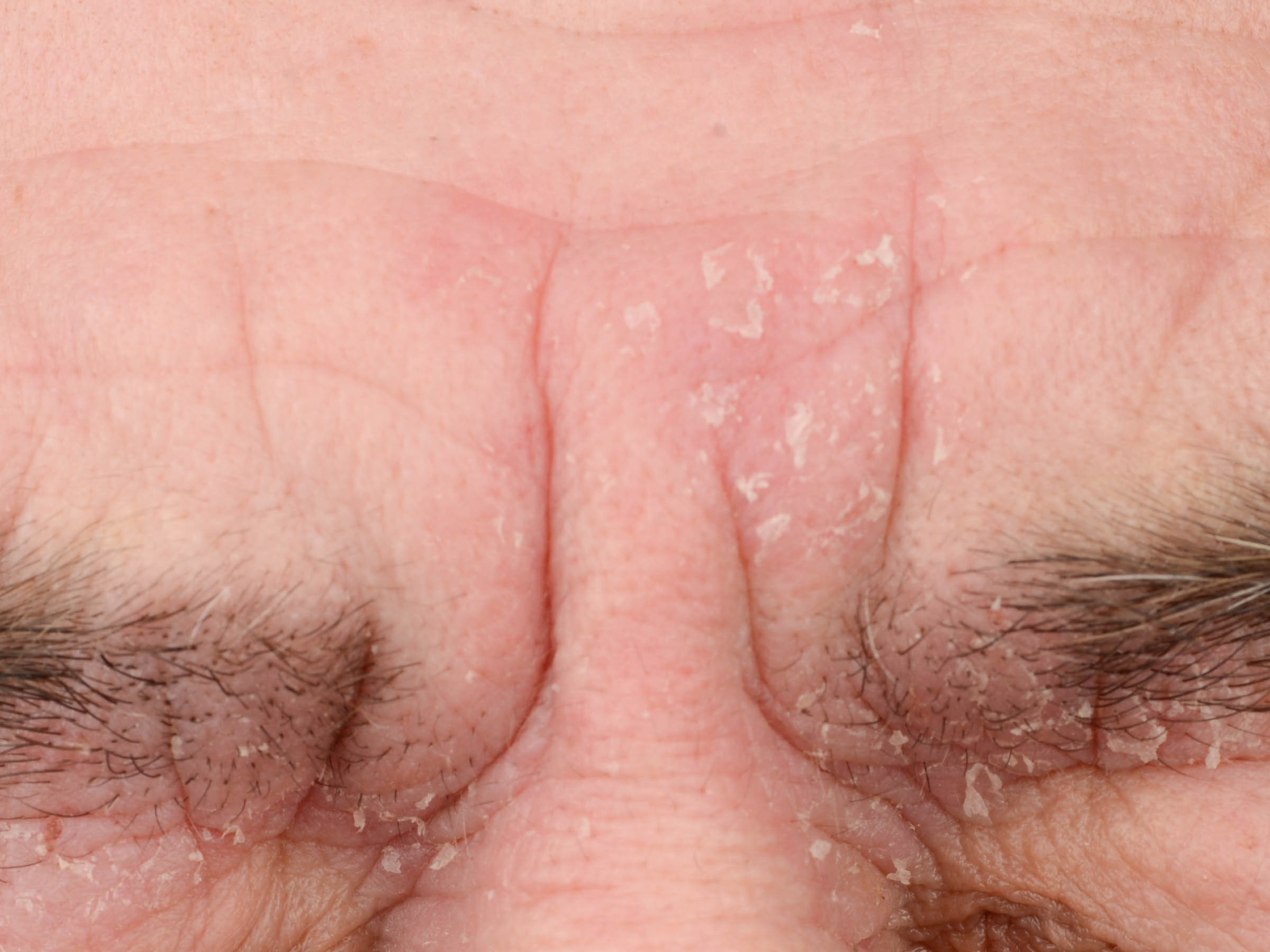
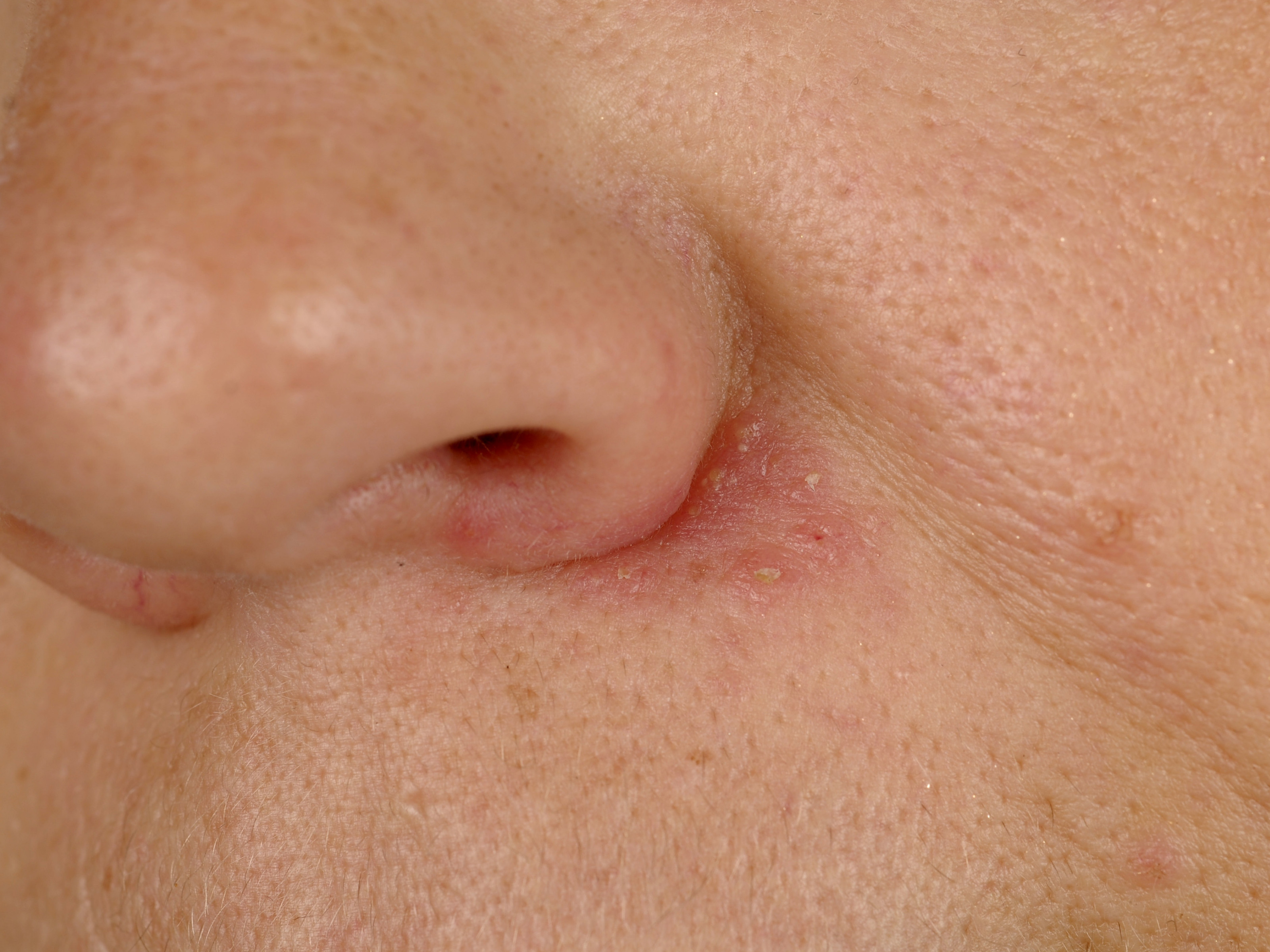
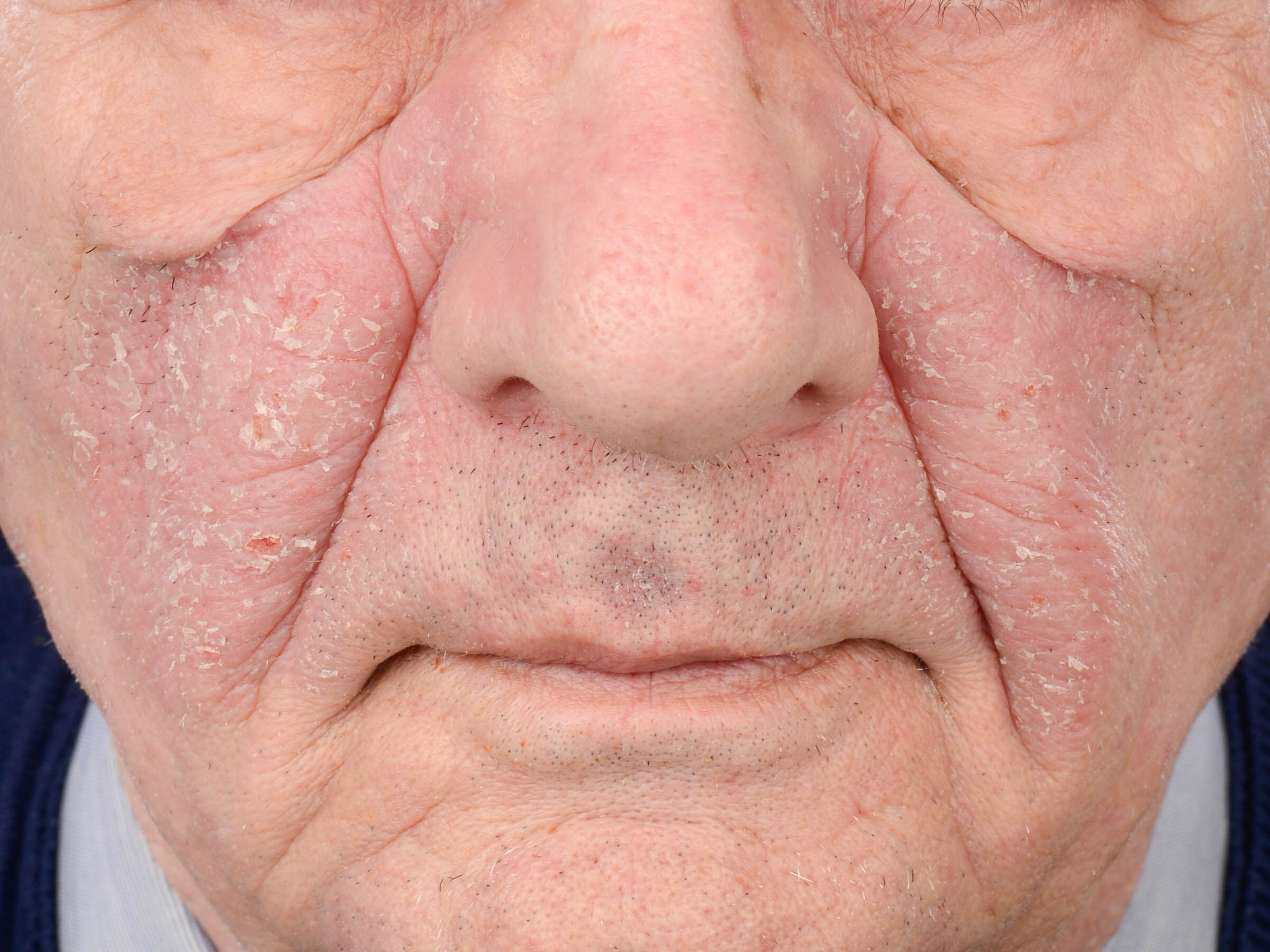
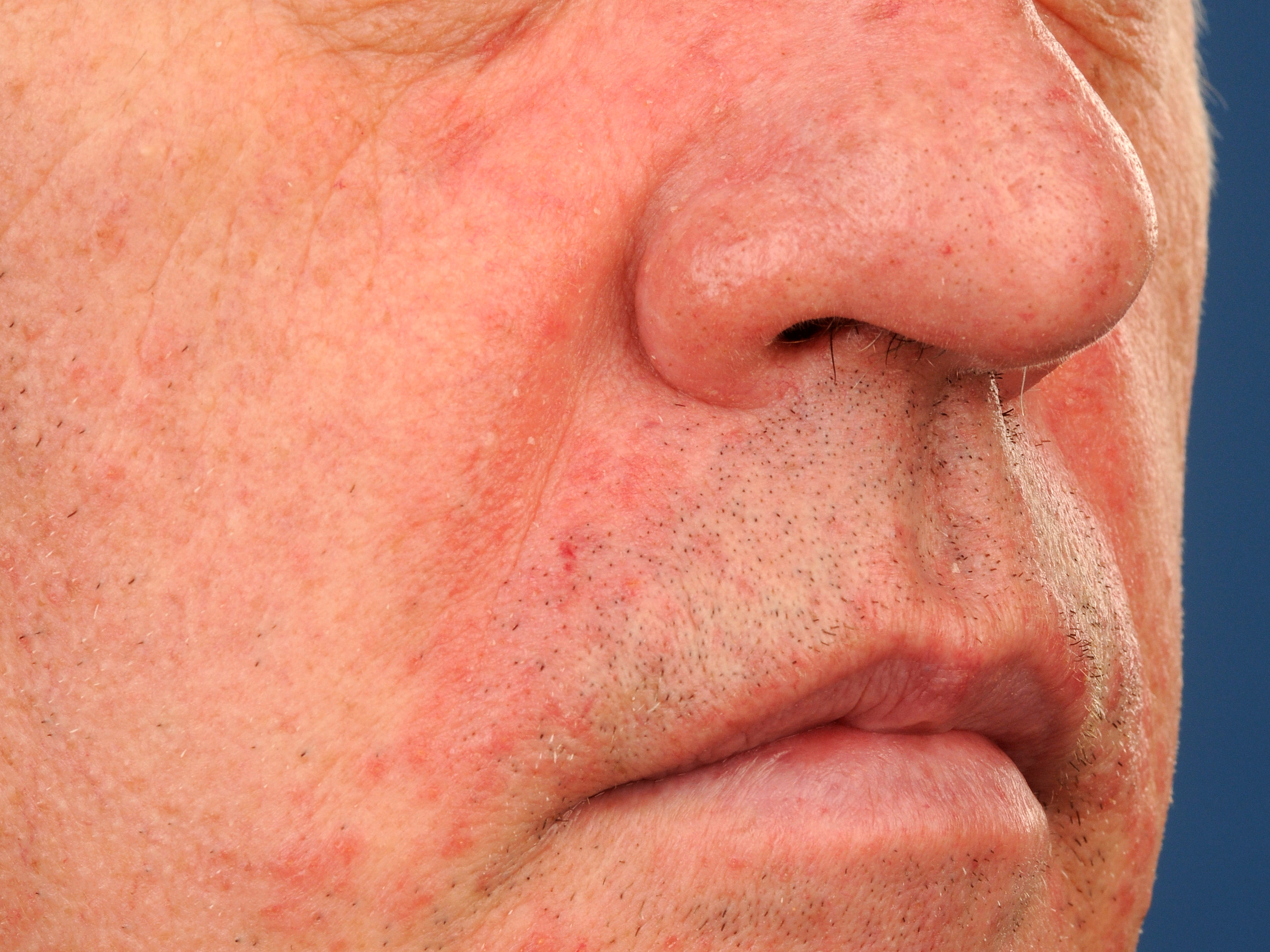
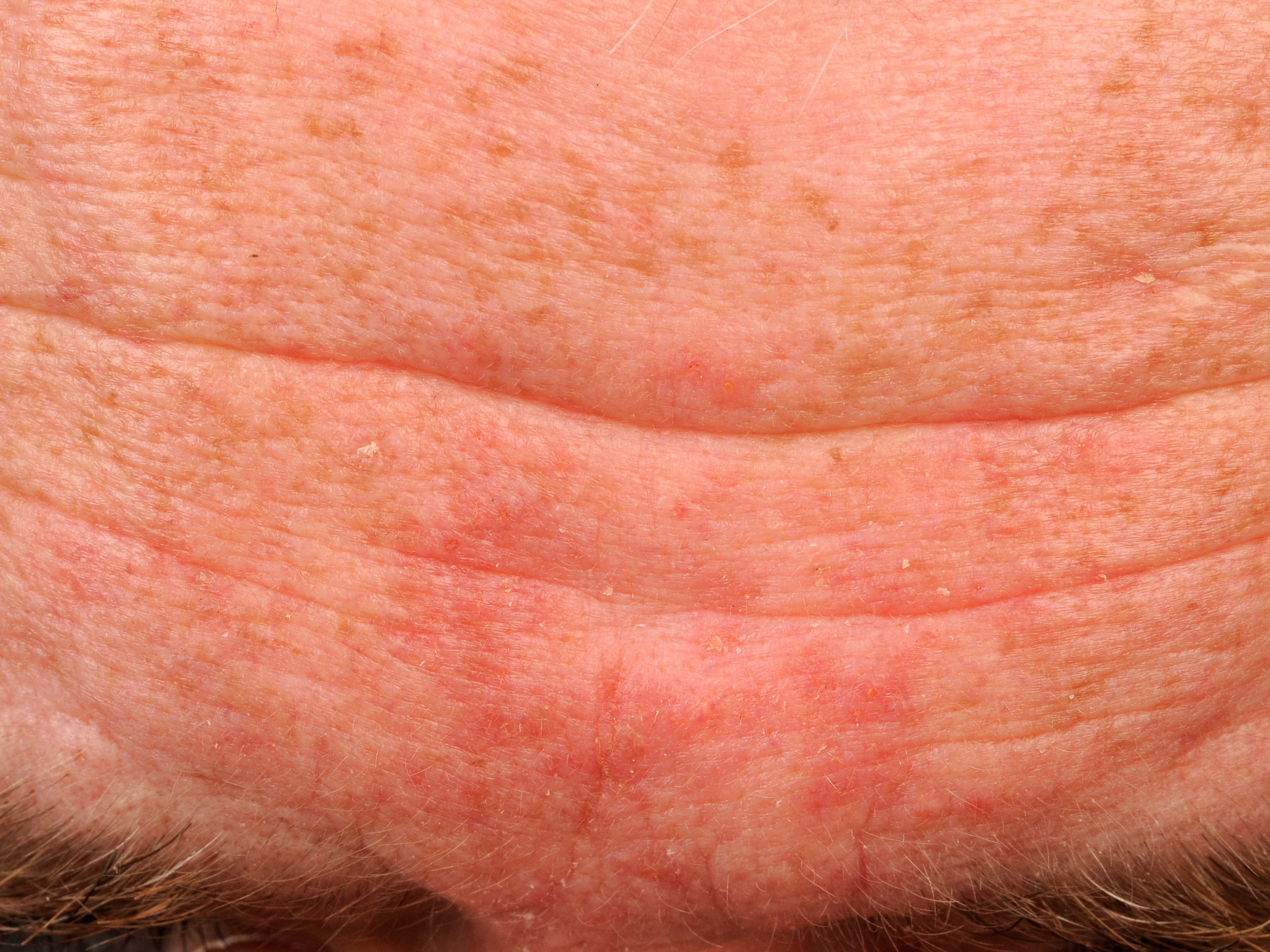
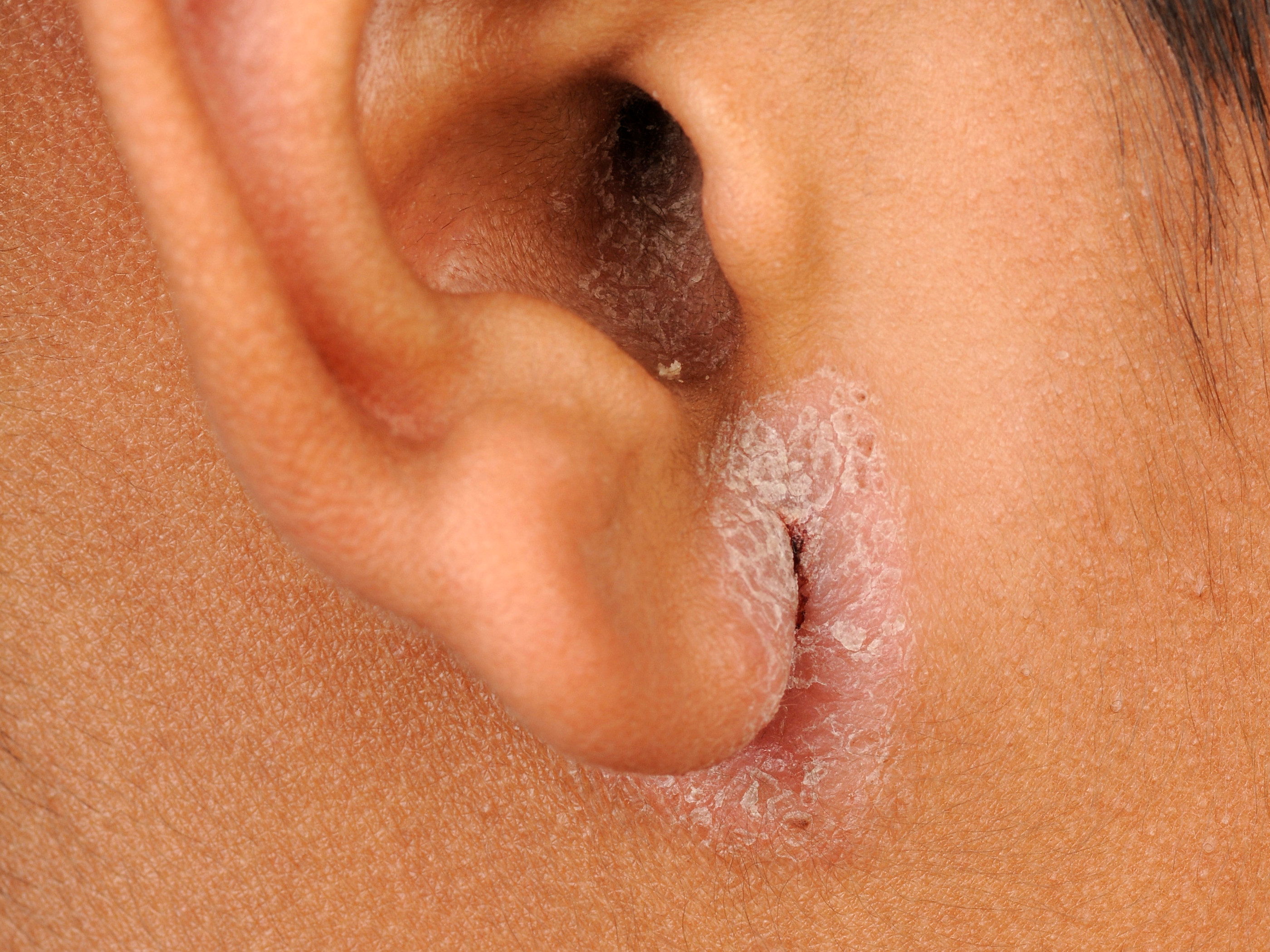
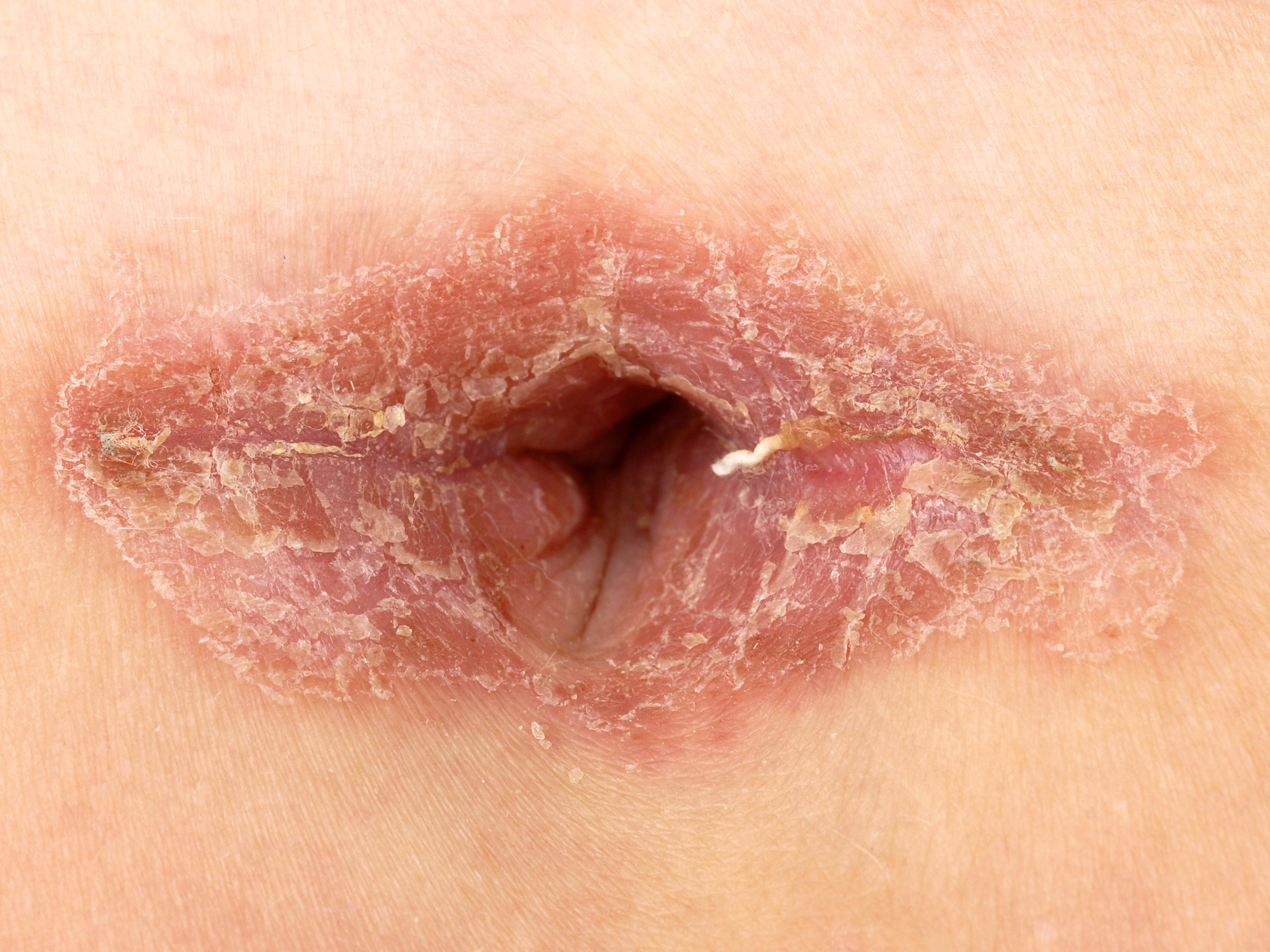
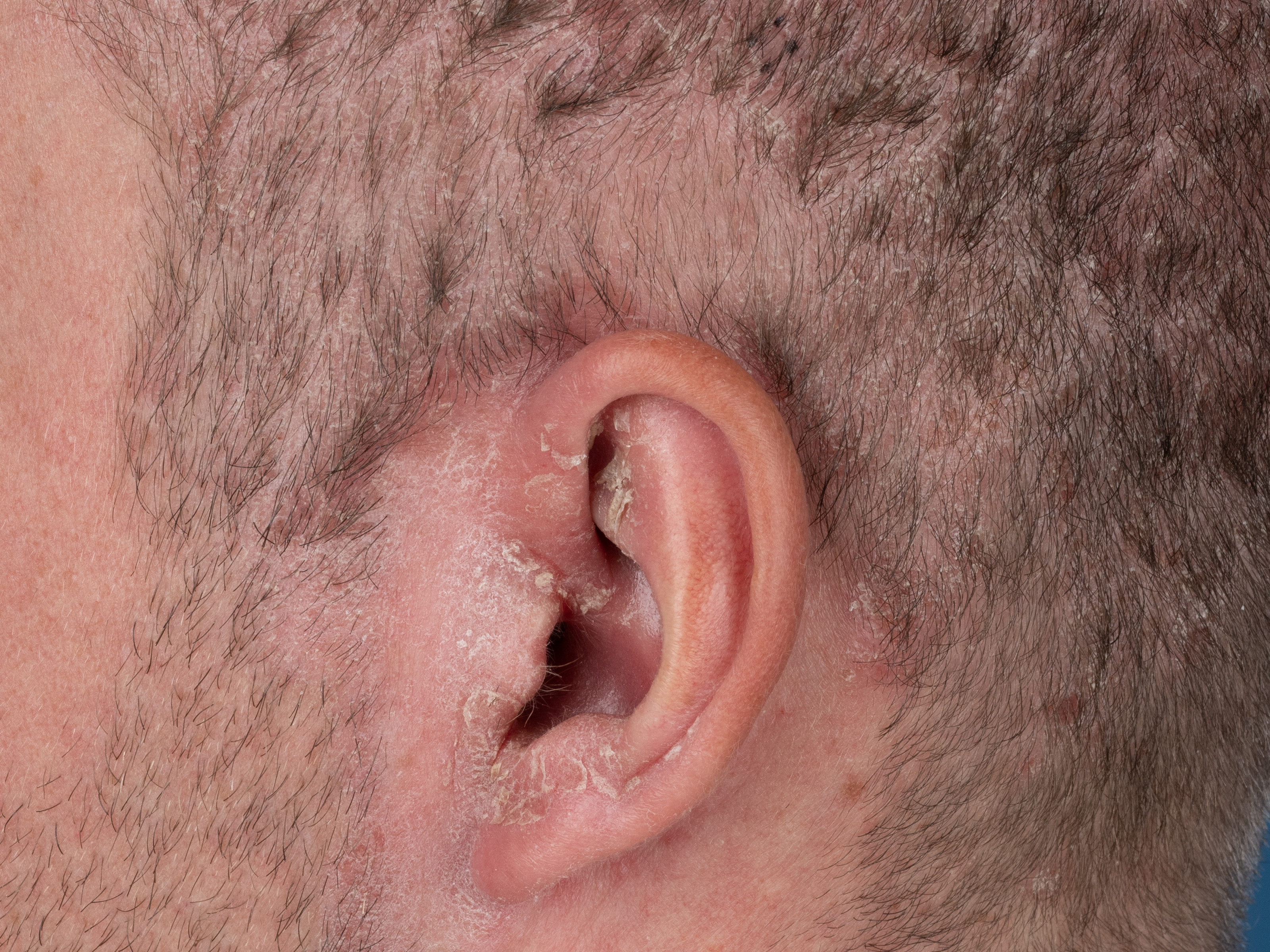
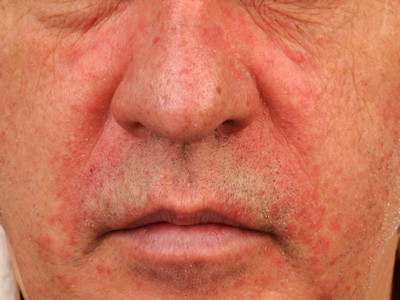
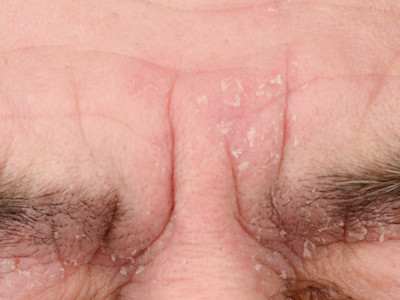
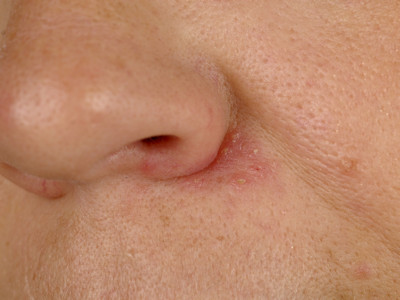
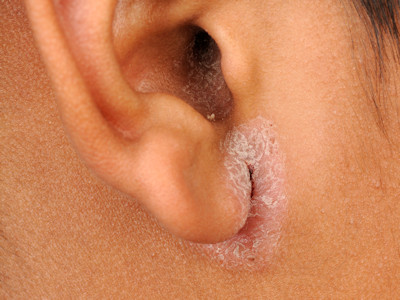
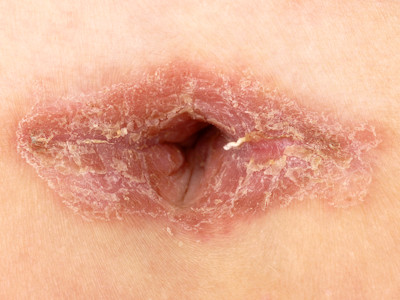
seborrhoicum) is a mild form of eczema that causes itching, redness, and flaking on the face, particularly around the eyebrows and in the folds next to the nose. These are the most common areas, but it can also appear behind the ears or along the hairline. Sometimes it spreads to the folds (navel, under the breasts, the fold of the abdomen, the groin, the cleft of the buttocks, and around the anus), and it can also appear around the eyelashes.
 |
 |
 |
|
Seborrheic eczema in the classic
preferred areas: the folds next to the
nose and the eyebrows. |
WHO GETS SEBORRHEIC DERMATITIS?
Seborrheic eczema is common, estimated to affect 5% of the population. It is more common in men than women. It can be an annoying, itchy, and sometimes disfiguring skin condition, but it is otherwise harmless. It develops in perfectly healthy individuals, is not related to any underlying illness, and is not contagious. It begins around puberty and is most active in young adulthood.
It comes and goes, sometimes disappearing completely. Under certain circumstances, it can reappear.
It is rare in childhood. It can occur in newborns, but then it is called "cradle cap" and
looks differently, as yellowish crusts on the top of the head.
The eczema is easily treated with simple remedies (creams and ointments), but after stopping treatment, it can return, just like dandruff.
HOW DOES SEBORRHOEA DEVELOP?
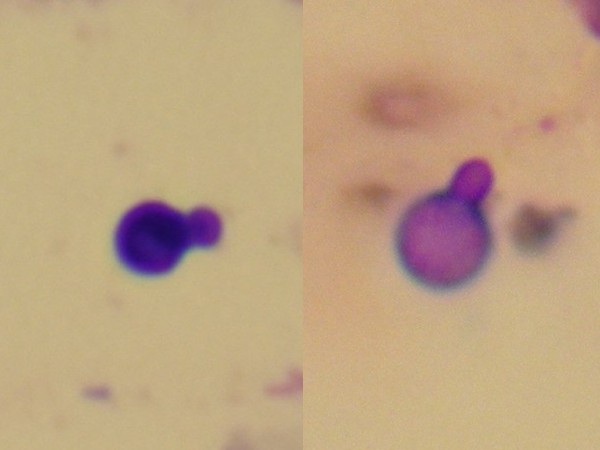
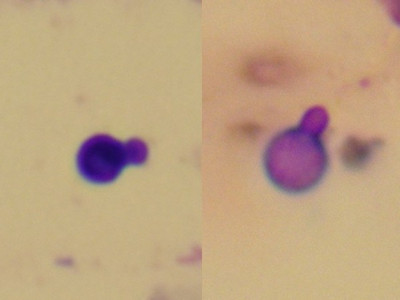
It is believed that seborrheic eczema in adults is caused by skin irritation caused by a yeast that lives on the skin. The yeast (a type of fungus) in question is called
Pityrosporum ovale, also known as Malassezia furfur. This yeast is found on everyone's skin and thrives on the
thin layer of fat that is always present on the skin. People with
fatter skin likely have more of these yeasts on their skin than people with
dry skin. It's also possible that the composition of the
fat layer varies between individuals. This could explain why seborrheic eczema runs more frequently in certain families. It's also possible that the amount of yeast doesn't vary, but that some people react more severely than others. Emotional stress can aggravate seborrheic eczema, as can low temperatures in autumn and winter and dry air in centrally heated rooms. Sometimes the condition worsens in someone who needs to be hospitalized for a while.
The Malassezia
yeast, which lives on the skin, can also cause other problems. In some people, it irritates the scalp, causing redness and flaking, also known as
dandruff. Dandruff is
actually a form of seborrheic dermatitis (scalp
dermatitis). Both conditions,
dandruff and seborrheic dermatitis (eczema) on the face or elsewhere on the body, can occur simultaneously. The presence of too many of the same yeasts on the trunk can cause so much irritation that discoloration occurs: lighter patches alternating with darker patches. This is called
pityriasis versicolor. The yeasts can also irritate hair follicles, causing small pimples. This is especially common on the back, can be extremely itchy, and is called
pityrosporon folliculitis.
So, the Malassezia yeast can cause various problems in people who are susceptible to it.
 |
|
the yeast Malassezia furfur |
WHAT DOES IT LOOK LIKE?
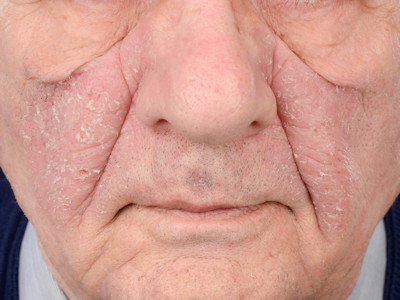
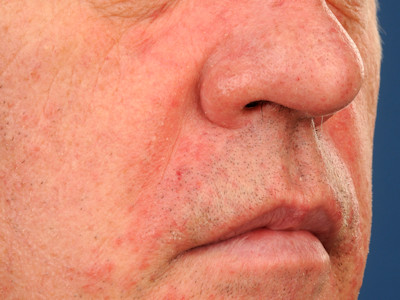
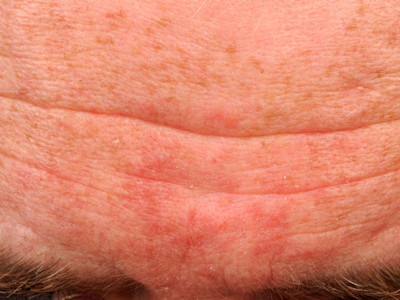
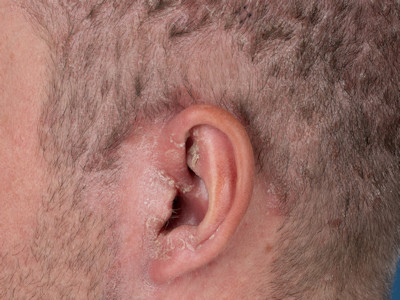
Classic seborrheic eczema in adults involves redness, itching, and flaking in the aforementioned areas. The flakes are often somewhat yellowish in color and can therefore appear greasy. All skin types produce sebum (oil), which comes from the sebaceous glands, and all skin flakes. The skin constantly renews itself, with the top layer of skin always shedding in the form of flakes. With excessive sebum production, a mixture of sebum and flakes forms on the skin. This is called seborrhea. In newborns, this can form a very thick layer on the top of the head, which is difficult to remove (cradle cap).
With dandruff, a variant of seborrheic eczema, the flakes are found on the scalp, along the hairline, or behind the ears. The scalp can sometimes become covered with thick flakes. These flakes are often attached to the hair, and with the loss of flakes, hair can also be lost. This usually recovers, and new hair grows back. See further under dandruff.
 |
 |
 |
| seborroïsch
eczeem |
seborroïsch
eczeem |
seborroïsch
eczeem |
 |
 |
 |
| seborroïsch
eczeem |
seborroïsch
eczeem |
seborroïsch
eczeem |
HOW IS THE DIAGNOSIS MADE?
Usually, the symptoms of seborrheic eczema are so clear that a dermatologist can diagnose the condition visually. Only when there is doubt will further investigation be performed. This may involve examining some skin flakes under a microscope, or an allergy test if other forms of eczema are suspected, such as allergic contact dermatitis or atopic eczema. Occasionally (rarely), it is necessary to remove a small piece of skin under local anesthesia (a skin biopsy) for further examination.
WHAT ARE THE TREATMENT OPTIONS?
Treatment focuses on reducing the number of yeasts on the skin and dampening the inflammatory response. Yeasts and fungi can be treated with antifungal agents, which are available as topical creams or tablets that work internally. Anti-inflammatory creams (topical corticosteroid creams) reduce inflammation. Often, both treatments are combined into a single cream. Light therapy can also be used as an anti-inflammatory treatment. All these treatments suppress the symptoms and soothe the skin, but stopping treatment can cause the eczema to return. If this happens, treatment must be resumed.
Ketoconazole
Ketoconazole is an anti-yeast and anti-fungal agent. It is used as a cream, and there is also a lotion for the scalp, for dandruff. It can be used in its pure form (ketoconazole 2% cream) or in combination with a topical corticosteroid cream (ketoconazole 2% in hydrocortisone cream or triamcinolone cream).
Topical corticosteroids
Topical corticosteroids are creams or ointments that contain a corticosteroid. Corticosteroids are anti-inflammatory substances. They are substances that are similar in composition to the anti-inflammatory adrenal cortex hormone (cortisol) produced in the body. Corticosteroids are widely used for various skin conditions such as eczema and psoriasis. They are available in different strengths, classified into classes 1, 2, 3, and 4. For the treatment of seborrheic dermatitis, the mildest class (class 1, hydrocortisone cream) is usually sufficient. If that does not provide sufficient relief, a class 2 corticosteroid (for example, triamcinolone cream) can be used. These corticosteroid creams can be combined with an anti-yeast agent such as ketoconazole. Applying the cream to your face once a day is usually sufficient. If all goes well, you can reduce the frequency to 2 to 4 times a week.
The goal is to apply it often enough to keep the seborrheic dermatitis at bay. Applying too much or too often is also not good. Corticosteroid creams can have side effects, especially if too much is used or if too strong a product is used. If you use them according to the above recommendations, they are safe, even for long-term use.
Treatment with tablets
For very severe forms of seborrheic dermatitis, anti-yeast tablets can be prescribed to kill the Malassezia yeast from within. This is rarely necessary. Examples of these tablets are itraconazole or fluconazole.
Anti-dandruff shampoos
Dandruff is also a form of seborrheic dermatitis and is sometimes present simultaneously in people with seborrheic dermatitis on the face. Dandruff can be effectively treated with anti-dandruff shampoos. Shampoos containing ketoconazole or tar are also used. See further under dandruff.
Light therapy
The sun has a beneficial effect on many skin conditions, including seborrheic dermatitis. That's why seborrheic eczema patients often experience less discomfort in the summer. This can be simulated with light therapy (ultraviolet light, UVB lamps). This is rarely necessary, only in severe cases that do not respond to standard treatments. Light therapy is administered in the hospital two or three times a week.
WHAT CAN YOU STILL DO YOURSELF?
Reduce the number of yeasts on th scalp.
Dandruff often improves simply by washing your hair regularly with a simple anti-dandruff shampoo available at the supermarket. Also, maintain good hygiene. For the folds (armpits, belly fold, navel, under the breasts, groin, buttocks), it's important to dry the skin thoroughly after your daily shower.
WHAT IS THE PROGNOSIS?
Seborrheic eczema is a chronic condition. It can be easily controlled, but after stopping treatment, the eczema can worsen or return. On the other hand, it can also spontaneously resolve for months or years.
|