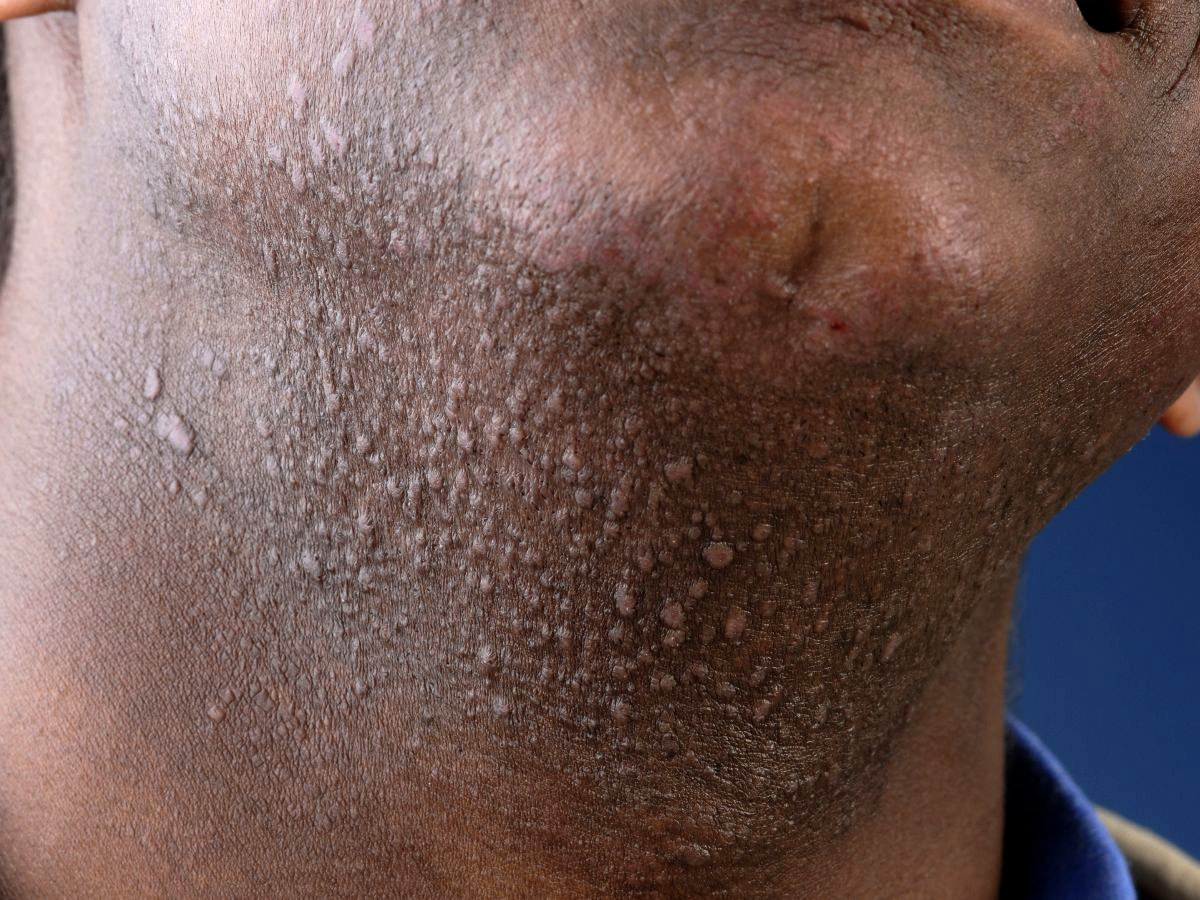
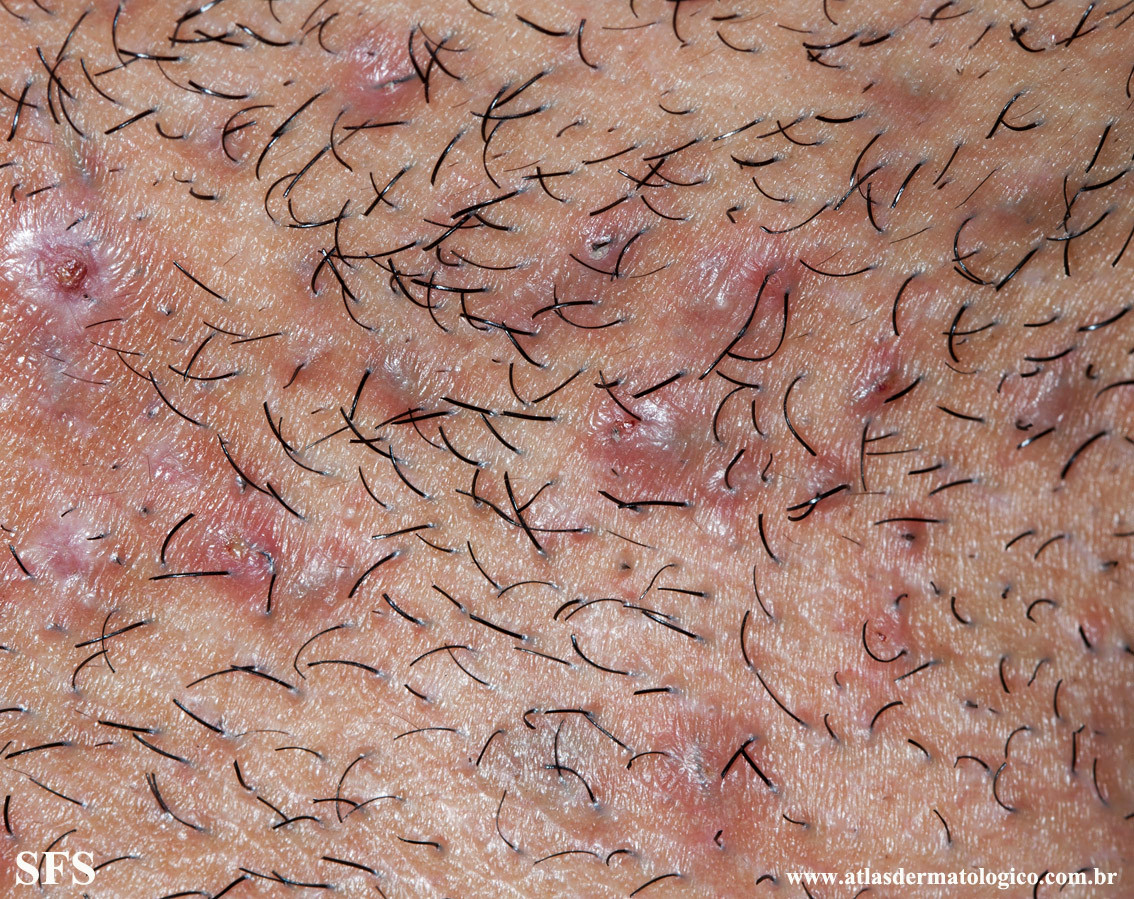
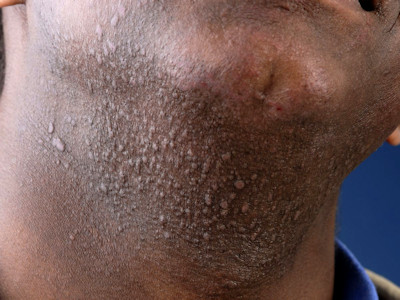
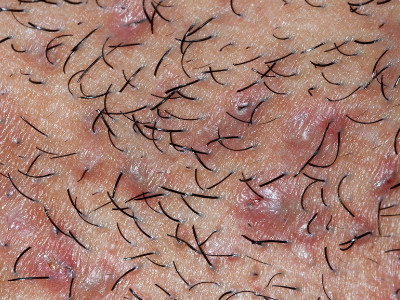
WHAT IS PSEUDOFOLLICULITIS BARBAE?Pseudofolliculitis barbae (razor bumps)is a skin condition in which pimples and bumps develop in the beard area. It is caused by ingrown hairs . Hairs should normally grow neatly and straight out from a hair follicle. Sometimes this goes wrong and a hair doesn't grow out properly, but grows back into the skin, right through the wall of a hair follicle. These "ingrown hairs" cause inflammation: a bump or pimple develops around the hair. A major cause of ingrown hairs is shaving too close. That's why they are also called " razor bumps . " The second major cause is curly hair, especially kinky hair .WHAT DOES PSEUDOFOLLICULITIS BARBAE LOOK LIKE?Bumps develop around the beard hairs in the beard area, especially on the neck, but sometimes also on the cheeks. Sometimes a hair emerges from the bumps, and sometimes a pus-filled head appears. They can become inflamed and itchy. Sometimes, thickened scars ( keloids ) develop in the area. Ingrown hairs can also appear on the neck. A similar pattern can occur in women who shave their armpits and pubic hair.
 |
 |
| pseudofolliculitis barbae |
ingrown hairs |
Photo right: Samuel Freire da Silva - Dermatology Atlas (Creative Commons License 3.0 ).
WHAT IS THE CAUSE OF PSEUDOFOLLICULITIS BARBAE?The two main causes of ingrown beard hairs are shaving too short and having frizzy hair . If the hairs are very curly, as with frizzy hair, they can also more easily grow into the wall of the hair follicle. Therefore, pseudofolliculitis barbae is much more common in Afro-Caribbean men (with frizzy hair): approximately 60% suffer from it, while less than 5% of white men have it. Afro-Caribbean men are also more likely to develop thick scars, called keloids. Keloids mainly occur in areas like the neck, chest, and ears. Afro-Caribbean men can be doubly unlucky: they suffer from ingrown frizzy hairs on the neck and excessive scarring (keloids) on the neck, which causes scarred, hard bumps to develop around each ingrown hair. This is called acne keloidalis nuchae (nuchae means neck). Frizzy hair can spontaneously ingrown into the wall of a hair follicle, but the problem usually arises from shaving, especially from cutting the hairs too short. The problem is that the latest shavers, and even the latest generation of razors, are specifically designed to cut the hairs as short as possible. "Lift and cut" razors, where the hair is lifted slightly by the first blade and cut slightly below skin level by the second blade, are completely unsuitable for men with pseudofolliculitis barbae (razor bumps), and are ideal for white men who don't need to shave as often. However, for Afro-Caribbean men and anyone with razor bumps, they're not the right razors. Razors with multiple blades can also cause this effect. Tightening the skin, going over the same area too often, or pressing too hard all have the same undesirable effect: hairs cut too short.
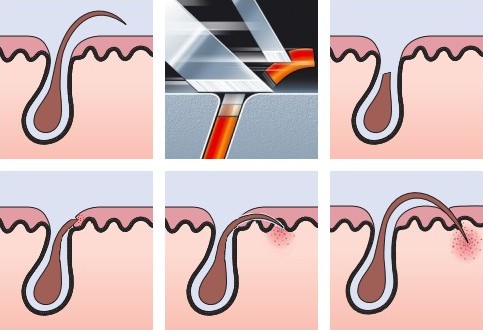
The cause of ingrown hairs: Modern razors have two blades in quick succession.
The first blade lifts the hair, the second blade cuts it.
The hair then retracts below the skin level.
As the hair grows back, it burrows into the wall of the hair follicle.
This is especially common with curly hair (kinky hair).
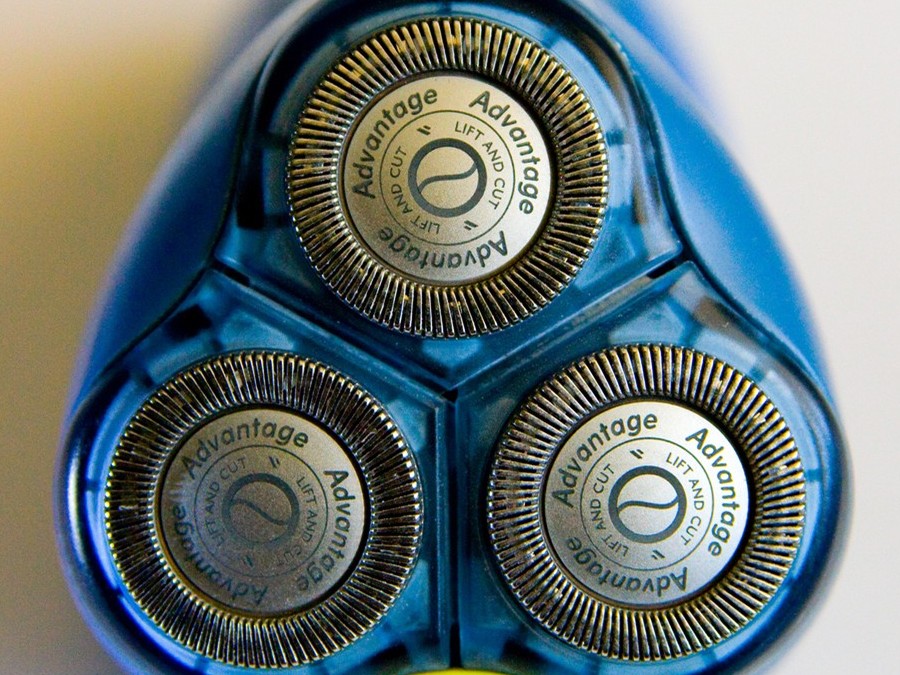
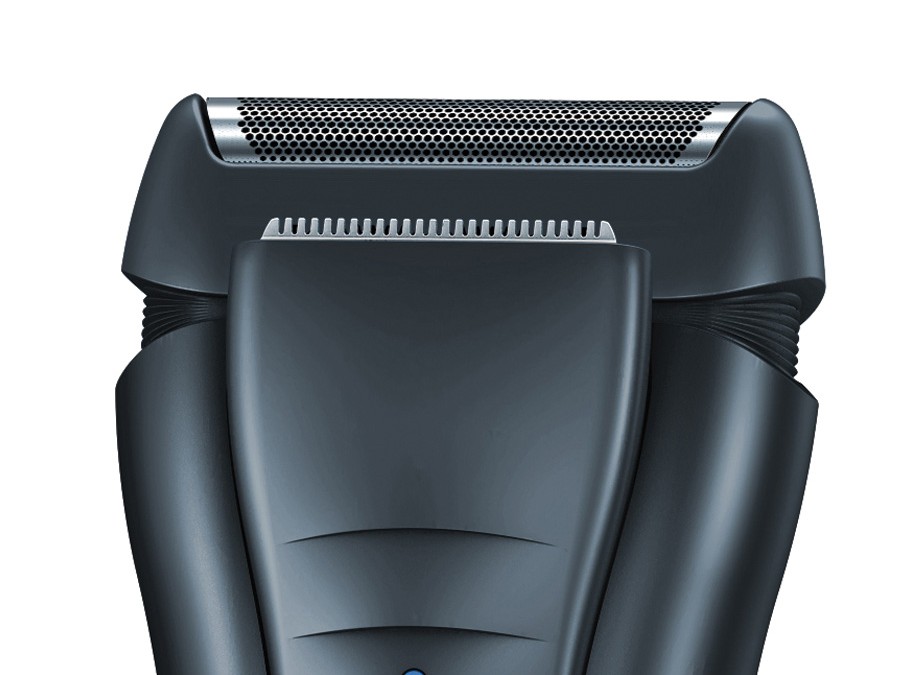
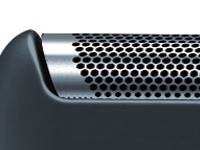
WHAT IS THE TREATMENT OF PSEUDOPHOLLICULITIS BARBAE?One way to get rid of them is to grow a beard, but that's not acceptable for everyone. Another option is to grow a beard temporarily (3-4 weeks) and use medications during that period to reduce the inflammation that develops around the ingrown hairs. Examples of medications that can reduce inflammation include anti-inflammatory lotions such as Topicorte lotion (corticosteroid lotion), antibiotic lotions such as clindamycin lotion, or taking anti-inflammatory antibiotics such as minocycline, doxycycline, or tetracycline. Then, once the condition has calmed down, switch to a better shaving technique, making sure the hairs aren't cut too short.WHICH SHAVERS OR RAZOR SHOULD I USE?Shavers:Don't use shavers with "lift and cut" technology, where two blades cut hairs in quick succession. The triple-headed Philishave shavers use this technology. They shave very well, but they shave too closely (too short) for ingrown hairs. A model with a curved blade behind which single blades move back and forth (the Braun type) is already better. Even better is a professional or luxury shaver with a trimmer setting (depth adjustment). These shavers can be adjusted to cut hairs just 1 mm above the skin. Seek advice from a reputable specialty store; if necessary, ask your hairdresser for advice.
 |
 |
 |
| unsuitable razor |
no 'lift and cut' technique |
suitable razor |
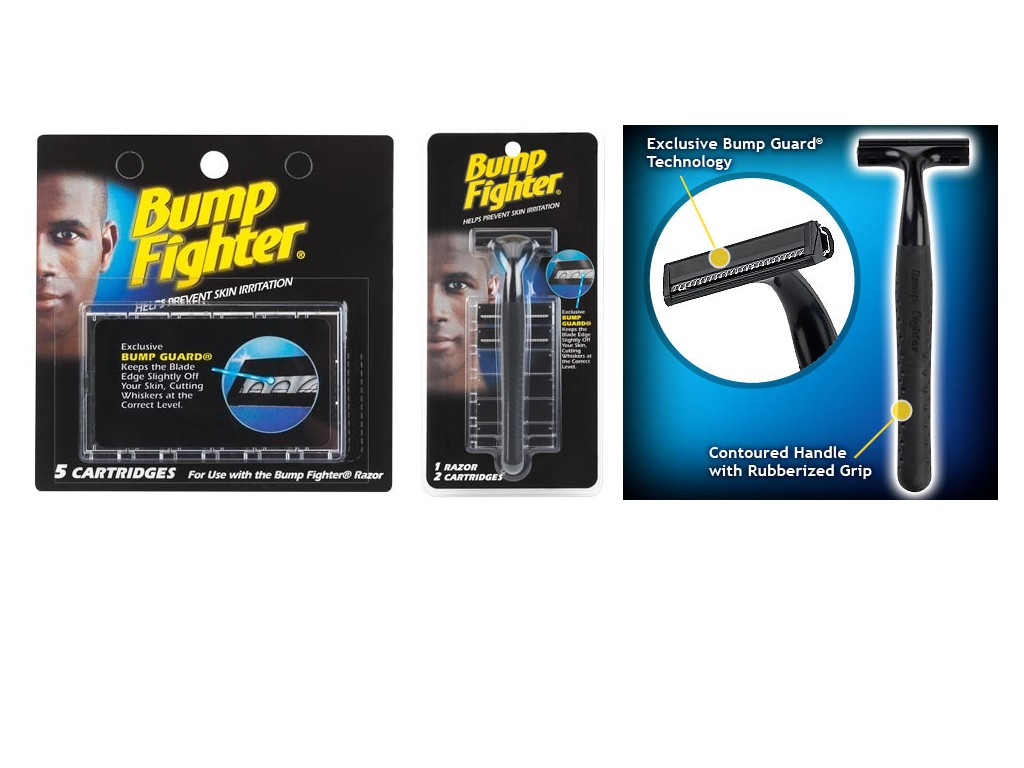
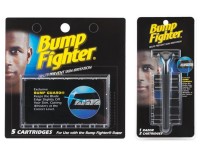
Razors:Modern razors sometimes have three to five blades in quick succession, which can also cause hairs to be cut too short. Special razors exist for pseudofolliculitis barbae. These often consist of just one blade and spacers. A well-known American brand is the Bump Fighter . You can find out where this razor, or similar types, can be purchased or ordered online.
 |
| bump fighter razor |
WHAT ELSE CAN I DO?Tips to prevent razor bumps include:
| - |
don't shave every day but every other day |
| - |
do not use a razor with the 'lift and cut' technique |
| - |
do not stretch the skin and do not push too hard |
| - |
use a professional shaver (trimmer, clipper) that can be adjusted to a safe shaving height |
|
|
| When shaving with a razor: |
| - |
soften the hair well beforehand by soaking it for at least 5 minutes with a hot wet towel |
| - |
use a good shaving gel |
| - |
use special razors like the bump fighter razor ( www.personna.com ) |
| - |
do not stretch the skin |
| - |
shave with the direction of the hair growth, not against it |
| - |
use 1 stroke per area, do not go over the same area multiple times |
Chemical hair removalAn alternative to shaving is chemical hair removal using chemicals that dissolve the hairs. However, these products can be quite irritating to the skin, especially if pseudofolliculitis barbae is already present.Laser hair removalLaser hair removal (laser epilation) of the beard area is also a possible solution. Laser hair removal isn't easy because it can be very deep. Powerful lasers are therefore required. Laser treatment can cause scarring or discoloration. Furthermore, laser treatment is expensive and usually not covered by health insurance. However, for severe cases, it is sometimes the last resort.Treatment by a skin therapist or beauticianThe skin therapist can sometimes loosen the ingrown hairs so they no longer grow into the skin. The skin therapist can also advise on shaving products and techniques. And often (depending on the local organization at the dermatology clinic) the skin therapist also performs the laser hair removal method.WHAT ARE THE OUTLOOK?By changing shaving methods and taking all the aforementioned supportive measures, including a visit to a dermatologist, the condition can improve significantly and sometimes disappear completely. If excessive scarring has developed, it becomes more difficult. Thick keloid scars usually don't disappear on their own, and there's no simple treatment. |