|
PRURIGO NODULARIS |
 |
 WHAT IS PRURIGO NODULARIS ? WHAT IS PRURIGO NODULARIS ?
Prurigo nodularis is a skin condition
that causes intensely itchy bumps. Prurigo means
itching, and the addition of nodularis refers to the bumps. It is also called Hyde's prurigo nodularis, after the doctor who first described it in 1909. Prurigo nodularis mainly occurs in adults and is a chronic condition. It is more common in women than in men.
HOW DOES PRURIGO NODULARIS DEVELOP?
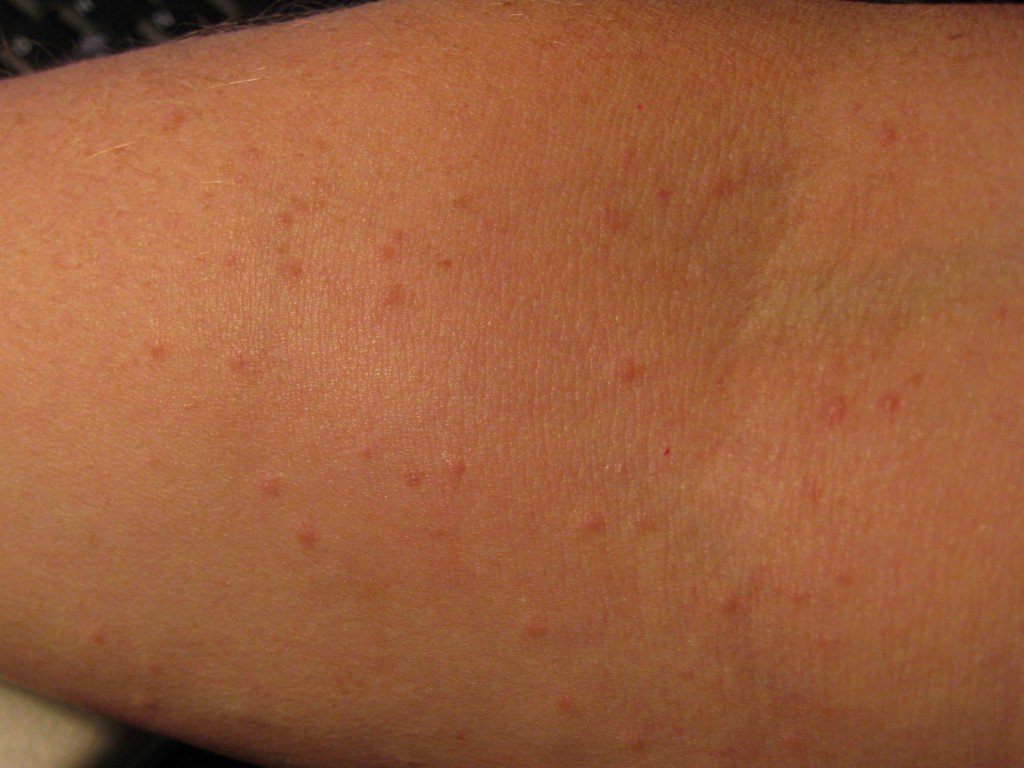
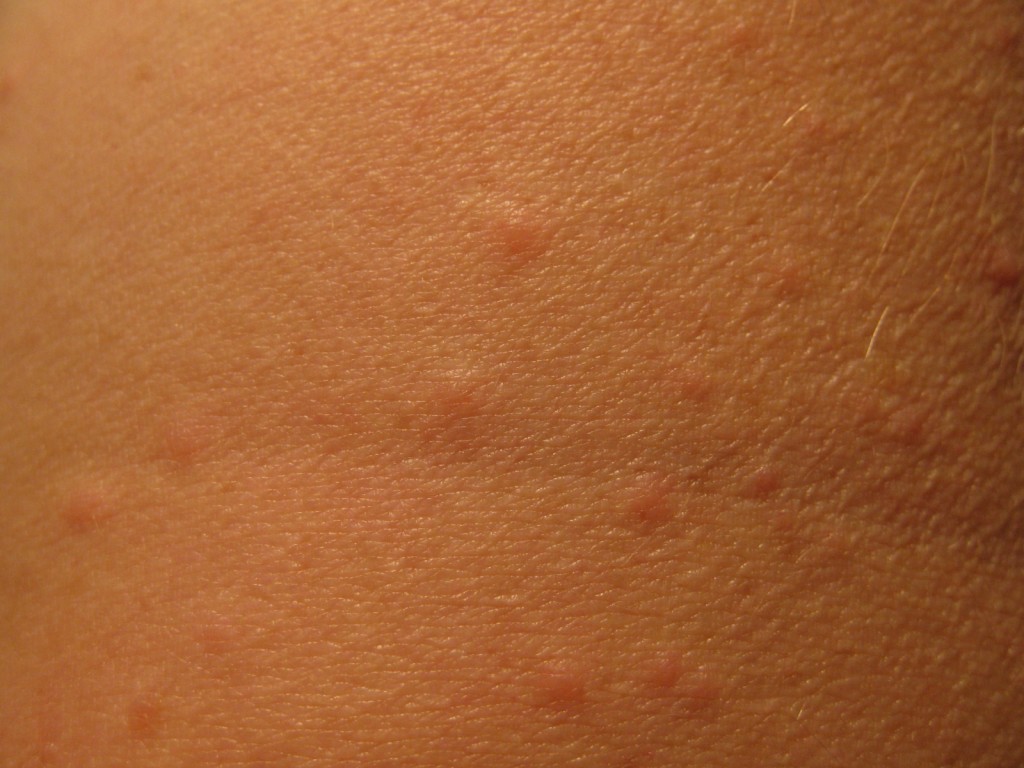
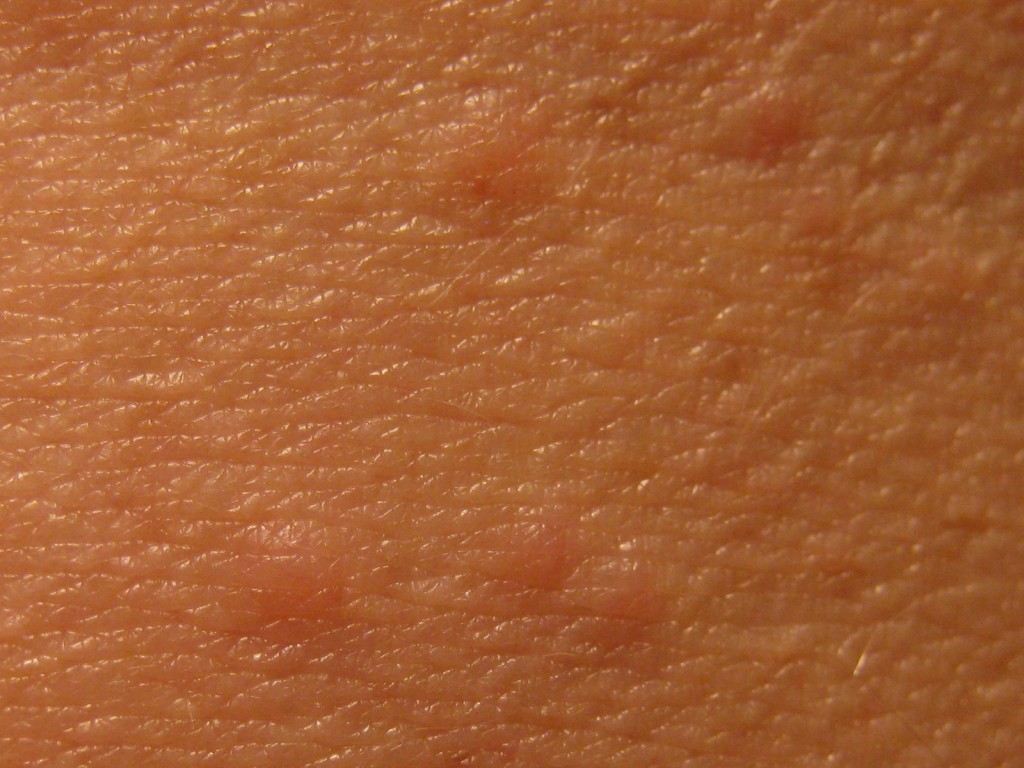
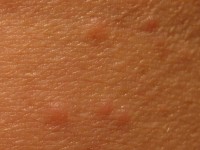
It is not known exactly how prurigo nodularis develops. One theory is that it starts with itching in one spot, or with an acute itchy bump. Acute itchy bumps (prurigo acuta) can appear suddenly, either singly or in groups of dozens, and can be caused by a variety of factors (insect bites, allergies, eczema, etc.). Acute itchy bumps also disappear quickly or are scratched off. Some patients with prurigo nodularis also have these types of acute bumps in between, or had them in the beginning. For many patients, it is unclear which came first, the itching or the bumps.
 |
 |
 |
|
acute prurigo papules |
acute prurigo papules |
acute prurigo papules |
What is clear, in any case, is that the hard bumps are caused by chronic scratching. The continuous mechanical damage to the itchy area leads to the formation of more and more scar tissue and connective tissue. Scratching the itchy bump temporarily relieves the
itch, but during the healing phase, the itching returns, perpetuating the condition. Scratching also occurs unconsciously or during sleep, because the itching stimulus automatically triggers a scratching reflex. Psychological factors, problems, and stress can also play a role, as they can exacerbate the scratching behavior. In addition, prurigo nodularis also causes stress and sometimes sleep problems. People with dry skin or eczema can also develop prurigo nodularis because they suffer from severe itching. In the case of atopic eczema, prurigo nodularis can also develop later in life, with chronic itchy bumps and a lot of scratching. This is also known as Besnier's prurigo.
 |
 |
 |
|
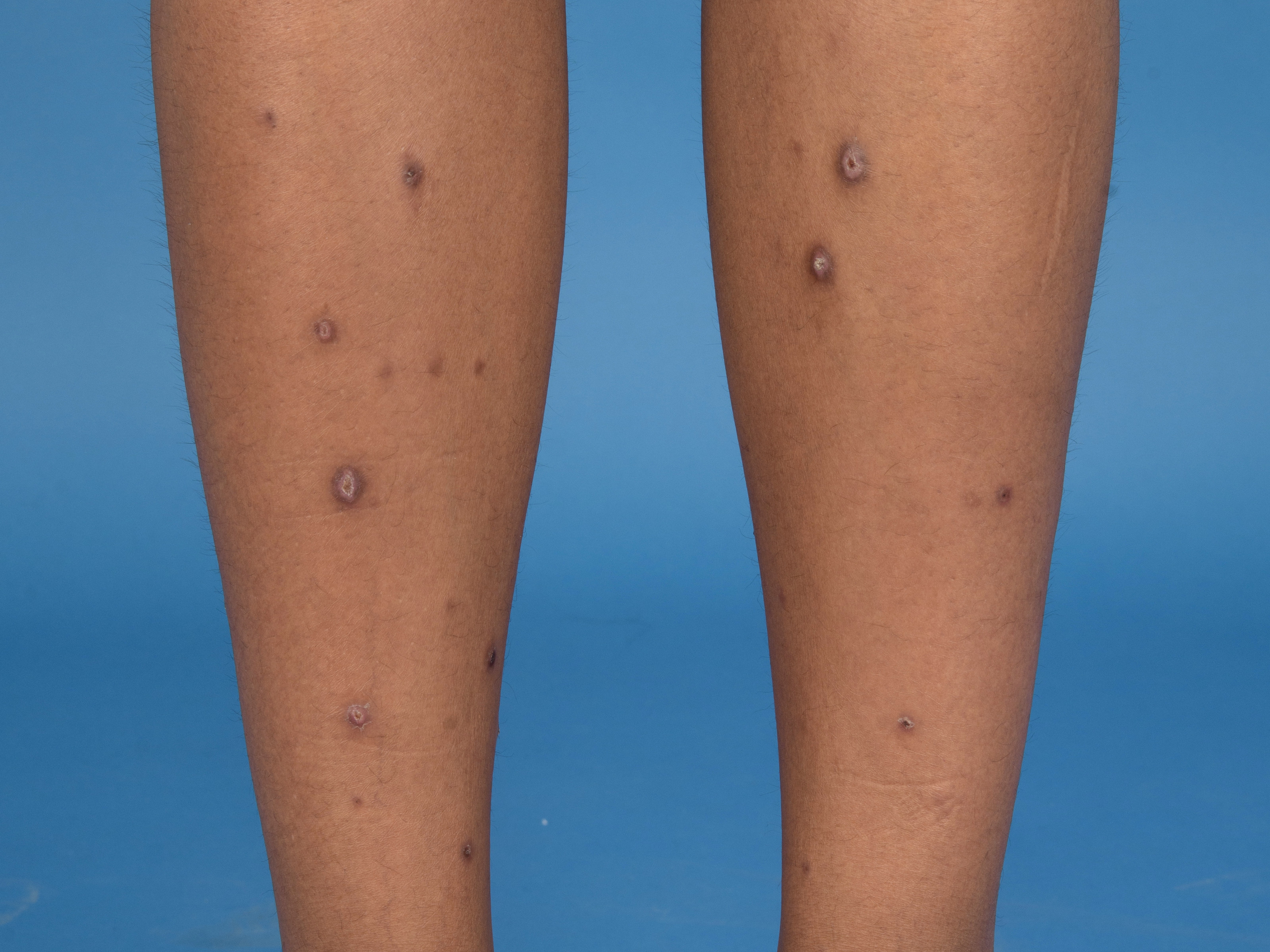
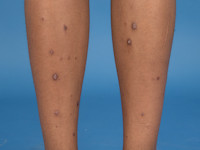
prurigo nodularis |
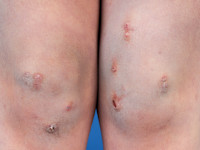
prurigo nodularis |
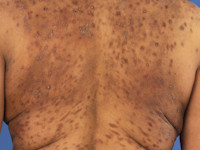
prurigo nodularis |
WHAT DOES PRURIGO NODULARIS LOOK LIKE?
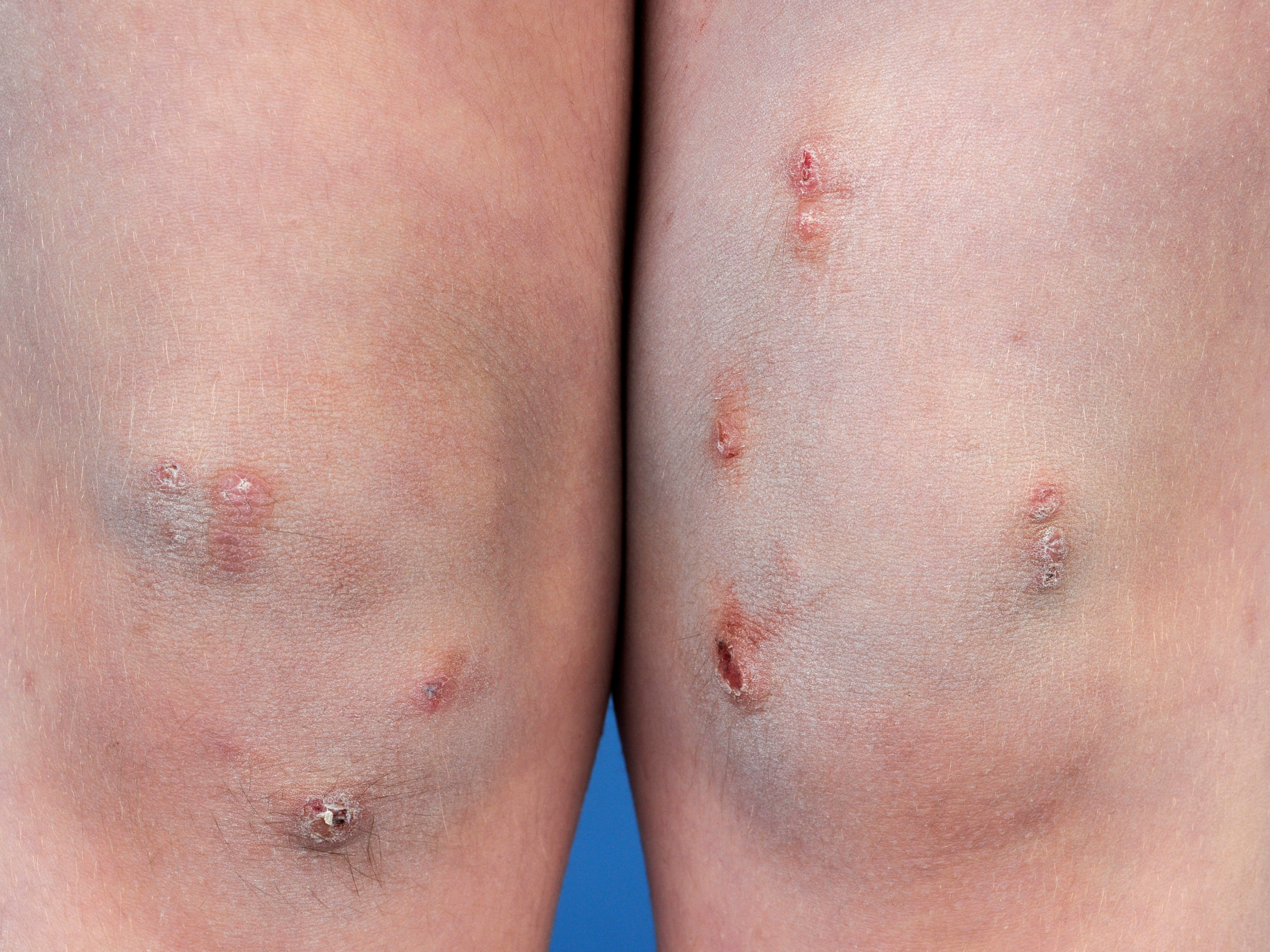
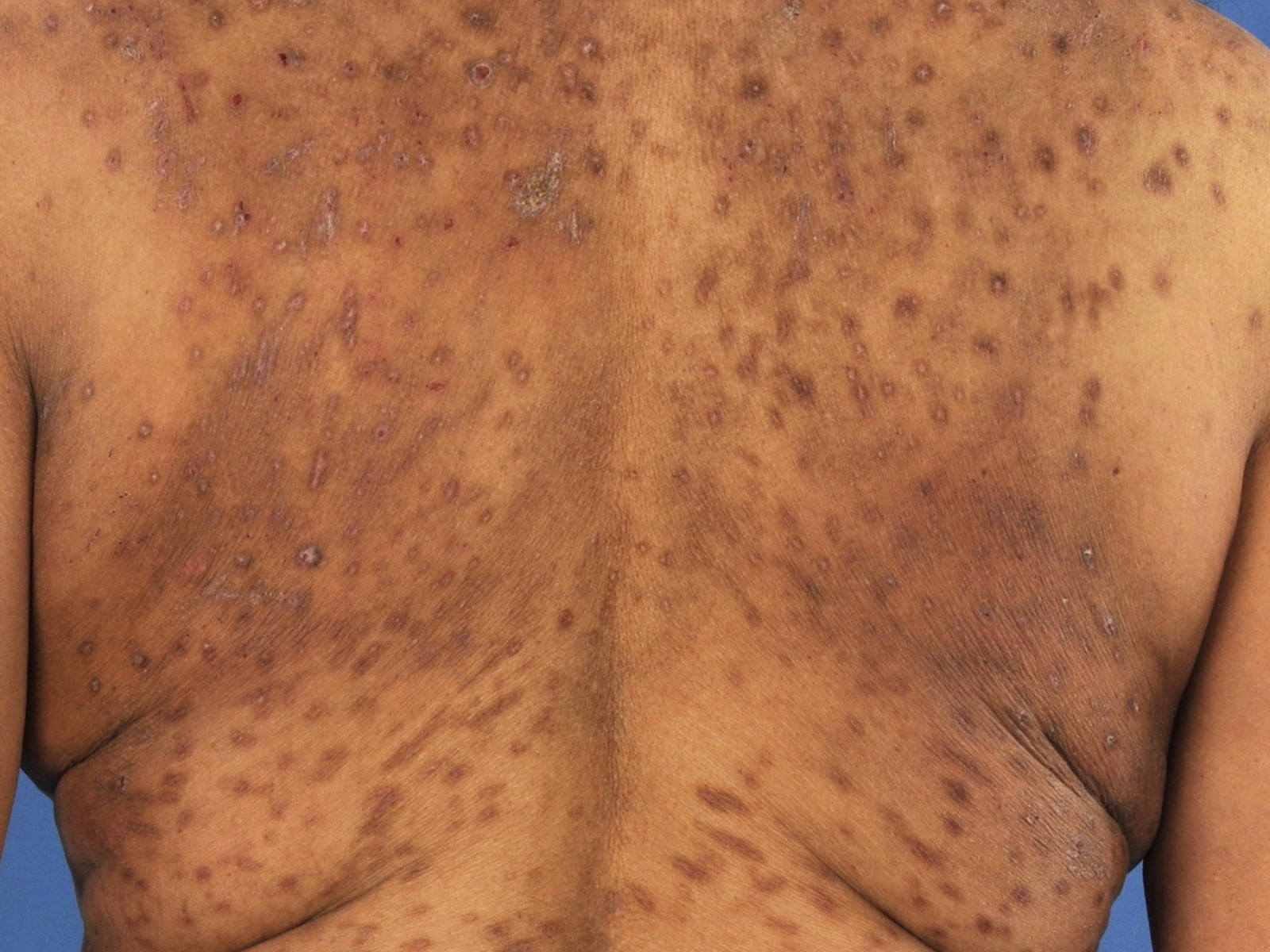
The itchy bumps are a few millimeters to about a centimeter in size and can be found all over the body, but usually on the arms and legs. Arms and legs, especially around the wrists and ankles, are areas that are often scratched. The bumps are round, often damaged by scratching, and are red, purple, gray-blue, or brownish in color. They feel hard to the touch and are extremely itchy. Scratching a bump causes wounds and scars. Scratching causes new bumps to form. The whole process of itchy bumps coming and going can last for years; it is a chronic skin condition.
IS PRURIGO NODULARIS CONTAGIOUS?
Prurigo nodularis is not contagious; it is not
caused by an infection.
HOW IS THE DIAGNOSIS MADE?
The diagnosis is made based on the clinical picture, on how it looks. It is easy to recognize because of its typical appearance and the itching. Sometimes a
skin biopsy must be taken to rule out other skin conditions.
In addition, further investigation is often carried out to determine the underlying cause of the itching. For example, a blood test can determine whether someone has a predisposition to atopic eczema. And there are some abnormalities that cause itching, such as liver and kidney diseases, which can be detected with a blood test. Usually, prurigo nodularis is seen on its own, or in conjunction with dry skin or atopy, and blood tests do not provide any further clues.
HOW IS PRURIGO NODULARIS TREATED?
Treatment must be initiated to reduce the itching, and you must also try to scratch as little as possible. Only by taking these two measures is it possible to break the vicious circle. It is very difficult not to scratch when your skin itches, but scratching only makes prurigo nodularis worse. When the scratched wounds heal, the skin often starts itching again.
There are several ways to treat the itching:
| - |
|
Oily skin care creams. Dry
skin itches, so the skin must always be well
cared for with oily or moisturizing creams. |
| - |
|
Topical corticosteroids in
the form of a cream or ointment. Topical
corticosteroids are powerful inhibitors of
eczema and itching. If necessary, the cream
can be covered with a special plaster (a
hydrocolloid plaster, see the leaflet on
hydrocolloids). Covering with a plaster
prevents scratching but also ensures that
the steroids penetrate the skin more
effectively. In stubborn cases,
corticosteroids can also be injected
directly into the prurigo nodularis bumps
(provided there are not too many). |
| - |
|
Anti-itch tablets
(antihistamines). |
| - |
|
Light therapy, treatment
with UVB light in light cabins. |
| - |
|
Freezing with liquid
nitrogen. |
If the effect is insufficient and the itching is severe, there are also some stronger medications that can be prescribed, such as ciclosporin, or azathioprine. These medications can also have many side effects, so they will not be prescribed lightly.
Antidepressants can also help, as can psychological counseling to learn how to deal with itching and tricks to avoid scratching.
WHAT IS THE PROGNOSIS?
If you manage to stop scratching, prurigo nodularis can be cured. Treatment with creams and other remedies should alleviate the itching, but you will have to stop scratching on your ow . If you continue to scratch, it will not go away and can last for years and cause significant damage to the skin.
WHAT ELSE CAN YOU DO?
Prevent your skin from drying out by not showering too hot and using a good moisturizing lotion or ointment after showering. Try not to scratch. Keep your nails short so that you do not scratch the areas open.
|