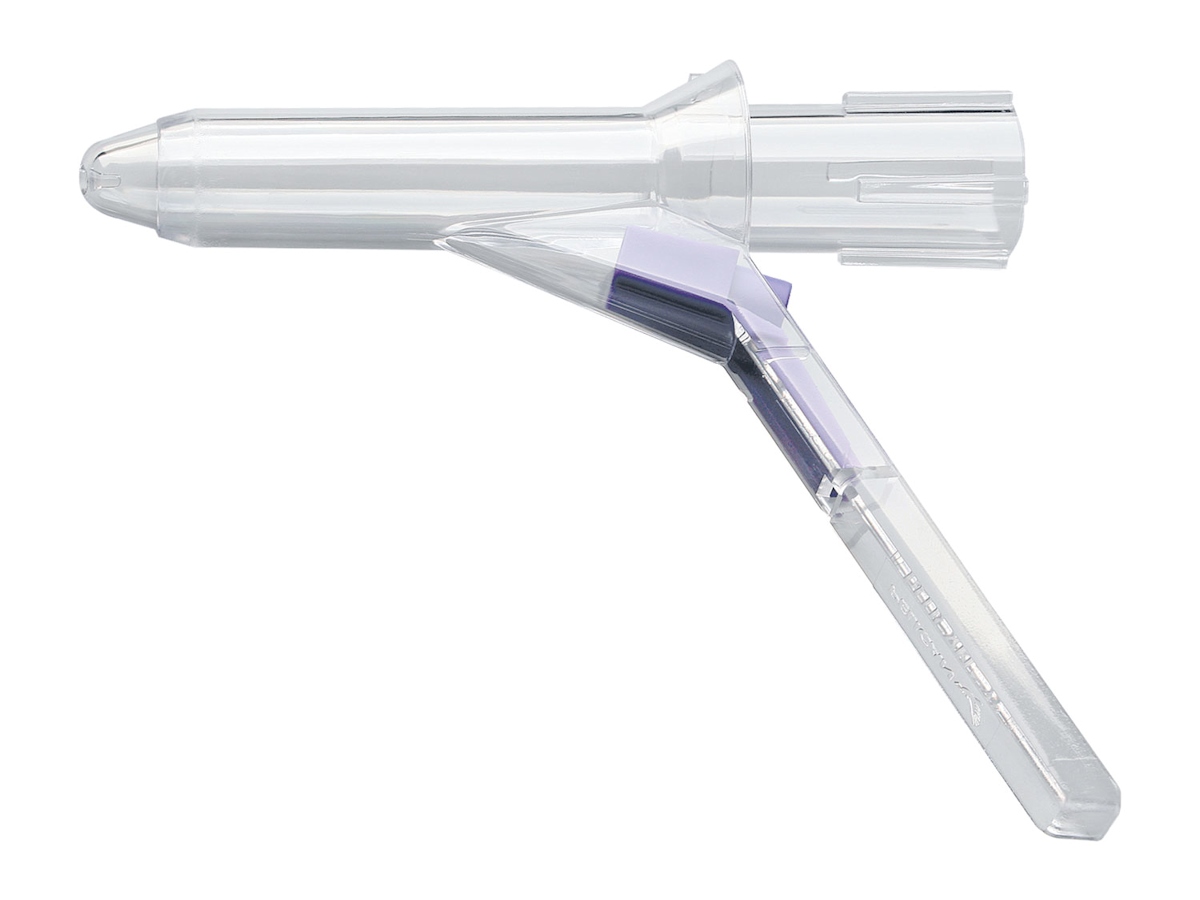
WHAT IS A PROCTOSCOPY?During a proctoscopy, the doctor examines the anus and the rectal lining. This is done by inserting a short metal tube—a proctoscope—into the patient's body. Through this proctoscope, the doctor can examine the area around the anus and rectum to detect or rule out any abnormalities.HOW IS THIS RESEARCH PROCEEDING?A proctoscopy is generally a safe and well-tolerated procedure. During the examination, the patient lies kneeling or on their left side on an examination table, or in a gynecological chair (chair with leg rests). The doctor examines the anus and briefly examines it with a finger. They then insert the proctoscope. In rare cases, the skin of the anus may tear slightly during a proctoscopy. This can cause pain and bleeding. This can be treated with medication, if necessary.
REMOVAL OF POLYPSDepending on the doctor's findings, they may follow up with treatment. For example, if the doctor discovers polyps (these are mushroom-like growths), they will be removed immediately. This is done by placing a loop of metal wire around the polyp like a lasso. An electric current applied to the wire cuts off the polyp. The doctor will carefully examine the removed polyps after the treatment. When removing polyps, there is a small chance of bleeding (approximately 1%). This bleeding can occur from the time of treatment up to 14 days afterward. Usually, this bleeding stops spontaneously.TREATMENT OF HEMORRHOIDSThe doctor may also detect hemorrhoids. If these are bleeding or have bled, they are treated. A special suction device pulls the hemorrhoid up slightly, after which the doctor places a plastic band over it. This clamps the hemorrhoid shut, and it will fall off within 1-2 weeks. This treatment is virtually painless. Sometimes, severe post-operative pain occurs. Painkillers can help. If the post-operative pain persists or becomes very severe, it is advisable to contact your doctor.
Hemorrhoids can also be treated with infrared light, which causes the hemorrhoid to shrink.REMOVING A PIECE OF TISSUEIf the doctor detects something unknown or abnormal during a proctoscopy, they will remove a tissue sample. Further examination of the tissue will reveal the nature of the unknown or abnormality. Taking biopsies is not painful, but often causes some bleeding.
A proctoscopy takes five to ten minutes. If the doctor extends the examination with a treatment, the examination may take longer.PREPARATIONIn principle, no preparation is required for a proctoscopy. In some cases, the examination can only be performed if the last part of the large intestine is empty. Half an hour beforehand, the patient is given an enema, which induces the urge to defecate. Once the patient has passed stool in the toilet, the examination can begin.MEDICATIONThe patient must always inform their attending physician in advance of any medication use. Medications that affect blood clotting should preferably be stopped before a proctoscopy. Medications such as Sintrom mitis®, Marcoumar®, and Ascal affect blood clotting. Using these medications during and around a proctoscopy can cause prolonged bleeding.
Because bacteria can enter the bloodstream during the removal of polyps or tissue samples, antibiotics are administered to patients with abnormalities such as heart valves. Patients with artificial devices are also given antibiotics for the same reason. If a patient has any abnormalities or if artificial devices are present, they are advised to inform their physician in advance.RASHThe doctor performing the proctoscopy will discuss the findings with the patient immediately afterward. The results of any tissue analysis are, of course, not immediately available. The procedure for the examination varies by hospital. |