This brochure provides a general overview of post-traumatic dystrophy. Please be aware that your individual situation may differ from what is described.WHAT IS POST-TRAUMATIC DYSTROPHY?Post-traumatic dystrophy- also called " complex regional pain syndrome " - is a condition that can occur after an injury or surgery to an arm or leg. This condition can involve any tissue and can therefore be interpreted as an abnormally strong reaction of the body to an injury or surgery.
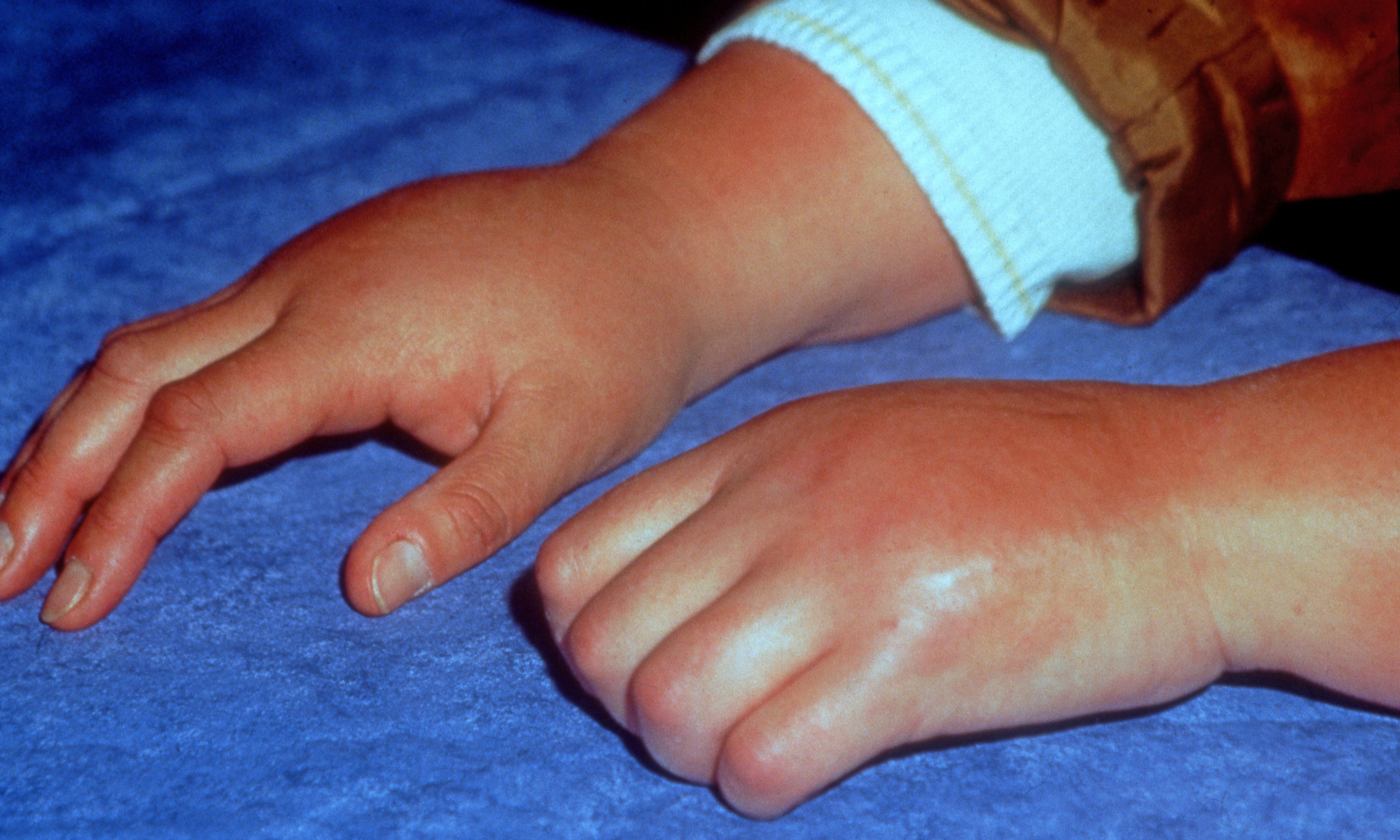
The etiology of post-traumatic dystrophy is not yet well understood. In the Netherlands, approximately 8,000 people each year develop symptoms suggestive of post-traumatic dystrophy. This symptom complex usually begins with a rapid onset of pain, which can eventually become chronic. It is striking that the pain does not correspond to the severity of the injury.WHAT ARE THE PHENOMENA?In post-traumatic dystrophy, the skin temperature can be warm or cold. Symptoms that may occur include:
- pain (which increases with exertion),
- swelling of a body part,
- fluctuations in skin temperature (warm in warm dystrophy, cold in cold dystrophy),
- skin discoloration of the affected area (red or blue),
- reduced mobility and pain to the touch.
 |
| post-traumatic dystrophy |
Photo: CRPS Patient Association - Wikimedia (Creative Commons License 3.0 ).
When four of the symptoms described above are present, the diagnosis can be made. The affected area is often larger than the original site of the injury or surgery.
In addition to the symptoms mentioned above, the following may also occur:
- altered/increased nail growth with crumbling,
- increased hair growth on the affected body part,
- increased sweat production, for example, in the palm of the hand or sole of the foot.HOW IS IT TREATED?Because it is not well understood how and why this abnormal, intense reaction to a relatively minor injury or surgery arises, there is no preferred treatment. Therefore, various treatment options are available.
Rest:
Rest of the affected body part may be recommended. A special splint or brace may be applied. Painkillers are prescribed to manage the pain, possibly a combination of vasodilators and/or anti-inflammatory medications.
Physiotherapy:
A combined treatment may also be prescribed, including medication, physiotherapy, and occupational therapy. If pain and limitations persist, consultation with a pain clinic can take place to determine whether a pain block can be applied to the affected body part using, for example, a special injection technique.
Infusion therapy:
It may also be decided to administer a special sugary liquid through an IV for several days during a hospital stay, which may respond favorably to the symptoms.WHAT ARE THE OUTLOOK?In general, it can be said that approximately 80 to 90% of patients with post-traumatic dystrophy recover more or less; some will continue to have residual symptoms.IS FURTHER RESEARCH NEEDED?Special investigation is often not necessary, because the diagnosis is made on the basis of the history and symptoms.SUMMARYIn summary, it can be concluded that post-traumatic dystrophy is still a relatively poorly understood condition that occurs after a relatively minor injury or surgery. There is no universal agreement on treatment options.
Because the condition is sometimes difficult to recognize and its onset can sometimes lead to dramatic situations in a person's life, social isolation of patients with post-traumatic dystrophy must be prevented.PATIENT ASSOCIATIONThere is a patient association for patients with post-traumatic dystrophy (PTD) / complex regional pain syndrome:
Patient Association CRPS
Postbus 31157
6503 CD Nijmegen
www.crps-vereniging.nl |