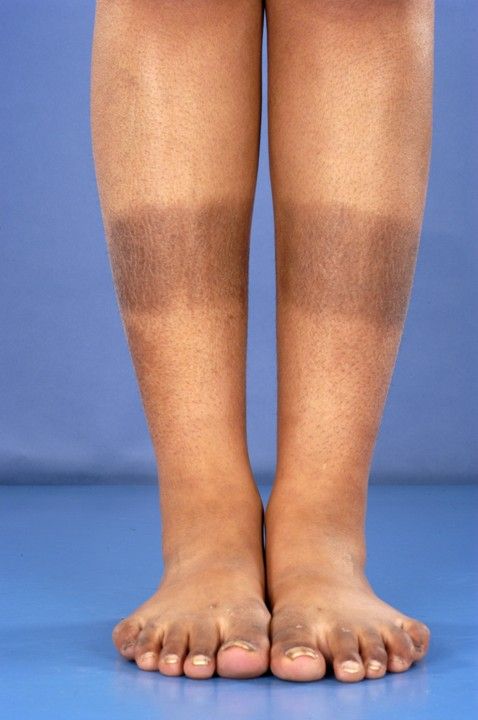
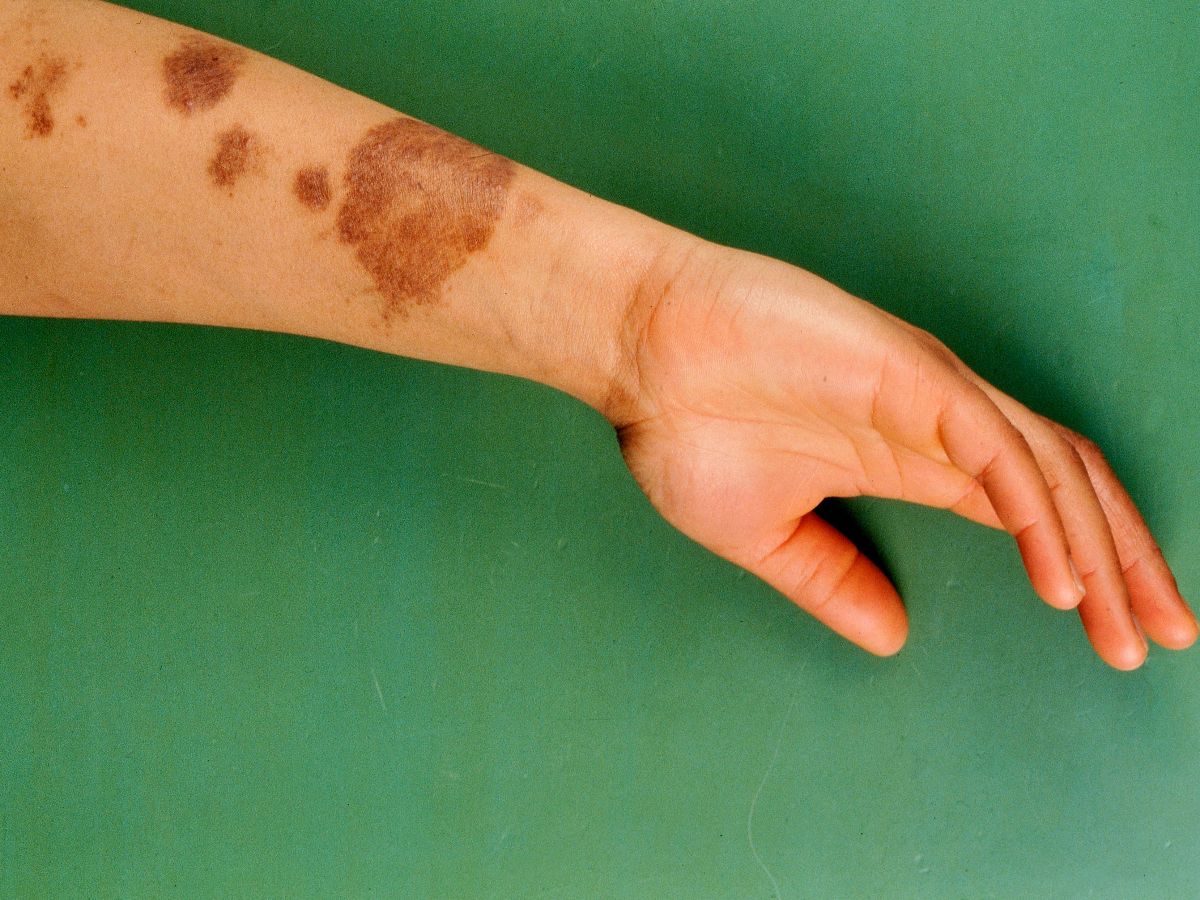
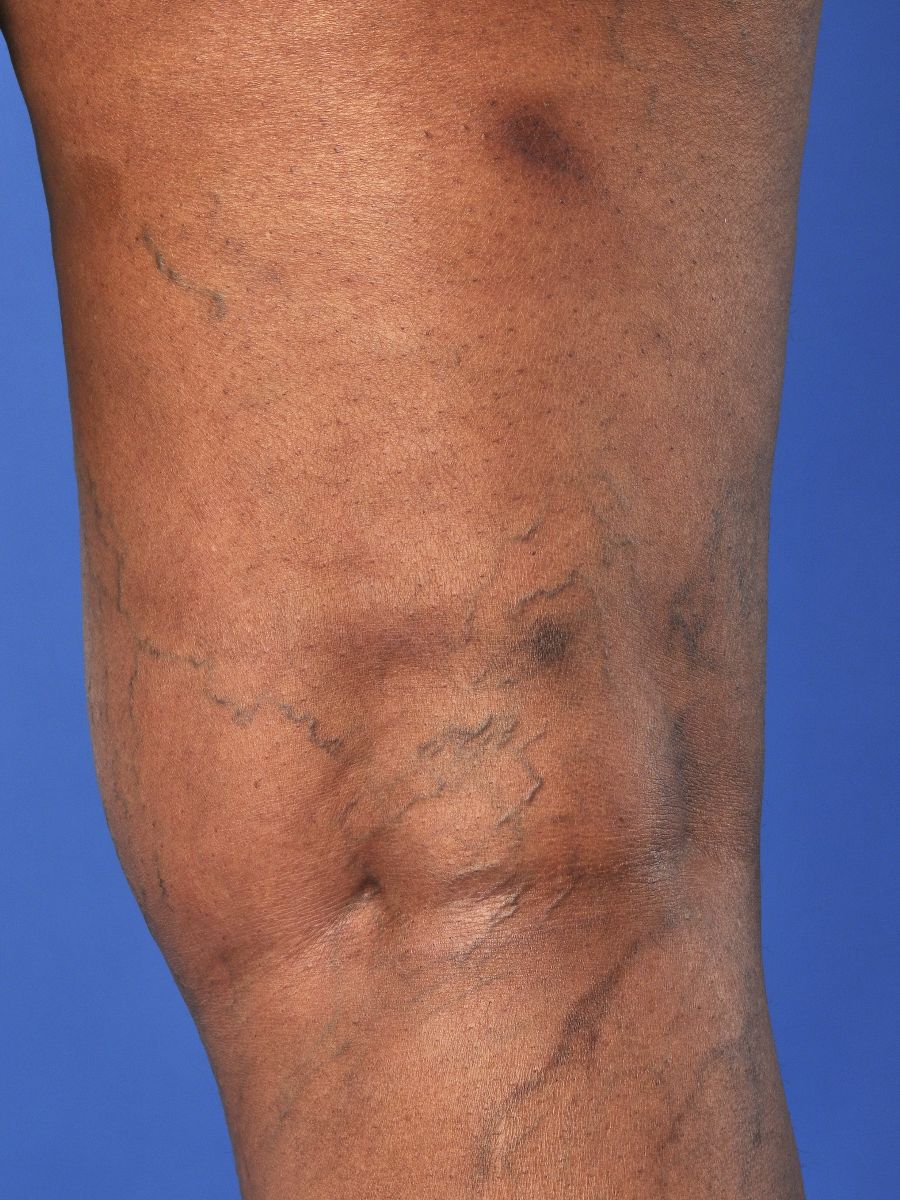
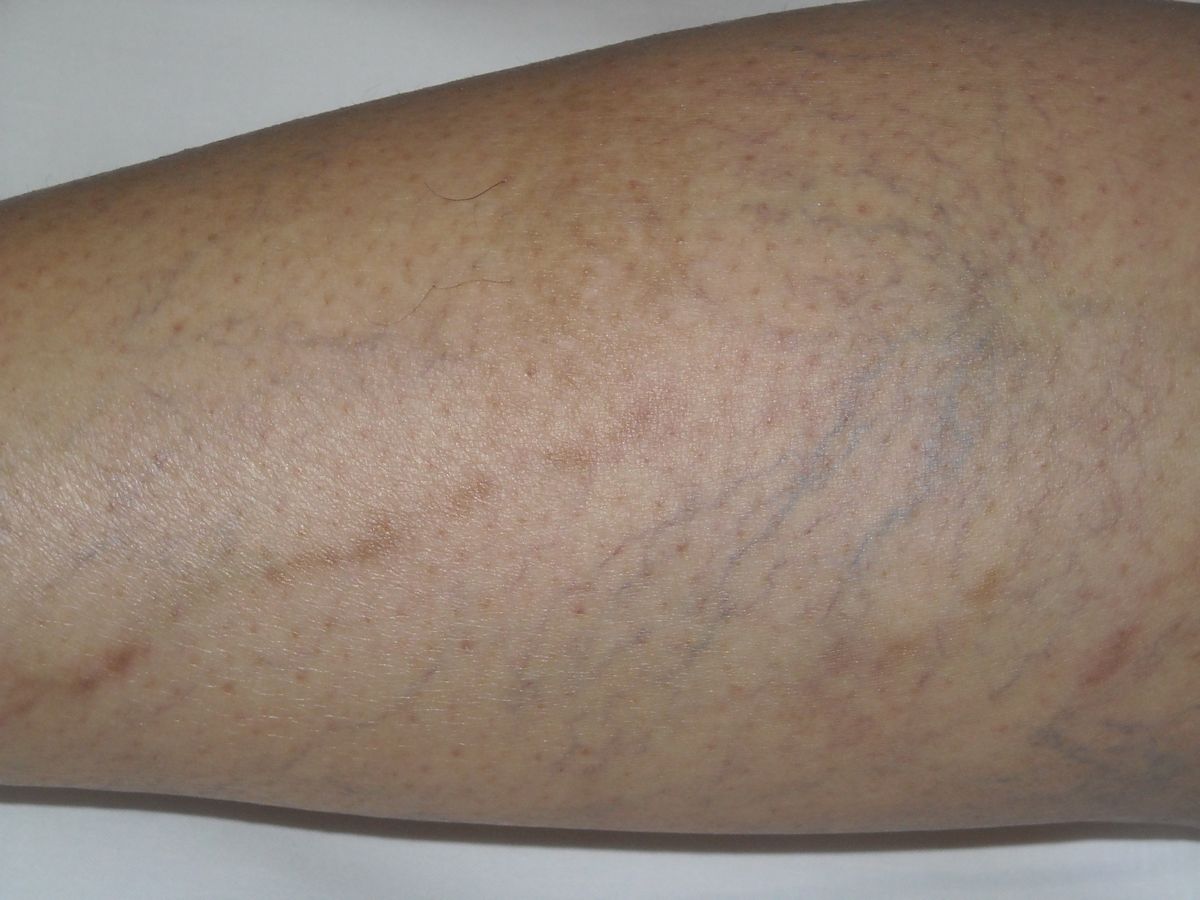
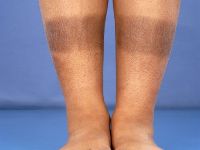
WHAT IS POST-INFLAMMATORY HYPERPIGMENTATION?Post-inflammatory hyperpigmentation is a darkening of the skin that occurs after inflammation or skin damage. This can be caused by anything from eczema, pimples, scratches, or burns. People with darker skin tones are particularly susceptible to this.
 |
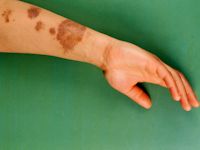 |
| pigment after contact dermatitis |
pigment after eczema |
 |
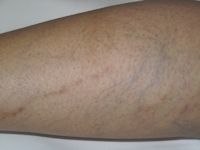 |
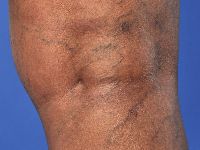
| after varicose vein treatment |
after varicose vein treatment |
HOW DOES POST-INFLAMMATORY HYPERPIGMENTATION OCCUR?Skin color is formed by pigment granules produced in the deeper layer of the skin by pigment cells (melanocytes). These pigment granules protect the skin from sunlight. After exposure to sunlight, the pigment cells produce more pigment, and the skin then turns brown. The pigment cells can also be stimulated to produce pigment when there is inflammation in the deeper layer of the skin, or when there is damage (scratches, wounds, pimples, blisters, burns, irritation, scratching, after freezing the skin, etc.). This occurs primarily in people with darker skin and in Asians.
Post-inflammatory hyperpigmentation occurs in various skin conditions (including eczema, lichen planus, lichen simplex chronicus, itchy bumps, chickenpox, psoriasis, blistering conditions, autoimmune diseases, and drug reactions). Many skin conditions involve inflammation in the deeper layer of the skin, right at the boundary between the epidermis and dermis, where the pigment cells are located. The inflammation stimulates the pigment cells to produce more pigment. The inflammation also destroys some pigment cells, and then their contents, consisting of pigment granules, become trapped under the skin, like a tattoo. Specialized immune system cells (macrophages) try to clear and absorb the pigment, but they're not entirely successful. Only after months or even years is the pigment finally removed.WHO GETS POST-INFLAMMATORY HYPERPIGMENTATION?Post-inflammatory hyperpigmentation occurs in people with darker skin or in Asians who have experienced inflammation or skin damage. It can occur at any age and on any part of the body where the skin has been damaged.HOW IS POST-INFLAMMATORY HYPERPIGMENTATION TREATED?Post-inflammatory hyperpigmentation is difficult to treat. If the pigment is superficial, it usually fades on its own within six months to a year. If it's deeper, it usually doesn't disappear or only after years. It's important to treat the cause to prevent new spots from developing. So, if eczema is the cause, treat it thoroughly. If acne is the cause, treat it as soon as possible with strong treatments.
For hyperpigmentation where the pigment is superficial, bleaching creams or peeling creams can be somewhat effective. If the pigment is deeper, it's difficult to treat. Sometimes a pigment laser can be used. However, there's a risk that this could cause new dark spots. Therefore, laser treatment is often used with caution.
Another option is camouflage with a professional camouflage cream in the right color. A skin therapist can advise you on this.WHAT ARE THE OUTLOOK?What is the outlook? Once the cause of the hyperpigmentation is removed, the dark discoloration will fade on its own. However, this can take months or years. It doesn't always disappear completely. |