|
PITYRIASIS ROSEA |
 |
 WHAT IS PITYRIASIS ROSEA? WHAT IS PITYRIASIS ROSEA?
Pityriasis rosea is a harmless skin condition that resolves on its own within a few weeks. Pinkish-red, scaly patches develop across the body, particularly on the trunk, and may be slightly itchy.
WHAT DOES PITYRIASIS ROSEA LOOK LIKE?
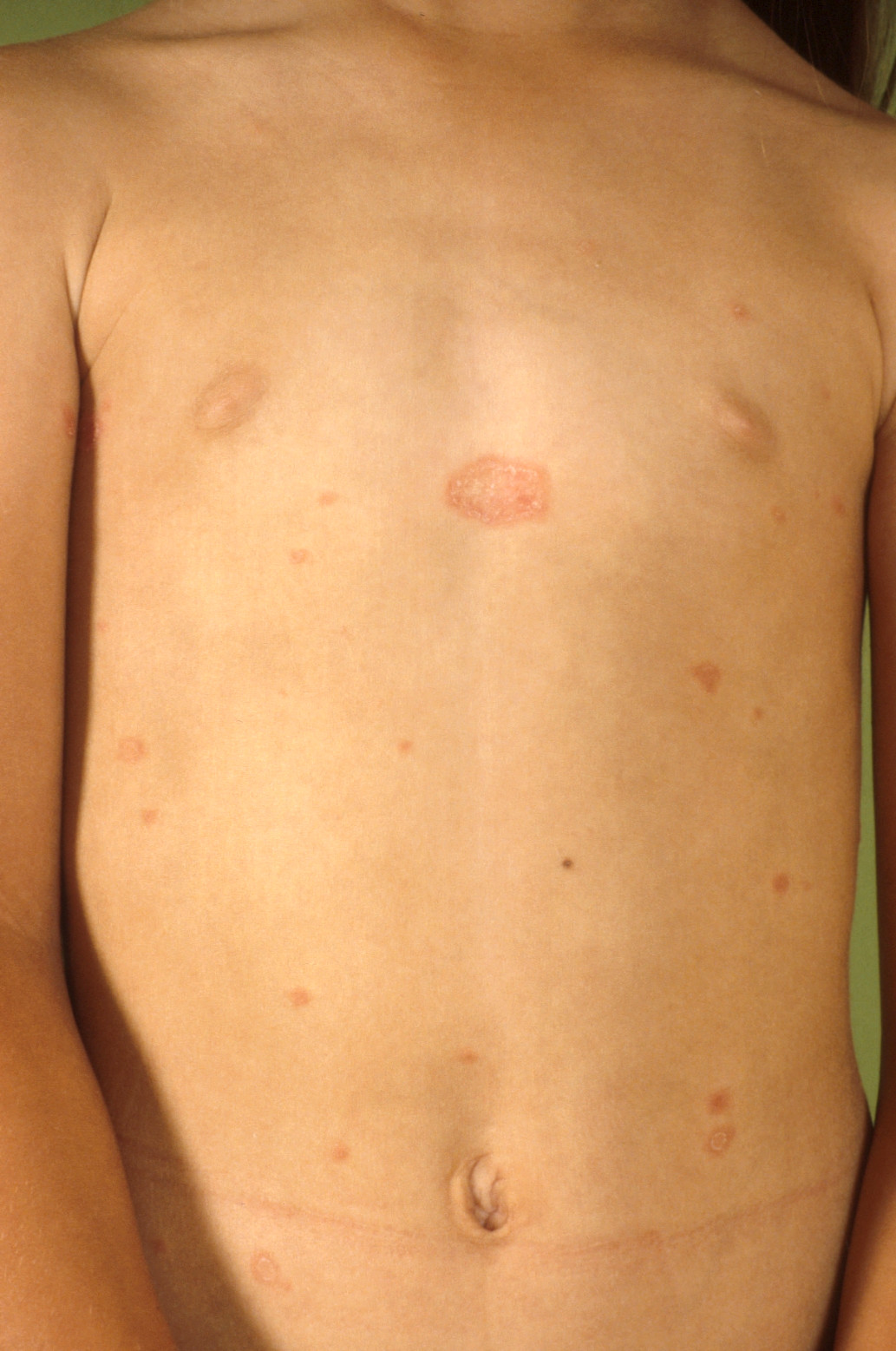
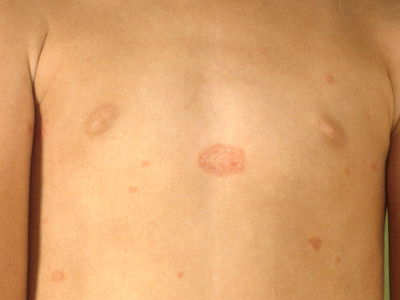
In 80% of cases, the rash is preceded by the appearance of a single 2-5 cm patch with a pink, scaly border and a skin-colored center, which heralds the onset of subsequent lesions (also called a "herald patch"
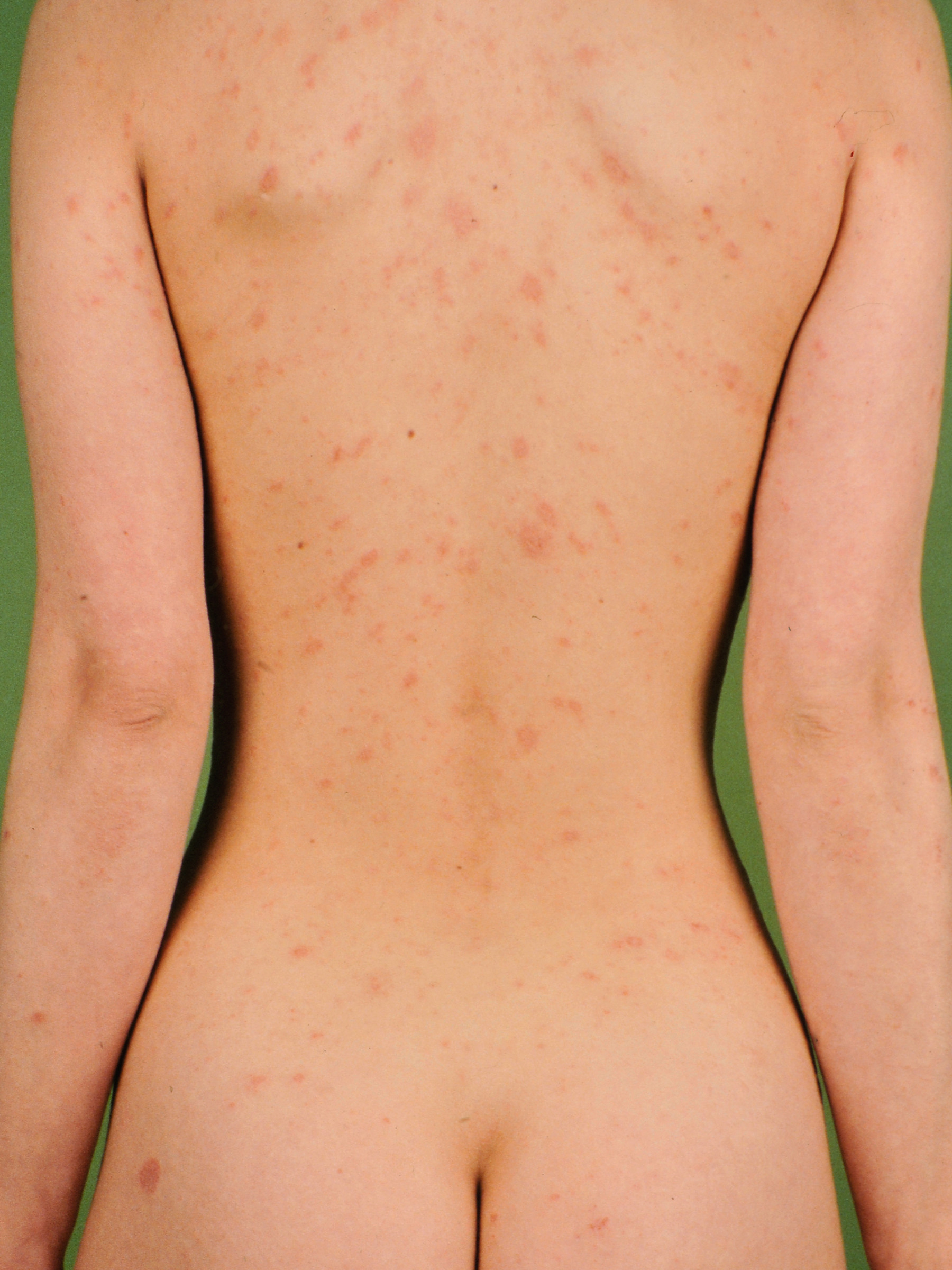
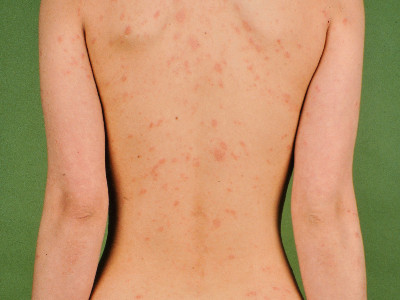
or "plaque-mère"). One to two weeks later, several similar patches, often slightly smaller and oval in shape, appear, primarily on the trunk, upper arms, and thighs. The palms of the hands and soles of the feet are usually spared.
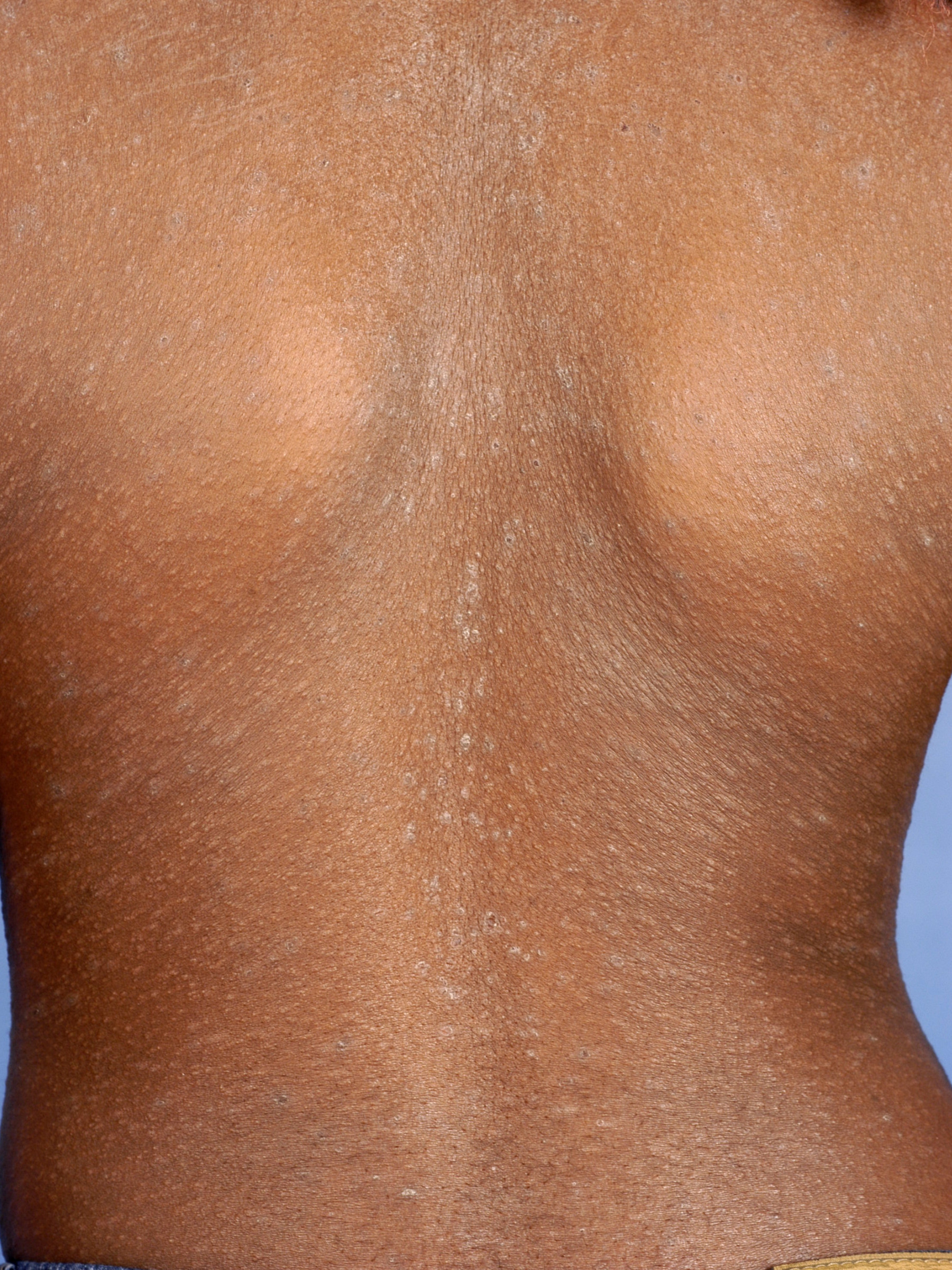
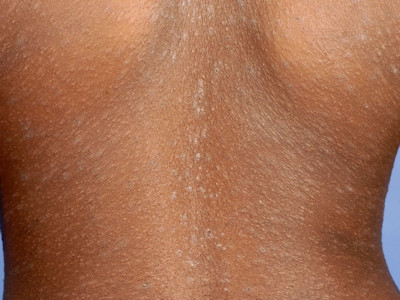
The patches typically appear in a pattern that follows the skin lines. On the back, a pattern resembling the branches of a pine tree may appear
(Christmas tree pattern). New spots may appear during the first 1-2 weeks, and the rash fades naturally over the next 2-4 weeks without leaving scars. However, pigmentation differences may occur, especially in people with darker skin tones, which gradually fade. Both lighter and darker discolorations occur.
 |
 |
 |
|
herald patch |
pityriasis rosea |
pityriasis rosea |
Most patients are completely symptom-free within 5-6 weeks. Occasionally, it takes a little longer (3-5 months), but that's exceptional.
It mainly occurs in young people (75% are between the ages of 10 and 35, with a peak around age 23). Women have it slightly more often than men. The cause is unknown. It occurs worldwide. It is thought to be a reaction to a viral infection, but this is uncertain. Indications are that it occurs more frequently during the colder months, and that there are also known cases that arose almost simultaneously within the same family or class. Furthermore, approximately 20% of patients report experiencing flu-like symptoms prior to the rash, such as fever, headache, sore throat, diarrhea, or swollen lymph nodes. It is not contagious, meaning that it can be transmitted to another person through skin-to-skin contact. It is also not dangerous for the unborn child in the event of pregnancy. Once you've had it, you usually don't get it again (the chance of this happening is only 2%).
HOW IS THE DIAGNOSIS MADE?
In most cases, the symptoms and progression are so typical and recognizable that additional testing is not necessary to establish the diagnosis.
HOW IS PITYRIASIS ROSEA TREATED?
Treatment is neither necessary nor readily available.
However, symptom management can be achieved. The main symptom is itching, which affects between 25 and 75% of patients. Itching can be controlled with topical anti-itch medications from a pharmacy, such as menthol gel (1% menthol in carbomer water gel). Topical corticosteroid creams (hydrocortisone cream, triamcinolone cream) and anti-itch tablets (antihistamines) can also be used for itching. In exceptional cases, for prolonged, severe itching, light therapy with UVB (ultraviolet B)
can be started. Dryness and flaking of the areas can be counteracted with slightly greasy creams or body lotions.
|