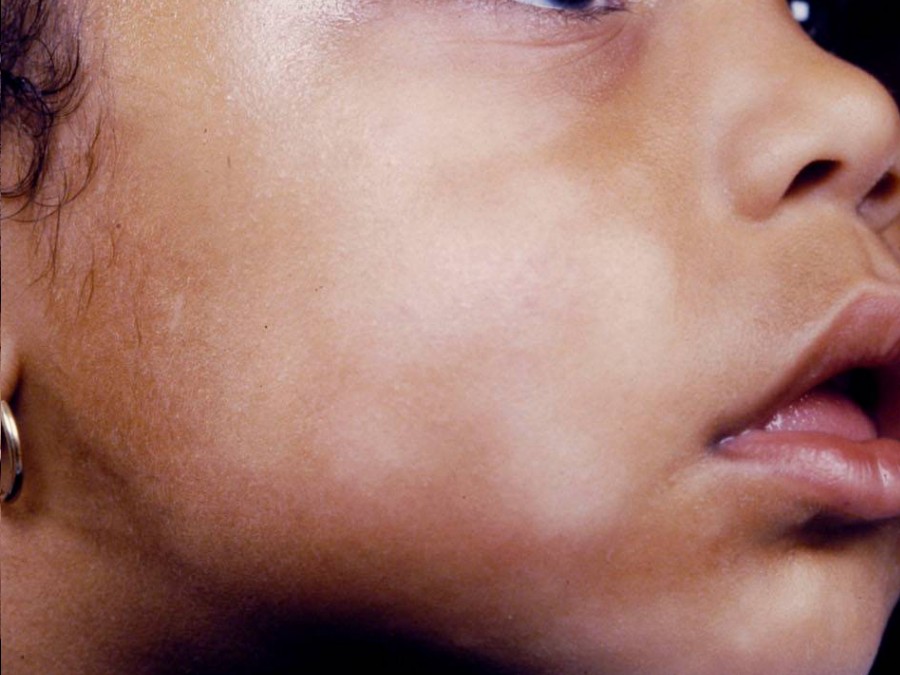
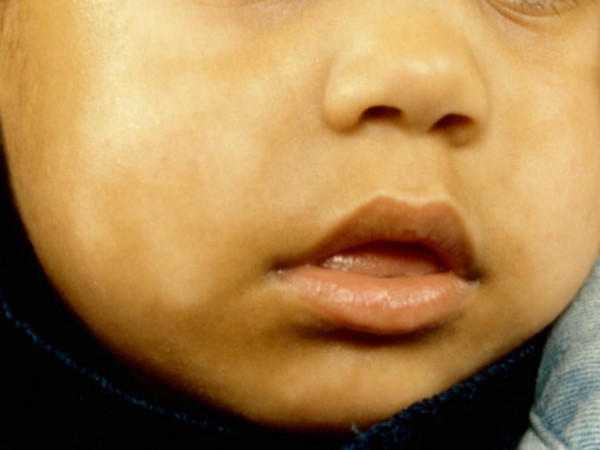
WHAT IS PITYRIASIS ALBA?Pityriasis alba is a skin condition that causes lighter-colored patches to appear on the face. It primarily affects children and teenagers with darker skin. It's a mild form of eczema, with localized pigment loss in the patches. Sometimes the skin is also dry or flaky (pityriasis = flaky, alba = white).WHAT DOES PITYRIASIS ALBA LOOK LIKE?Pityriasis causes faint, lighter-colored patches to appear on the face, especially the cheeks. It can also occur on the neck, arms, and upper torso. The color difference is sometimes barely noticeable. Sun exposure can worsen the color difference. The affected skin is sometimes dry, flaky, or red. The redness can be difficult to see on darker skin.
 |
 |
| pityriasis alba |
pityriasis alba |
HOW DOES PITYRIASIS ALBA OCCUR?Pityriasis is caused by a mild form of eczema, usually atopic eczema. Eczema causes the skin to become inflamed. This causes redness and flaking, and often itching. The pigment cells in the deeper skin layer can respond to this by producing less pigment. The medical term for this is post-inflammatory hypopigmentation (less pigment after inflammation). The pigment cells likely don't actually produce less pigment, but the color difference arises because the skin cells in the eczema patches divide more rapidly. The pigment cells can't keep up; they can't produce enough pigment in rapidly dividing skin. This causes a color difference.WHO GETS PITYRIASIS ALBA?Pityriasis alba is primarily seen in children with darker skin who are prone to eczema (atopic eczema). The lighter patches are more noticeable on darker skin. Children with fair skin can also have eczema patches on their face, but in that case, only dryness or flaking is visible, and no color difference.HOW IS PITYRIASIS ALBA TREATED?Pityriasis alba doesn't always require treatment. The discoloration disappears on its own, although this can take months to years. If there is still active eczema, treating it is helpful. Usually, simply applying moisturizing cream is sufficient. If necessary, mild anti-inflammatory ointments are prescribed. If there are severely bothersome light patches, light therapy can be administered.WHAT ARE THE OUTLOOK?Well, the stains will eventually go away on their own. |