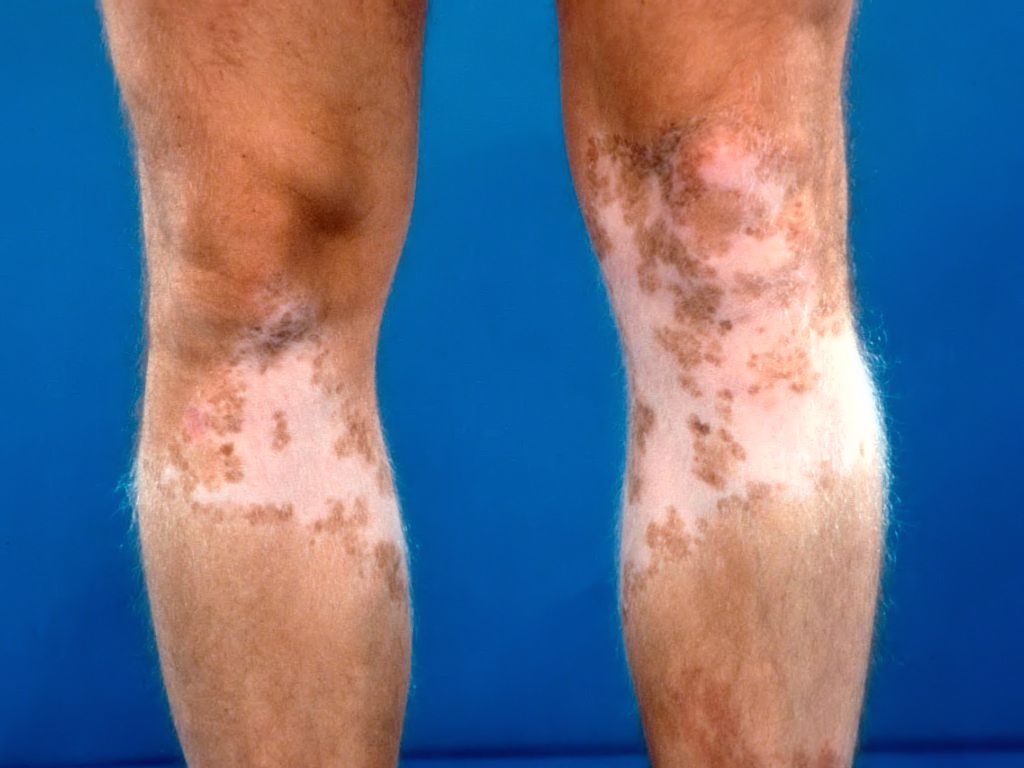
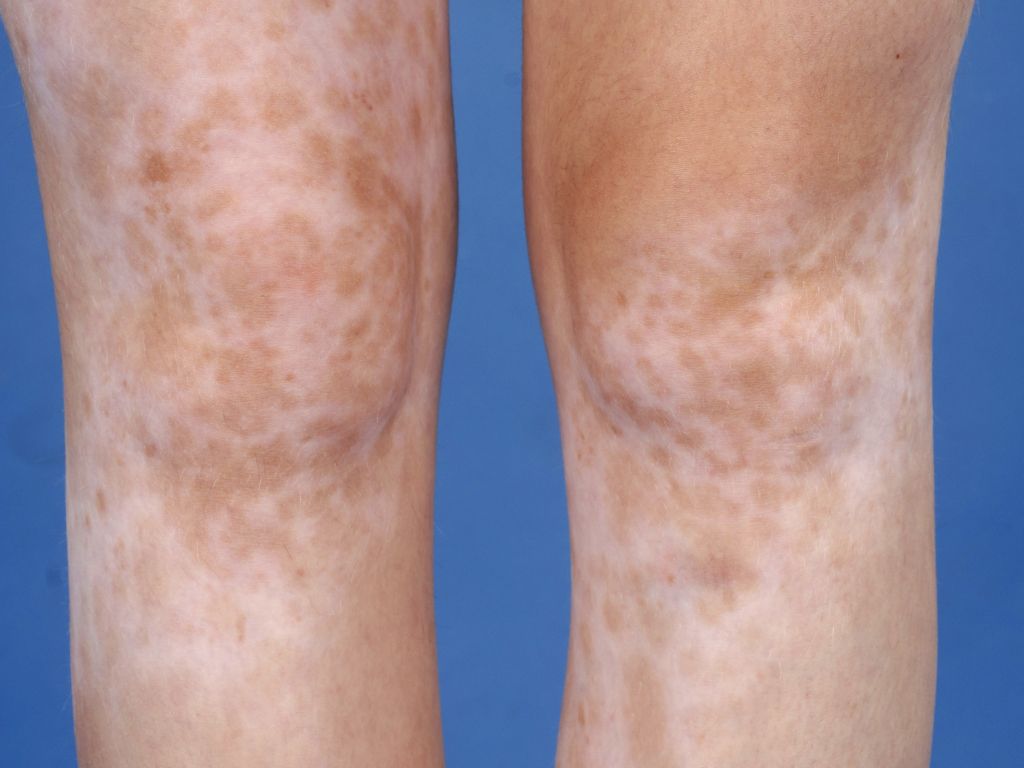
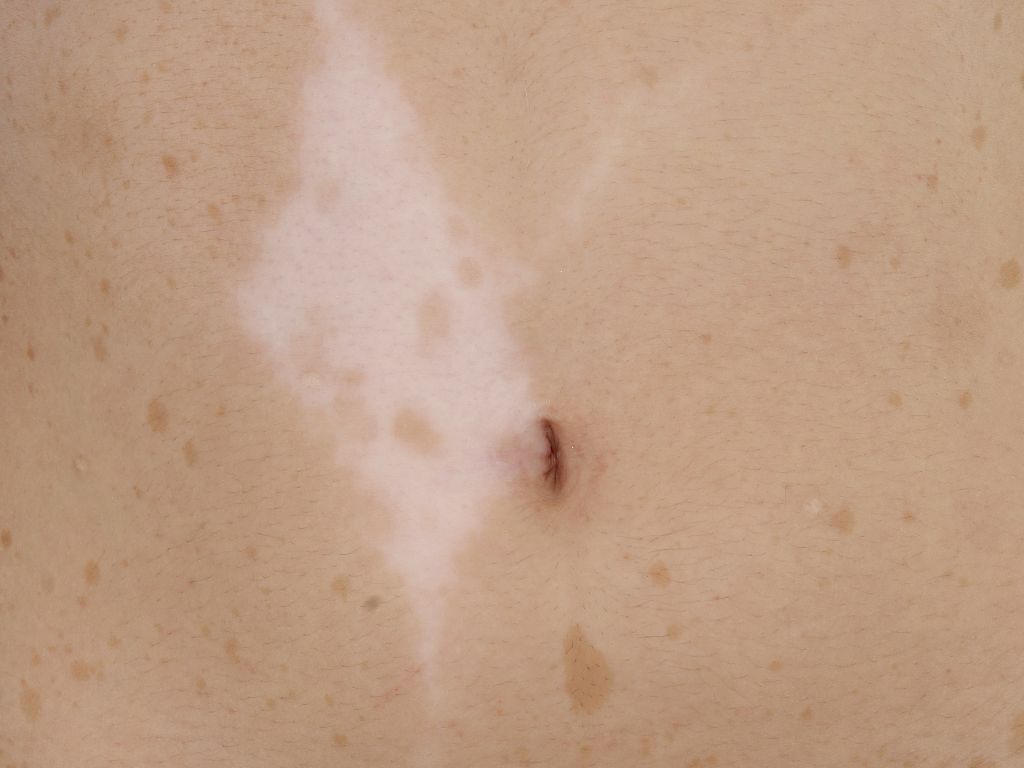
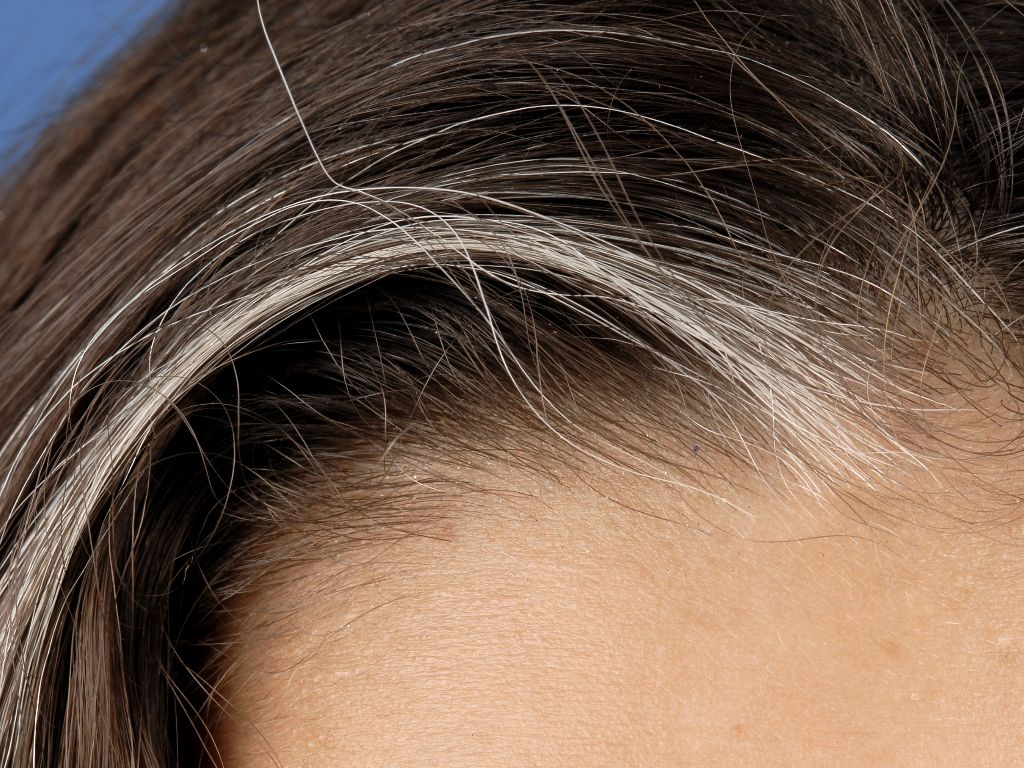
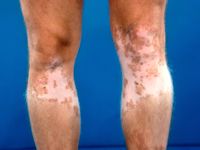
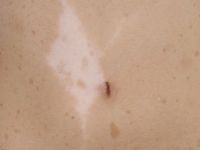
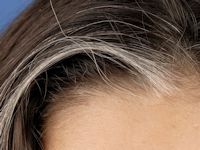
WHAT IS PIEBALDISM?Piebaldism is a skin condition characterized by white patches of varying size and shape on the body. The hair can also be completely white in patches (white locks). Piebaldism is a congenital skin condition; it's present from birth. It's also hereditary; it can run in families. The white patches in piebaldism resemble vitiligo, another skin condition with white patches. However, piebaldism is present from birth, while vitiligo develops later in life.HOW DOES PIEBALDISM OCCUR?People with piebaldism have a defect in a specific part of their genetic material (the C-KIT gene, located on chromosome 4q12). This genetic defect causes a protein that is responsible for the distribution of pigment cells throughout the body to be missing. Pigment production by pigment cells begins very early, even before birth. This is why the white patches are visible immediately after birth.WHAT DOES PIEBALDISM LOOK LIKE?Irregular white patches are present from birth. These patches are completely devoid of pigment. They are most common on the knees and elbows, chest, abdomen, and central forehead, and are often triangular in shape. The presence of a white lock of hair on the front of the head is very characteristic of piebaldism and sometimes even the only symptom. In fair skin tones, the patches may not be noticeable at birth. In addition to white patches, darker colored patches may also appear, which can be located either within the white patches or at the edges of them. The patches do not change shape, and no new white patches appear after birth.
 |
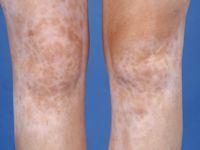 |
| piebaldism |
piebaldism |
 |
 |
| piebaldism |
white lock of hair |
HOW IS THE DIAGNOSIS MADE?The diagnosis is based on the clinical picture, its appearance. It's easily recognizable by the irregular white patches combined with dark spots. It often runs in families, and the patient already knows what it is.HOW IS PIEBALDISM TREATED?Piebaldism cannot be treated with ointments or light therapy. There is currently no therapy that can reverse the pigment disorder or genetic defect in piebaldism. However, the symptoms can be reduced through pigment transplantation. This involves transferring pigment cells from a normal skin area to the white patches where they had disappeared. Various methods are used for pigment transplantation: small pieces of normally pigmented skin (biopsies) can be transferred to a patch of white skin (minigrafting). This is performed on an outpatient basis under local anesthesia. Minigrafting is a minor surgical procedure that is not medically necessary. The method is not used in children under the age of 12, but only from the age of 16 onwards. This treatment is effective for piebaldism; in over 80% of cases, the transplant can lead to the disappearance of the treated white patches.
An alternative method is cell suspension transplantation, in which pigment cells are extracted from a piece of normal skin and, after processing, distributed in a liquid onto the white skin to be treated. This fluid contains pigment and skin cells and is replaced on the pre-treated (laser-treated) white area. This method is not yet registered for pigment disorders, but is currently being investigated at the SNIP (AMC Amsterdam) and the University Hospital Ghent (Belgium).WHAT ARE THE OUTLOOK?Unlike vitiligo, the white patches will not increase in number or size over the years. Piebaldism does not affect general health. Despite the absence of pigment in the white patches, there is no increased risk of developing skin cancer or melanoma compared to people without piebaldism. The white patches are, however, more susceptible to sunburn because they are not protected by pigment. Piebaldism can be part of a rare syndrome called Waardenburg syndrome. Patients with this syndrome have piebaldism combined with two different colored irises in the eyes, ear abnormalities (deafness), and reduced intellectual abilities.WHAT CAN YOU STILL DO YOURSELF?Camouflaging depigmented areas with skin-colored makeup can sometimes make them virtually invisible as long as the camouflage is in place. This can be especially effective for the face. Skin therapists can inform you about this option. |