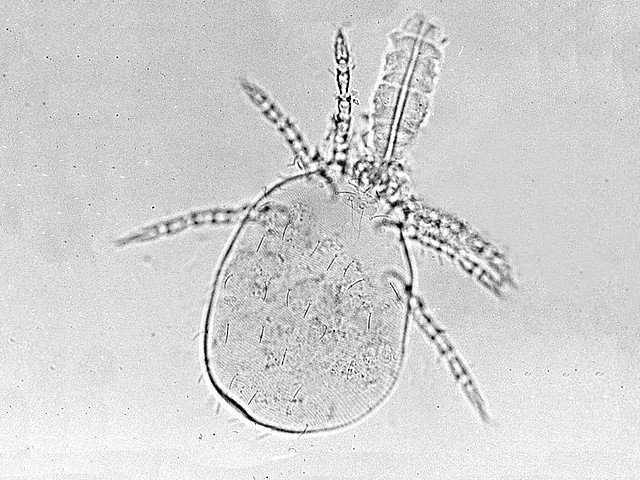
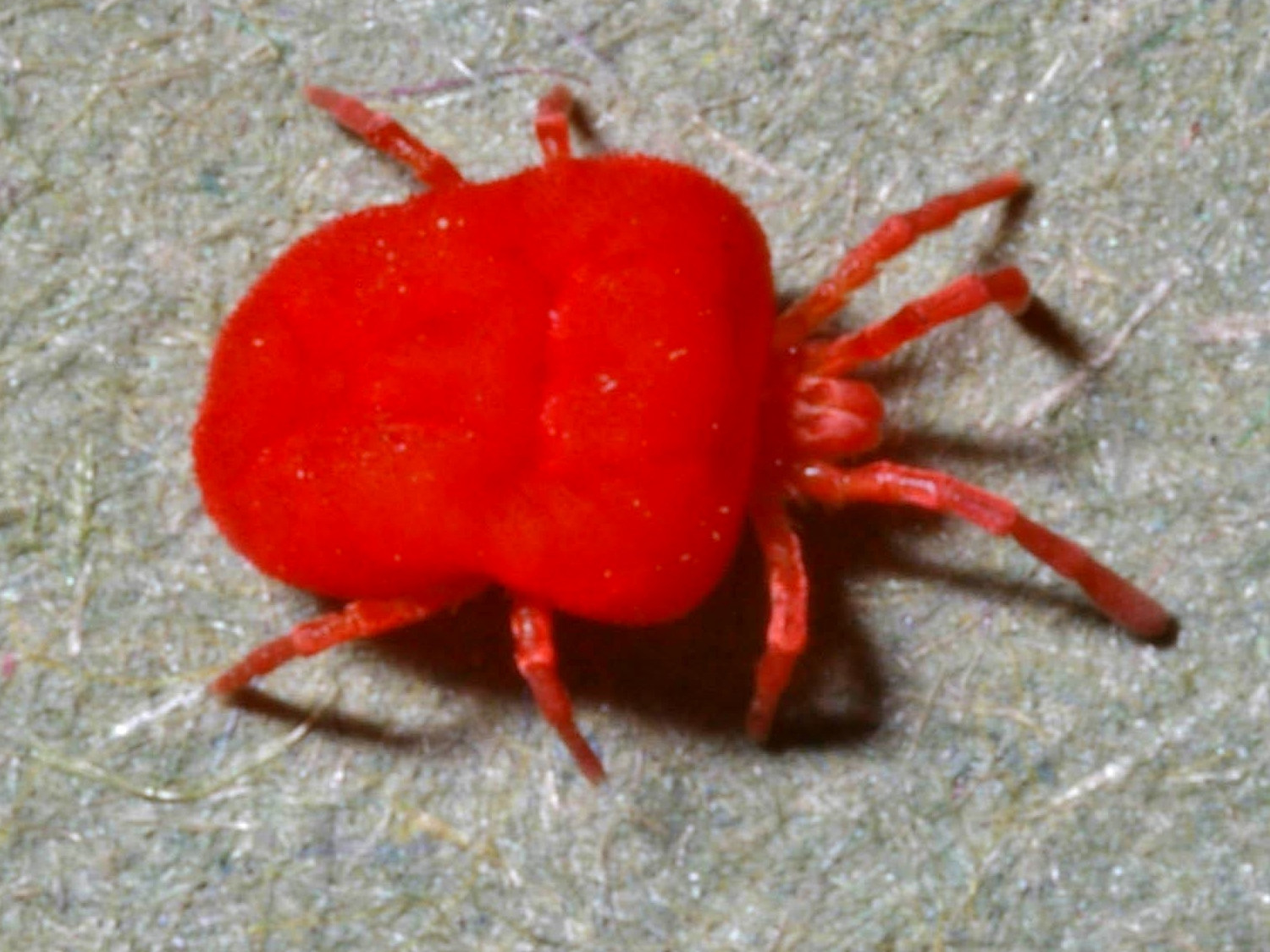
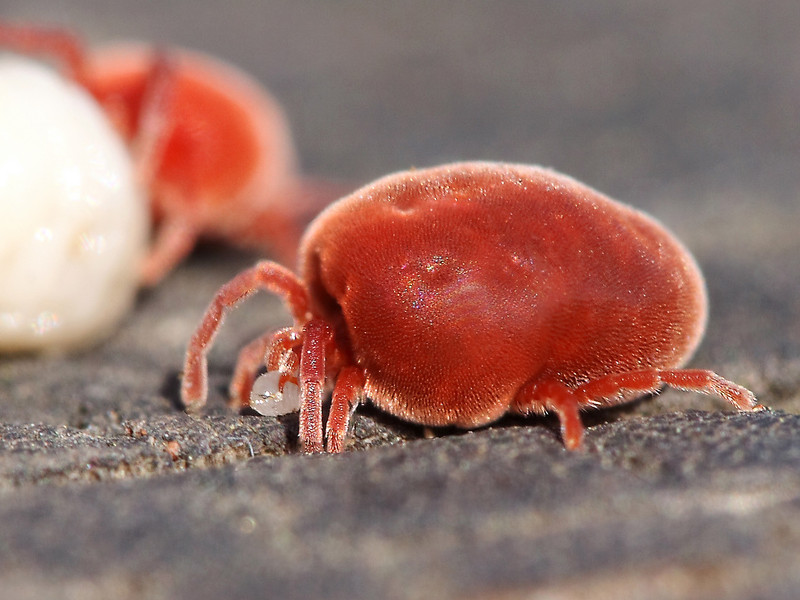
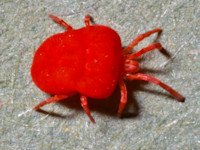
WHAT IS TROMBICULIASIS?Trombiculiasis (synonyms: trombidiosis or trombiculosis) is an intensely itchy skin condition caused by the bites of the harvest mite. The harvest mite, Latin name Trombiculidae autumnalis, also known as the red velvet mite, is a tiny, bright red spider. Thousands of different species exist worldwide. This spider lives in the soil and on trees and shrubs and is completely harmless to humans. However, during the warm season, from April to early autumn, with a peak in September, the harvest mite produces eggs that develop into minuscule (0.2-0.3 mm) mites, which then search for a host (animal or human) to feed on. These harvest mite larvae, called chiggers in English, are virtually invisible but spread rapidly across the skin in search of places to bite.
 |
 |
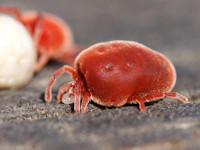 |
| harvest mite (velvet mite) |
harvest mite (velvet mite) |
harvest mite (velvet mite) |
Photos: Alan R Walker and Lukas Jonaitis - Wikimedia (Creative Commons License 3.0 / 2.0 ).
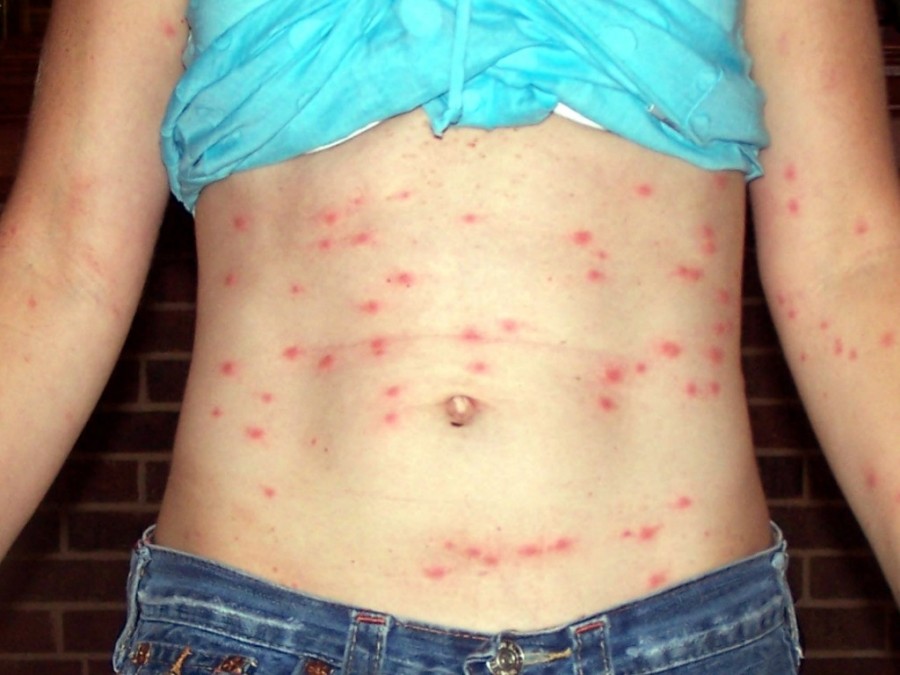
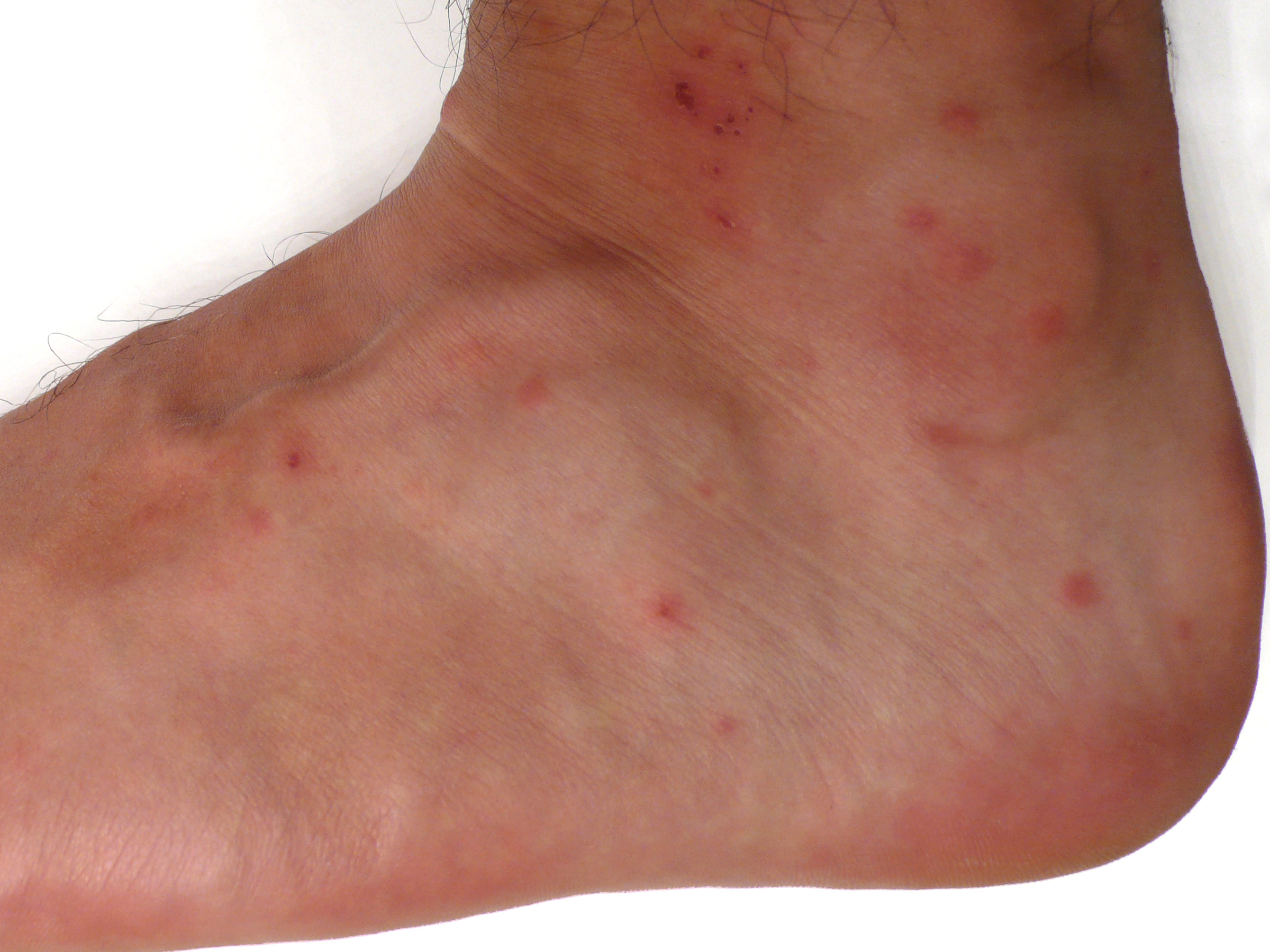
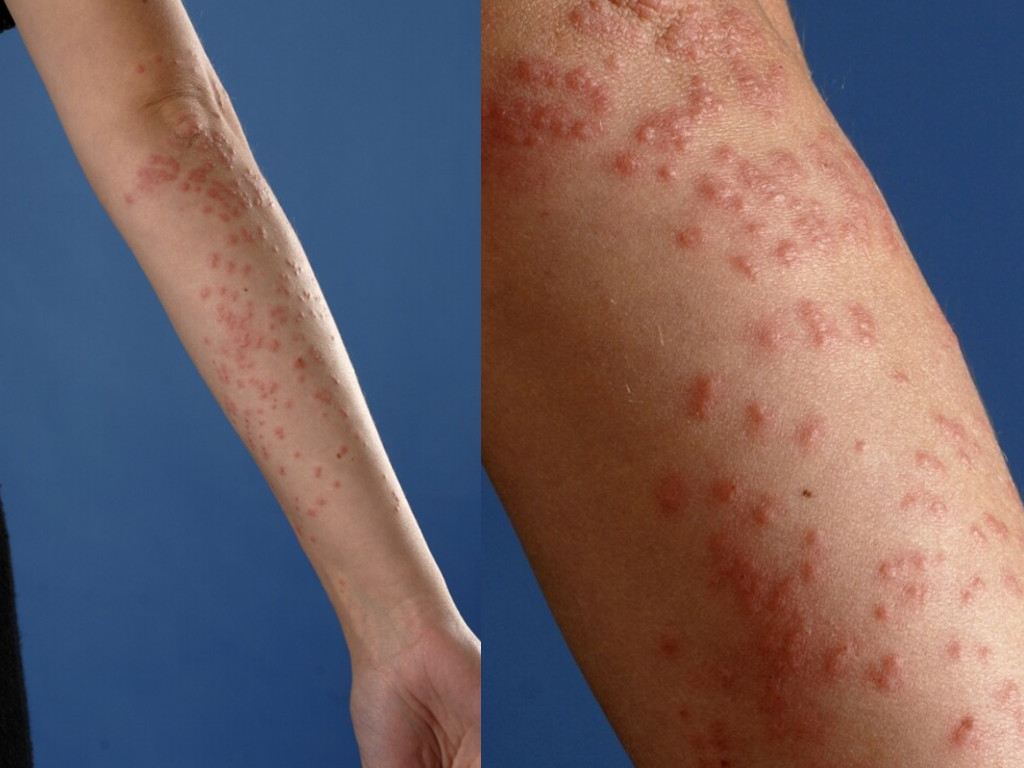
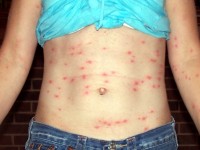
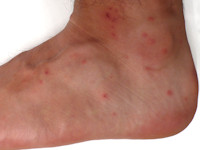
WHAT ARE THE PHENOMENA?The bites themselves go unnoticed. Only after a few hours do they begin to itch terribly. Then, small red bumps appear everywhere where the mites have bitten. The skin in the center of these red, intensely itchy bumps is sometimes paler, and a bite site or a scab may be visible.
Preferred locations are the feet, ankles, and lower legs, where the mites can access first. They also prefer thin skin (ankles), folds (backs of the knees, groin, armpits), and places where clothing fits tightly against the skin (under underwear, socks, waistband, waist).
 |
 |
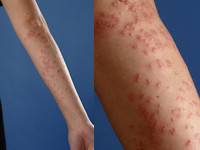 |
| chigger bites |
chigger bites |
chigger bites |
Photos: Slturis and Tim Vickers - Wikimedia (Creative Commons License 3.0 / 1.0 - Public Domain Image).
HOW DOES THE ITCH ARISE?The mites don't suck blood like mosquitoes, but they bite into the skin and inject enzymes that liquefy the tissue. A small column of liquefied tissue forms. The larva sits atop this tunnel, sucking up bodily fluids through a straw, while continuing to inject digestive enzymes. It is these enzymes that cause the itching.
The young larvae are small, fast, and invisible, and only after several hours, when the itching begins, do humans realize they've been stung. Normally, they remain in the bite for 3-4 days until they are fully engorged, but this usually doesn't happen in humans. Because of the itching, they are scratched off prematurely or scrubbed away. The young mite cannot sting again and then dies. But the damage is done. The itching, caused by an allergic reaction to the enzymes, begins 3-6 hours after the bite and doesn't reach its peak until 1-2 days later. It may take 7-10 days for it to go away.
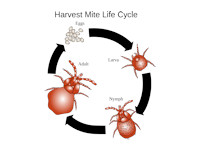 |
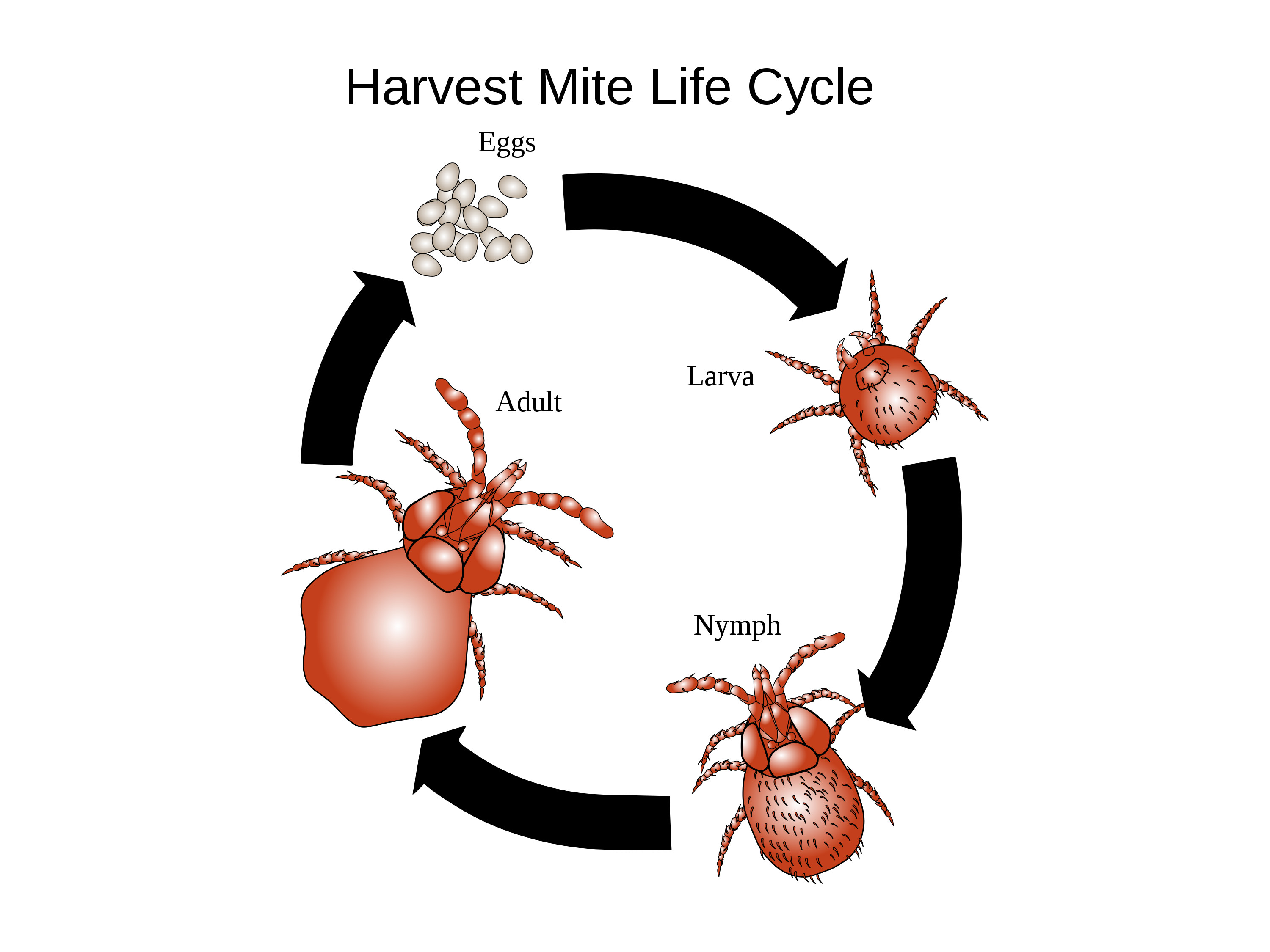
| cycle chigger |
Illustration: Bugboy52.40 - Wikimedia (Creative Commons License 1.0 - Public Domain Image).
The life cycle of the harvest mite. The adult harvest mite, or velvet mite, is a small, red, eight-legged spider. During the summer, starting in spring and especially in late summer, the mite lays eggs. These hatch into tiny young harvest mites (chiggers) called larvae. These larvae wait on trees, shrubs, and on the ground for a human or animal to pass by. Anyone who sits on the ground wearing shorts is in for a treat. The tiny harvest mite larvae quickly find a suitable spot to attach themselves and suck on tissue fluids. Once the larva is full, after three days, it develops into a slightly larger version of the mite called a nymph, and then into an adult harvest mite, which will lay more eggs.WHAT CAN I DO TO PREVENT HARVEST MITE STINGS?In and around the garden, bites can be prevented by keeping grass and vegetation short. In nature, avoid sitting or lying on the ground. Keep walking. Anyone who absolutely must walk through shrubs where these mites are present should dress appropriately. Wear socks, long pants, tuck pants into socks, and long sleeves. Insect repellents containing DEET can prevent bites. Apply these mosquito repellent products to your hands, forearms, ankles, lower legs, and neck before walking.WHAT ARE THE TREATMENT OPTIONS?Take a hot shower or warm bath to remove any remaining mites, scrub your skin thoroughly, using plenty of soap and a washcloth or brush, and then put on clean clothes. The clothes may still contain living mites, so they should be washed at a minimum of 50 degrees Celsius. Try not to scratch. If necessary, clean the bites with rubbing alcohol.
See your doctor or pharmacist as soon as possible and ask for the best and most powerful anti-itch product available. These can be products containing menthol or a local anesthetic, or both.
Otherwise, there's not much else to do but wait it out. It can take 2-3 days for the itch to subside. |