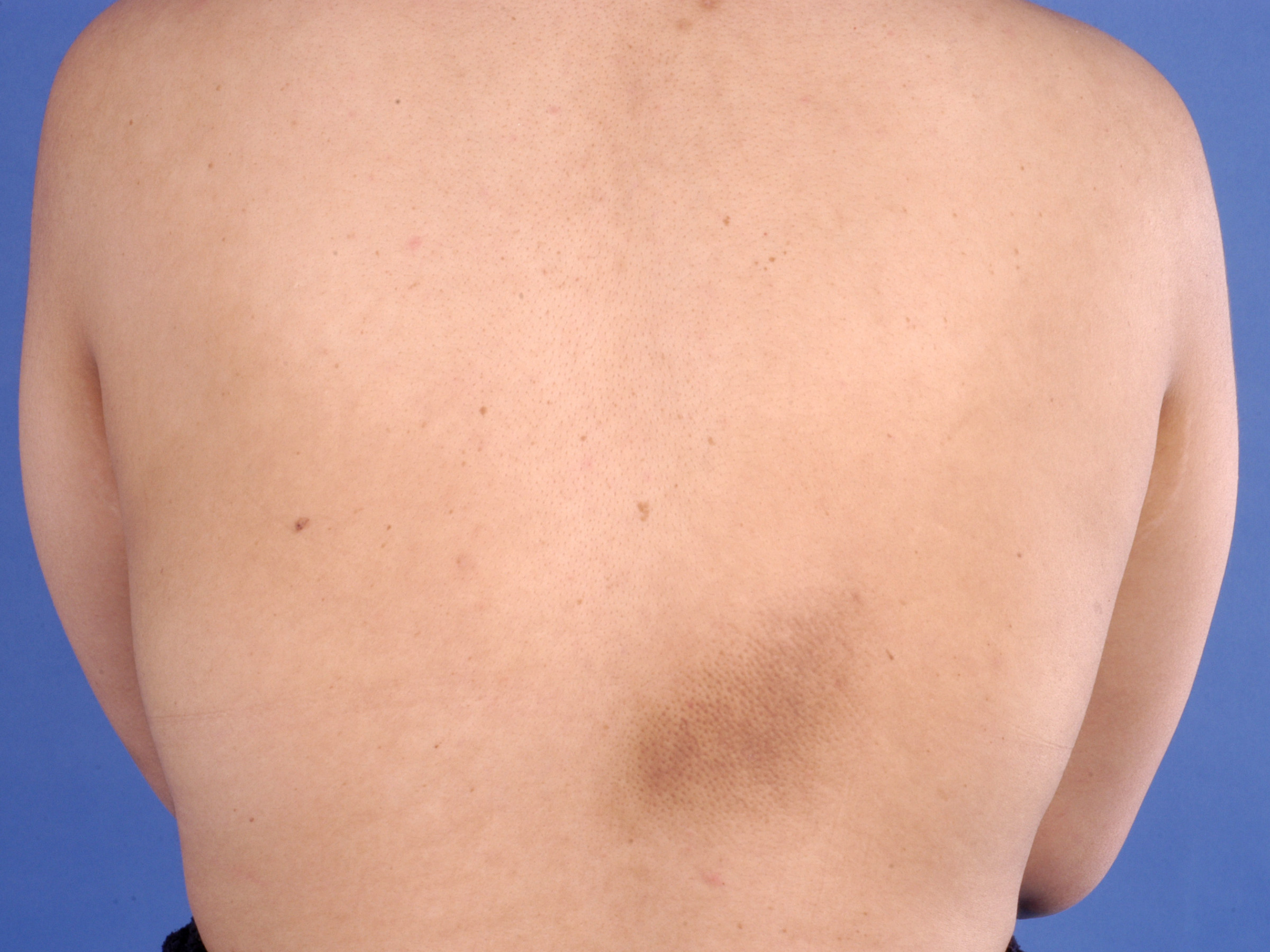
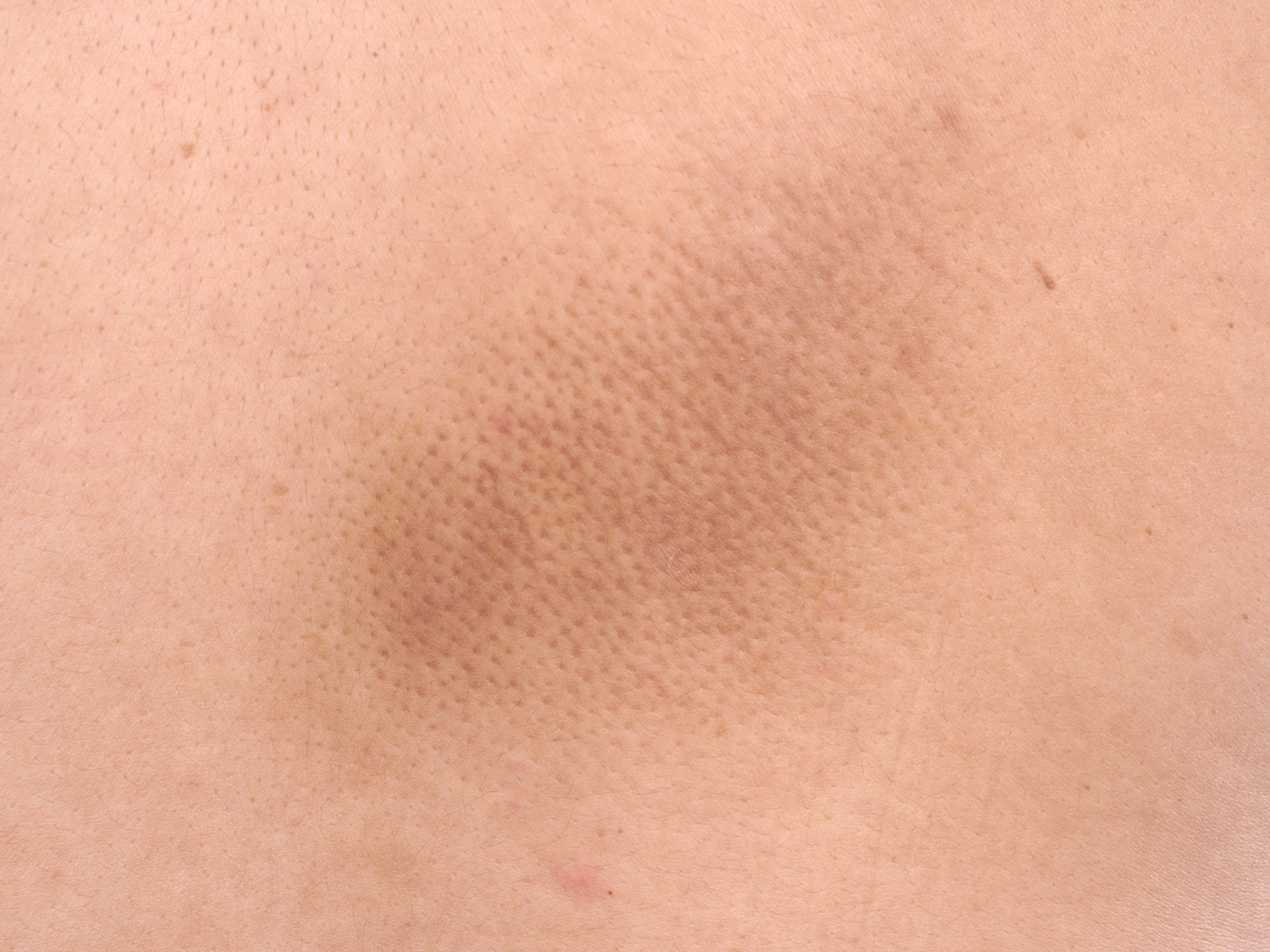
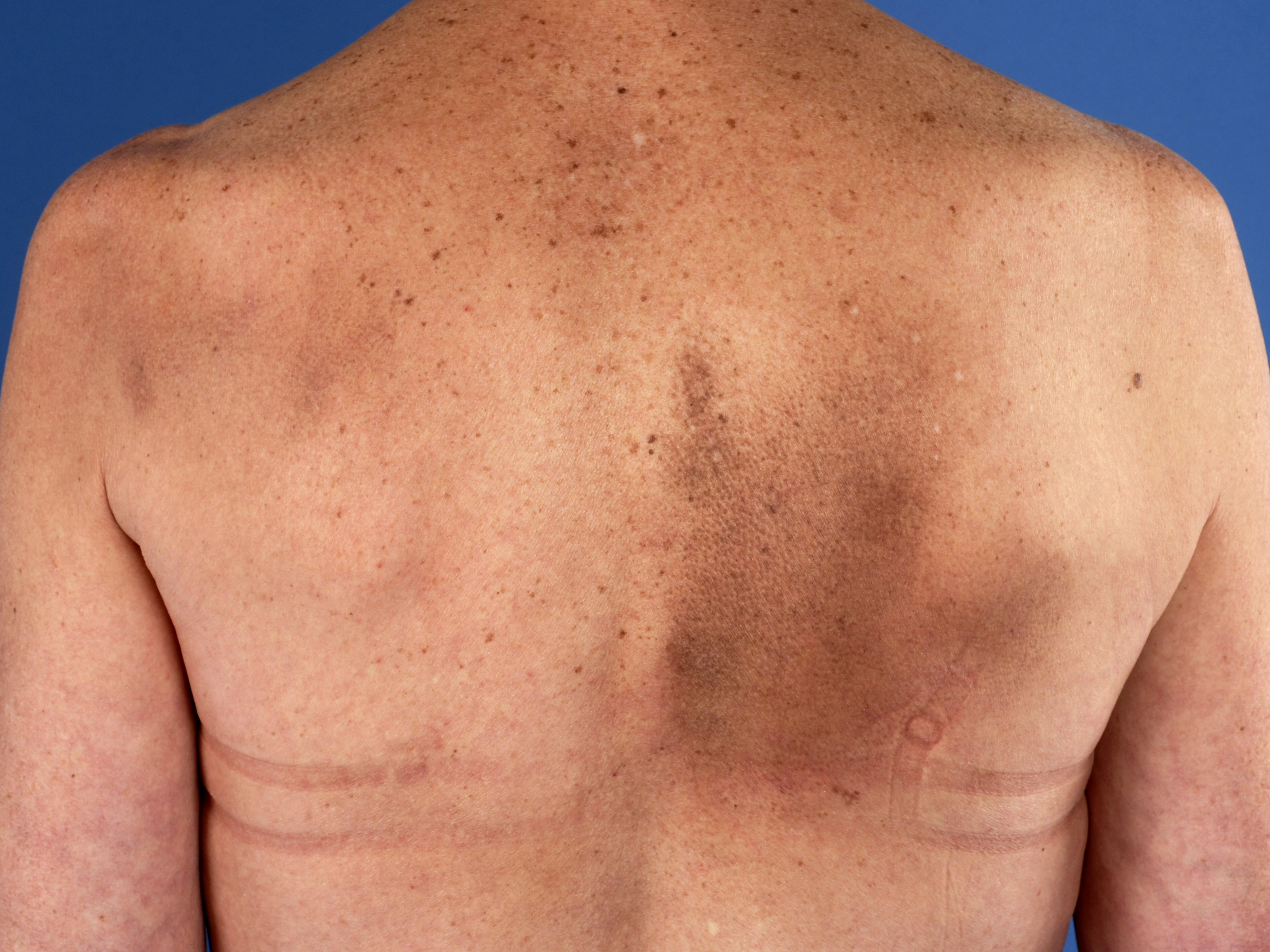
WHAT IS NOTALGIA PARESTHETICA?Notalgia paraestheticais the Latin name for a severely itchy spot on the back, at the level of the shoulder blade. The skin at that spot is often darkened and thickened. This is the result of prolonged scratching. The term "notalgia" refers to the symptoms: itching, burning, tingling, and sometimes even pain. The addition of "paresthetica" means "due to a sensory disturbance." This term is used because it is thought that the itching is caused by damage to the nerves that supply this patch of skin on the shoulder blade. It is not entirely certain that nerve damage is the cause; this is a theory. The itching associated with notalgia paresthetica can be very bothersome, making it an unpleasant condition.
English names and synonyms for notalgia paresthetica include "posterior pigmented pruritic patch," "subscapular pruritus," and "hereditary localized pruritus."WHAT DOES NOTALGIA PARESTHETICA LOOK LIKE?The spot is approximately 3-10 cm in size, located on the back, at the level of the shoulder blade, and usually only on one side. Initially, there is only an itchy spot and nothing visible. The itching is severe, leading to scratching, rough towels, back scratchers, or the itchy spot being constantly rubbed against chair backs. This scratching causes damage to the skin: the skin thickens, darkens, and can eventually develop into scars (sores, white patches, scabs). Notalgia paresthetica is a chronic condition. Sometimes it goes away, sometimes it returns.
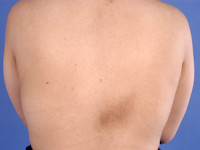 |
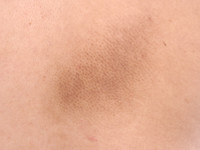 |
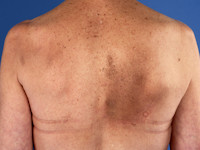 |
| notalgia paresthetica |
notalgia paresthetica |
notalgia paresthetica |
WHAT IS THE CAUSE OF NOTALGIA PARESTHETICA?The exact cause is unknown. One theory is that it arises from damage to the sensory nerves in this patch of skin above the shoulder blade. The nerves in this area create awkward angles between the muscles of the back and shoulder blade, which are constantly moving, making them particularly vulnerable. Nerves can also become trapped around the vertebrae. And after a viral infection with the herpes virus (herpes zoster, shingles), nerves can also be damaged.
If nerves are damaged, it can lead to numbness, but also to all sorts of other unusual sensations such as tingling, prickling, itching, and even pain.WHO CAN GET IT?In principle, anyone can get it, but it occurs most often in older age. People with spinal degeneration or a nerve disorder (neuropathy) are at greater risk.HOW IS THE DIAGNOSIS MADE?The diagnosis is based on the clinical picture, its appearance. The combination of the location, the brown or black color, and the itching is often sufficient to identify the condition.
Sometimes it's necessary to take a sample of skin from the area (a skin biopsy). There are other skin conditions that can cause an itchy, dark area, such as various forms of eczema.
The presence of a notalgia paresthetica area is not a reason to conduct extensive investigation for nerve compression. The connection to nerve compression is too vague for that. However, if other symptoms are present that could indicate nerve compression, such as back pain, numb skin, or if something has occurred that could have caused it (surgery, accidents, spinal wear and tear), then it is worthwhile to investigate. Options include an X-ray of the spine or a referral to a neurologist for nerve conduction testing (EMG, electromyogram).HOW IS NOTALGIA PARESTHETICA TREATED?Notalgia is difficult to treat. Treatment focuses on suppressing the itching. Several remedies are available for this purpose:Capsaicin creamCapsaicin cream FNA is a cream containing a pungent substance derived from Spanish red pepper. The ingredient capsaicin irritates the skin and stimulates the nerves, thus suppressing the itching sensation. The cream must be applied frequently, initially five times a day, then less frequently.Lidocaine ointment or EMLA creamThese local anesthetic creams can help with the itching. EMLA cream is best applied under a thin film bandage, as this allows it to penetrate the skin more effectively.Local anti-itch agentsOintments and lotions with cooling or anti-itch properties such as cooling ointment, menthol ointment, or levomenthol-lidocaine gel FNA.Topical corticosteroidsThese ointments and creams, which are also used for eczema, inhibit inflammation but can also reduce itching.AmitryptillineAmitryptilline is a drug that affects nerve impulse transmission. It can have side effects. See the package leaflet for this medication.WHAT ARE THE OUTLOOK?Notalgia paresthetica is a chronic condition. Sometimes the condition fades away over months or years. Unfortunately, in many people, it reactivates later. It's not dangerous, nor is it contagious, but it is very bothersome because of the itching. It's very difficult not to scratch, as it happens almost unconsciously (scratch reflex), even during sleep.WHAT CAN YOU STILL DO YOURSELF?Try not to scratch, as that will only make it worse. This is easier said than done, however. |