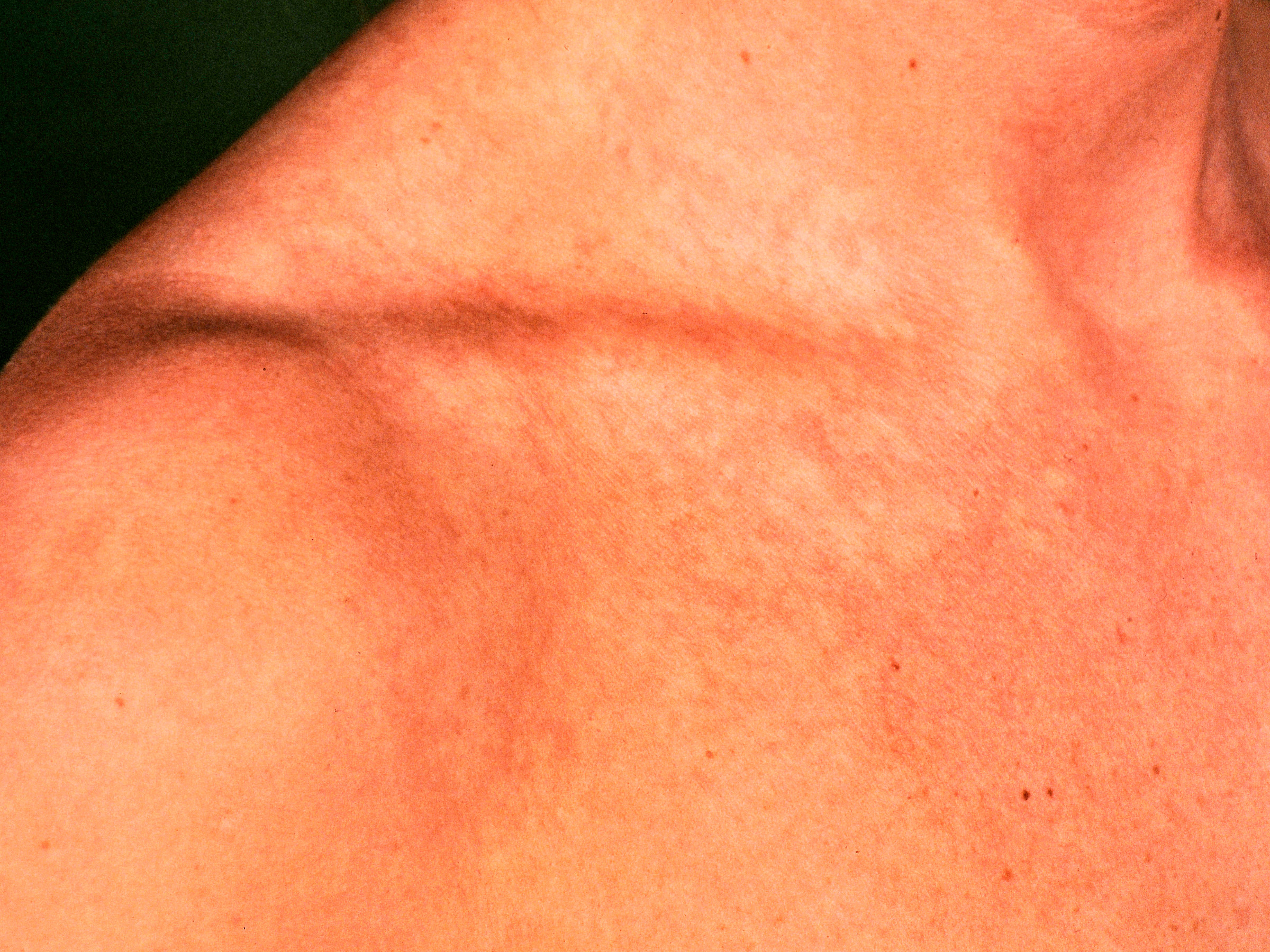
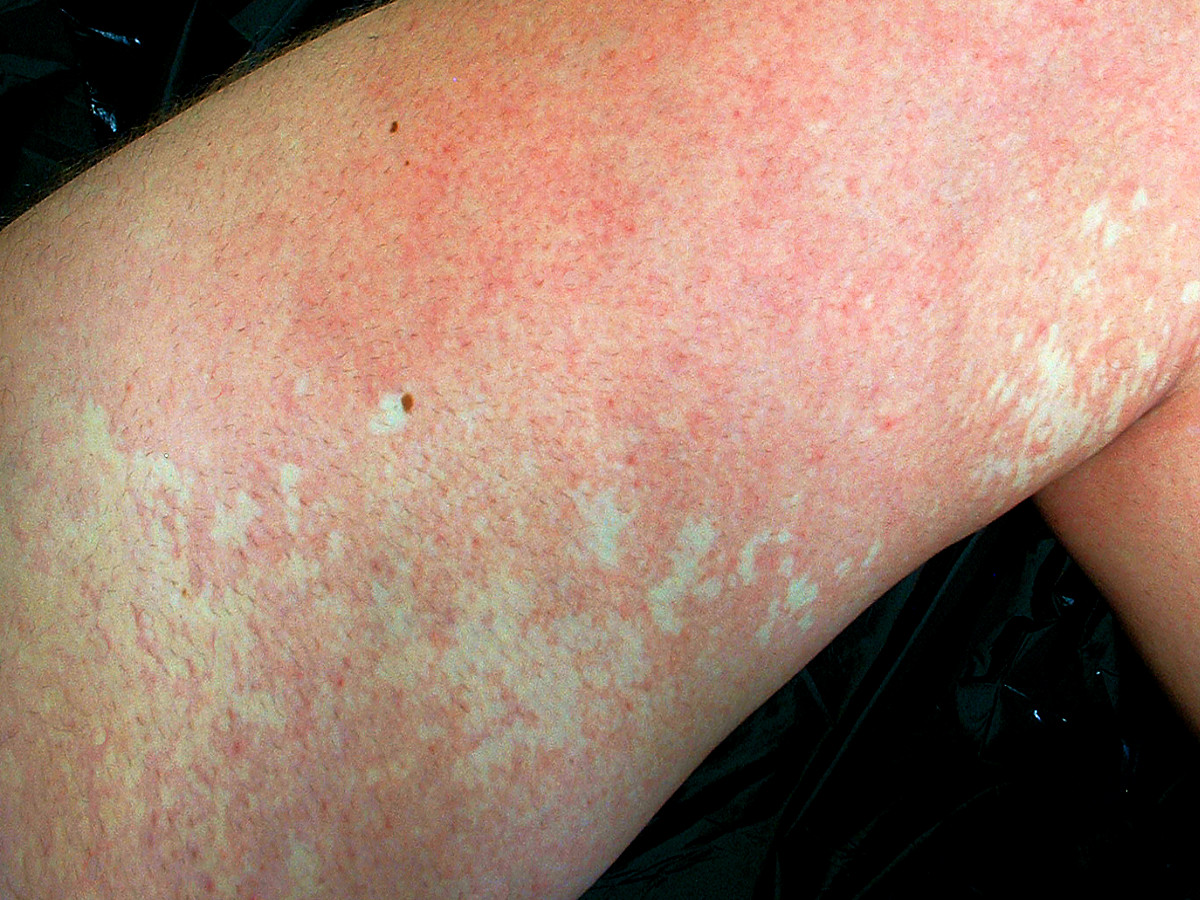
WHAT IS A NAEVUS ANEMICUS?A nevus anemicus is a pale spot on the body. The spot has a paler color compared to the surrounding skin because the skin in the nevus anemicus has reduced blood flow. A nevus anemicus is sometimes barely visible, but becomes visible when the surrounding skin reddens, for example, due to heat or rubbing.
Nevus is the medical term for a birthmark, and anemia is the term for paleness. A birthmark is usually a collection of pigment cells, but in the case of a nevus anemicus, it is a vascular abnormality. A nevus anemicus can be visible from birth, but this is not always the case. They can also become visible as early as toddler or preschool age. It is slightly more common in girls than boys. It is a rare condition. It is not hereditary.
 |
 |
| nevus anemicus |
nevus anemicus |
Photo right: Birthmarkshare - Wikimedia (Creative Commoms License 1.0 - Public Domain Image).
WHAT DOES A NAEVUS ANEMICUS LOOK LIKE?A nevus anemicus is a patchy, pale spot. It's usually on one side of the body, particularly the trunk. Most are on the chest. It can also appear on the neck or on the arms or legs. Usually, there's only one. Having multiple anemic nevi is common but very rare. The spot is barely visible, but becomes more noticeable when the difference in blood flow increases, for example, with heat or by rubbing the skin. In normal skin, the blood vessels dilate, and a red color develops. This doesn't happen with a nevus anemicus, because the blood vessels don't dilate. The spot remains stable for the rest of the patient's life, and no new spots develop. The spot is no more sensitive to sunburn than the surrounding skin because the pigment cells are intact. A nevus anemicus doesn't cause any symptoms. Parents often take it to the doctor because it's noticeable and they want to know what it is; sometimes it resembles vitiligo.HOW IS NAEVUS ANEMICUS DIAGNOSED?The diagnosis is based on the clinical picture, its appearance. Rubbing the skin increases the contrast. Pressing it with a glass compresses the blood vessels, and the difference between the spot and its surroundings disappears. A Wood's lamp (UV light, black light) can be used to examine the area, and then no difference is visible between the spot and its surroundings, while with a vitiligo spot, a significant difference is seen.HOW DOES A NAEVUS ANEMICUS OCCUR?A nevus anemicus is caused by an abnormality in the capillaries of the skin. These are narrowed or permanently constricted, and they lack the ability to respond to various stimuli by vasodilating. This results in a difference in blood flow to the skin, which causes the color difference. Taking a biopsy of a nevus anemicus is pointless; no abnormalities are visible under the microscope, and the capillaries appear normal.HOW IS A NAEVUS ANEMICUS TREATED?There is no treatment for a nevus anemicus, and treatment is unnecessary because there are no symptoms. In the rare situation where a nevus anemicus is on the face and is cosmetically unsightly, it can be camouflaged with makeup.WHAT ARE THE OUTLOOK?A nevus anemicus will not disappear, but it will also not grow larger. During childhood, the spot does grow along with the body, but after that, it remains stable, and no new spots develop. It is a harmless condition that never causes any symptoms. |