WHAT IS LYMPHOGRANULOMA VENEREUM?Lymphogranuloma venereum, abbreviated LGV , is a rare sexually transmitted infection (STD) that is uncommon in Western countries like the Netherlands. It is common in tropical countries (Southeast Asia, Africa, Central America, and the Caribbean). It is caused by a specific variant of the Chlamydia bacterium, not the same type that causes the well-known Chlamydia infection of the urethra in men and women, but a different type (designated in the laboratory by the letters L1, L2, or L3).
Lymphogranuloma venereum is contracted through unprotected sexual contact. People who have frequent sexual contact or engage in anal sex are at greater risk of infection with LGV. As are, of course, people who have had sexual contact with someone from tropical regions where this disease is common. It is more common in men than women.PHENOMENAThe infection initially causes few symptoms. On average, 10-14 days after contracting the infection (sometimes as early as 3 days, sometimes as late as 6 weeks), a small, inconspicuous bump, blister, or ulcer may appear on the penis or vaginal wall, which then disappears after a few days.
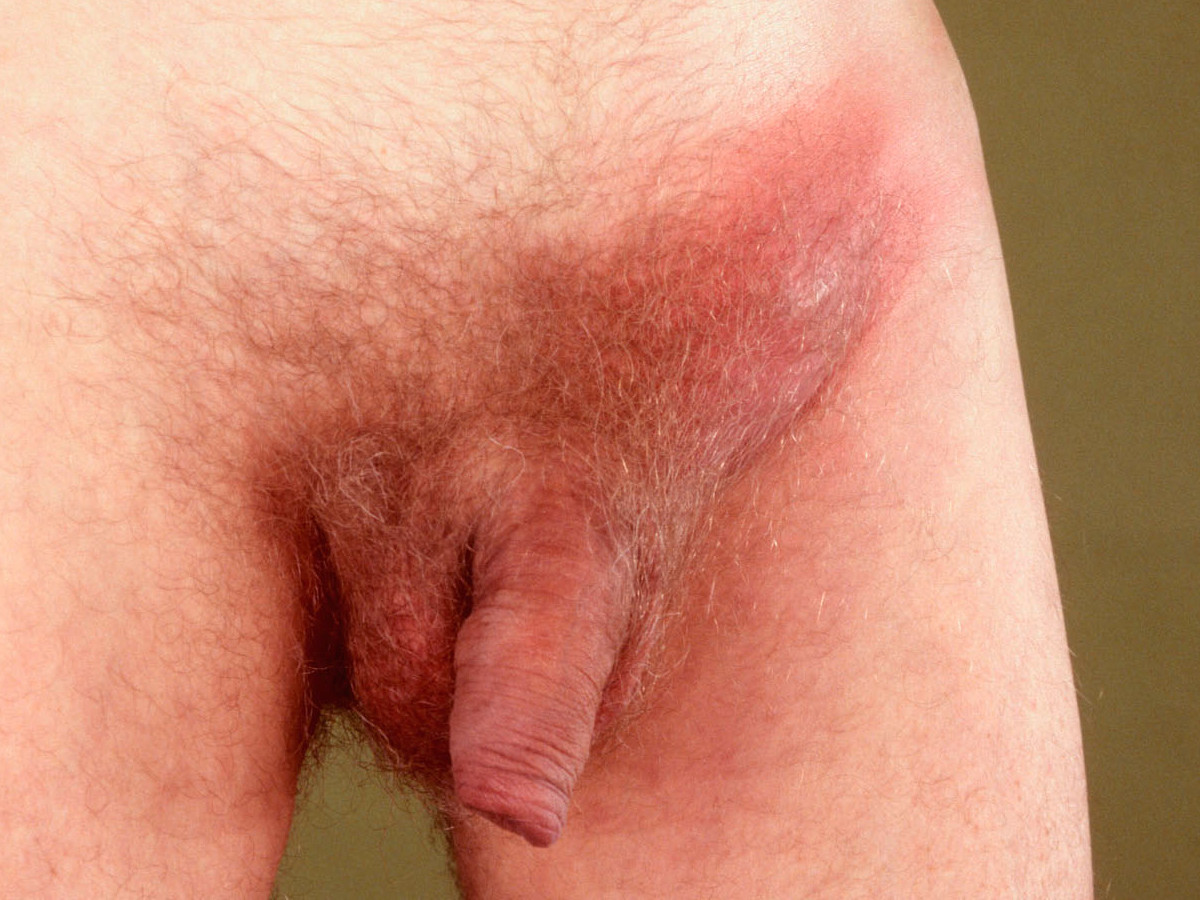
Then, usually 2-6 weeks later, painful, swollen lymph nodes develop. In men, this usually occurs in the groin, often on one side; in women, it is the deeper glands in the pelvis that swell (with symptoms such as lower abdominal pain or lower back pain). The glands can become very large and almost burst due to the accumulation of inflammatory fluid in them. Sometimes, the glands rupture spontaneously, and the fluid drains. General symptoms may also be present at this stage, such as fever, chills, flu-like symptoms, muscle aches, and joint pain.
 |
 |
 |
| lymphogranuloma venereum |
lymphogranuloma venereum |
swollen lymph nodes |
RESEARCHTo determine whether lymphogranuloma venereum is present, a culture is taken and examined with a specific test (called NAAT or PCR) for Chlamydia type L1, L2, or L3. A blood test for LGV can also be performed, but this is less common since the specific test became available.
In addition to the LGV test, as with everyone who visits the doctor for a sexually transmitted disease (STI), tests will also be performed for other STIs that can cause similar symptoms (ulcers and swollen lymph nodes), such as syphilis. The doctor may take a smear from the urethra and/or cervix and/or anus and examine the urine. To determine whether you might also have syphilis or an HIV infection, the doctor usually also performs a blood test. If the doctor is going to perform a blood test for HIV infection (the cause of AIDS), this will be discussed with you first.TREATMENTLymphogranuloma venerum can be cured effectively with a course of antibiotics. However, long-term treatment is required, usually three weeks. It is important to always complete the prescribed course of treatment, even if symptoms disappear sooner. Your partner(s) may also have an infection, even if they are not experiencing any symptoms. Therefore, it is important that your partner(s) undergo examination and, if necessary, treatment. It is best to avoid sex during treatment. This prevents you and your partner(s) from repeatedly infecting each other. If you do have sex, use a condom. If your symptoms persist after treatment, return to your doctor.
For very large, swollen lymph nodes that are at risk of bursting, the fluid can be aspirated using a needle and syringe to relieve pressure and reduce pain.LATE EFFECTS OF LGVIf the infection is severe, problems can arise later, sometimes even years later, due to the inflammation and swelling of the lymph nodes. Chronic inflammation can develop, particularly in and around the anus, and sometimes abscesses and fistulas develop. Symptoms include pain, fever, urge to urinate and cramping, itching around the anus, pus discharge, or bloody diarrhea. The chronic inflammation can eventually cause serious damage to the anus, possibly requiring surgical intervention. Lymphatic vessels can also become damaged and blocked. |