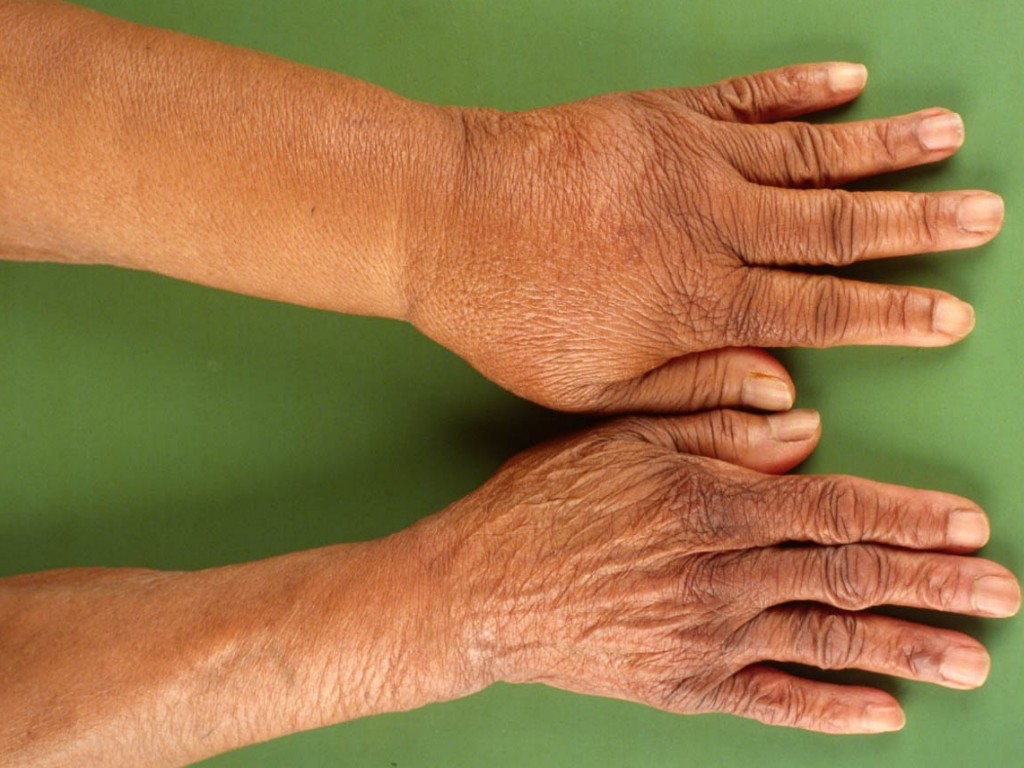
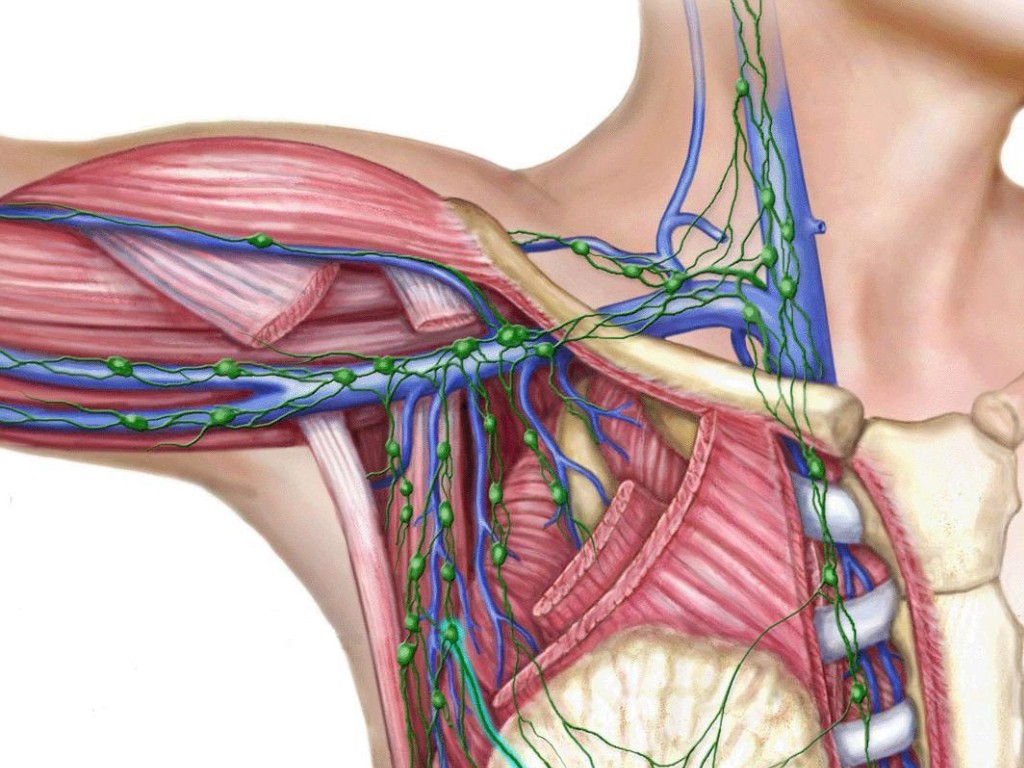
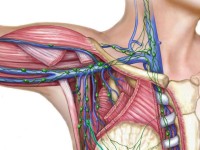
WHAT IS LYMPHEDEMA AND HOW DOES IT DEVELOP?In addition to blood vessels, the body also has lymphatic vessels. The lymphatic vessels transport protein-rich tissue fluid (lymph) back to the vascular system. Lymphedema is an abnormal accumulation of lymphatic fluid due to an imbalance between production and drainage. This imbalance can have various causes, including surgery and/or radiation therapy. During breast cancer surgery, in which the lymph nodes from the armpit must be removed, unavoidable damage to the lymphatic vessels occurs. This increases the risk of developing lymphedema in the arm. This risk increases if the armpit also requires radiation therapy after this surgery. Lymphedema can develop years after surgery, so it remains important to focus on preventing it. Once lymphedema develops, it does not go away on its own and can be very bothersome.COMPLAINTSSymptoms that may arise from lymphedema include swelling, a feeling of tiredness and heaviness, pain or tingling, limitations in movement and/or limitations in daily functioning, skin abnormalities and infections.
 |
| lymphedema arm |
PREVENTING LYMPHEDEMATo prevent lymphedema, it's important to ensure that excess lymph fluid doesn't build up in the arm and that it continues to flow freely.
Heavy loads, high temperatures, and infections can all cause excess fluid production. Therefore, try not to overload your arm and be careful with heat. However, it's important to keep moving. Exercise and regular physical activity are beneficial, as long as you don't force anything. Muscle movement will help lymph fluid flow through the body and drain more efficiently. Infections can also damage lymphatic vessels, disrupting the balance between supply and drainage.SOME RULES OF LIFE- If you are lying or sitting, elevate your arm and hand.
- Preferably do not have your blood pressure checked on the arm of the operated side.
- Preferably do not have blood drawn from the arm of the operated side.
- Preferably do not have an IV inserted in the arm of the operated side.
- Prevent wounds and infections on the arm and hand by thoroughly disinfecting any wounds with
disinfectant and applying a bandage.
- Wear gloves when performing rough tasks (gardening, dirty housework, etc.)
. - Maintain good hygiene and take good care of your skin.
- Avoid overexerting your arm by gradually increasing your activities.
- Find a balance between rest and exertion, but try to move normally. Light exercise is fine
- Be careful with hot water, steam, hot showers, baths, sauna visits and prolonged sunbathing
- Do not use hot water bottles, 'cherry stone', red lamp or warm packs on your arm or shoulder
- Do not overexert yourself in hot weather, take breaks and do arm and shoulder exercises occasionally
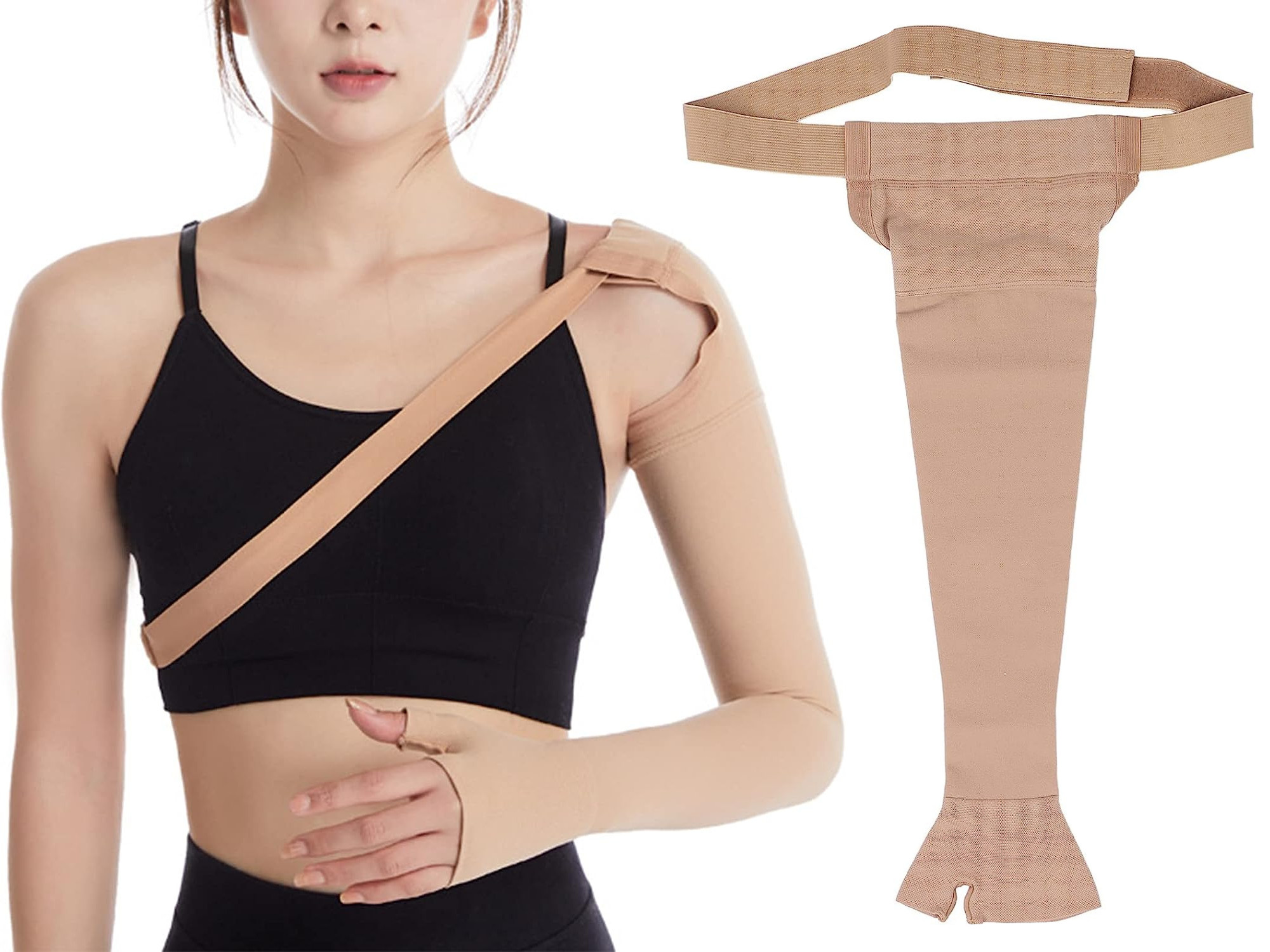
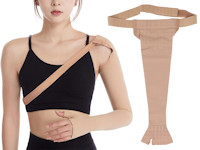
- Do not wear tight clothing, jewelry or 'sleeve holders'WHAT TO DO IF YOU HAVE COMPLAINTS?Despite all the lifestyle rules, lymphedema can still develop, even if it only occurs during exertion. Why some people develop it and others don't is unclear. If you notice symptoms consistent with lymphedema, you can first try resting and elevating your arm. If the symptoms don't improve in the following days, contact your GP, your treating physician, or your oncology nurse. If you notice signs of an impending infection, you should contact these experts sooner. The sooner measures are taken, the greater the chance of resolving the lymphedema.TREATMENTLymphedema of the arms can be treated by fitting a compression stocking for the arm.
Massage techniques (manual lymph node drainage) can also be used to help drain lymph from the arm towards the lymph nodes. There are certified therapists throughout the Netherlands who can perform this.
 |
 |
| lymphatic vessels in the armpit |
compression stocking arm |
Further information can also be found on the website of the Drachten Lymphedema Working Group:
www.lymfoedeem.nl |