What you need to know about tick bites and Lyme disease if you come into contact with them through your work.
Anyone who comes into contact with nature in any way should be aware of the risk of being bitten by a tick and thus contracting Lyme disease. You can't avoid forests, wooded areas, and gardens. However, you can protect yourself reasonably well against tick bites by wearing the right clothing. Prevention is always better than cure. It's important to remove ticks that have attached to you as soon as possible. It's also wise to note the date of a tick bite in your calendar immediately. The first visible symptom of Lyme disease is a red, ring-shaped rash around the tick bite. But other, less easily recognized symptoms can also occur. If you experience symptoms that could indicate Lyme disease, consult your occupational health physician or general practitioner promptly. Lyme disease, especially in its early stages, can be treated effectively and quickly with antibiotics.
The summary above outlines what you should know if you come into contact with ticks through your work. There's much more information about tick bites and Lyme disease. This handout answers several questions about ticks and Lyme disease. If you'd like to know more about this disease, you can always contact your occupational health physician.TICK BITES (NOT) ANYTHING SPECIAL?Anyone who spends a lot of time in forests and other natural areas for work is at high risk of being bitten by a tick. Often, you'll barely notice it. When you get home, you simply remove the tick. If only it were that simple. If only tick bites were just an annoying side effect of being in nature. Unfortunately, that's not always the case. Ticks can be infected with bacteria and viruses. They can transmit these through their bites, thus causing infectious diseases. In Eastern Europe, for example, encephalitis occurs, caused by a virus and transmitted by a tick bite. This disease, called FSME, is not yet known in the Netherlands. Here, we only know Lyme disease.
Ticks and Tick Bites:
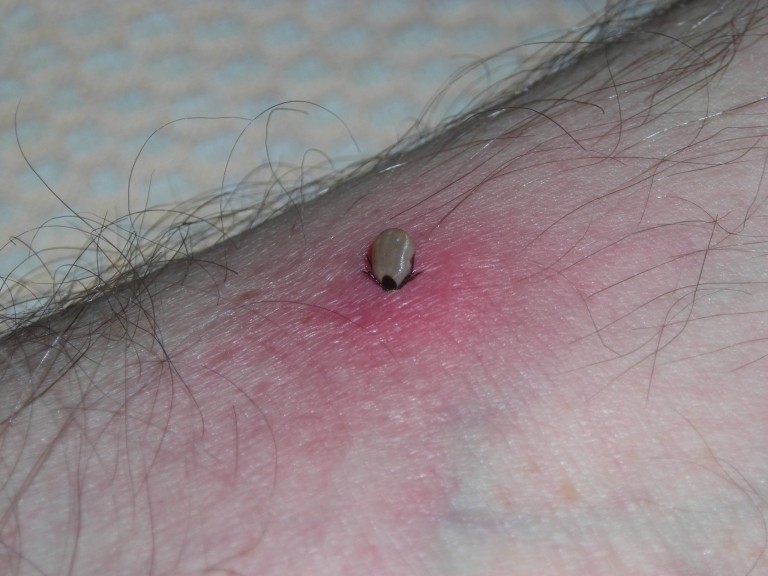
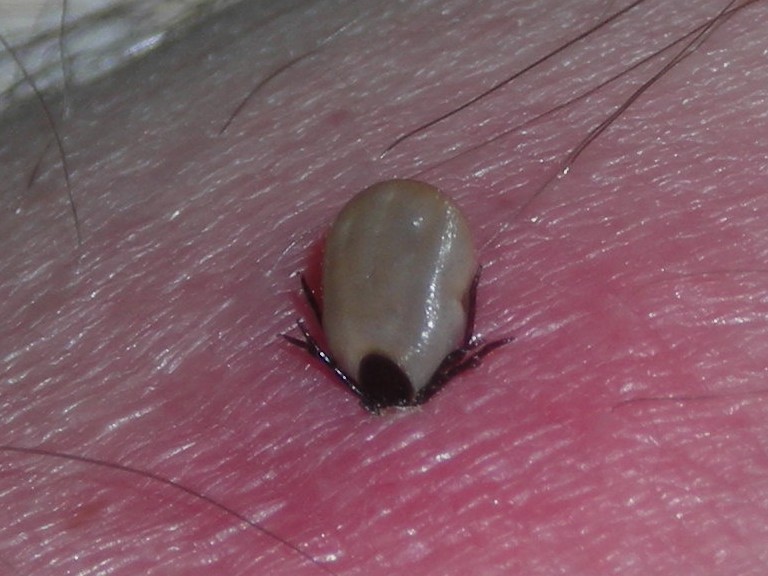
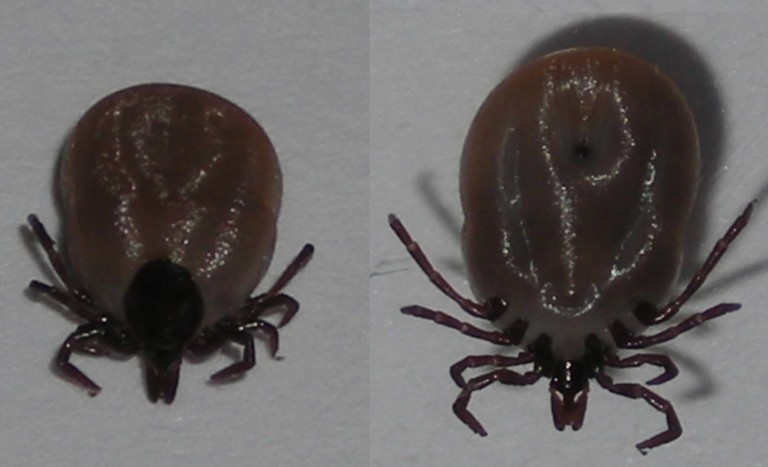
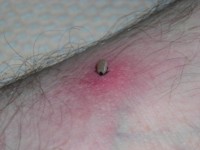
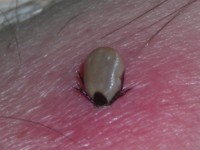
Ticks are parasites. They attach themselves to the skin of animals and people to suck blood. They do this primarily on animals. Ticks then travel from these animals to shrubs and trees. Ticks then travel from these shrubs and trees to you. People cannot be infected by infected animals, but only by a direct tick bite.
Not every tick bite transmits Lyme disease. Only 15% of ticks in the Netherlands are infected. The tick attaches to the skin and sucks its blood through a snout-like organ. The bacteria and viruses within the tick's body can thus come into contact with the host's blood. This doesn't happen immediately; the tick takes its time to engorge itself. The longer the tick is engaged in blood-feeding, the greater the risk of transmitting the infection.
That's why it's so important to remove ticks quickly. The shorter the tick remains attached, the lower the risk of infection. It's even better to prevent tick bites as much as possible.
 |
 |
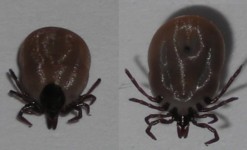 |
| Ixodes ricinus (tick) |
Ixodes ricinus (tick) |
Ixodes ricinus (tick) |
Preventing Tick Bites
Prevention is always better than cure. But preventing tick bites isn't easy: your work requires you to spend a lot of time in wooded areas or nature reserves. Moreover, it's difficult or impossible for you to walk around bundled up all the time. However, your clothing is crucial: long-legged trousers and long-sleeved shirts and sweaters. These clothes also need to fit well, as ticks have a nasty habit of crawling through the smallest openings. So: tuck your trouser legs into your boots or socks, and your shirt or T-shirt into your trousers.
At the end of the day, check your body for ticks. If you've been bitten by a tick, note the date in your calendar. Also, pay close attention to physical symptoms that could indicate Lyme disease, such as a red, ring-shaped rash around the tick bite.
Removing a Tick
If a tick attaches to you, try to remove it as quickly and thoroughly as possible. Never disinfect a tick before removing it. This increases the risk of infection. Carefully pull the tick out using your thumb and index finger or, even better, with special tick tweezers or a tick key (Tick Remover), taking care not to squeeze its body. Then disinfect the wound with a cotton ball soaked in alcohol.
Lyme disease, a 'new' disease
. Lyme disease is a 'new' disease. The 'new' word is in quotation marks because it means that although the disease has existed for decades—including in the Netherlands—we are only recently recognizing it more frequently.
Lyme is the name of a town in Connecticut, USA, nestled in the woods. In 1975, an epidemic of joint disease broke out there. This sparked intensive research in America and Europe. This research revealed that it was a disease caused by a bacterium (Borrelia burgdorferi). It was also discovered that this bacterium was transmitted by ticks. Joint pain isn't the only symptom of Lyme disease. The disease can also cause skin, nervous system, and heart disorders.
Antibodies
It is now known that people bitten and infected by infected ticks can produce antibodies (antibodies are produced by the body attempting to neutralize the bacteria). These antibodies are often only detected in the blood several months after the tick bite. Therefore, a blood test does not always indicate whether or not someone is infected with Lyme disease. Research conducted by Staatsbosbeheer (State Forestry Service) employees also shows that only about a quarter of people with antibodies actually experienced symptoms. Having antibodies certainly does not guarantee protection against Lyme disease. Furthermore, it is still unknown how long these antibodies remain in the blood.
Lyme
disease has three consecutive stages. Fortunately, Lyme disease can usually be treated successfully in each of these stages. The difficulty with Lyme disease is that there are known cases in which the first and/or second stages appear to have been skipped, and the patient only experiences the later symptoms. Because these later symptoms of Lyme disease can also be associated with other conditions, the treating physician may not immediately suspect Lyme disease. Therefore, you should always inform the doctor if you have (had) been exposed to tick bites due to your work.
The first stage:
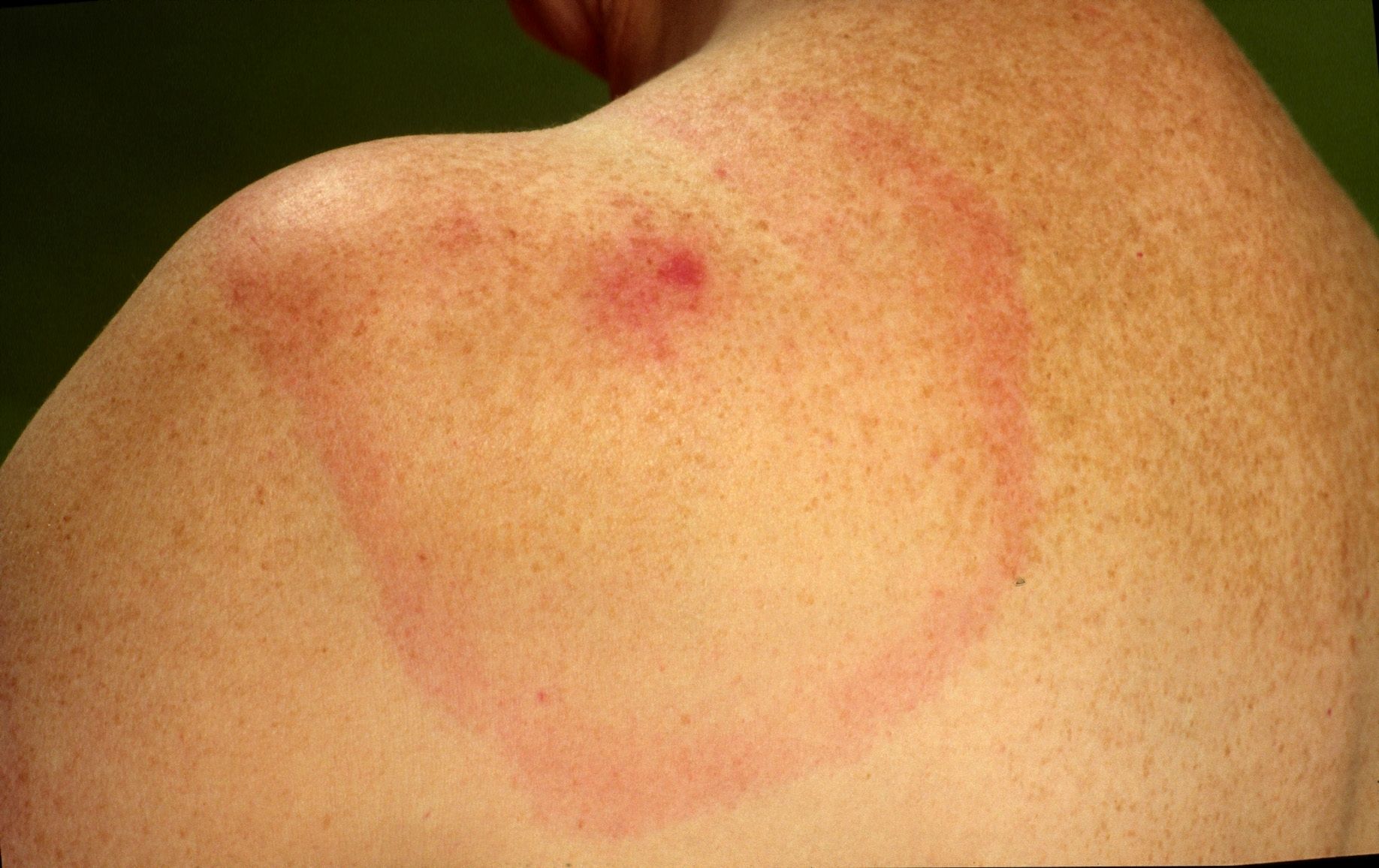
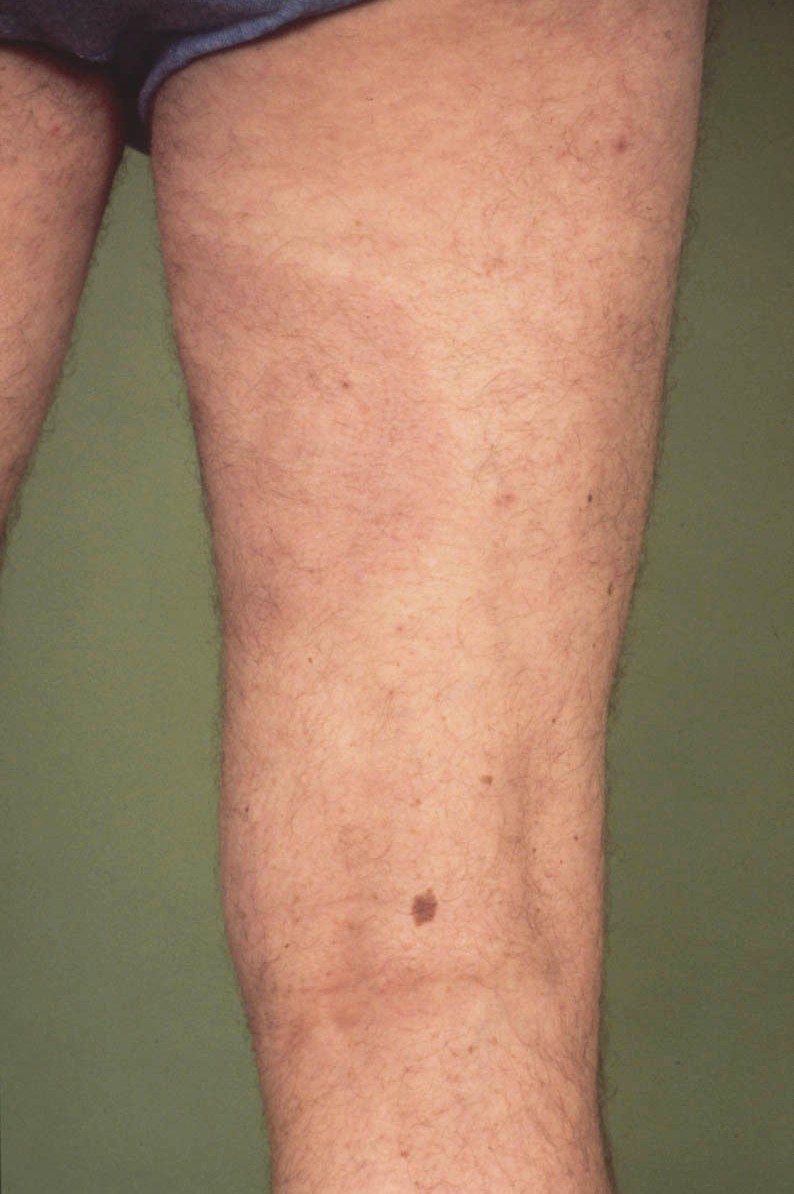
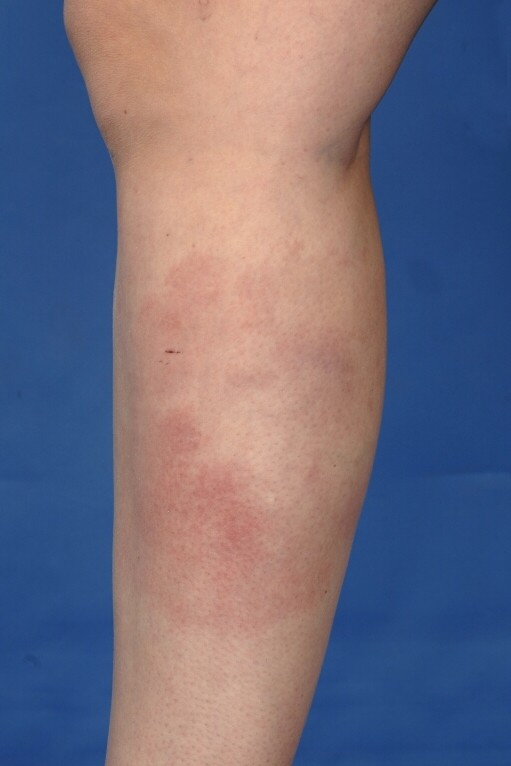
A red spot may appear at the site of the tick bite, which gradually enlarges and fades in the center (erythema migrans). A faint, light-red, ring-shaped spot may remain around the tick bite for some time. The tick bite itself is often no longer visible. This skin condition (often a subtle rash) usually develops within three weeks of the tick bite and often remains visible for several months.
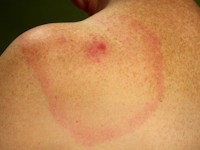 |
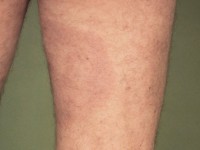 |
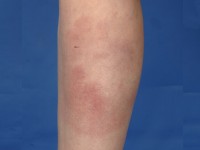 |
| erythema chronicum migrans |
erythema chronicum migrans |
erythema chronicum migrans |
The second stage:
A few weeks to months after the tick bite or the (mild) rash, disorders of the nervous system, joints, and/or heart can develop. Neurological symptoms may include pain in the arms or legs, headache, facial paralysis (causing the eyelid to stay closed and the corner of the mouth to droop), and double vision. Joint symptoms include swollen, painful joints. Heart disorders caused by Lyme disease are rare. Symptoms suggestive of this include a slow pulse and a tendency to faint.
The third stage:
When the neurological symptoms and joint complaints worsen and become chronic, it is called the third stage. The third stage also includes a skin condition localized to the hands, forearms, lower legs, and/or feet. The skin turns dark red to purple.
Treatment:
There is (as yet) no vaccine against Lyme disease. Therefore, the disease cannot be prevented with medical means, but it can be treated and cured. If you have symptoms suggestive of Lyme disease, see your occupational health physician or general practitioner promptly. Always keep your occupational health physician informed of the progress of your treatment if you contracted the disease at work.
Lyme disease is treated with antibiotics. The antibiotic used and how it is administered depend on the symptoms. The treatment outcome is almost always good at any stage of the disease, although joint pain can often persist after treatment. It is important that you seek treatment as soon as possible. This increases the chance of success. When referring you to a specialist, your general practitioner should definitely mention the possibility that your occupation and/or previous symptoms could be a sign of Lyme disease. After recovery, you are not immune to Lyme disease! You can be re-infected by tick bites!
Examination:
If the doctor suspects Lyme disease, the diagnosis can be made through a physical examination and (sometimes) a blood test. However, it can sometimes take months for the body to develop antibodies. That's why it can be difficult to determine whether someone has Lyme disease through blood tests.
Preliminary testing, such as regular blood tests, is of little use in Lyme disease. This is for the same reasons mentioned above, and also because someone who doesn't have antibodies today may have them tomorrow. Blood tests even have drawbacks. They can give a false sense of certainty. Even if the body doesn't produce antibodies, that doesn't necessarily mean you don't have the disease.
The best form of investigation is to monitor your body closely and contact your occupational health physician or general practitioner for any symptoms that might even remotely suggest Lyme disease.
Finally
, it's clear that Lyme disease, especially after the initial stage, isn't an everyday illness. However, that doesn't mean you should be overly concerned if you've been bitten by a tick. First, not every tick bite is contagious. Second, an infected tick doesn't always cause an infection. Third, being infected doesn't guarantee symptoms will develop. Fourth, now that we know what causes the disease, it can usually be treated effectively. |