| LICHEN SIMPLEX CHRONICUS |
 |
 WHAT IS LICHEN SIMPLEX CHRONICUS? WHAT IS LICHEN SIMPLEX CHRONICUS?
Lichen simplex chronicus is the medical term for an intensely itchy patch of skin, often on the lower legs. It is caused by repeated scratching of the same area. The excessive scratching causes the skin to become thicker, harder, and often darker in color, especially in people with darker skin. Scratching is usually an unconscious and uncontrollable response to the itching. The itching is often worst at the end of the day and when at rest (when there are no other distractions). People also scratch the areas unconsciously at night while sleeping. Chronic scratching sometimes becomes a habit. Emotions, stress, and psychological factors also influence scratching behavior. Lichen simplex chronicus occurs without other skin diseases being present, but it also occurs in patients who have an itchy skin disease such as atopic eczema, dry skin, or psoriasis. It also occurs in patients who experience itching all over their body.
WHAT DOES LICHEN SIMPLEX CHRONICUS LOOK LIKE?
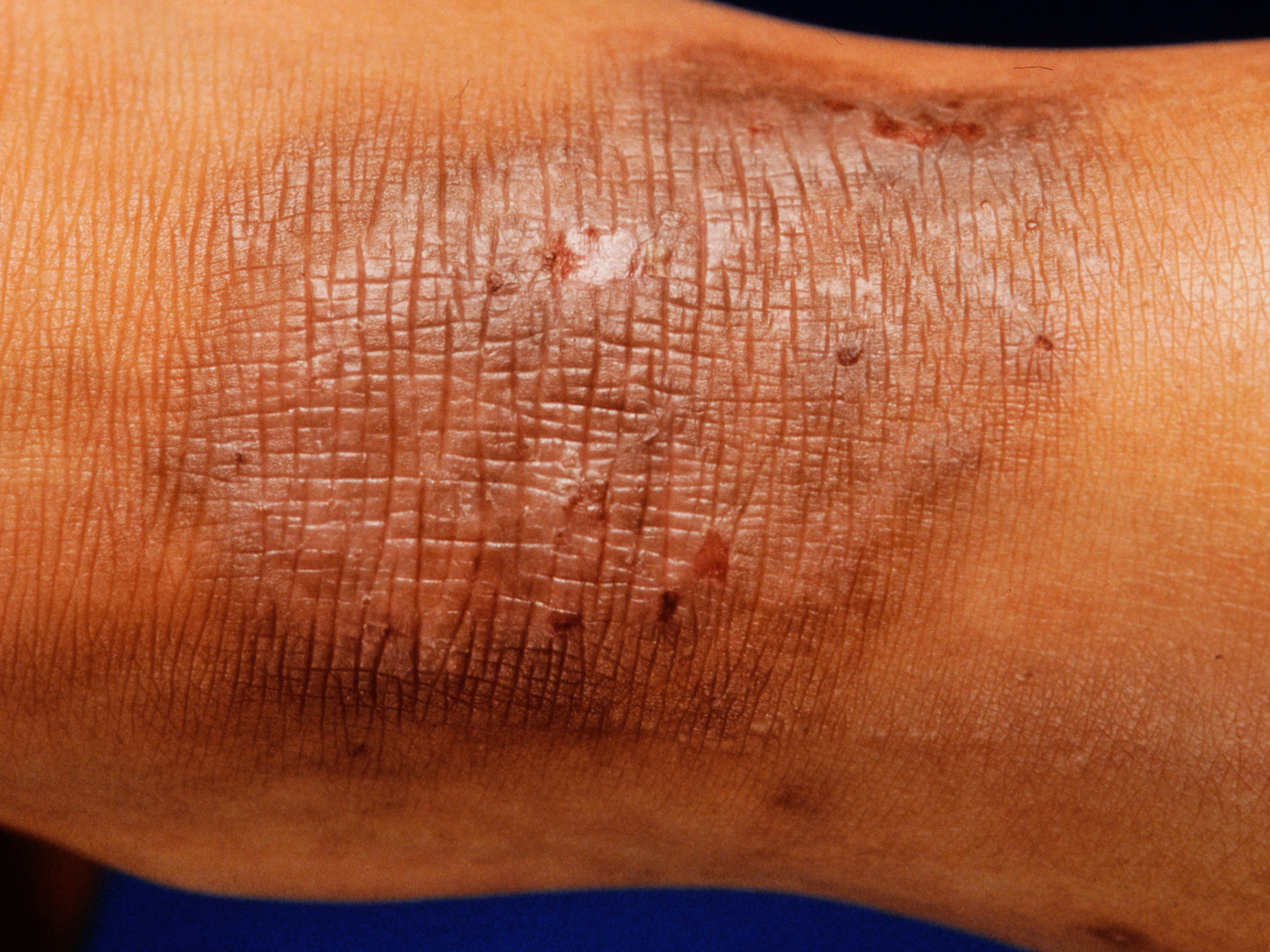
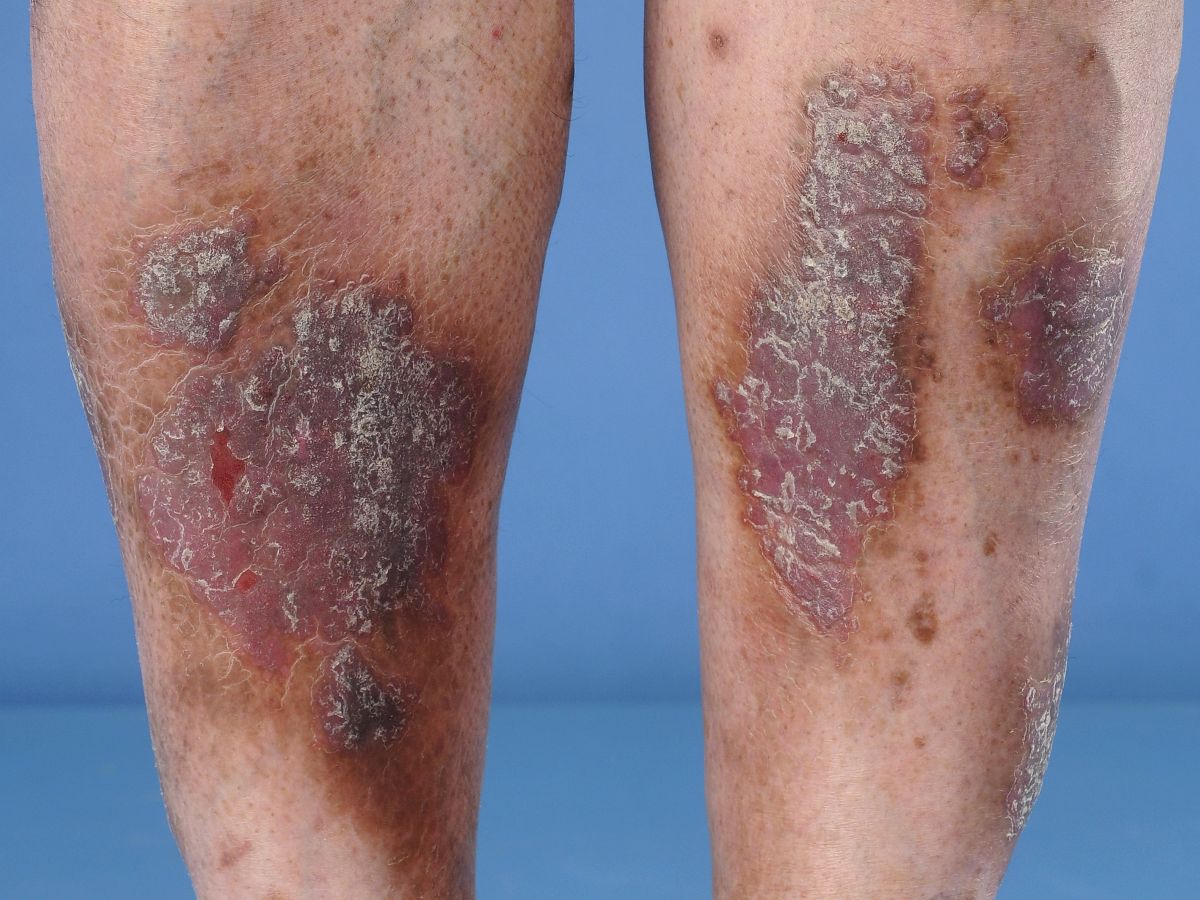
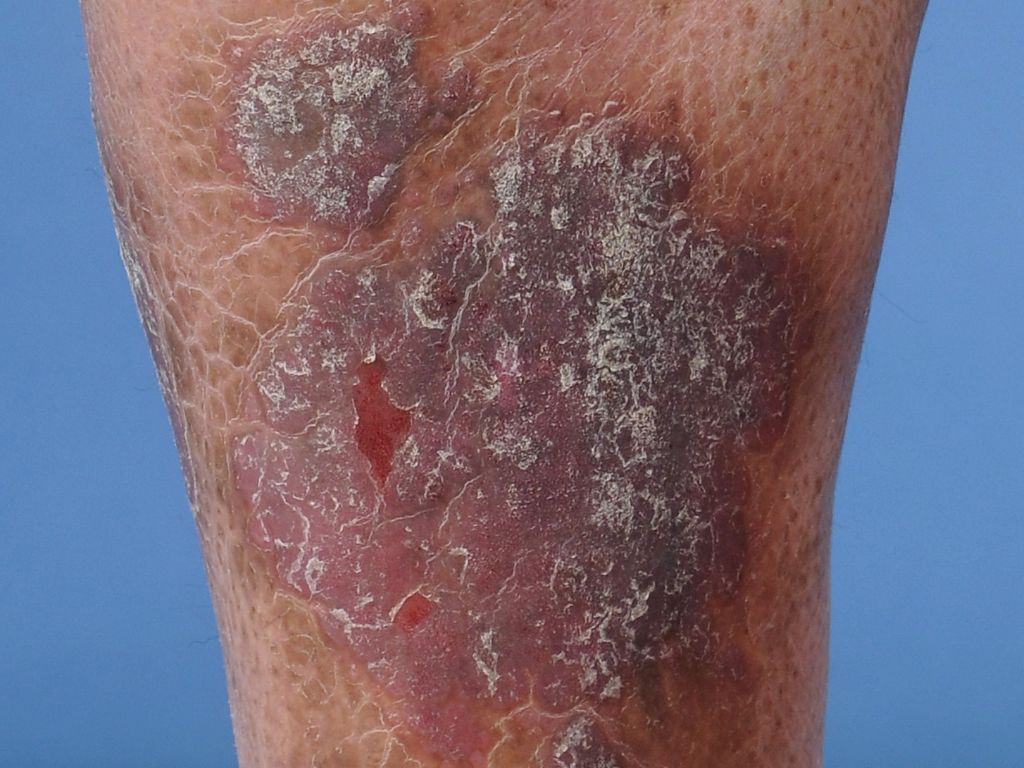
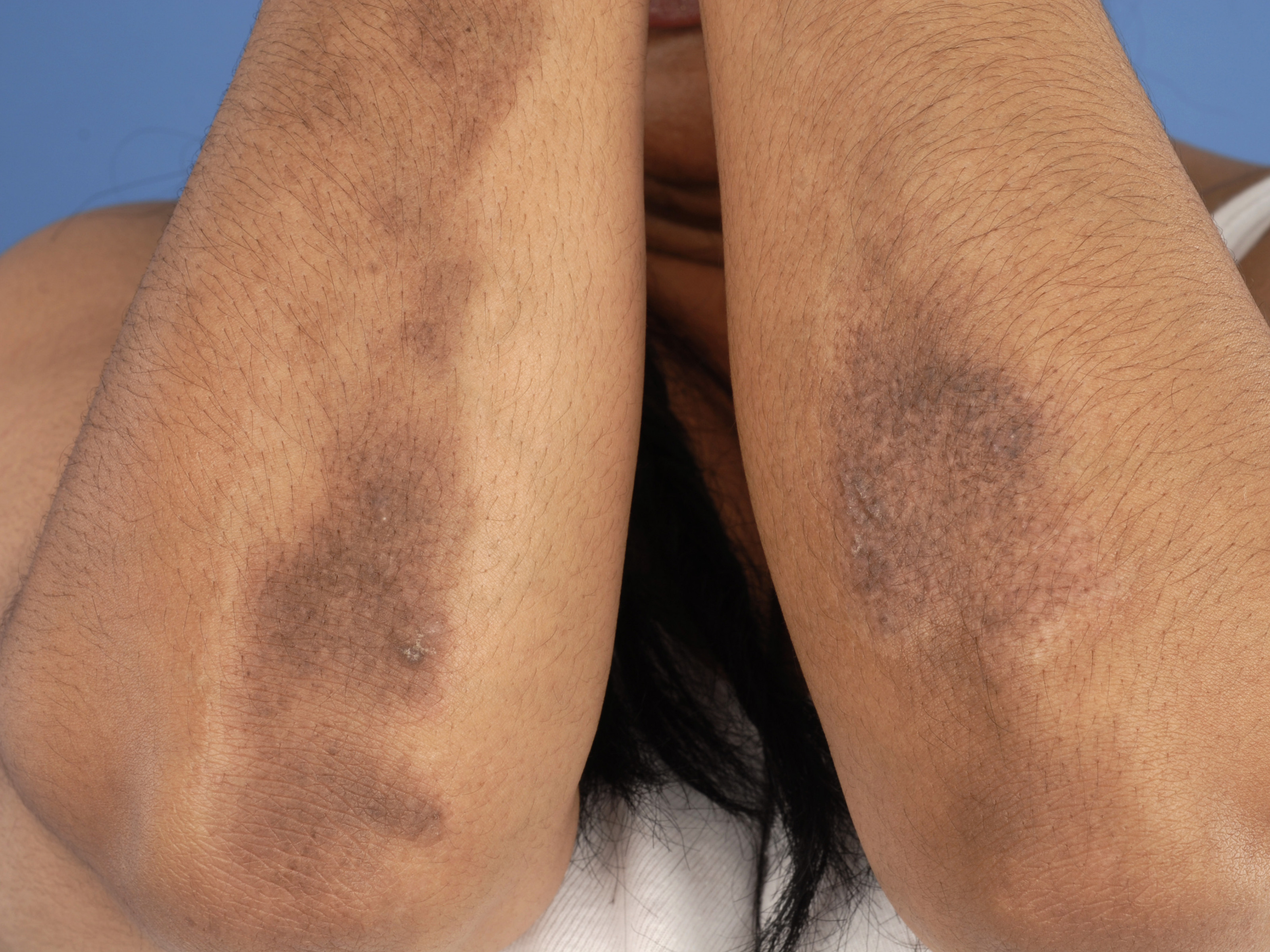
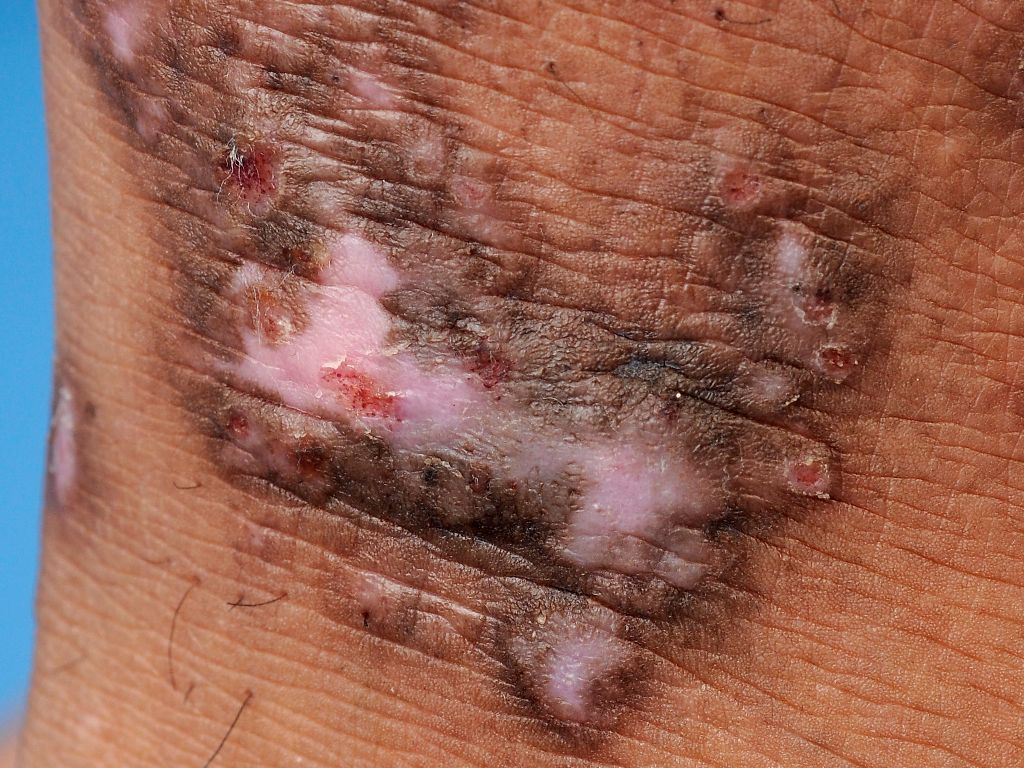
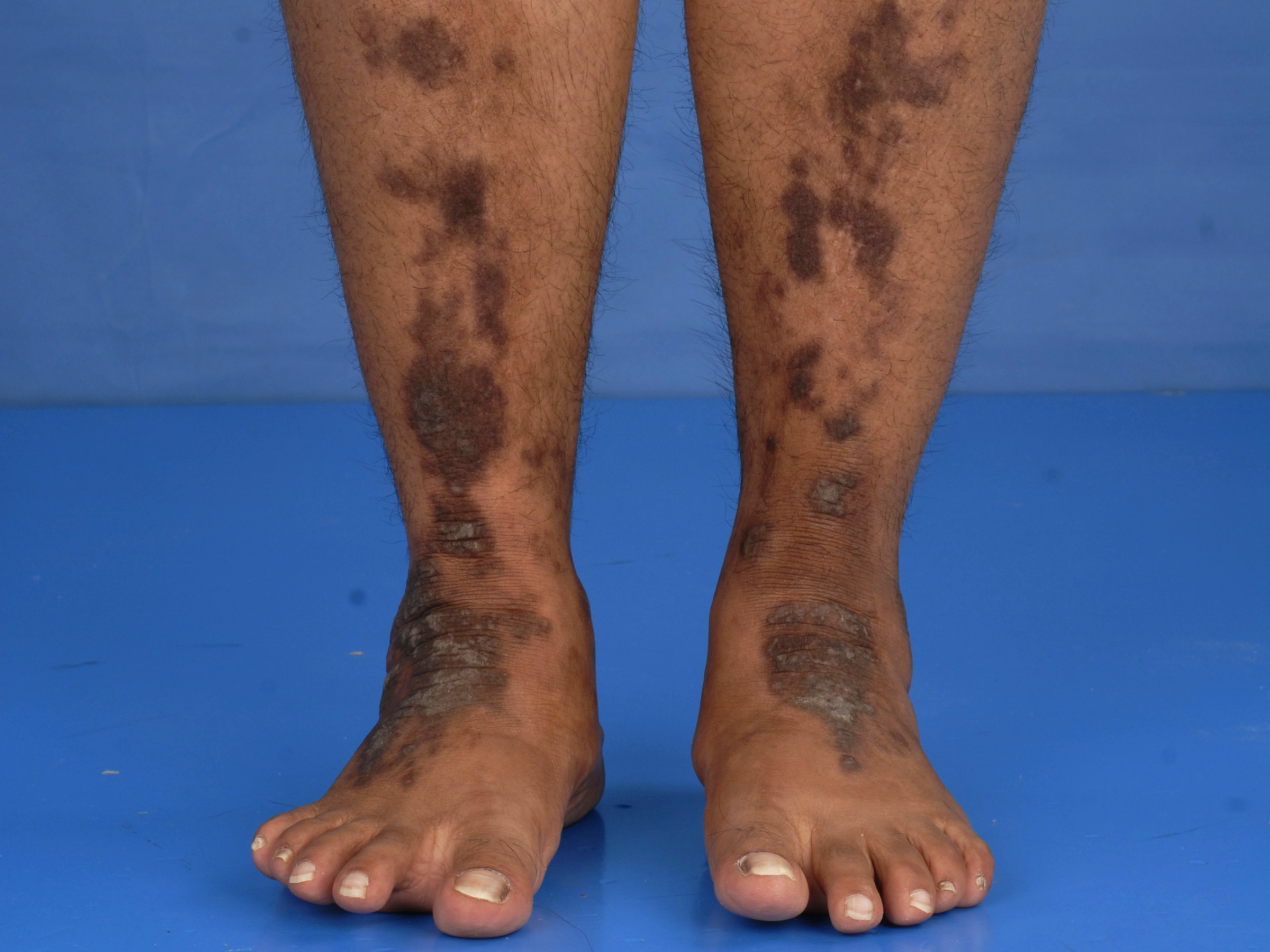
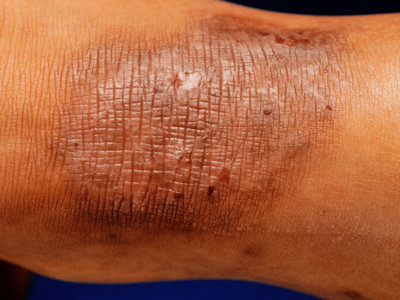
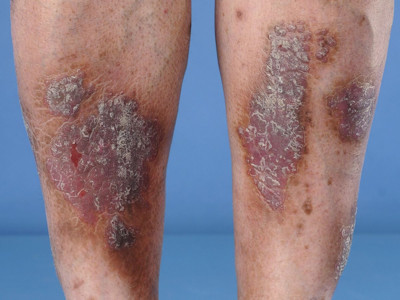
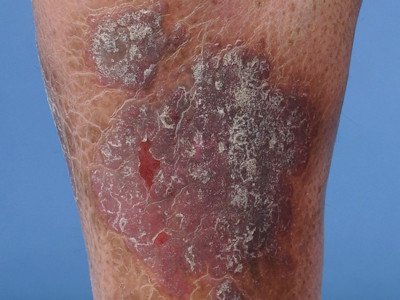
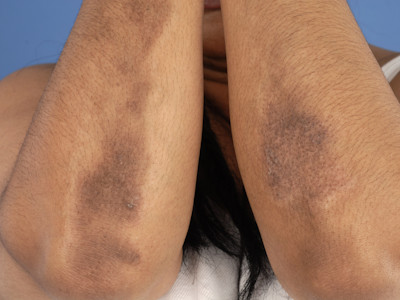
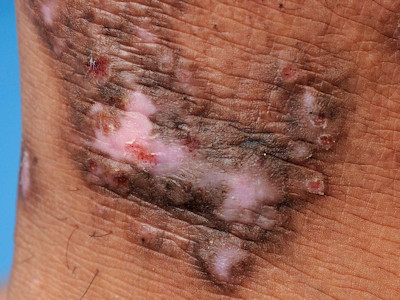
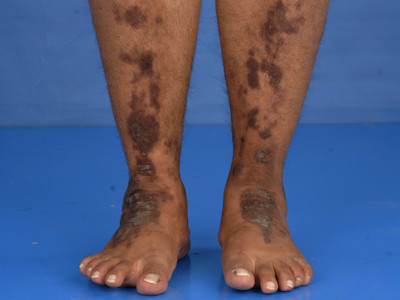
Lichen simplex chronicus often occurs in typical places: the lower legs, around the ankles, on top of the feet, on the neck, on the forearms, buttocks, and sometimes on the scrotum. The skin in these areas is thickened and hardened, and there are reinforced (more visible) skin lines, and often flakes, scabs, and wounds. The skin may also darken because more pigment is formed. This occurs mainly in people with dark skin. Lichen simplex chronicus occurs equally often in men and women; it is more common in people with dark skin.
 |
 |
 |
| lichen
simplex chronicus |
lichen
simplex chronicus |
lichen
simplex chronicus |
 |
 |
 |
| lichen
simplex chronicus |
lichen
simplex chronicus |
lichen
simplex chronicus |
WHAT IS THE CAUSE OF LICHEN SIMPLEX CHRONICUS?
Lichen simplex chronicus can develop after frequent picking or scratching of the skin during an emotional or stressful period. It can also be caused by itching, spontaneous itching, or itching due to skin conditions such as eczema or dry skin. Scratching causes small wounds, and when these wounds heal, this is accompanied by itching. This creates a cycle of itching-scratching-wounds-healing-itching and so on. Sometimes it is not clear whether it started with itching or scratching.
HOW CAN LICHEN SIMPLEX CHRONICUS BE TREATED?
The most important thing is to break the itch cycle. This can be done by applying powerful anti-inflammatory corticosteroid ointments such as Betnelan, Elocon, Diprosone, Diprolene, Diprosalic, or Dermovate ointment to the skin once or twice a day. Sometimes corticosteroids are injected into the affected areas.
It is also important to try not to scratch or rub the skin. If the itching returns, do not scratch, but apply the corticosteroid ointment or a nourishing base ointment to the area.
Covering the area with special plasters can also be effective. There are thin, self-adhesive hydrocolloid wound plasters that can remain in place for days. These plasters protect the area from scratching, including unconscious and nocturnal scratching. In addition, wounds heal faster under these plasters. Leave the plasters in place for as long as possible. They usually stay in place during showering.
If necessary, it is also possible to apply a small amount of corticosteroid cream or ointment under the plasters. This allows the corticosteroid to penetrate better. However, applying strong corticosteroid ointments for too long is not good either, as this can cause side effects such as thin skin or lighter-colored patches. As soon as possible, reduce the treatment or use products without corticosteroids, such as tacrolimus ointment or pimecrolimus cream.
In stubborn cases, there are other options such as treatment with local creams or tablets that suppress the itching sensation. Light therapy is also a possibility.
CAN LICHEN SIMPLEX CHRONICUS BE CURED?
It takes patience, but lichen simplex chronicus can be cured. Depending on the size of the patch, this can take 3 to 8 weeks. Unfortunately, the symptoms often return. It is important not to scratch, but to restart the same treatments immediately.
WHAT ELSE CAN YOU DO YOURSELF?
Keep your nails short. Tap or squeeze the skin instead of scratching. Prevent unconscious scratching by covering the area with a protective plaster or bandage. If psychological factors appear to be playing a role, ask for a referral to a medical psychologist.
|