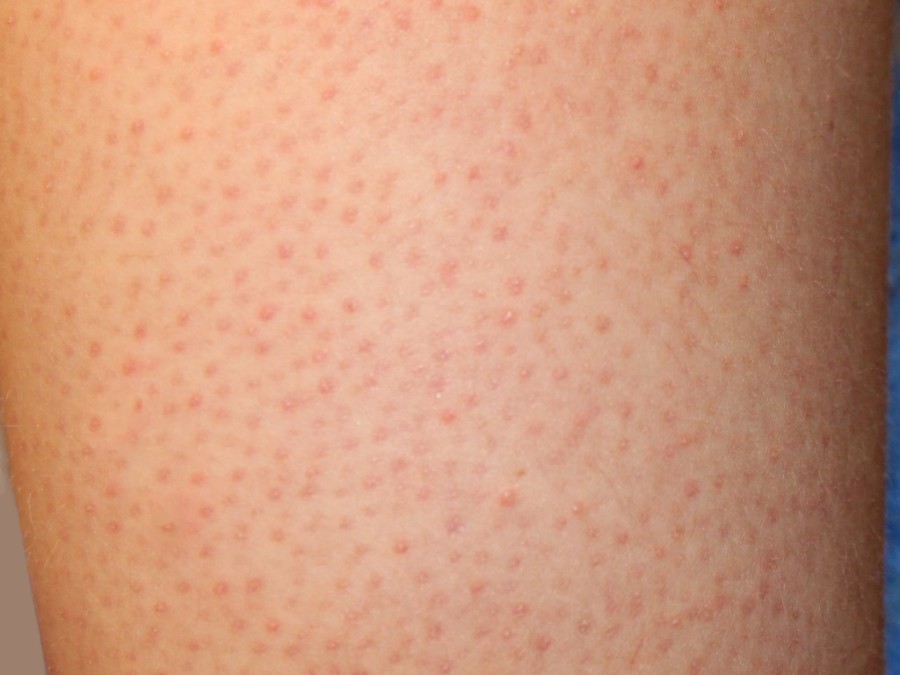
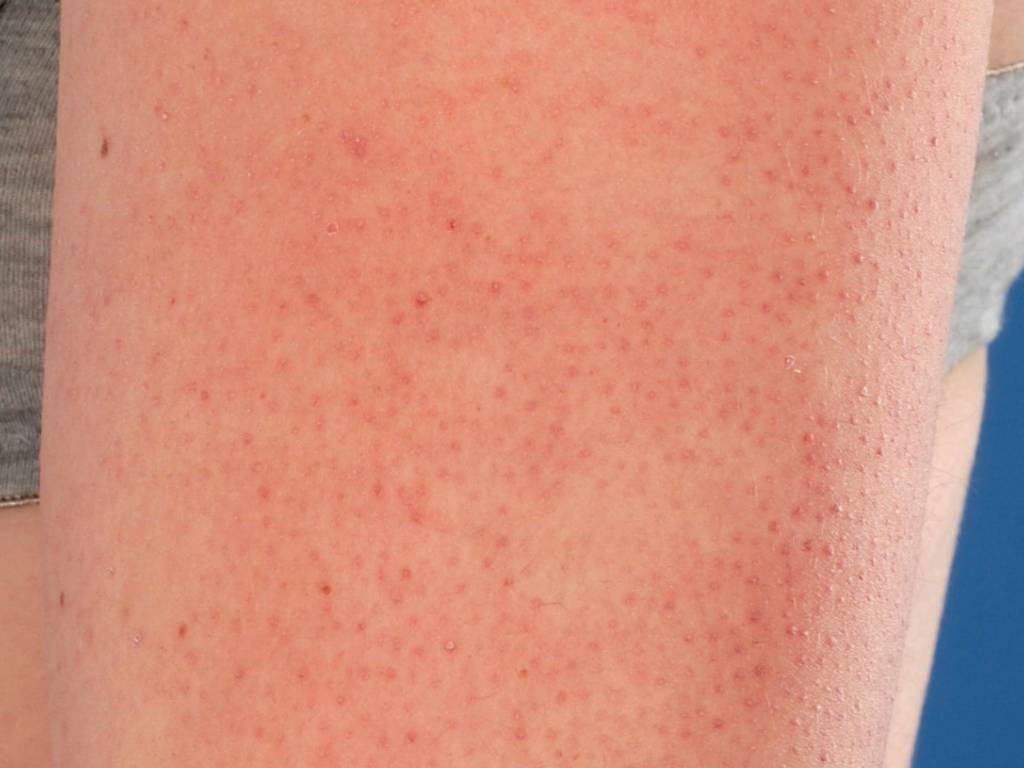
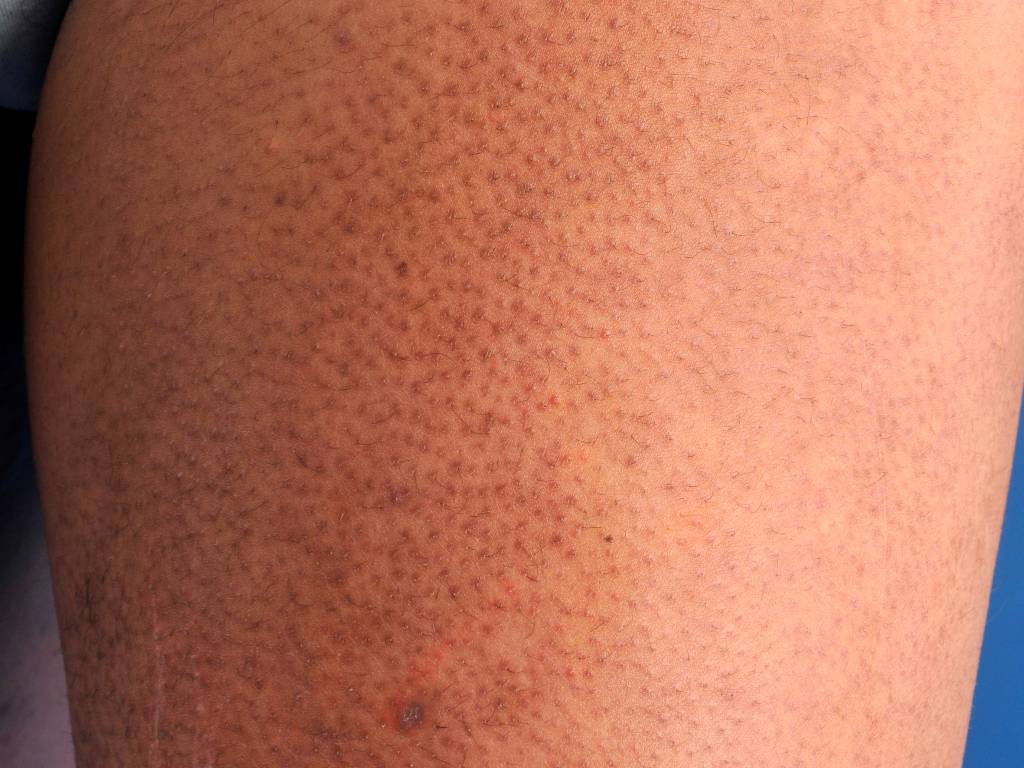
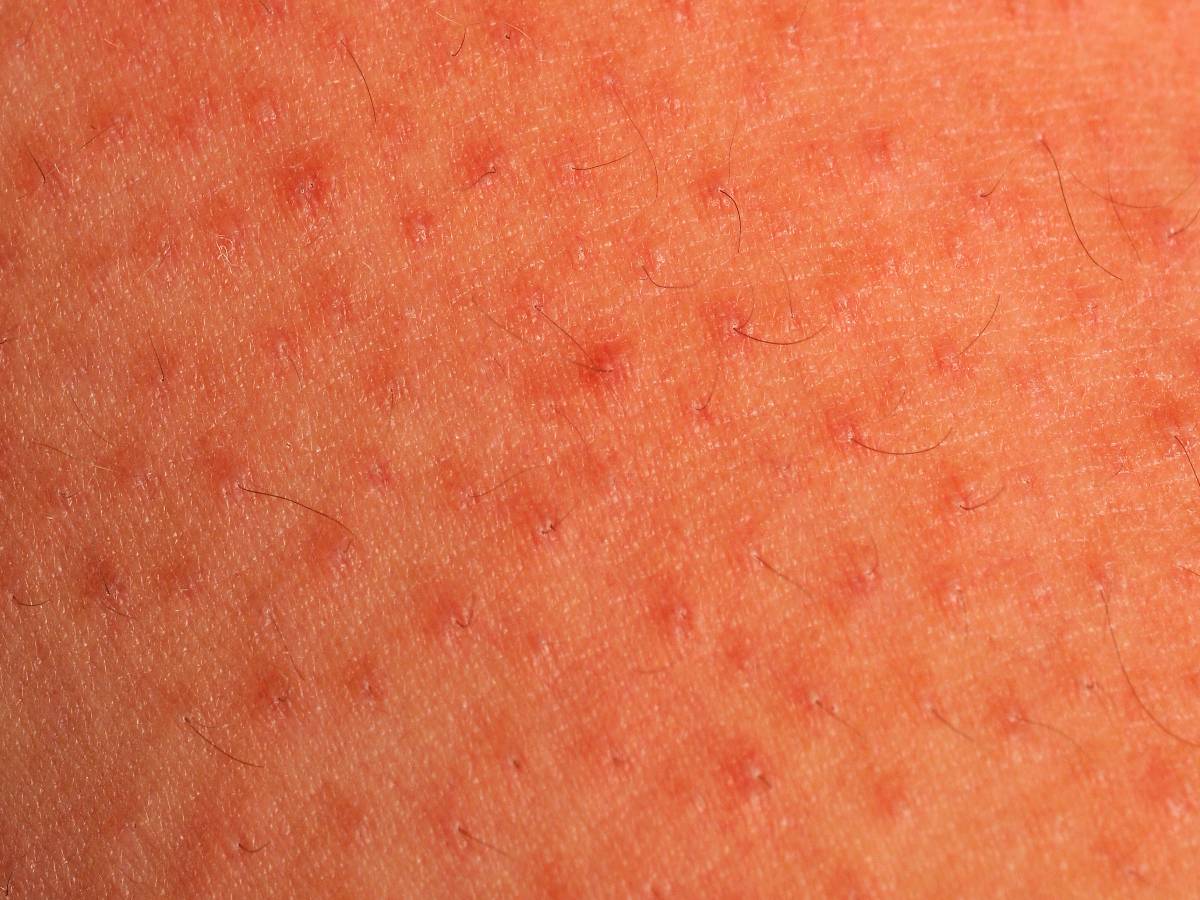
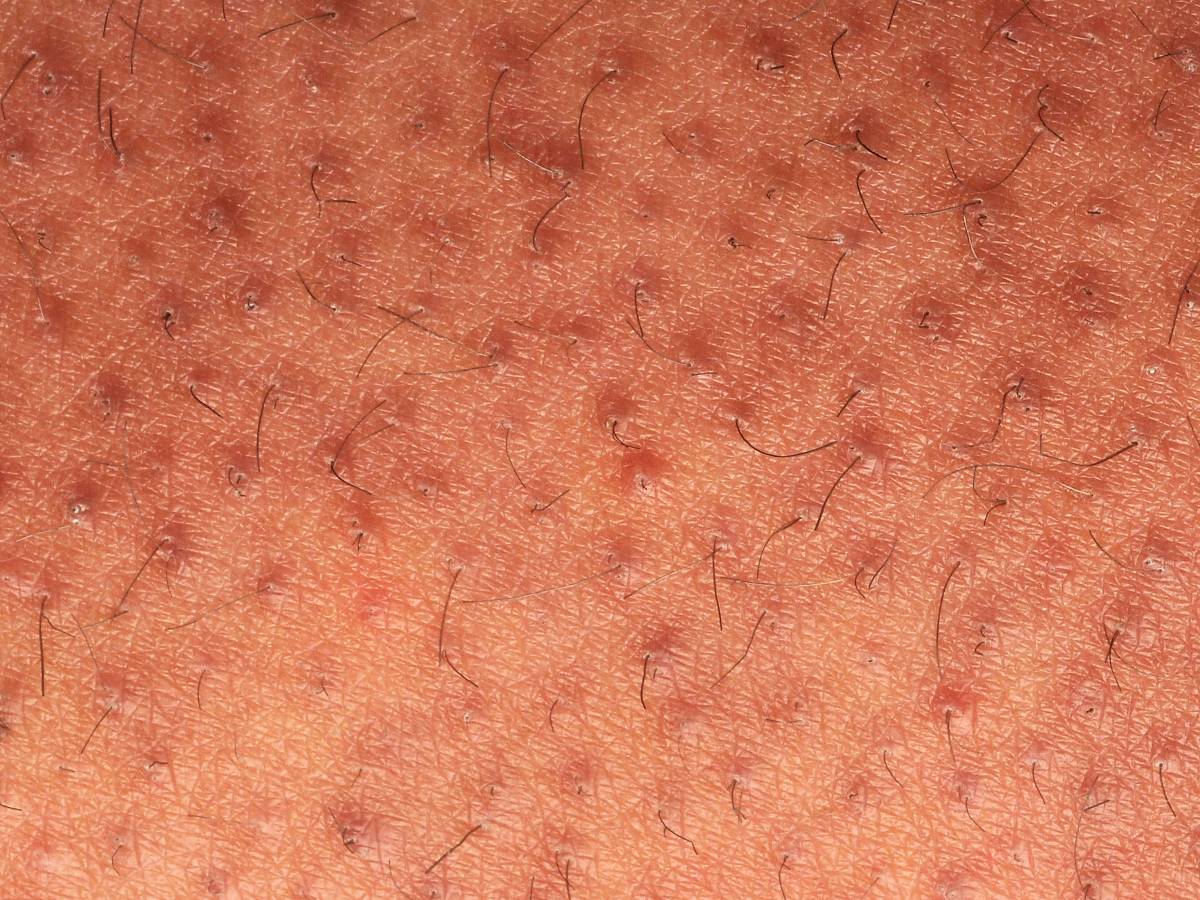
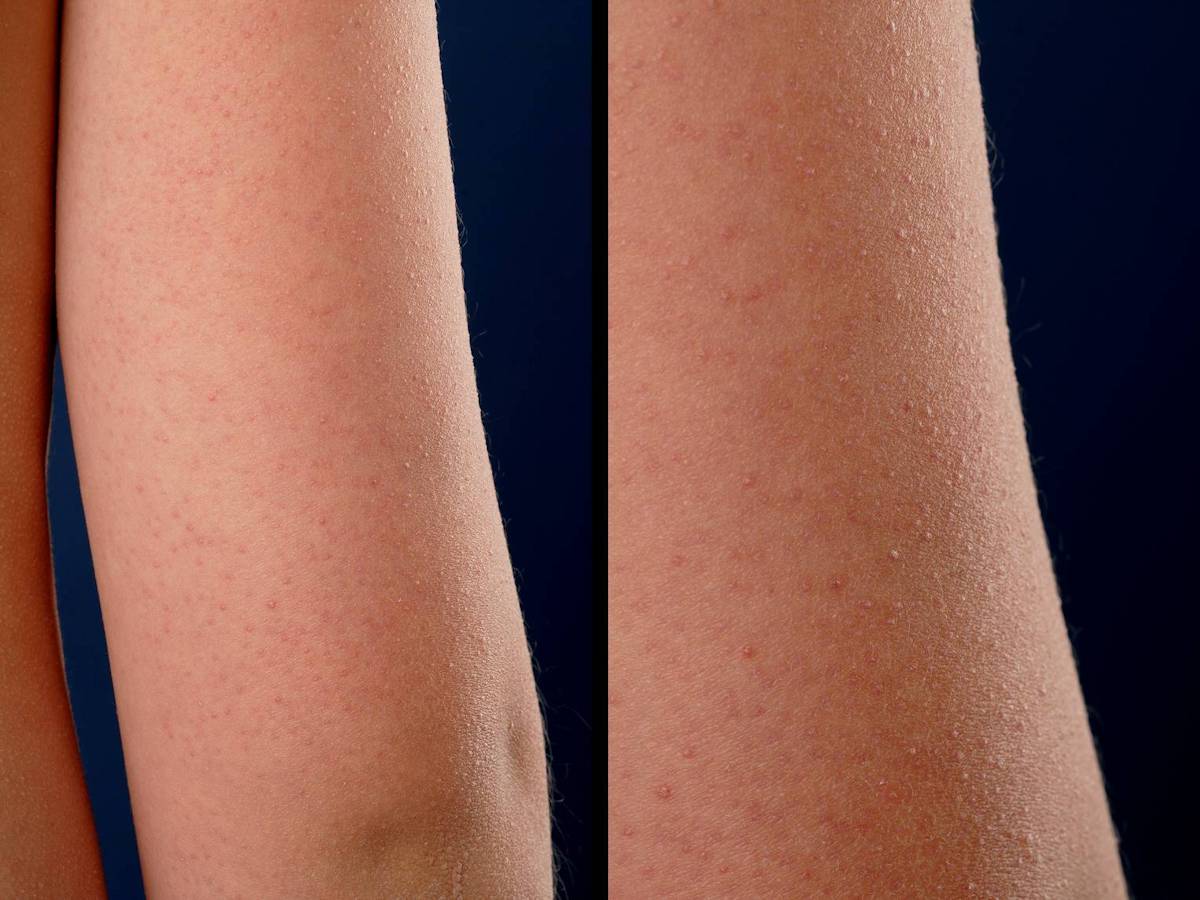
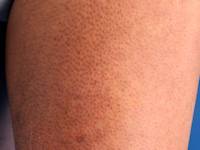
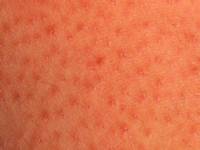
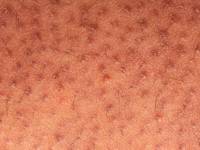
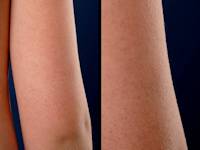
WHAT IS KERATOSIS PILARIS?Keratosis pilarisKeratosis pilaris is the phenomenon of small, rough-feeling bumps around the hairs . This occurs mainly on the outer side of the upper arms. It looks a bit like goosebumps. Keratosis pilaris is very common, especially in children and adolescents. A closer look reveals that approximately 50-80% of children and adolescents and approximately 40% of adults have these bumps to a greater or lesser extent. It often runs in families; it is hereditary. Because it is so common, it can't really be called a disorder; some people have it and others don't. It is a harmless condition that usually doesn't cause any symptoms. Some find it cosmetically disturbing.WHAT DOES KERATOSIS PILARIS LOOK LIKE?A bump has developed in every spot where a hair emerges. The skin there is also slightly thickened and feels rough. Keratosis is the medical term for a thickened stratum corneum (the top layer of the skin), and pilaris means "around the hairs." It looks a bit like goosebumps, and is sometimes simply called goosebumps or anser-vel (goose skin). Keratosis pilaris mainly affects the outer surfaces of the upper arms and legs, but sometimes also the face, buttocks, or torso. It can be very mild, barely visible, or extensive.
It usually causes no symptoms. Sometimes there is some inflammation, visible as redness. In darker skin, this mild inflammation can cause pigment spots. Itching and scratching can cause scabs, wounds, and scars.
 |
 |
 |
| keratosis pilaris |
keratosis pilaris |
keratosis pilaris |
 |
 |
 |
| keratosis pilaris |
keratosis pilaris |
keratosis pilaris |
HOW DOES KERATOSIS PILARIS OCCUR?Hair grows from a hair follicle. This hair follicle is also lined with skin cells, which divide and eventually shed as a skin flake. In keratosis pilaris, the skin flakes block the hair follicle's duct, causing a small bump. Sometimes, the hairs don't emerge because a clump of flakes blocks the opening. It can also become infected. The exact reason for this is unknown. It appears to be genetic, meaning the predisposition to keratosis pilaris is inherited; often, parents also have it, or had it as a child.WHO GETS KERATOSIS PILARIS?Keratosis pilaris is very common, affecting about half the population, so anyone can get it. It mainly occurs in people with dry skin and atopy (the tendency to react allergically to anything) or atopic eczema . It affects all races, both men and women. It is better in summer than in winter. With age, the condition disappears in some patients.
Sometimes keratosis pilaris occurs in conjunction with other abnormalities. There is a rare condition called ulerythema ophriogenes . This condition features: noticeably red cheeks, sometimes with small bumps, red bumps on the forehead, in and between the eyebrows, loss of eyebrow hairs, especially on the outer edges, and keratosis pilaris on the upper arms.HOW IS THE DIAGNOSIS MADE?The diagnosis is made based on the clinical picture, its appearance. The picture is so clear, especially if it's on the upper arms, that no further examination is necessary.HOW IS KERATOSIS PILARIS TREATED?Usually, no treatment is necessary. If necessary, care products intended for dry or rough skin can be used. Many products are available for people with dry skin (see products for dry skin ). For rough skin, which is usually skin with a thickened stratum corneum (the outermost layer), there are products available that dissolve the stratum corneum slightly. This group of products is called keratolytics. They contain substances that soften the stratum corneum, such as urea, salicylic acid, lactic acid, tretinoin (vitamin A), adapalene, or alpha-hydroxy acid (AHA).Ointments, greasy creams or lotions for dry skinSee under products for dry skin .Products containing ureaCalmurid, urea 5 or 10% in eucerine cum aqua, urea 5 or 10% in lanette cream I FNA, urea 10% in petrolatum, urea 5 or 10% in cetomacrogol cream, urea 5 or 10% in petrolatum cetomacrogol cream, urea 5 or 10% in petrolatum lanette cream FNA, urea 5%, lactic acid 5% in Vaseline lanette cream, Calmurid HC.Products with salicylic acidSalicylic acid ointment 2% FNA (Unguentum acidi salicylici 2% FNA), salicylic acid 5 or 10% cream, salicylic acid 5 or 10% in Vaseline ointment FNA.Products with alpha hydroxy acids (AHA)Cosmetics, for example Louis Widmer AHA concept 10% cream.Other productsTretinoin cream 0.05% FNA, Differin gel (adapalene).
The skin can also be treated with gentle exfoliation. Exfoliation involves gently scrubbing away dead skin cells. Special scrubs are available at drugstores in the form of a cream with scrub particles. Some people make their own scrub solution from olive oil and raw sea salt. Another effective and much simpler option is to buy a polyester exfoliating glove for use in the shower.
A skin therapist can also perform treatments such as cleansing, scrubs, and "peelings," treatments with chemicals that dissolve the stratum corneum, such as glycolic acid peels.WHAT ARE THE OUTLOOK?Keratosis pilaris often improves on its own with age. However, some people experience no improvement. It's better in summer than in winter. Keratosis pilaris usually causes few symptoms. Simply caring for dry skin is often sufficient. |