WHAT IS ITCH?Everyone knows what itching is, but it's difficult to define. It's a sensation, a stimulus that prompts us to scratch the spot that tickles. It originates from an ancient defense mechanism in humans and animals: if something causes an itchy or crawling sensation on the skin, it could be a mosquito, a flea, a parasite, or something that can cause an allergic reaction or irritation, and then it must be removed. The itch triggers a reflex, the itch reflex, and we automatically start scratching, even in our sleep. It naturally becomes a problem when there's a constant itch sensation when there's nothing wrong and no reason to scratch.
Itching can be very annoying, a horror. It can define and disrupt your entire life. Children with itching can't sleep. Adults go "crazy with itching." "Itching is worse than pain," is a well-known saying.
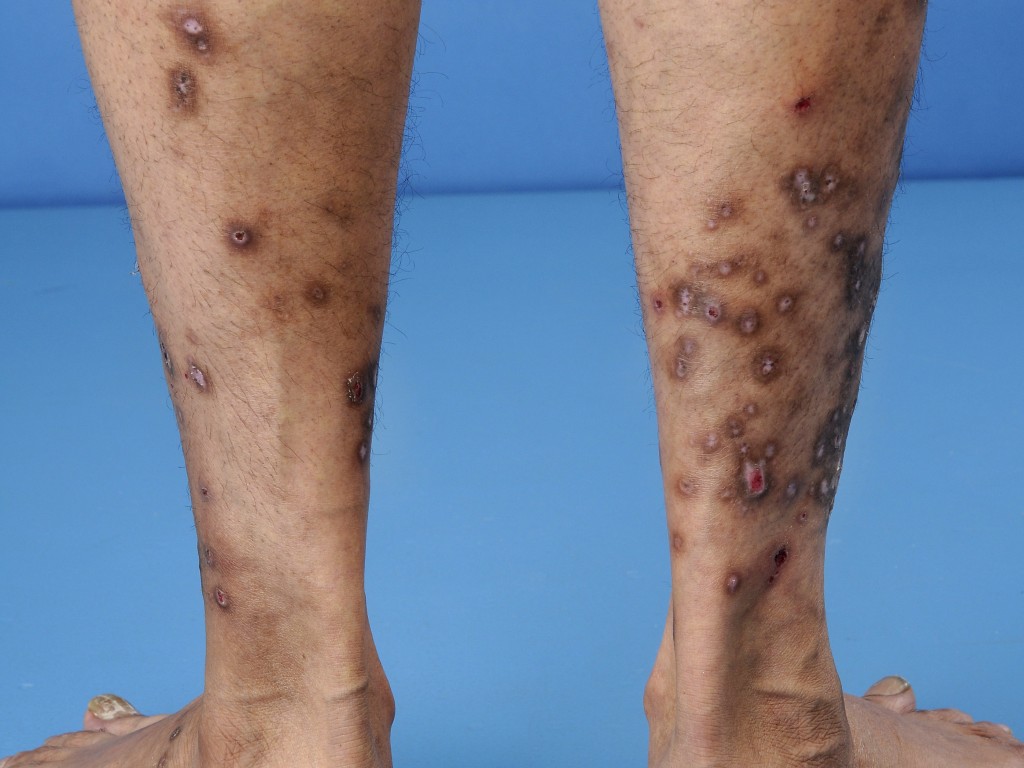
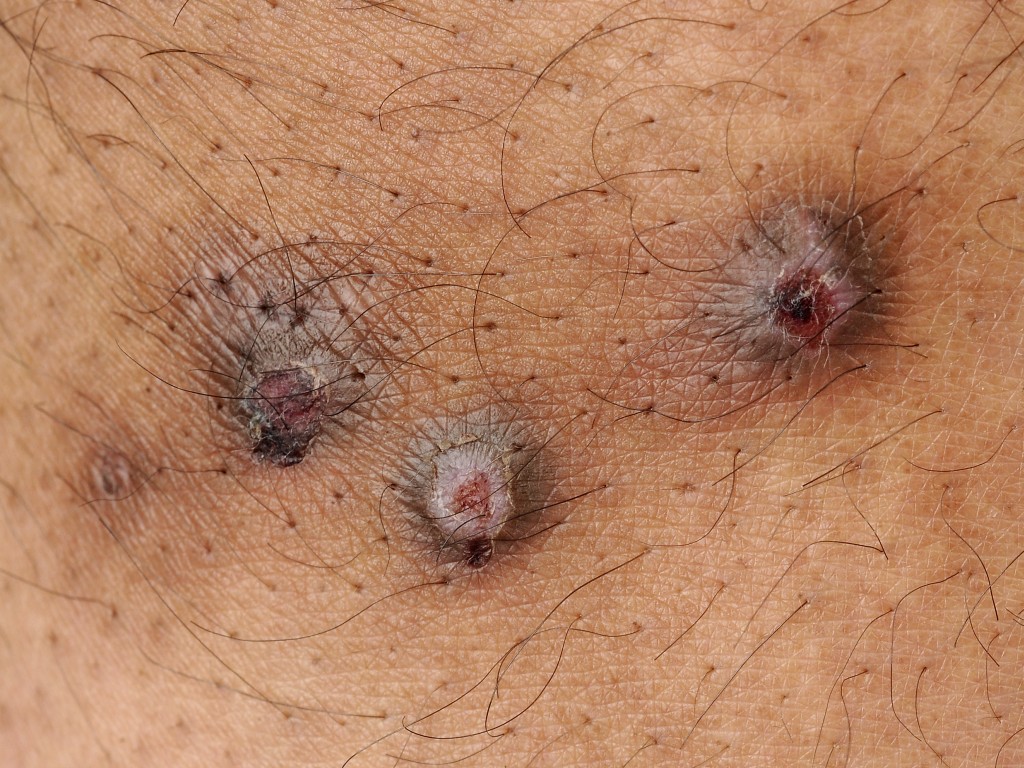
Itching can occur with certain skin conditions, such as dry skin, eczema, or psoriasis. In these cases, abnormalities may be visible. But it can also occur without any visible skin symptoms. The medical term for itching is pruritus. If skin conditions also occur due to the itch, such as itchy bumps, the term prurigo is also used.
 |
 |
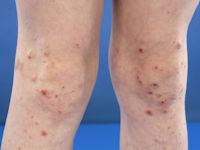
| itchy bumps |
itchy bumps |
WHAT ARE THE CAUSES OF ITCHING?Dry skin
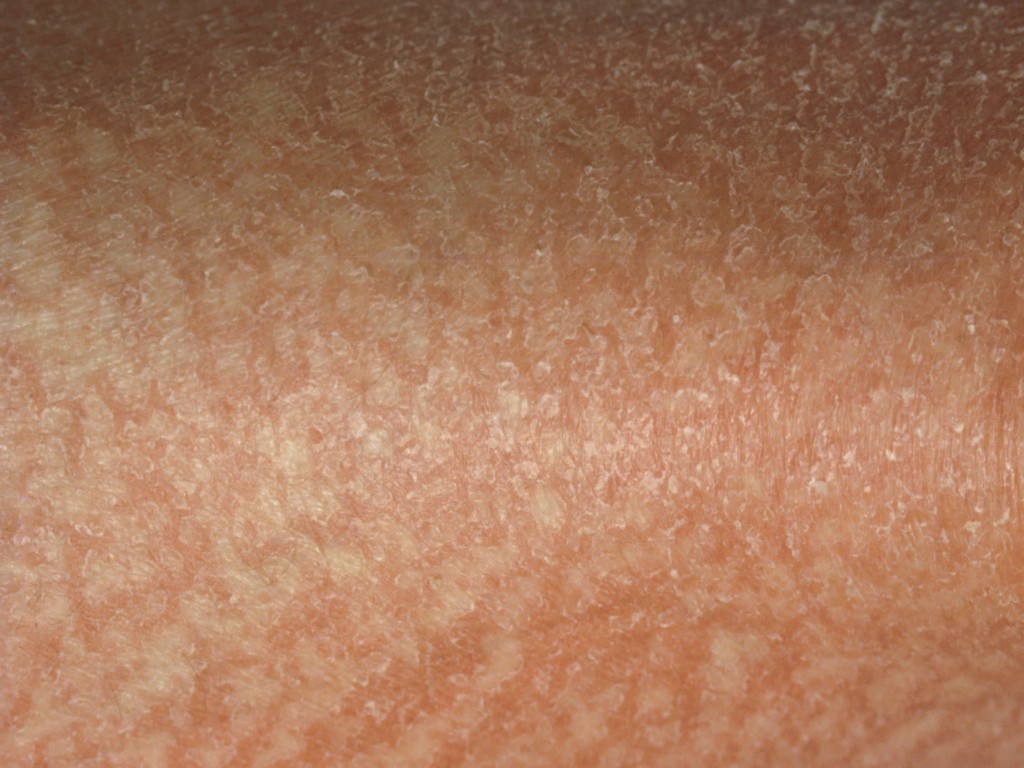
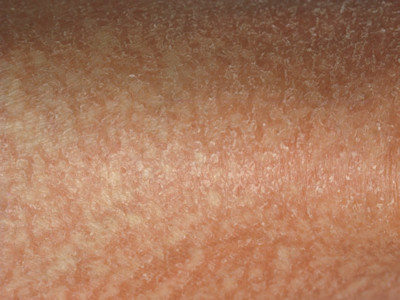
can cause itching. This is especially true for the elderly, but also occurs in people with atopic eczema.
 |
 |
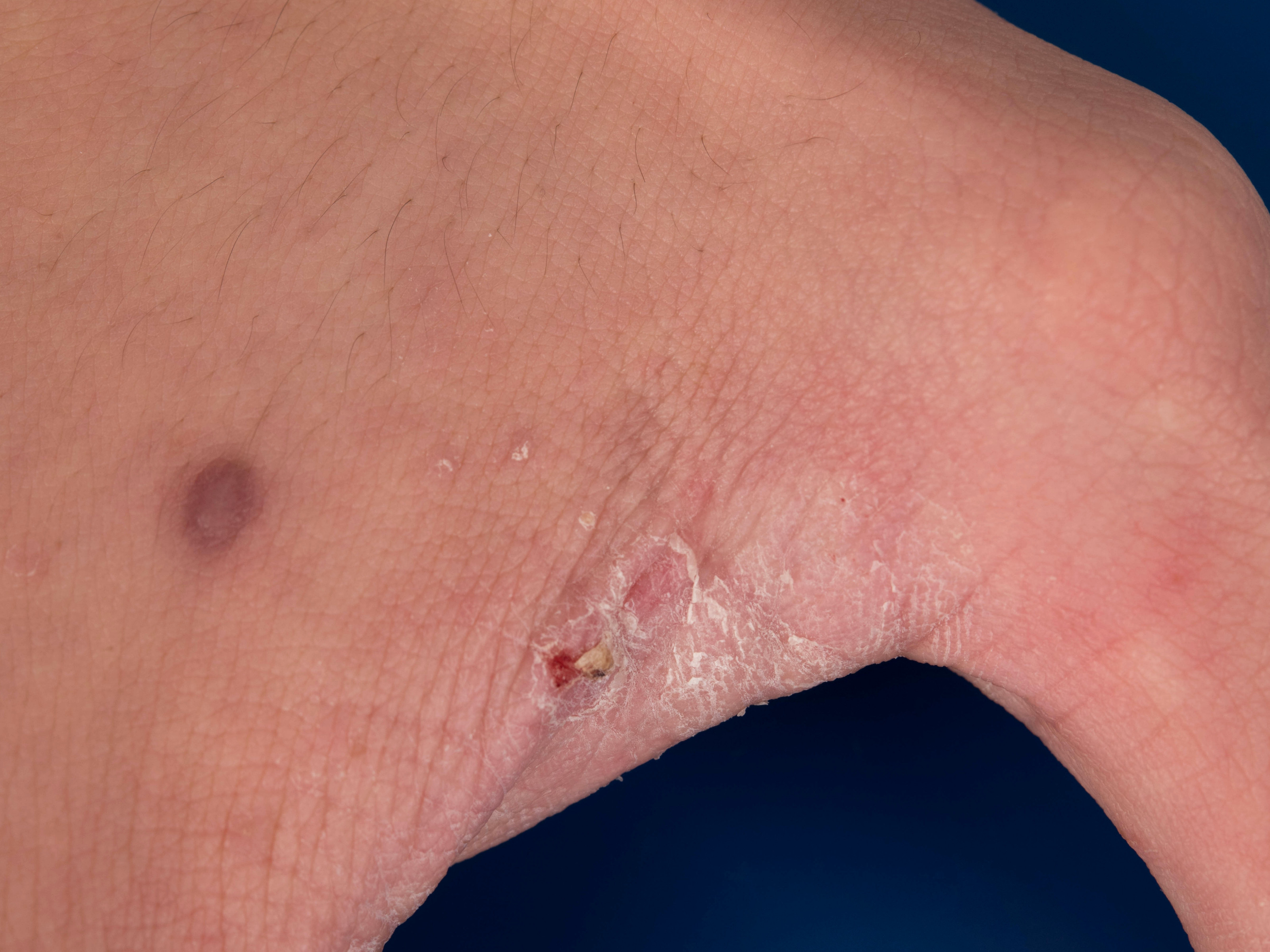
| dry skin |
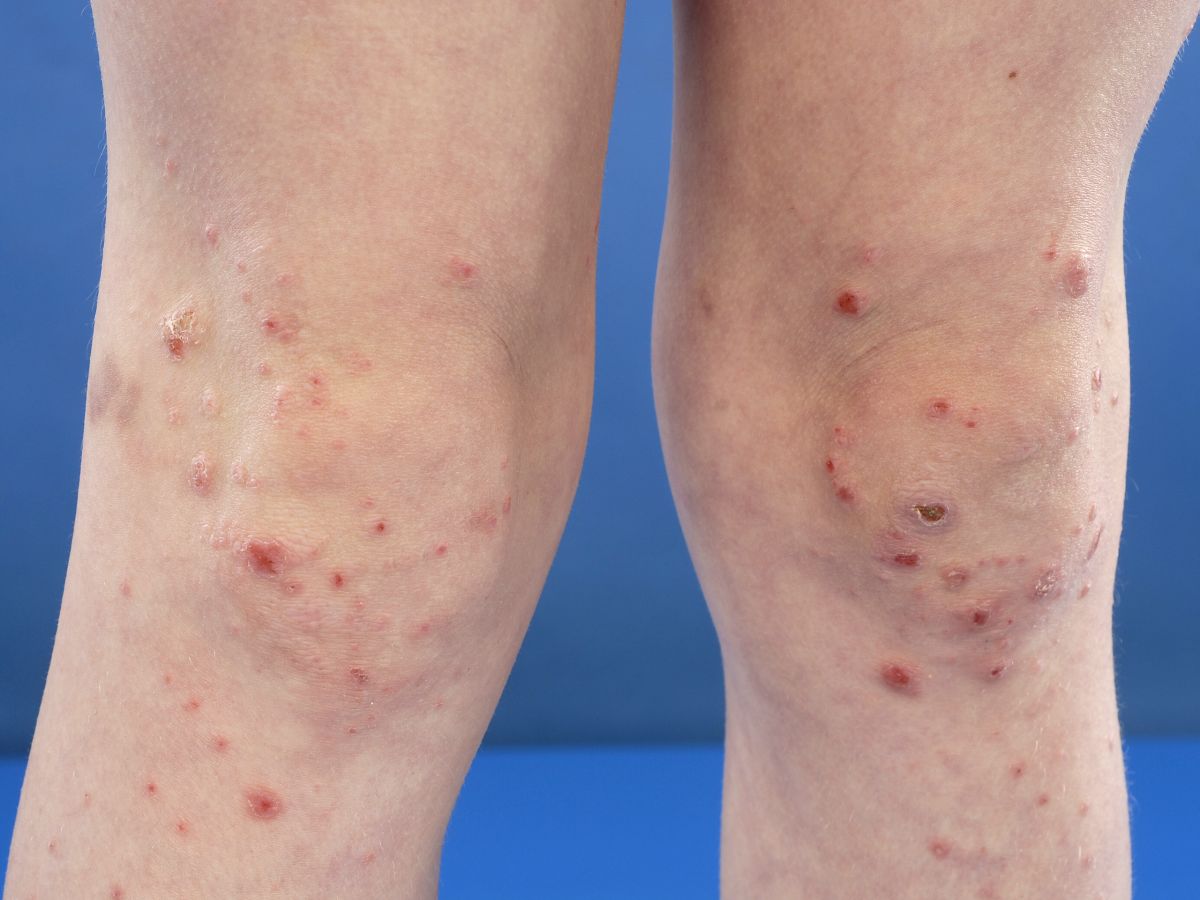
eczema |
An itchy skin condition.
Many skin conditions are accompanied by itching. The most common examples are eczema, psoriasis, and hives (urticaria). Fungal infections with Candida can also cause itching.
A parasite infection.
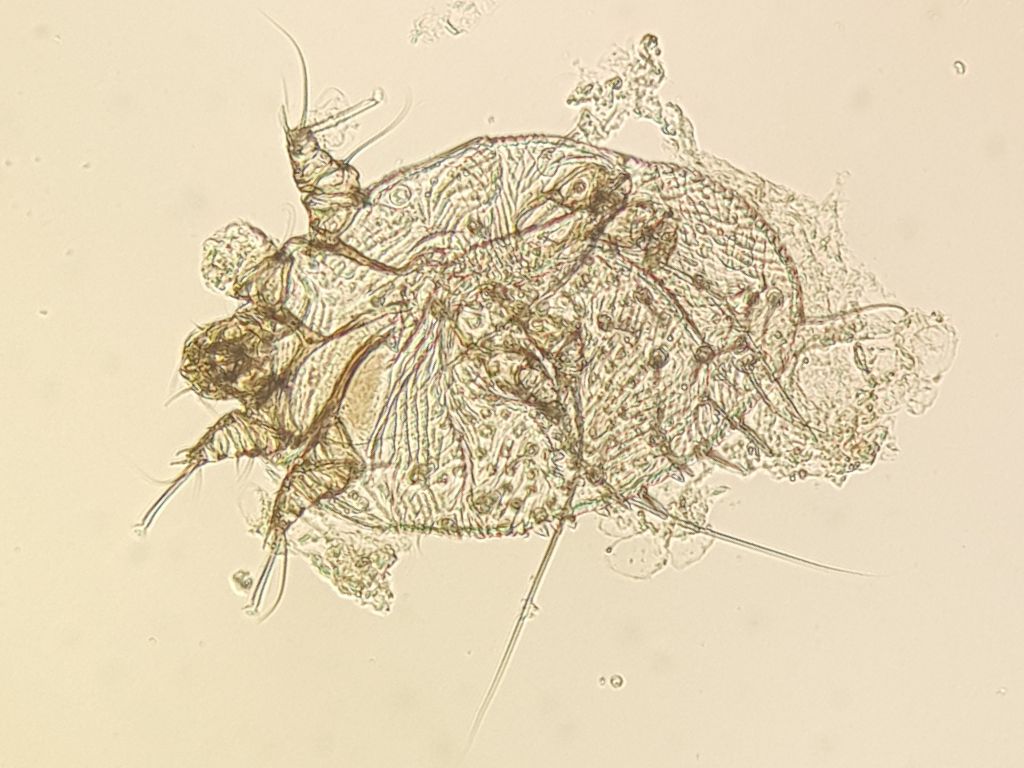
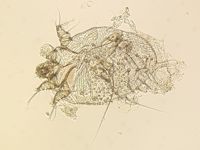
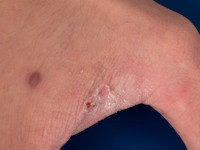
Some skin parasites, such as the scabies mite, can cause severe itching. But parasitic infections contracted in the tropics, such as intestinal worm infections, can also cause itching. The parasites trigger an allergic reaction, which causes the itching.
 |
 |
| scabies mite |
scabies |
Insect Bites:
All kinds of biting insects can cause itching. Not only mosquitoes, but also biting flies, ticks, fleas, mites, and bugs can sting and cause itchy bumps. Sometimes the reaction persists for a long time (persistent insect bite).
Medications:
There are lists full of medications that can cause itching. Check the package insert to see if this is listed as a side effect. But even if it isn't listed, the medication could still be the cause. Sometimes information can be found online by searching the drug's ingredient name combined with keywords such as itch, pruritus, prurigo, allergy, allergic reaction, rash, etc. The only way to determine if the medication is a factor is to stop taking it (for at least two months) or replace it with a medication from a completely different group.
Internal Diseases:
Itching can occur with an internal disease. This can occur with many conditions. There is even a mnemonic (SKIN PASTE) to remember all these illnesses.
The H stands for Hodgkin's disease, but it actually refers to all hematological disorders (blood diseases), both benign (polycythemia) and malignant (lymphomas, leukemia), in which itching has sometimes been described as a symptom.
The U stands for Uremia, or renal insufficiency. When the kidneys no longer function properly, waste products accumulate and cause itching.
The I stands for Icterus, or jaundice, caused by a liver that doesn't function properly. In this case, too, waste products accumulate and cause itching.
The D stands for Diabetes. Later studies have shown that diabetes doesn't often cause itching, sometimes indirectly due to medications diabetes patients take, or fungal skin infections that they experience somewhat more often.
The P stands for Psychological factors.
The A stands for Anemia, which also includes iron deficiency.
The S stands for Senilitas, or old age. In the elderly, the skin is often too dry, and dry skin can become itchy.
The T stands for Toxicodermia (a skin reaction caused by medications), which is common.
The A stands for Ancylostoma, which is a worm infection, but it refers to the entire group of worm infections, tropical infections, and also diseases like scabies, lice, fleas, etc.
This is the original explanation of SKIN PASTE; there are also other variations where the A is used for AIDS, or Other tumors, or Other infectious diseases (herpes), Other internal diseases (thyroid diseases), or Anorexia nervosa. So, there are many internal conditions that can cause itching. However, it's rare for an internal disease to be found as the cause in someone with itching. It is wise to do further investigation for chronic, unexplained itching, usually just blood tests, to see if an internal disease could be the underlying cause.
Unknown cause:
Unfortunately, no cause is often found for chronic itching. This is very frustrating, not only for you but also for your doctor. At some point, when all possible causes have been investigated and ruled out, you will have to accept that it is a chronic and intractable problem and look for treatments that reduce the itch (symptom management).
Psychological factors:
Itching can certainly be psychological. Some people get itchy just by reading about it (for example, this brochure or a brochure about scabies). Healthcare providers who have admitted a patient with scabies without knowing it all experience acute itching upon receiving the diagnosis.
Itching, regardless of the cause, often begins at the end of the day, while we are quietly sitting on the couch. Or at night in bed. Distraction helps. Doing something reduces the itching. The other stimuli make us less attentive to the itching stimuli.
Itching can also occur in patients with psychological problems. It often occurs after a serious event (death, divorce, job loss, etc.); sometimes it is due to stress, depression, or a psychiatric condition. Itching can also be a side effect of medications prescribed for psychological complaints.
Neurological causes:
Aside from the psychological effects mentioned above, itching can also have a neurological cause: a disturbance in nerve conduction or in the brain causes an itch stimulus to be perceived without any underlying cause. The itch seems to be felt in the skin, but there is something wrong with the nerve. An example is the condition called neuralgia paresthetica. This involves an itchy spot on the back, often just below the shoulder blade, caused by nerve irritation. A similar condition is called brachioradial pruritus, which involves compression of the nerves near the brachioradialis muscle.
Chronic scratching
If you scratch the same spot constantly, either habitually or due to stress, an itchy area with thickened skin (as a result of scratching) will develop. This area will continue to itch, and scratching only makes it worse. This is called lichen simplex chronicus. These itchy areas are often found on the wrists, ankles, or neck (typically easy-to-reach areas), but they can also occur on the genitals and around the anus. Itching around the anus (pruritus ani) can have other causes as well.
Pregnancy:
Itching is common during pregnancy (in approximately 50% of pregnant women). Skin lesions (itchy bumps, hives, rashes, blisters) can also develop. These are called pregnancy dermatoses (itchy skin lesions that develop during pregnancy).HOW IS ITCHING TREATED?Ideally, a clear cause for the itching could be found, which could then be resolved with a simple treatment, after which the itching would disappear. Sometimes this is possible, for example, if the itching was caused by a medication that can be stopped, or by scabies that is subsequently treated. Unfortunately, it often happens that no cause can be found. The only remaining options are treatments and measures to reduce the itching.
General advice:
| - |
Try not to scratch, scratching helps temporarily but will only make it worse in the end |
| - |
Instead of scratching, put something on it. |
| - |
If you absolutely have to, scratch with a layer of clothing between you. Try replacing scratching with gently tapping the skin, pressing with your fingertips, or lightly pinching. |
| - |
Keep the nails short and clean to limit damage if the urge to scratch becomes too strong. |
| - |
If it itches a lot, find a distraction, try to concentrate on something else. |
| - |
Prevent scratching at night: use cotton gloves or something else to cover the nails. Special baby gloves, and cotton or silk pajamas (anti-scratch suits) are also available for babies. |
| - |
Keeps the skin moist, prevents dehydration, treats eczema or psoriasis well. |
| - |
Avoid things that can dry out the skin: alcohol on the skin, showering too often or too hot, using too much soap, heat, sauna. |
| - |
Avoid things that can irritate the skin, aggressive products, perfumed detergents and toiletries, itchy sweaters, sunburn. |
| - |
Avoid highly spicy meals, large amounts of hot drinks and alcoholic beverages. |
| - |
Avoid stress. |
Treatment with local remedies, to be applied to the skin.
| - |
Creams, moisturizing creams, ointments, and moisturizing lotions. Pharmacies carry products like cetomacrogol cream, lanette cream, the richer Vaseline-cetomacrogol cream, and Vaseline-lanette cream. But these don't always require a prescription. Several reputable brands make excellent skin care products that you can buy at supermarkets or drugstores. |
| - |
Menthol creams and lotions. |
| - |
Capsaicin-containing creams. Capsaicin is the burning substance found in chili peppers. It creates a sensation that suppresses the itching. |
| - |
Lidocaine-containing products. Lidocaine has an anesthetic effect, but can cause side effects if used in excess. |
| - |
Zinc oxide. Zinc oxide has anti-itch, protective, and cooling properties and is available without a prescription. It is white, which can be a cosmetic drawback. Zinc oxide is available as a lotion, ointment, paste, ointment, and cream. Zinc oxide lotion is suitable for large areas (e.g., chickenpox). The water in the lotion evaporates, giving the lotion a cooling sensation and relieving itching. The solid (powder) from the lotion remains as a layer on the skin—so do not use the lotion on wounds. Zinc oxide-limewater ointment (ZOK ointment) and zinc oxide ointment are used for moist skin conditions, and zinc oxide paste and ointment for dry skin conditions. Zinc oxide cream is used for eczema in skin folds and diaper rash. |
| - |
Corticosteroid creams or ointments. |
Light
therapy with UV-B or broad-spectrum light (see the brochure on light therapy) is also a good treatment for certain types of chronic itching.
Treatment involves tablets and medication that you must take.
| - |
Antihistamines. These are anti-itch tablets that are also prescribed for hives and hay fever. These medications cause few side effects and sometimes, but unfortunately not always, help with itching. |
| - |
Gabapentin |
| - |
Activated charcoal |
| - |
Prednisone |
| - |
Cyclosporine |
| - |
Thalidomide |
| - |
Antidepressants. These drugs interfere with the conduction of itch stimuli through the nerve. |
Other:
For insect bites or contact with nettles, dabbing with natural vinegar can provide relief.
Some patients buy a back scratcher as a handy tool, but be careful not to completely break the skin (and scratching only helps temporarily; it usually makes the condition worse).
A cold compress on the itchy area, such as a slightly damp washcloth or towel placed in the refrigerator for a while, or a cold pack wrapped in a cloth or washcloth, can provide relief. |