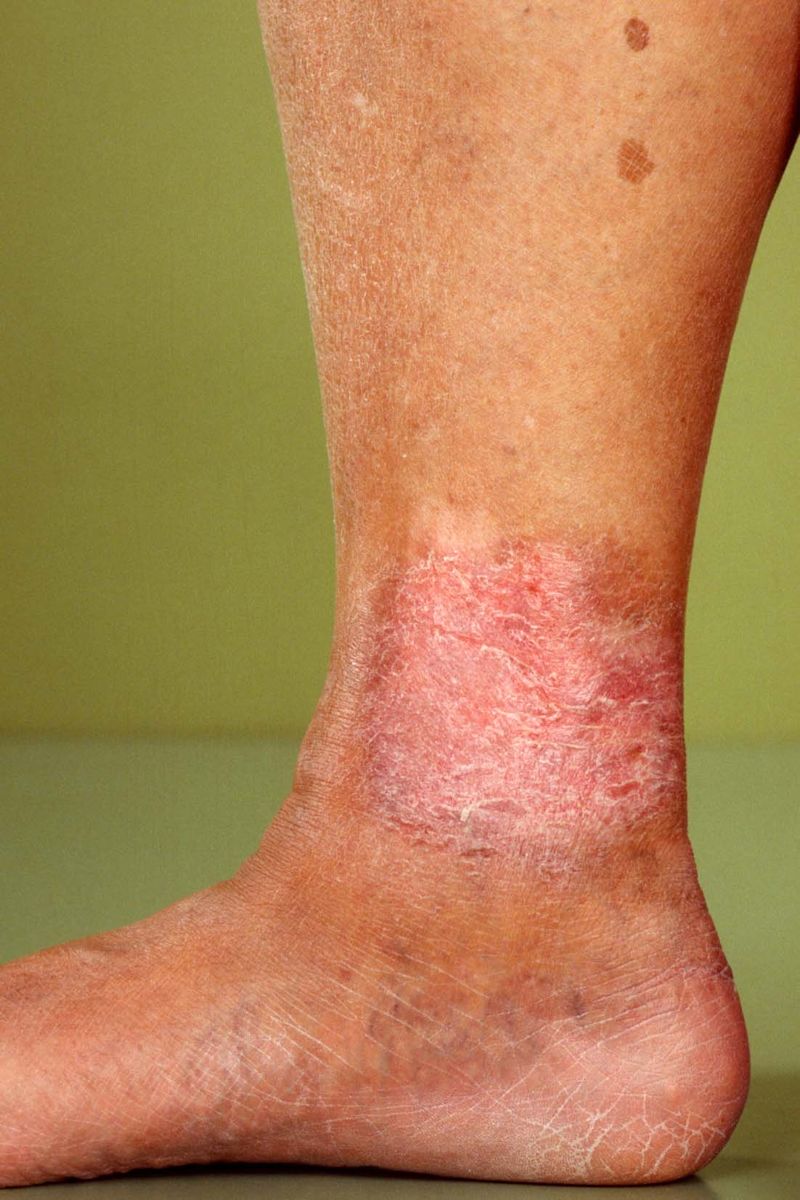
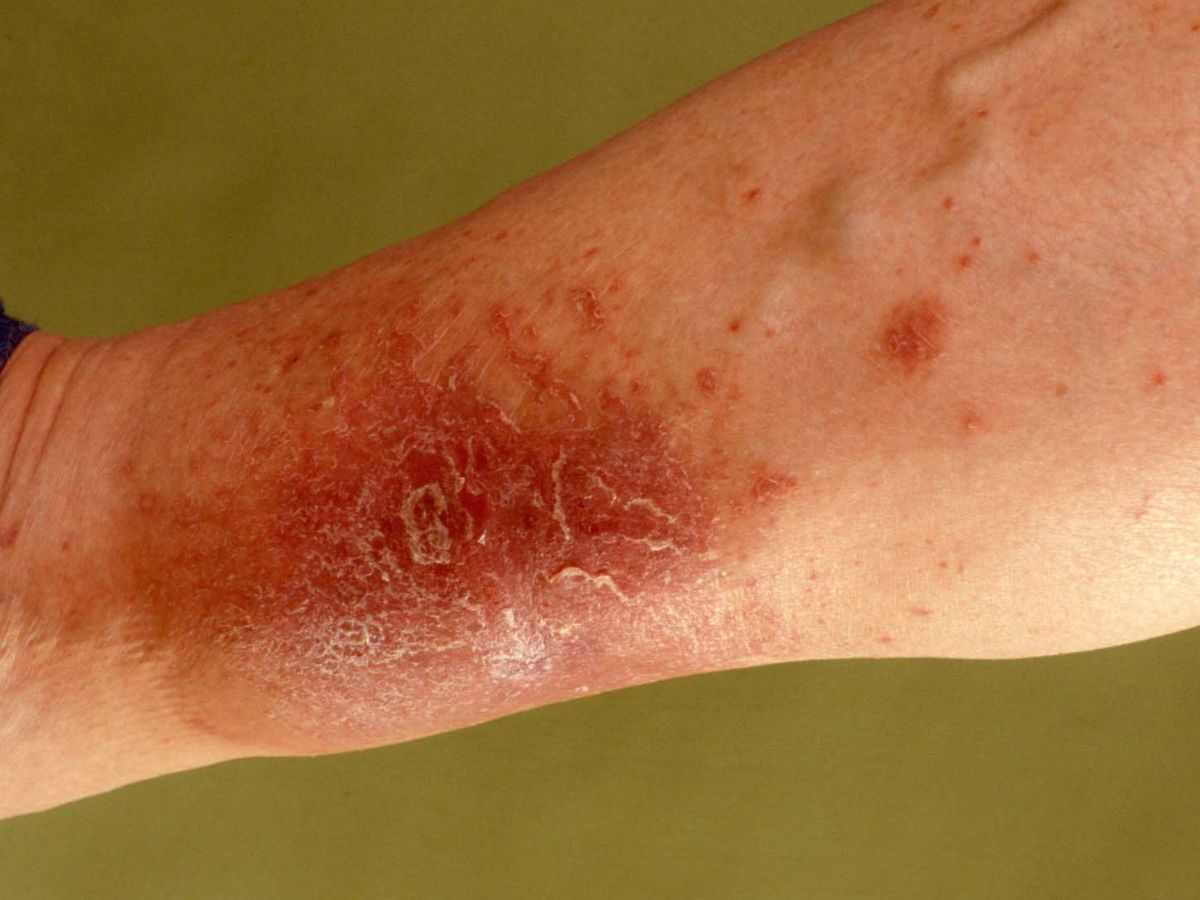
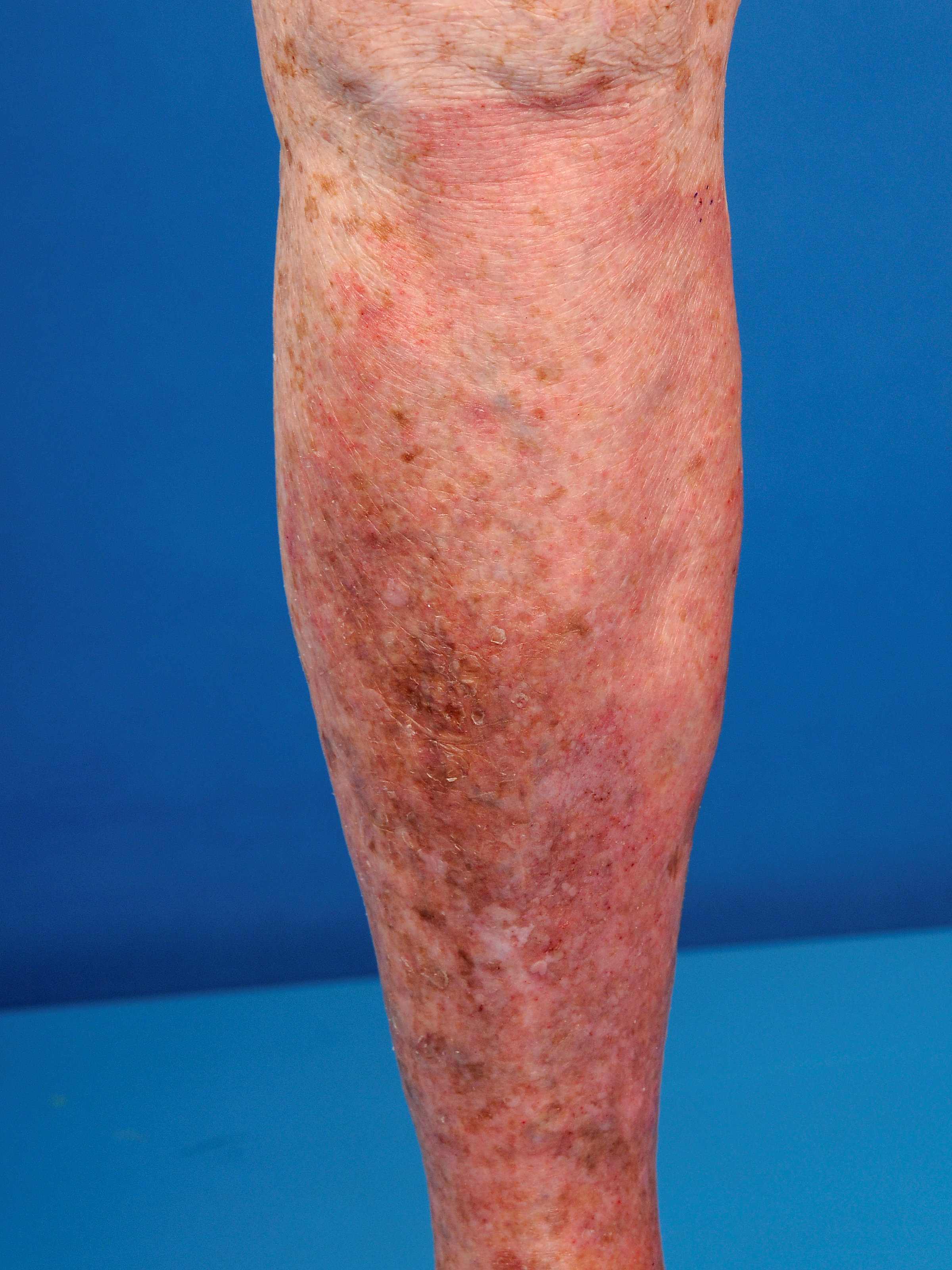
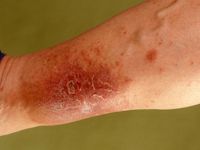
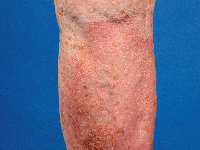
WHAT IS HYPOSTATIC ECZEMA?Eczema is a descriptive term for red, scaly, and often itchy patches on the body. Eczema can have many causes, such as a predisposition (atopic eczema) or an allergy to something that comes into contact with the skin (contact dermatitis). Eczema can also develop on the lower legs, where excessive fluid accumulates in the skin. This is called hypostatic eczema (hypo means low). Hypostatic eczema is often seen in patients whose blood vessels (the veins) in the lower legs do not drain blood properly.HOW DOES HYPOSTATIC ECZEMA DEVELOP?Hypostatic eczema occurs when blood becomes congested in the small capillaries of the skin. The main cause is that the blood flow through the veins (the blood vessels) no longer functions properly. All large veins in the skin and deep in the lower legs contain valves at regular intervals that prevent blood from flowing back. During walking, when the calf muscles tense, these veins are pushed empty, and the valves ensure that the blood is pushed upwards towards the heart. If the valves break, for example, due to old age or a previous thrombosis, this pumping function no longer works properly, and fluid builds up in the leg. The system also malfunctions with too little exercise, sitting with the legs down for too long, and during work that requires standing. Veins where the blood doesn't flow back properly become congested and dilated, becoming varicose veins. The increased pressure in the drainage system also extends to the tiniest capillaries in the skin, which are not well-equipped to withstand this pressure. Fluid leaks out, causing swollen legs (edema). Proteins also leak from the blood, which accumulate around the blood vessel walls and cause an inflammatory reaction with redness, swelling, and itching. Red blood cells, which contain high levels of iron, often leak out as well, which can eventually cause a reddish-brown discoloration. Edema can also develop due to a decline in the heart's pumping function and kidney problems.WHO GETS HYPOSTATIC ECZEMA?Hypostatic eczema is primarily seen in cases of poorly functioning veins (chronic venous insufficiency). Most patients are over 50 years of age. It is slightly more common in women. Risk factors include high blood pressure, obesity, multiple pregnancies, thrombosis and other clotting problems, impaired pumping function of the heart, impaired kidney function, little physical activity, and a sedentary or standing occupation.WHAT DOES HYPOSTATIC ECZEMA LOOK LIKE?Hypostatic eczema causes red, flaky, and often itchy patches on the lower legs. Scratching can cause scratch marks, sores, scratches, and scabs. The skin is often dry as well. There are also signs of congestion in the drainage system, such as varicose veins or fluid in the legs (edema). With edema, small dimples can be pressed into the skin, which remain briefly and then fill again. Fluid is often visible above the socks, or a print of the sock's pattern is left on the skin. Sometimes, reddish-brown, brown, or orange discolorations of the skin are also present due to iron pigment from red blood cells that have leaked through the congested capillaries.
 |
 |
 |
| hypostatic eczema |
hypostatic eczema |
hypostatic eczema |
HOW IS HYPOSTATIC ECZEMA DIAGNOSED?The diagnosis is based on the clinical picture and its appearance. Sometimes, vascular examination (duplex ultrasound) is performed to check for varicose veins, dilated veins with damaged valves on the outside or inside of the leg. Occasionally, if the condition is unclear, a skin biopsy is taken. If eczema is suspected to be caused by a contact allergy, allergy tests are performed.HOW IS HYPOSTATIC ECZEMA TREATED?Treatment consists of thoroughly applying an anti-inflammatory corticosteroid ointment to the skin. If the eczema responds well, the ointment can be applied less frequently, for example, 3 or 4 times a week. In addition, keep the skin well-moisturized with a rich base ointment, such as paraffin-vaseline.
The cause, the fluid in the leg, must also be treated. This can be done by bandaging the leg and then, once the fluid has drained, wearing a custom-made support stocking (therapeutic elastic stocking). If the leg is bandaged, the ointment cannot be applied daily, but it is possible to apply a strong, rich corticosteroid ointment to the leg when applying the new bandage. If you wear custom-made elastic stockings, the leg can be applied in the evening before going to bed. Alternatives to custom-made elastic stockings, less tight but cheaper and easier to combine with regular self-applying cream, are ready-made stockings or Tubigrip (tubular bandage).
Sometimes it's also helpful to treat varicose veins. Large varicose veins on the outside of the leg can be treated, and this can reduce congestion in the leg. Varicose veins (veins with damaged valves) deep in the leg cannot be treated; in that case, only wearing support stockings will help.WHAT CAN YOU STILL DO YOURSELF?Wear the elastic stockings consistently and use the ointments regularly. Get plenty of exercise. Walking is good for blood circulation. When sitting, don't let your legs hang down but rest them on a stool. Move your foot, curl your toes, or stand on your toes. This tightens the calf muscle and pumps blood back to your heart. |