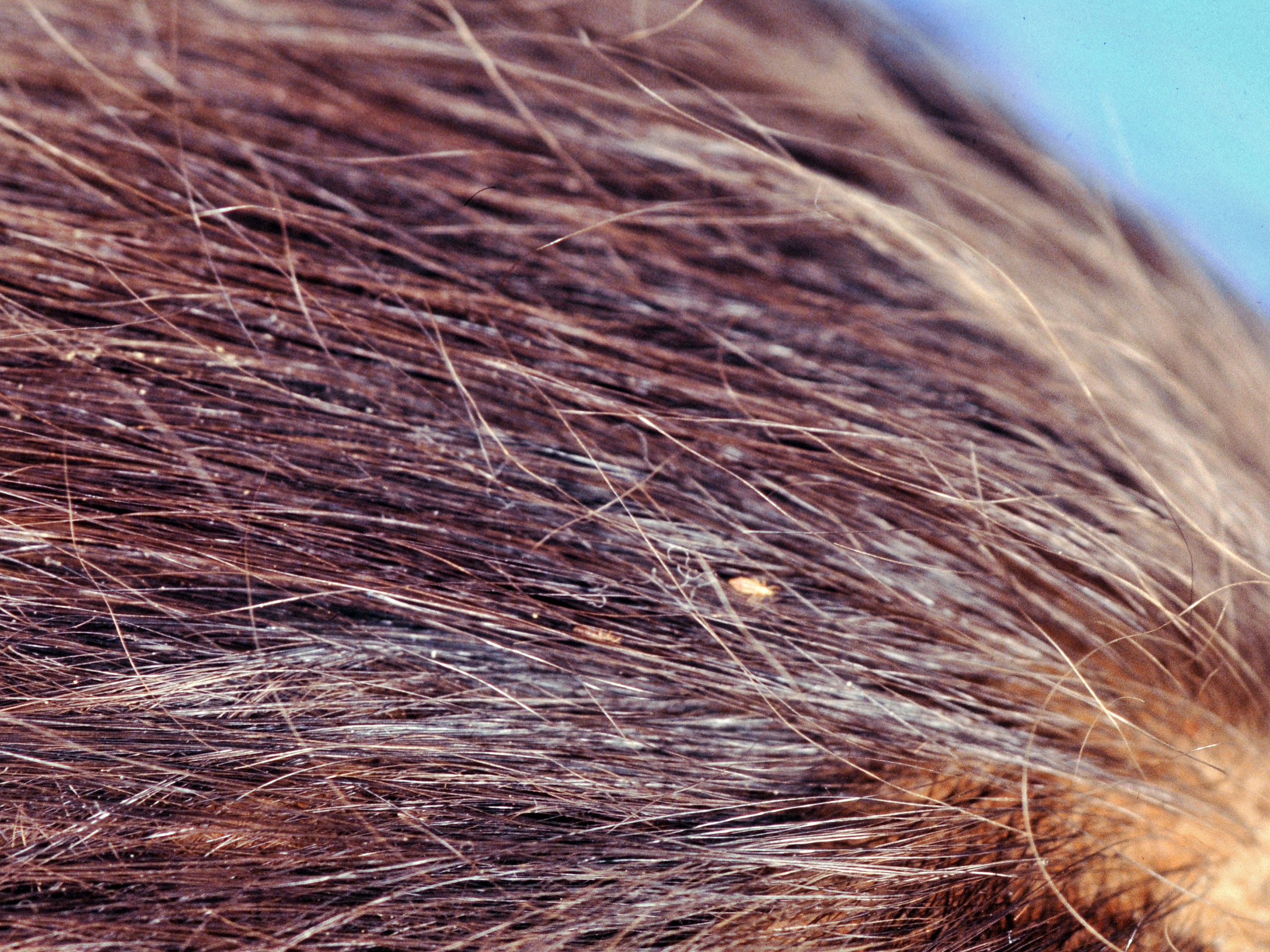
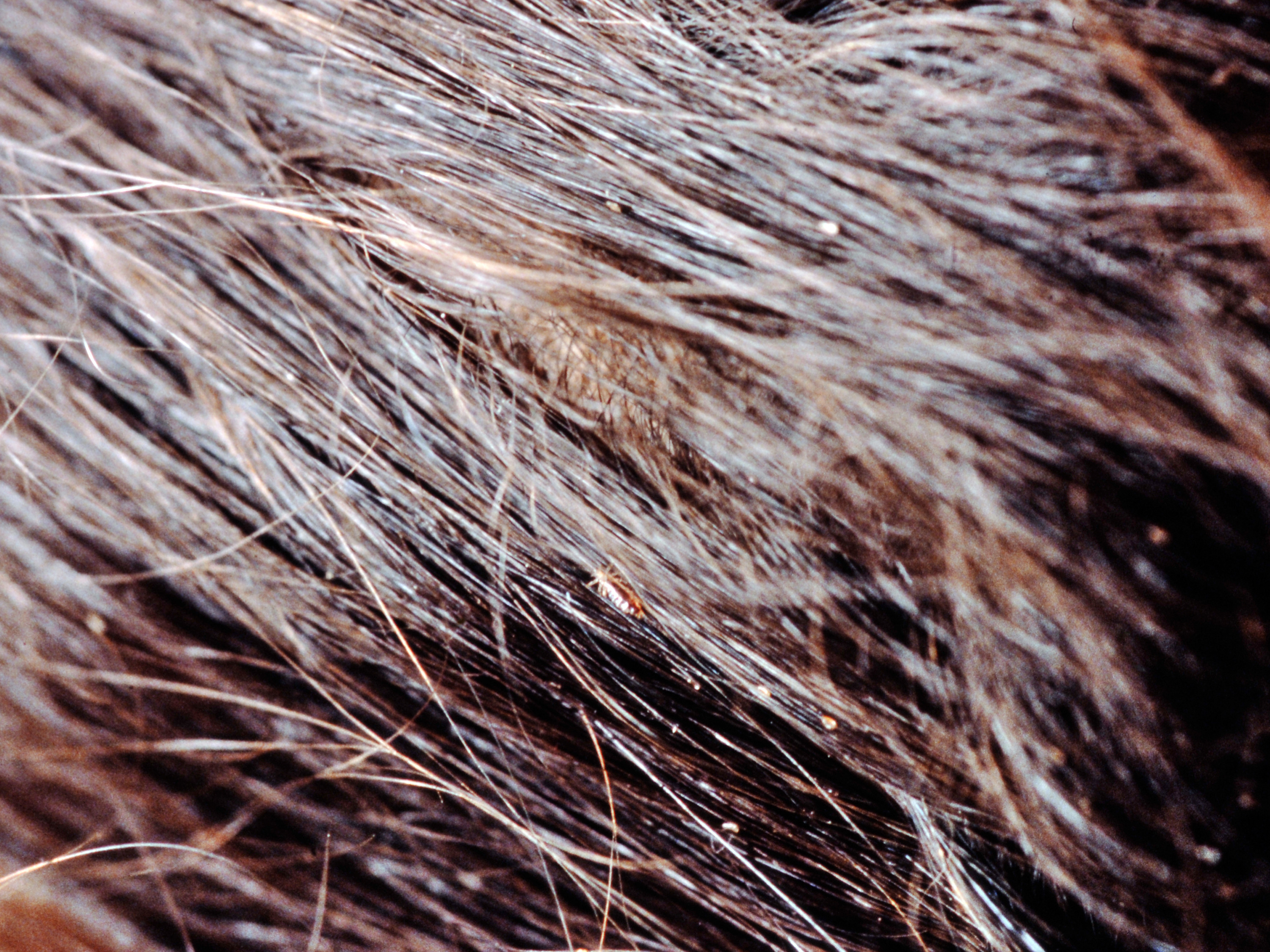
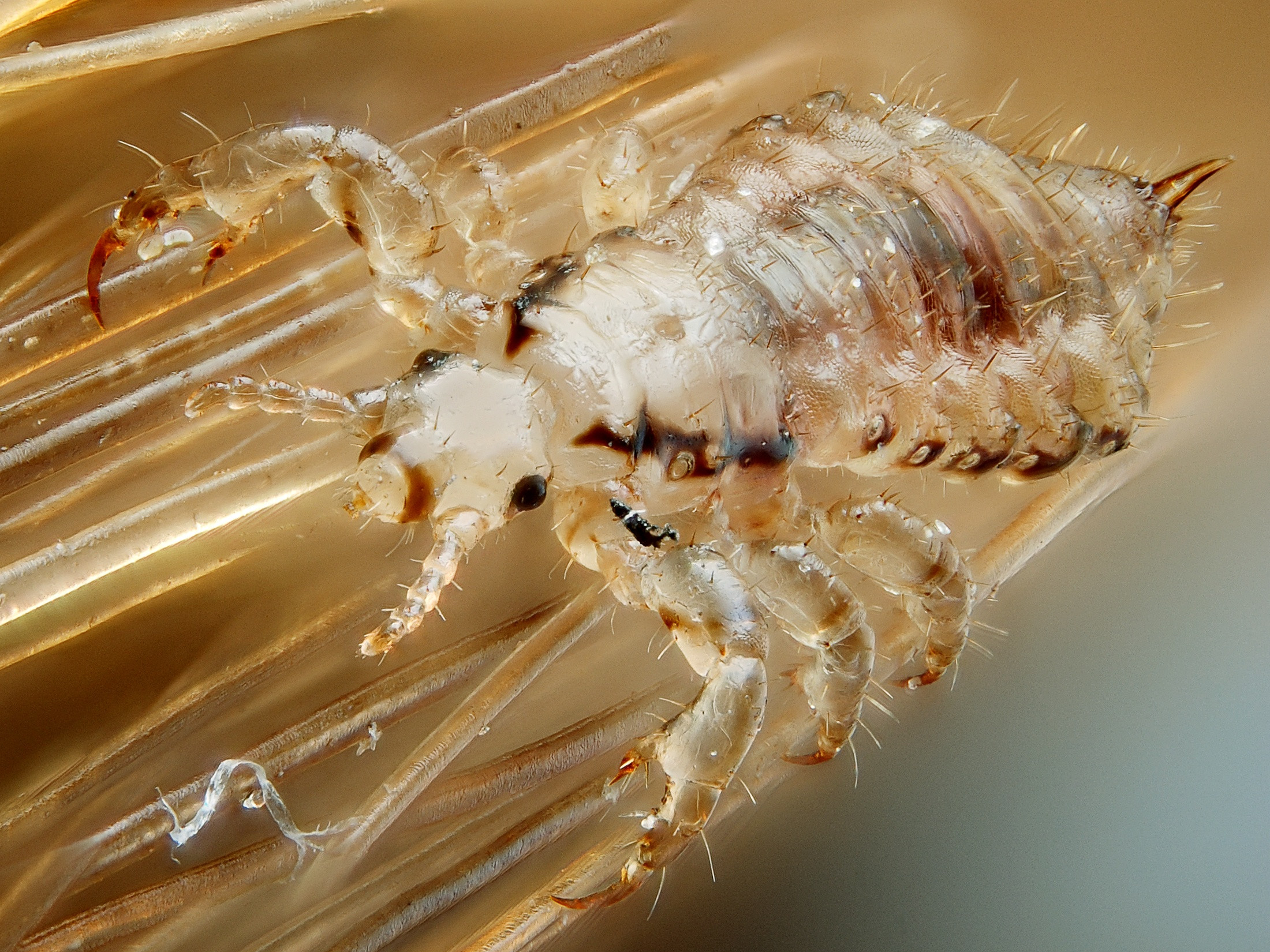
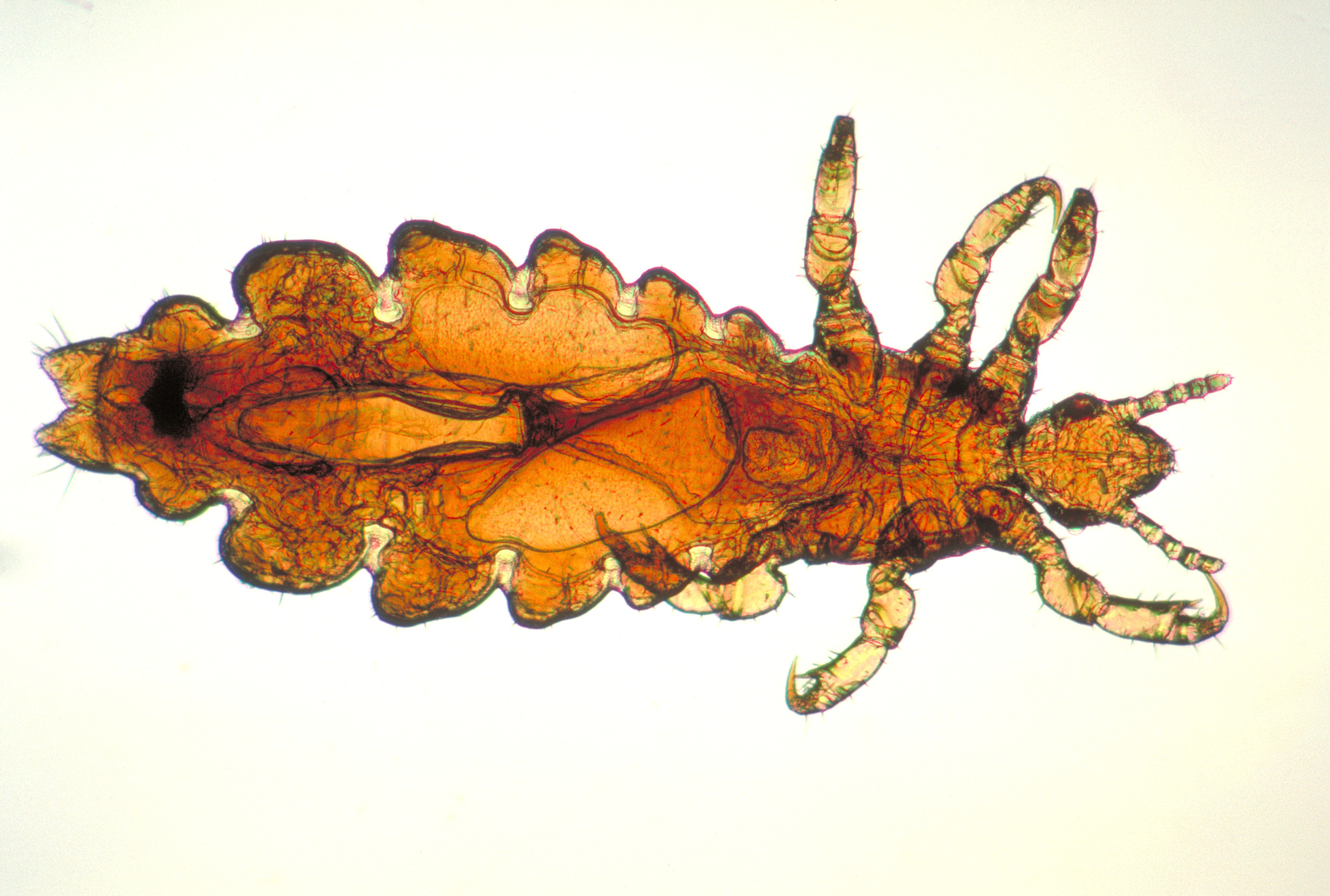
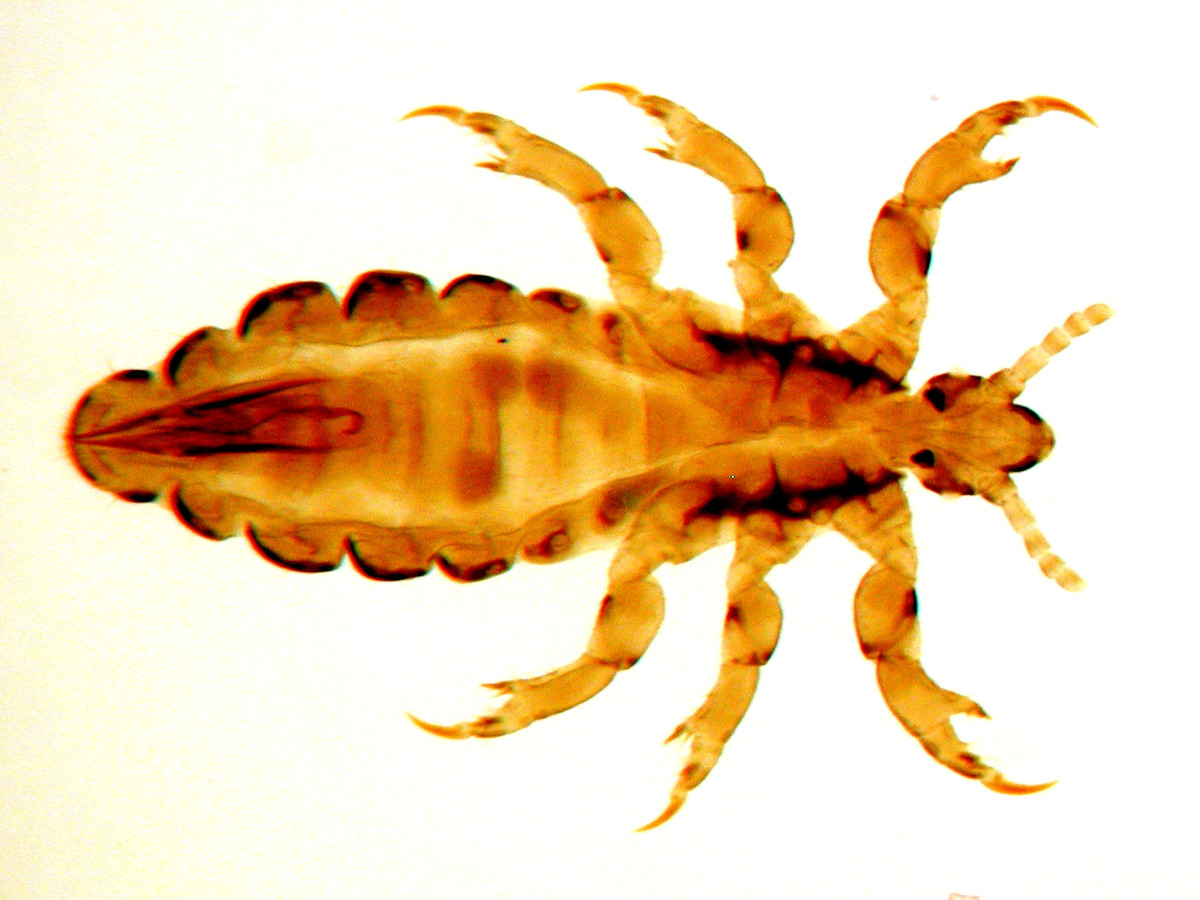
WHAT IS HEAD LICE?The head louse ( Pediculus humanus capitis ) is a very small, blood-sucking insect, a parasite. It lives only on the head, is not dangerous, and cannot transmit diseases. The main symptom caused by head lice is itching. The louse feeds on blood and bites 3 to 6 times a day. When sucking blood, some of the louse's saliva is introduced into the skin, causing the bothersome itching.
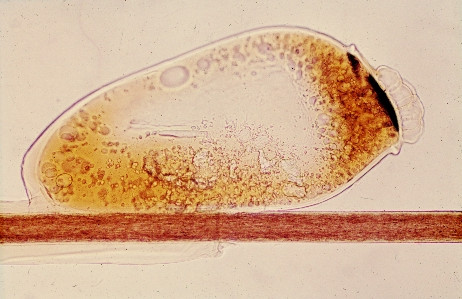
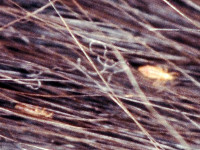
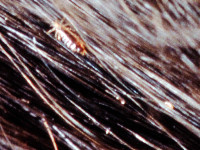
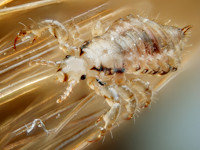
An adult head louse is about 3 millimeters long and is grayish-blue in color, or reddish-brown if it has just sucked blood. Head lice lay eggs (called nits), which they stick to the hair. Nits are very firmly attached to the hair. A head louse lives for about a month and can lay 250 eggs. Usually, there are no more than about 20 head lice on the head at the time it is discovered.
 |
 |
 |
| head lice |
head lice |
head lice cling |
WHAT ARE THE PHENOMENA?The main complaint is itching. Tiny eggs (nits) are also firmly attached to the hair, visible as white dots. Sometimes, head lice can be seen crawling in the hair.HOW ARE HEAD LICE TRANSMITTED?Head lice are highly contagious and are transmitted through hair-to-hair contact, meaning that when hairy heads touch, the lice can move from one head to the other. It occurs primarily in young children who play close together. School is usually the place where the infection is contracted. It is uncertain whether lice can also be transmitted via clothing (jackets, scarves, hats), and it is also uncertain whether various measures such as washing clothes at 60°C and placing jackets and hats in plastic bags are effective. Therefore, the RIVM (National Institute for Public Health and the Environment) advised in 2011 that all these measures are no longer necessary.SHOULD I BE ASHAMED IF MY CHILD HAS HEAD LICE?No. This happens in even the best families. Having head lice isn't a sign of poor hygiene; they actually thrive on clean, washed hair. It's just bad luck.WHAT HAPPENS IF MY CHILD IS FOUND WITH HEAD LICE AT SCHOOL?You will usually be called to pick up your child immediately and begin treatment. After you have started treatment, your child does not need to stay home. However, all other children at school and all members of your family must be checked for head lice. If head lice are found, everyone must be treated at the same time to prevent the lice from spreading. Some schools systematically check children for lice after the summer holidays.HOW SHOULD I CHECK FOR HEAD LICE?Sometimes you can see head lice crawling across the head. Look carefully between the hair, especially behind the ears and at the nape of the neck. You'll see the lice moving. Head lice aren't always easy to spot; the best way to check is to comb the hair over a piece of white paper with a fine-toothed comb (lice comb or nit comb) and then see if any lice fall out. Another way to determine if there are lice is to look for nits (grayish-white specks attached to the hair).HOW ARE HEAD LICE TREATED?Head lice can be treated by thoroughly combing the hair with a special nit comb every day for 14 days. If you do this very carefully, without skipping a single day or missing a single strand of hair, you can control head lice without using special anti-lice products.
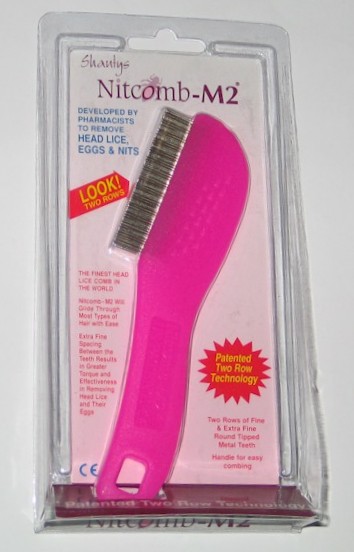
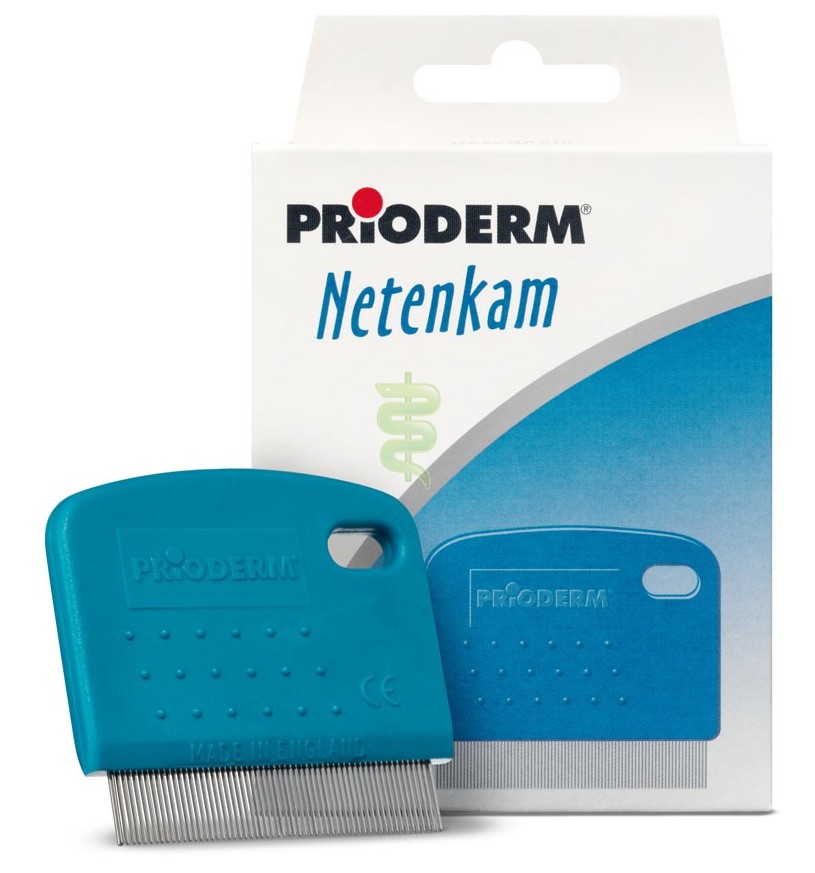
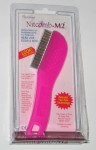
The other method, which offers a slightly more reliable approach, is combining combing with a louse-killing product.HOW SHOULD I COMB MY HAIR?Special combs with very fine teeth are available at the drugstore or pharmacy. These remove lice from the hair. By doing this every day for two weeks, you'll also catch any newly hatched lice. To comb your hair properly, first wet it thoroughly and massage in conditioner. Cover your eyes with a washcloth. Then, use a regular comb to comb out the tangles, and then use the nit comb to comb out all the hair, strand by strand, from end to end. Do this over a sink or a piece of white paper to see if any lice fall out. Afterward, rinse out the conditioner and clean the comb with soap and water. Daily combing is tedious, time-consuming, and painful, especially for girls with long hair. A tip: do it in front of the television.
 |
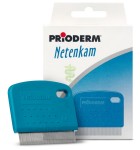 |
| net comb |
net comb |
WHAT TYPES OF ANTI-LICE PRODUCTS ARE THERE?The two most commonly used anti-lice products in the Netherlands are permethrin and dimeticone. Permethrin is a chemical that kills lice. Repeating the treatment after a week is usually recommended. Permethrin is best avoided during pregnancy and breastfeeding, and also not for babies under six months of age. In these situations, combing is recommended. If combing doesn't help, permethrin can still be used during pregnancy or breastfeeding. Dimeticone works differently; it blocks the lice's respiratory organs and has a suffocating effect. It is much less aggressive than chemical agents and can also be used during pregnancy and breastfeeding.
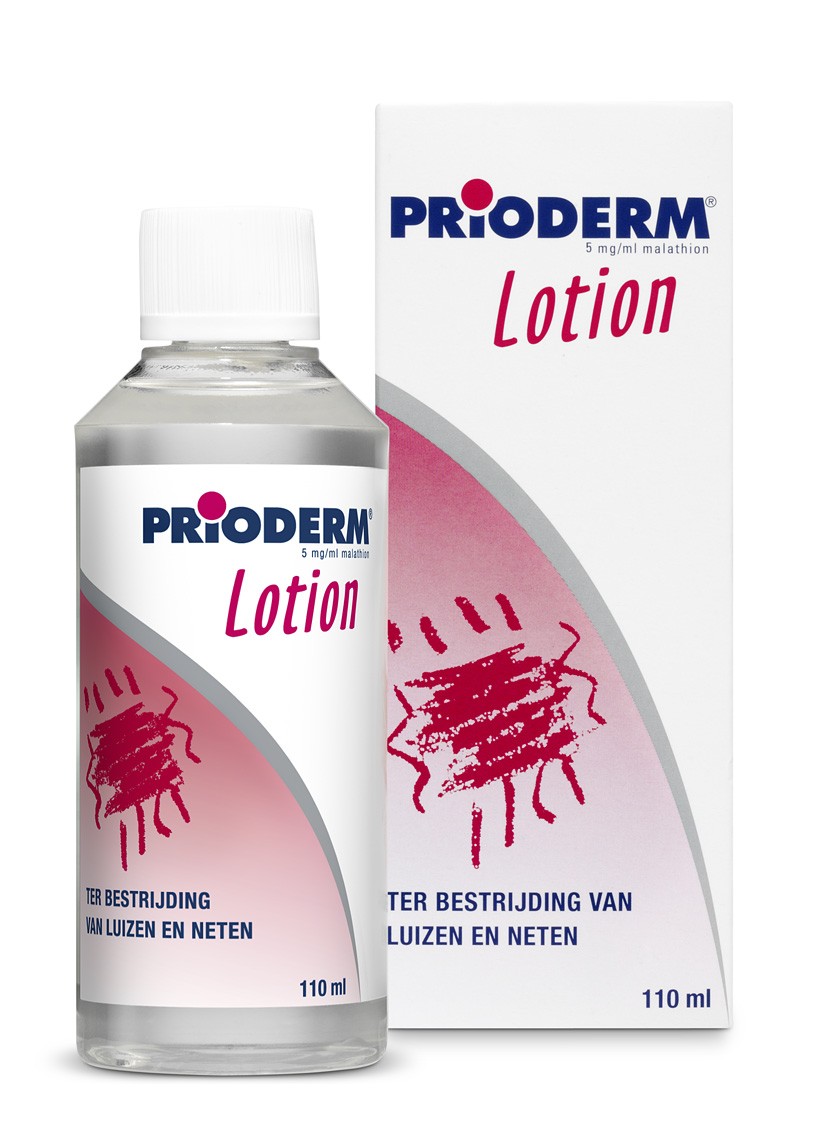
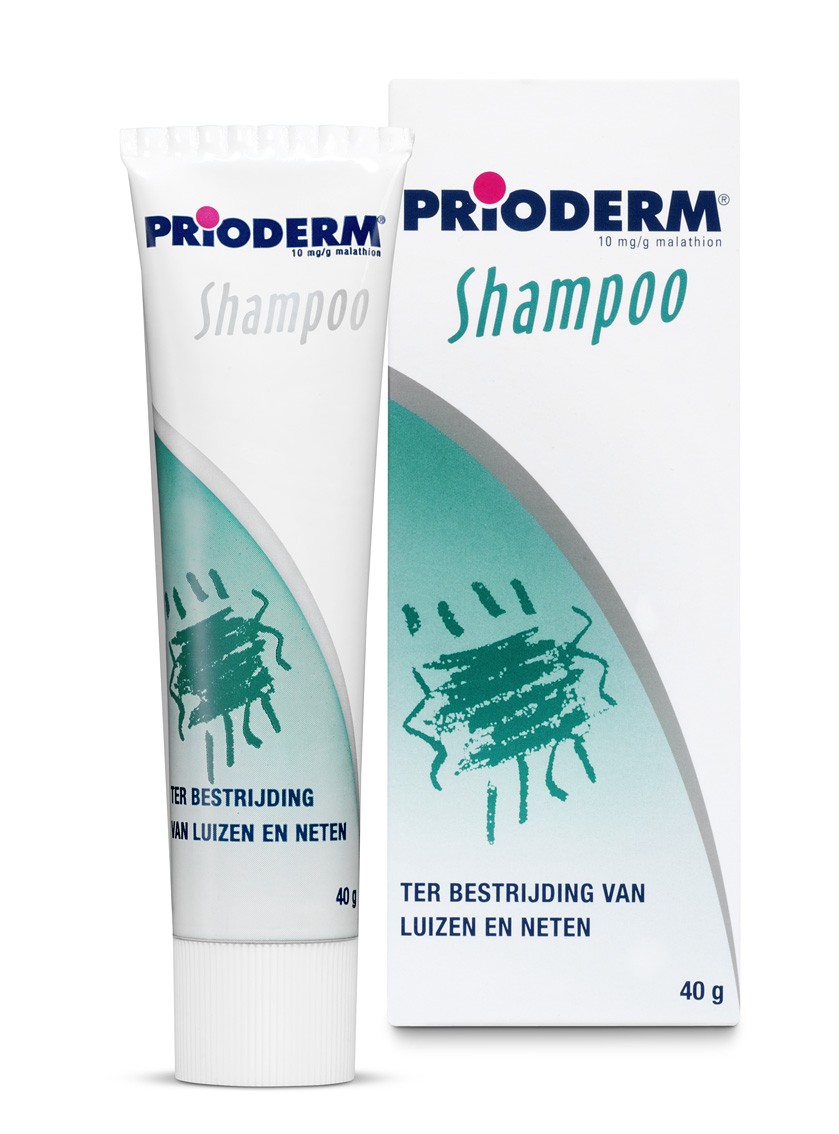
Whichever product you use, all treatments must be combined with combing. Combing, the mechanical removal of lice and nits, is therefore very important. Some products include a nit comb in the packaging.EXAMPLES OF ANTI-LICE PRODUCTSPermethrin and dimeticone are the names of the substances. Various anti-lice products contain these substances. Some examples include:
Loxazol lotion 1% (permethrin). 59 ml bottle, includes nit comb. Read the instructions on the packaging.
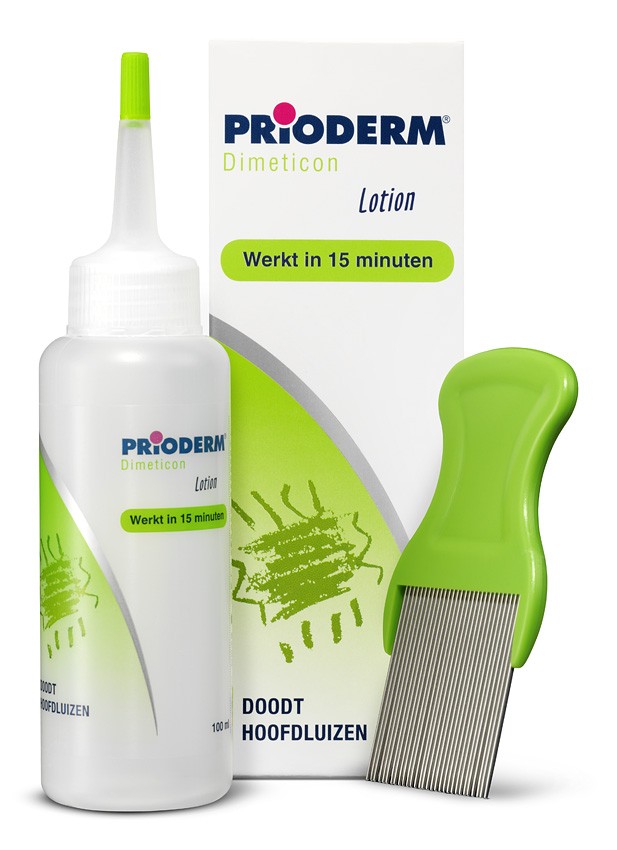
Prioderm dimeticone . This pesticide-free product kills head lice and nits in 15 minutes. Dimeticone penetrates the respiratory tract of head lice, causing them to suffocate. To break the life cycle of head lice, it is important to repeat the treatment after 9-10 days. Massage the lotion into dry hair and leave it on for 15 minutes. Then massage in a generous amount of undiluted shampoo, then rinse with water. Dimeticone can be used during pregnancy and breastfeeding.
WHERE CAN I GET ANTI-LICE PRODUCTS?For anti-lice products, go to the pharmacy or a large, well-stocked drugstore. These products are available without a prescription. They are not covered by insurance; you will have to pay for them yourself.WHAT SHOULD I DO IF I STILL SEE LICE AFTER 2 WEEKS OF COMBING?There are several reasons why the treatment might not be successful:
- You didn't comb out all the hair properly, missing some locks. Try again.
- There's been a new infestation. Check if there are any children at school or in your family who have head lice and who haven't been treated properly.
- The lice are resistant to the anti-lice product you used. That's possible. In that case, use a different product.In all cases: keep combing well!WHAT ELSE SHOULD I DO?Tell everyone in the area that you've discovered head lice on your child. The school or daycare center needs to know, as do any sports clubs, grandparents, neighbors, babysitters, and parents of friends. Everyone can then be checked for lice. Especially with school classes, it's important that all infected children in a group are treated simultaneously, otherwise they could re-infect each other. Carefully check all family members yourself, and have your own hair checked as well.CAN YOU PREVENT HEAD LICE?There are products that claim to prevent head lice, such as preventative sprays. It's best to avoid these products, as their effectiveness hasn't been sufficiently researched, and there's a risk that more and more head lice will become resistant due to excessive use of these products. |