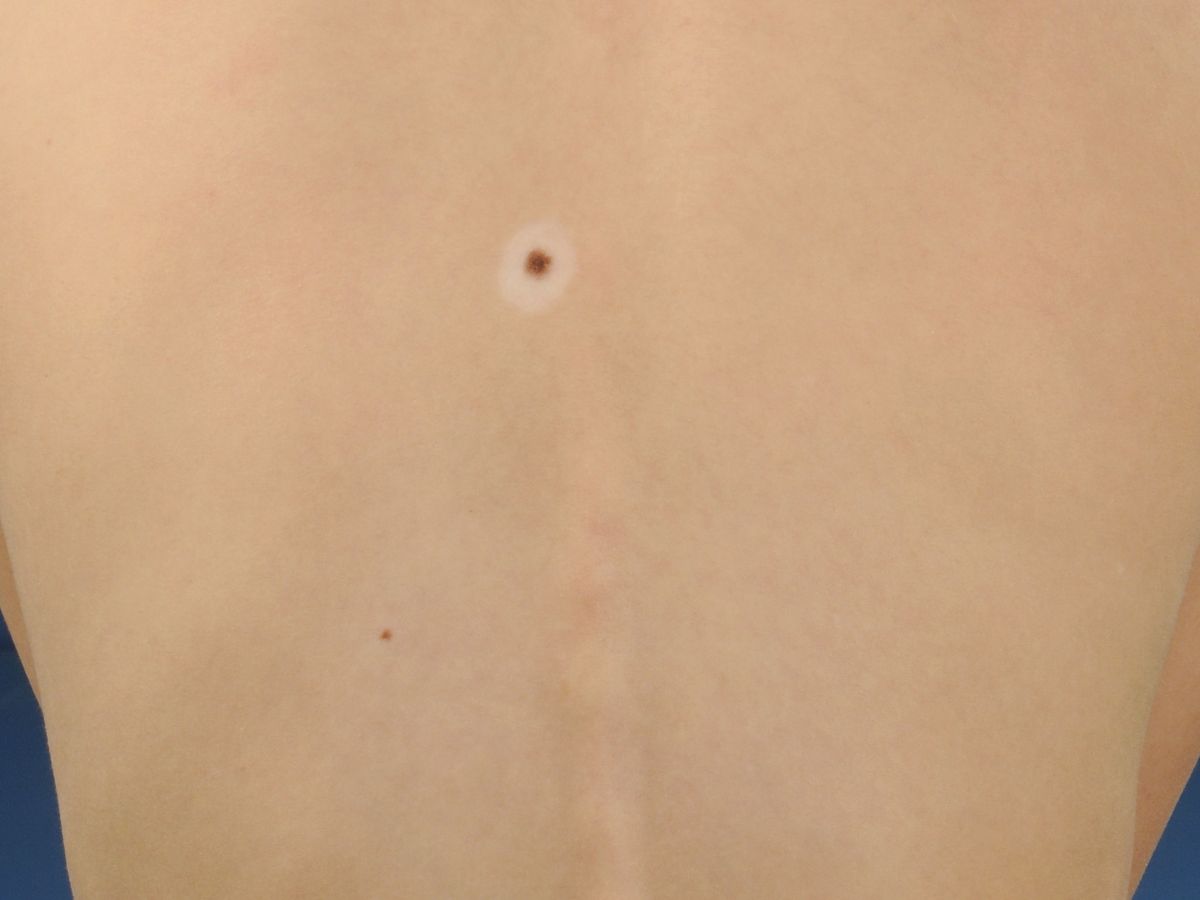
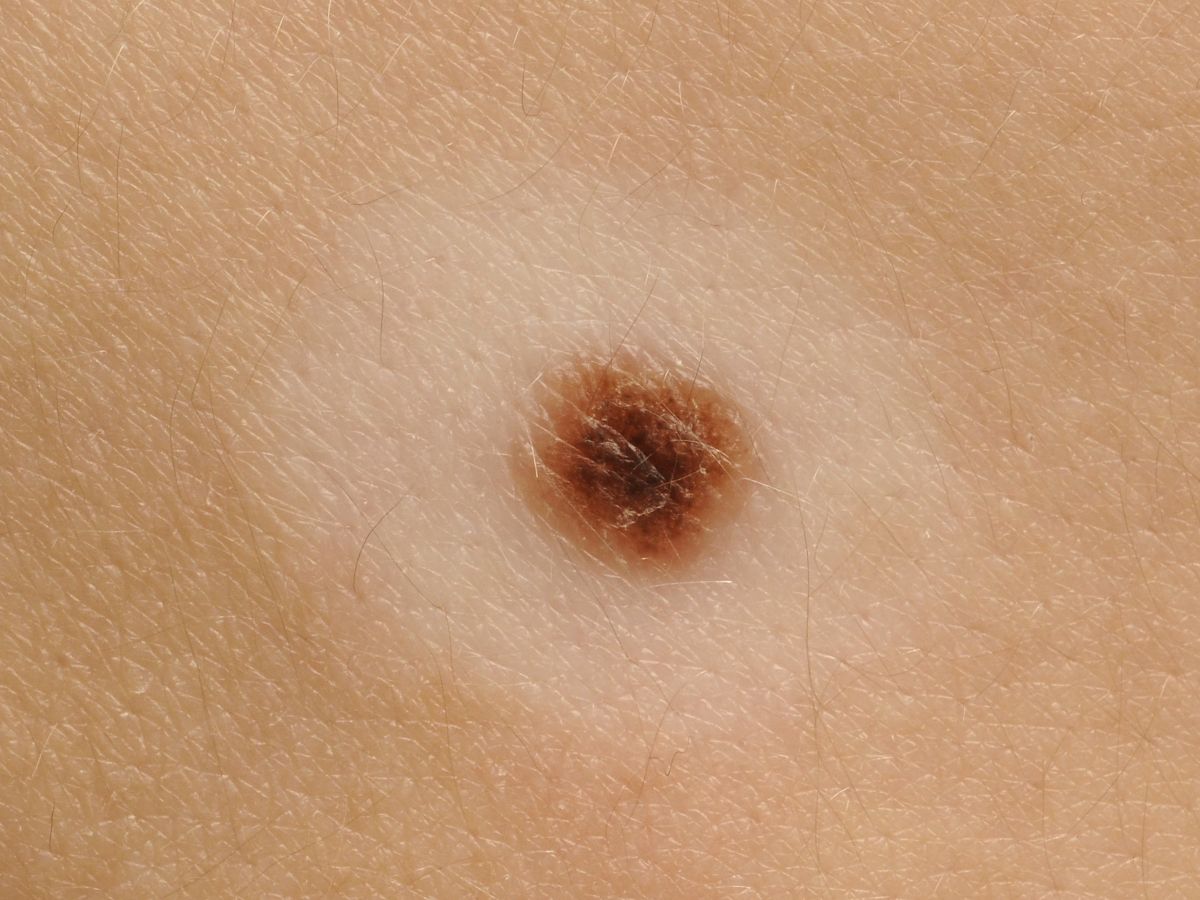
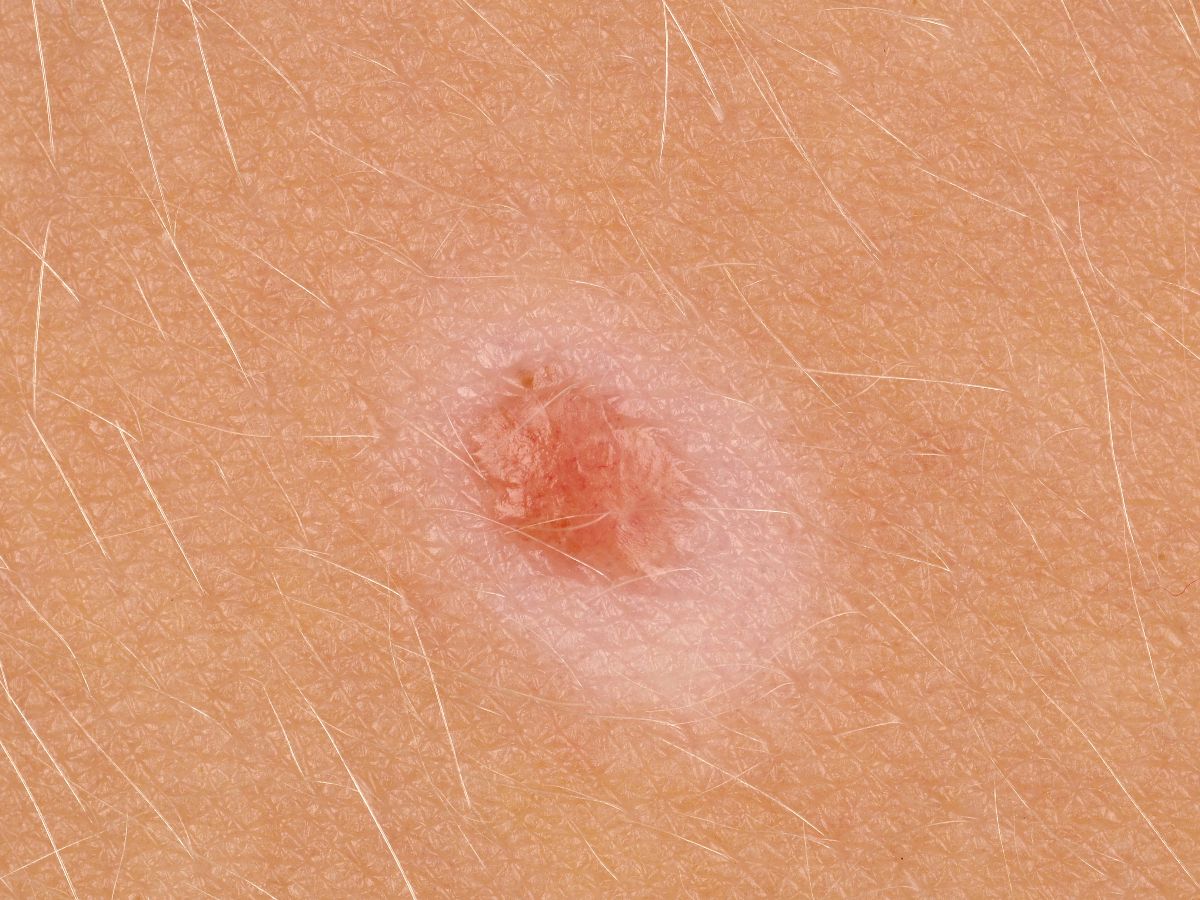
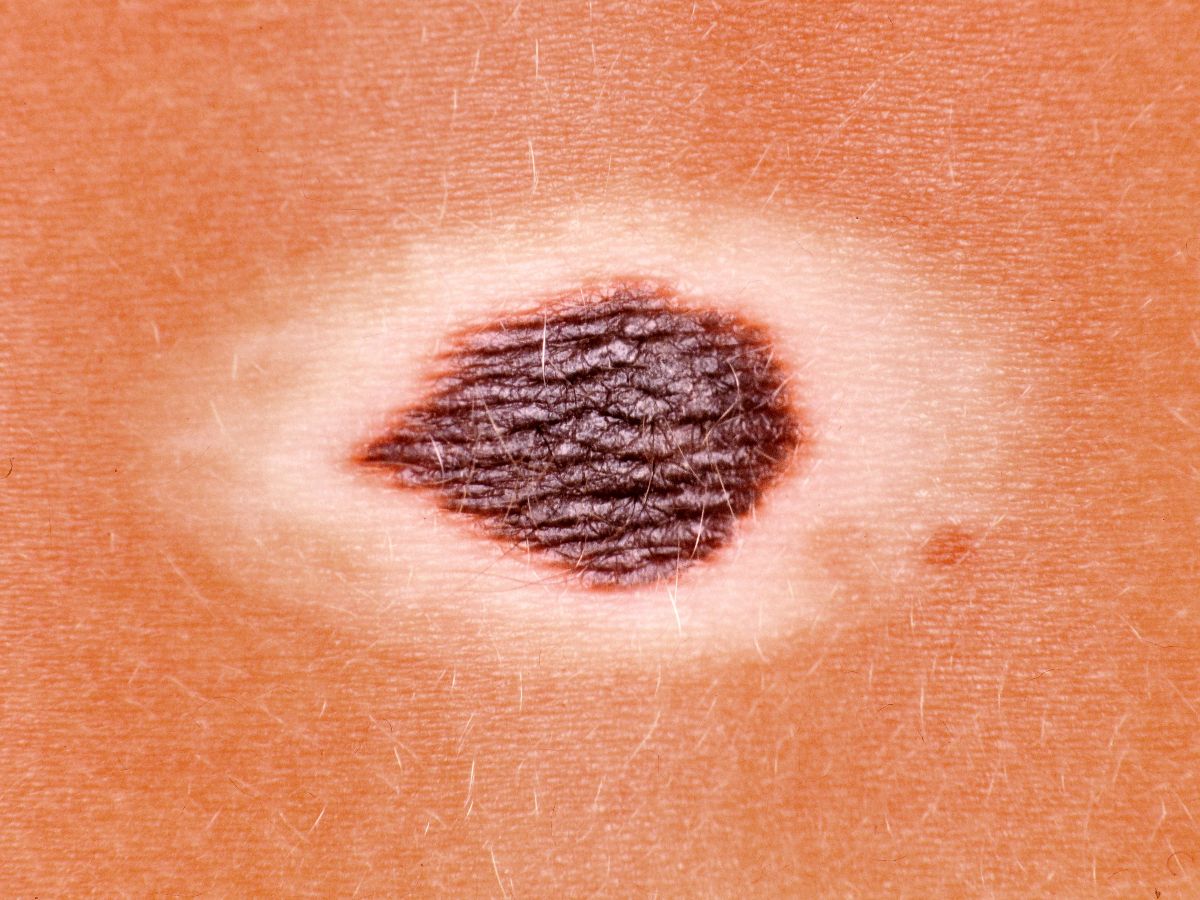
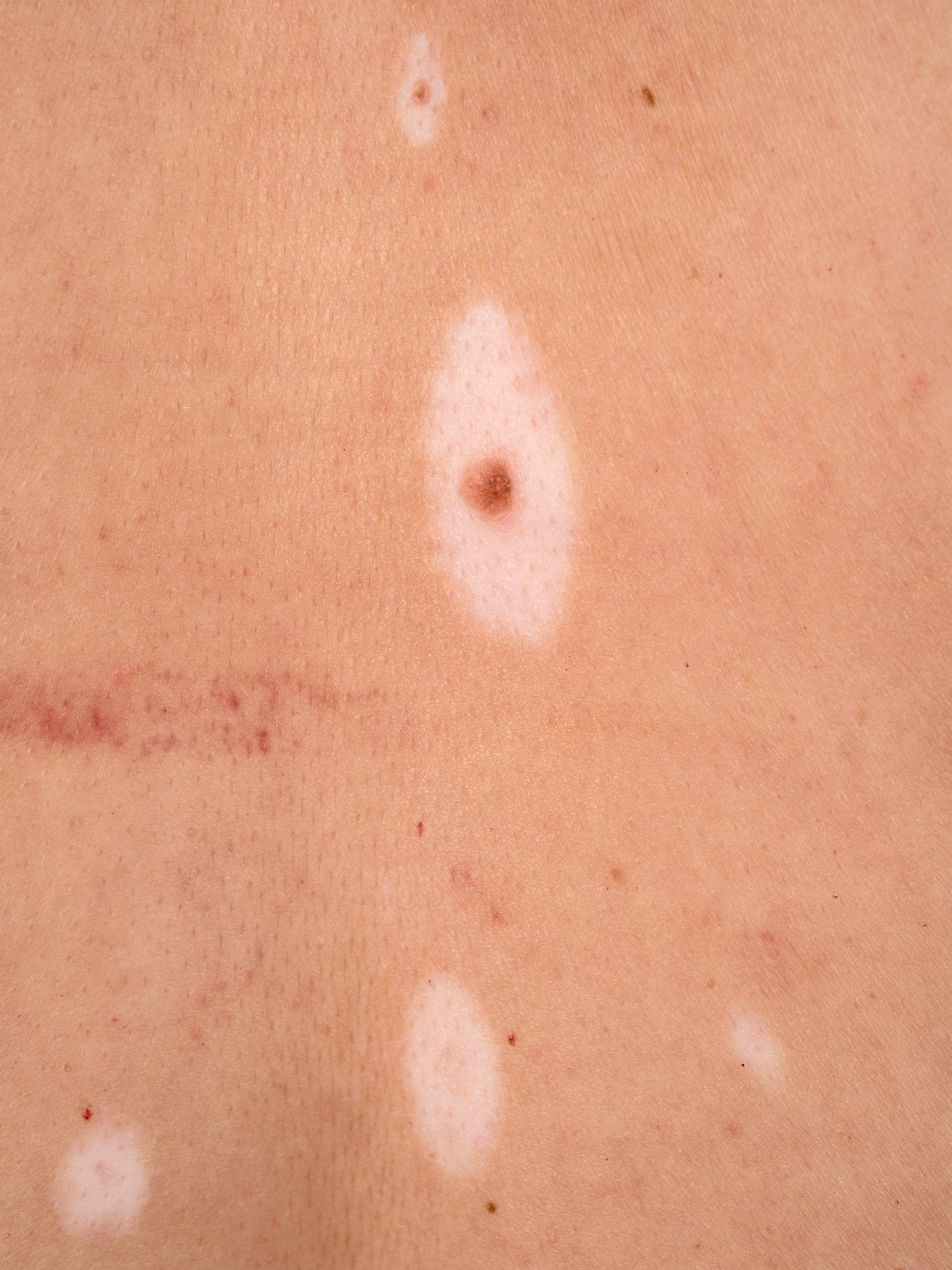
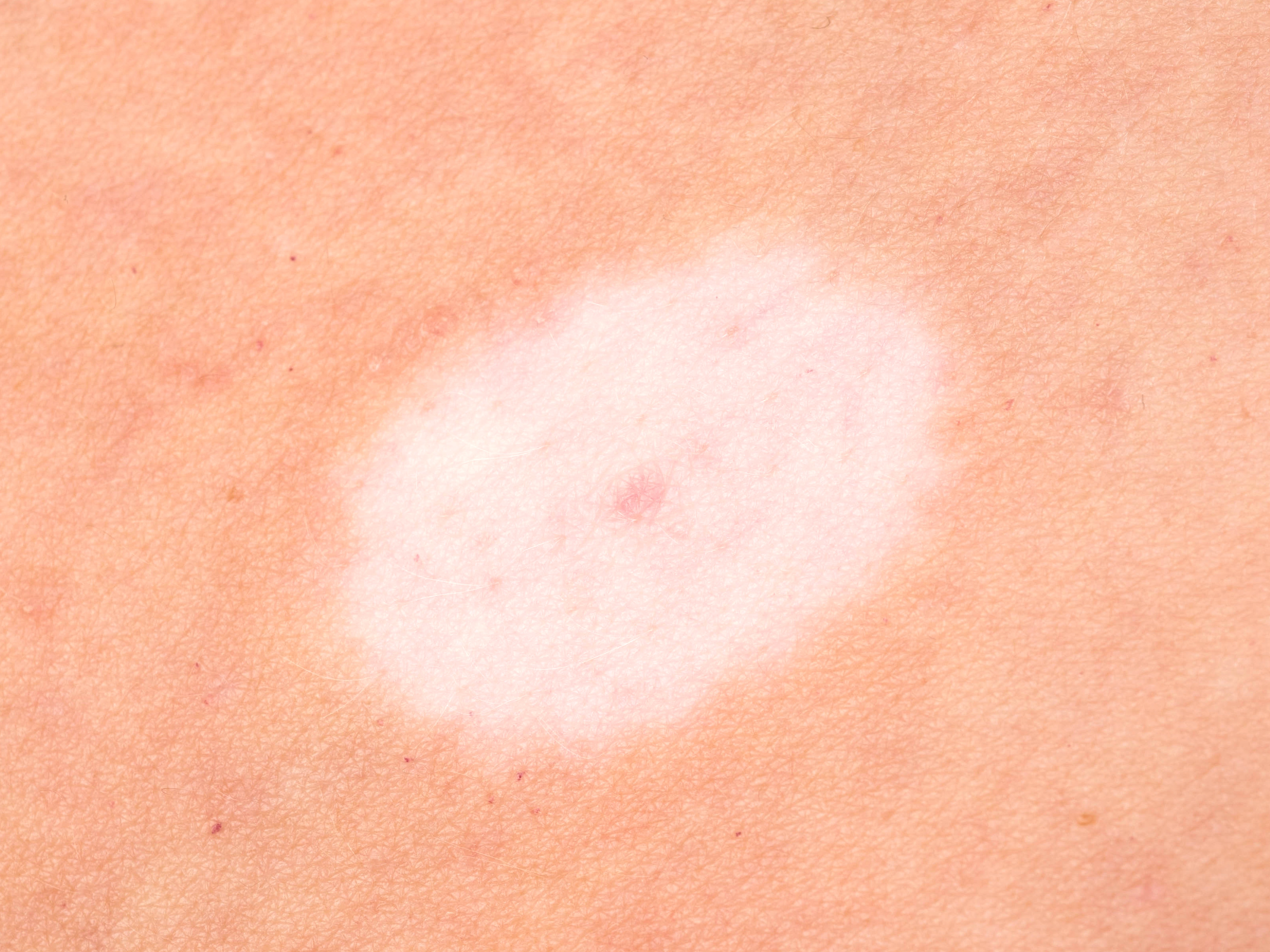
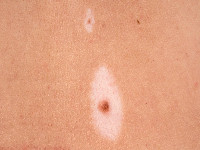
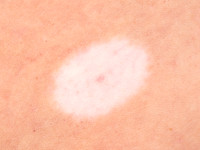
WHAT IS A HALO NAEVUS?A halo nevus is a mole with a white border around it. The mole was there first, and the white ring (halo) developed later. A halo nevus is also called Sutton's nevus and is also known as leukoderma acquisitum centrifugum, perinevoid vitiligo, and target mole.
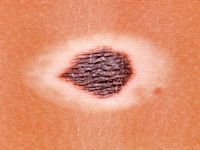
Halo nevus are harmless. The white border develops due to a clearing reaction of the mole.WHAT DOES A HALO NAEVUS LOOK LIKE?A halo nevus is a regular mole, but with a white border around it. The pigment cells in the white border have disappeared. The border is difficult to see in light skin, but very visible in dark skin. When you expose yourself to the sun, your skin tans, but not the halo: it remains pure white and can burn unsightly because the skin is no longer protected by pigment cells. A halo nevus can appear anywhere on the body, including the face. The central mole can be large or small, and skin-colored, pink, or brown. The ring around the mole can be very narrow, a few millimeters, or even centimeters wide. Usually, there is only one halo nevus, but multiple halo nevus can appear simultaneously.
 |
 |
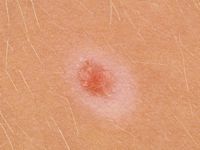 |
| halo nevus (Sutton nevus) |
halo nevus (Sutton nevus) |
halo nevus (Sutton nevus) |
 |
 |
 |
| halo nevus (Sutton nevus) |
halo nevus (Sutton nevus) |
halo nevus (Sutton nevus) |
HOW DOES A HALO NEVER DEVELOP?It's common for moles to be cleared by the body. The body's own immune system then works to eliminate the mole. This causes an inflammatory reaction in and under the mole. The mole in which this occurs may also be red and/or scaly. The immune system cells attack the pigment cells in the mole. Sometimes, antibodies are produced against pigment cells. These antibodies can also cause the pigment cells in the surrounding normal skin to disappear.WHO CAN GET A HALO NEVER?Anyone can get a halo nevus, both men and women, with any skin type. It's common, estimated at 1% of the population. It's most commonly seen in 15-20 year-olds, with a range of ages 3-42. It can occur simultaneously with vitiligo.CAN THE MOLE IN A HALO NEVER BE MALIGNANT?No. A halo nevus is by definition benign.
There are always exceptions: it's very rare for a mole with a white ring around it to turn out to be malignant. In that case, it wasn't a true halo nevus, but a melanoma with a white discoloration around it. In that case, the mole's center isn't regular, and neither is the white ring around it. Because this almost never happens, the best answer to this question is: a halo nevus is benign.WHAT SHOULD I DO IF I HAVE A HALO NEVER?It's wise to have it examined by a general practitioner or a dermatologist. They will check whether the mole looks normal in the center. If so, no further action is needed. If the general practitioner is not entirely confident, you will be referred to a dermatologist. The dermatologist will examine the mole, if necessary, closely with a magnifying instrument. If the mole looks irregular in the center, they will do what happens with any irregular mole: they will remove it and examine it under a microscope. This is only done if the mole looks suspicious. Having a white ring around a mole is not sufficient to consider it suspicious (see the moles brochure for more information ).HOW IS A HALO NEVER TREATED?A halo nevus does not need to be treated, removal is not necessary.WHAT ARE THE OUTLOOK?In most cases, the ring first lightens or enlarges, and the mole fades completely or almost completely. Then, the color in the ring gradually returns. This process can take several months to years. Sometimes, the pigment is completely gone and never returns, leaving a permanent white mark.WHAT CAN I STILL DO MYSELF?You need to be careful with the sun. Don't forget to always apply plenty of sunscreen to the halo, as the skin there is very sensitive to sunburn. |