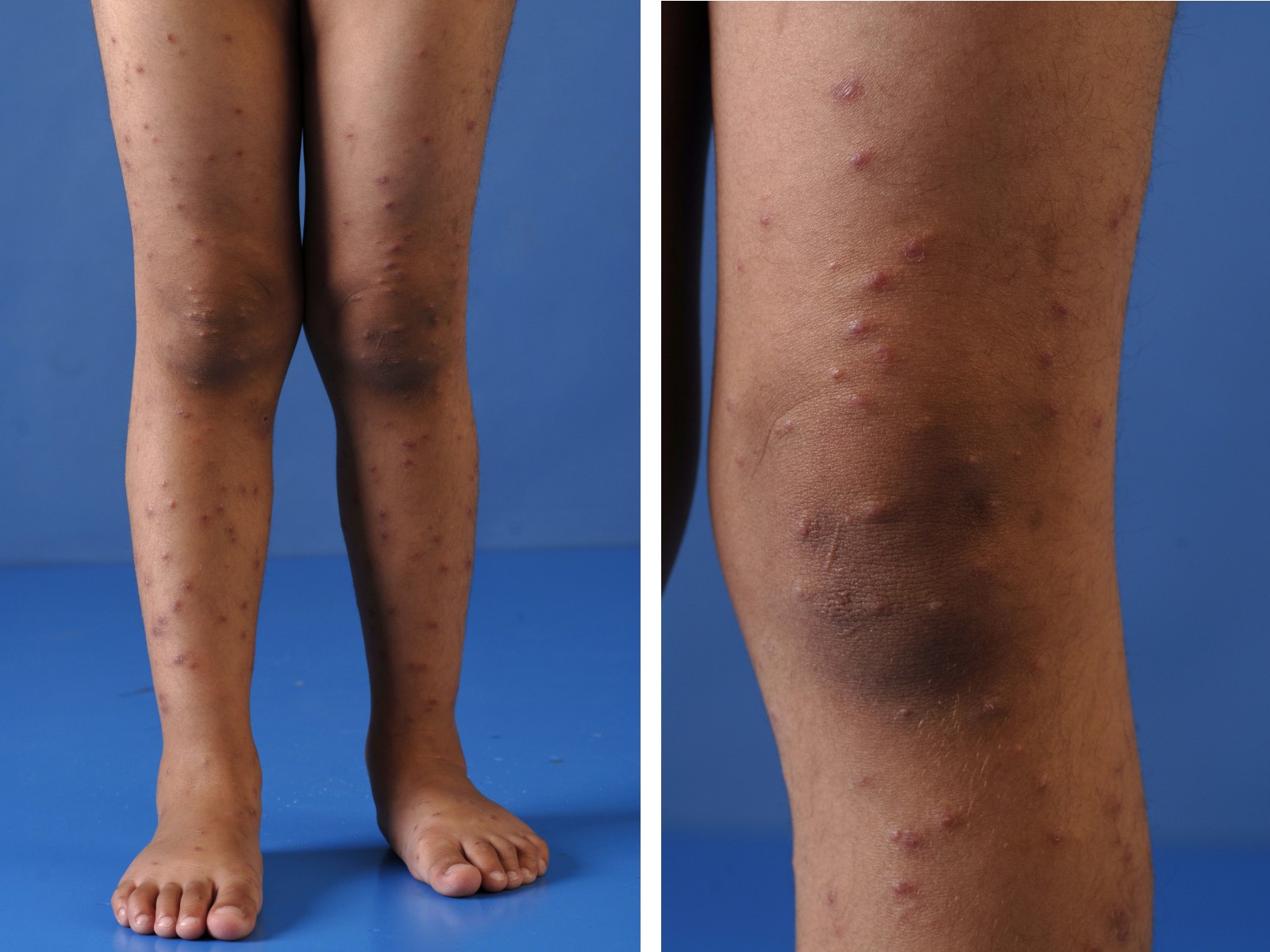
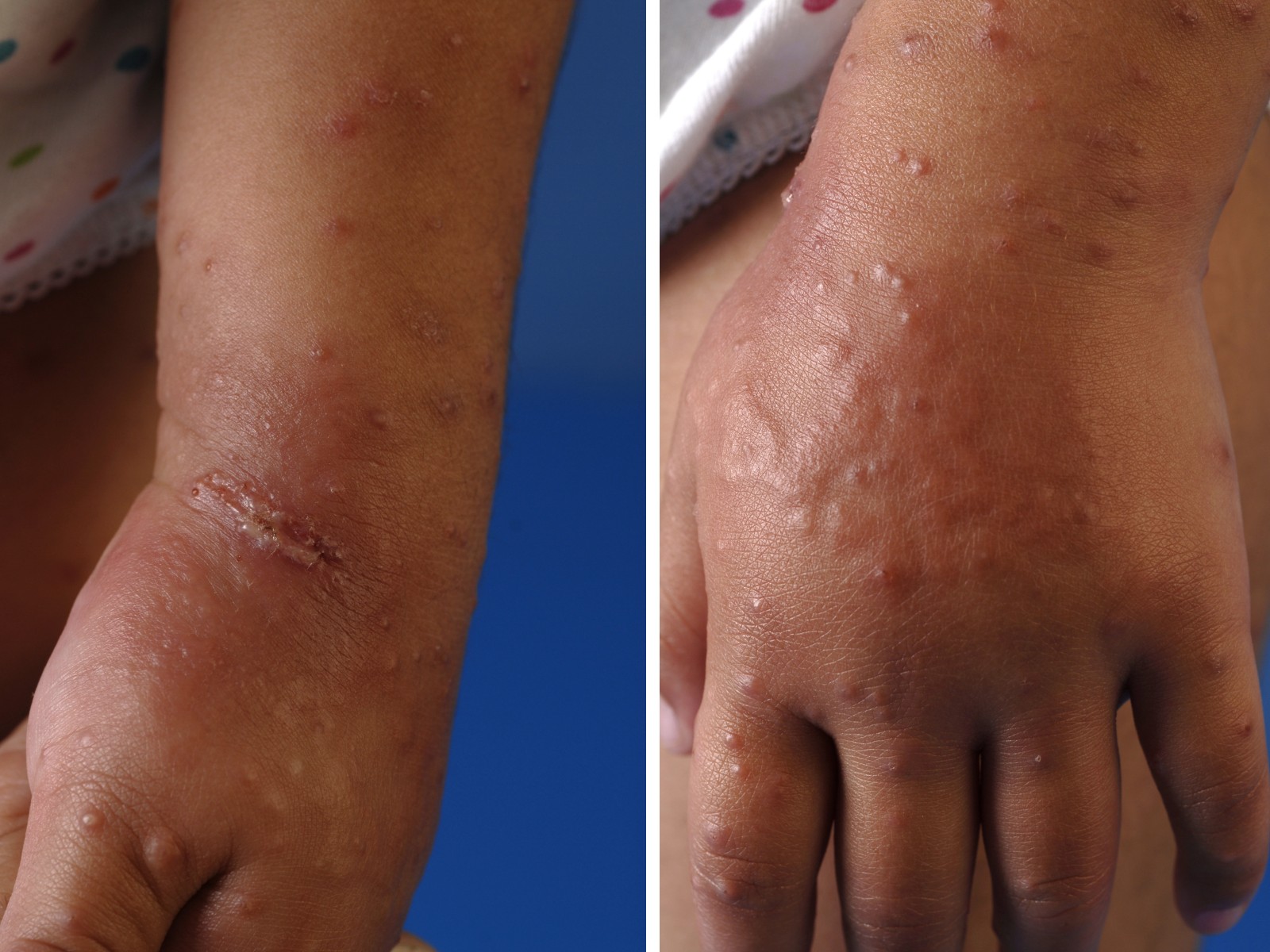
WHAT IS GIANOTTI CROSTI SYNDROME?Gianotti-Crosti syndrome is a sudden, self-limiting rash in young children. It is a reaction to a viral infection. Bumps and blisters appear, primarily on the arms and legs. The syndrome is named after the Italian physicians who first described it in 1955.
 |
 |
| Gianotti-Crosti syndrome |
Gianotti-Crosti syndrome |
WHAT DOES GIANOTTI CROSTI SYNDROME LOOK LIKE?Gianotti-Crosti syndrome causes 1- to 5-millimeter red or purplish-red bumps, and sometimes blisters, to develop, primarily on the extensor side (the front) of the forearms and lower legs. The rash develops within 3-4 days. It can also appear on the buttocks or thighs, but is usually not found on the trunk. Bumps may also appear on the face. The bumps are generally mildly or not at all itchy. Gianotti-Crosti syndrome is primarily seen in young children under the age of 12. Because Gianotti-Crosti syndrome is a reaction to a viral infection, symptoms such as a cold, sore throat, respiratory infection, ear infection, fever, listlessness, swollen lymph nodes, enlarged liver and spleen, diarrhea, eye infection, etc., may precede the rash.WHAT CAUSES GIANOTTI CROSTI SYNDROME?Gianotti-Crosti syndrome is a skin reaction to a viral infection, usually a respiratory infection caused by a cold virus. A rash often develops after or during a viral infection. These are usually small red spots that disappear on their own. Gianotti-Crosti syndrome is a variant of this viral rash, unique in that it primarily appears as bumps and blisters, and is most commonly found on the (extremities of) the arms and legs.
Several viruses can cause Gianotti-Crosti syndrome: echovirus, adenovirus, rotavirus, parvovirus B-19, coxsackie B virus, RSV (respiratory syncytial virus), enterovirus, rubella, parainflenza, HHV6, HIV, hepatitis B, EBV, and CMV.HOW IS GIANOTTI CROSTI DIAGNOSED?The diagnosis is based on the clinical picture and its appearance. The combination of red bumps and blisters, primarily on the arms and legs, developing rapidly and not itching after a cold is typical of Gianotti-Crosti. Further testing is not necessary.HOW IS GIANOTTI CROSTI SYNDROME TREATED?Treatment isn't really necessary, as the bumps go away on their own. The bumps usually cause few symptoms. A topical corticosteroid cream can be applied.STAYING HOME FROM SCHOOL?There's no need to keep your child home. Gianotti-Crosti is not contagious; it's a skin reaction to the virus, and the virus itself is already gone.WHAT IS THE PROGNOSIS?Gianotti-Crosti usually resolves on its own. The patches gradually fade over 2-8 weeks, sometimes leaving behind scaly patches. It's possible to get Gianotti-Crosti a second time, as a reaction to a different virus, but this is rare. The prognosis is good. Gianotti-Crosti itself isn't dangerous, but the underlying viral infection can sometimes make a child sick. |