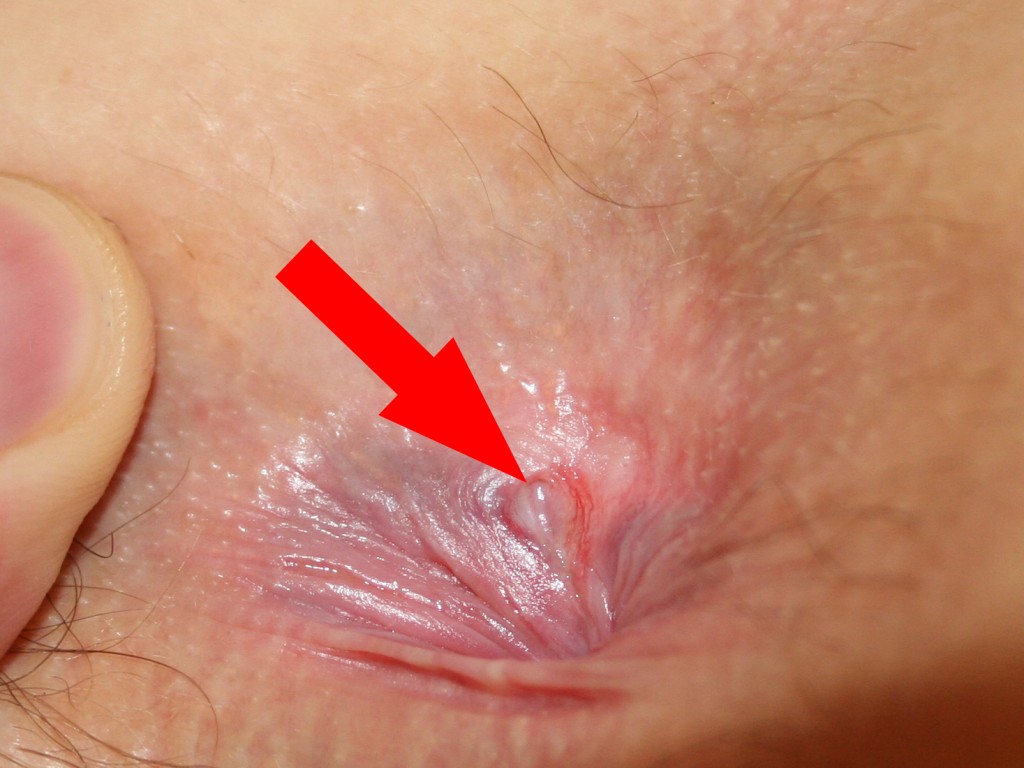
INTRODUCTIONHere you'll find a general overview of the symptoms and causes of a fissure in the ankle, as well as the most common treatment options. It's important to remember that when diagnosing a condition, everyone's situation is different.WHAT IS A FISSURA ANI?A fissure is a small crack; a fissure is a painful fissure in the anus. It runs lengthwise along the anus and is located in the midline at the anterior and/or posterior aspect of the anus. It most commonly occurs in young and middle-aged children, but can certainly also occur in babies, toddlers, and the elderly.
 |
| fissure ani |
Photo: Bernardo Gui - Wikimedia (Creative Commons License 1.0 - Public Domain Image).
WHAT IS THE CAUSE?Why the fissure develops, and why it occurs in specific preferred locations within the anus, remains unclear. It may be related to increased tension, a kind of spasm of a portion of the sphincter, and a resulting disruption in blood flow. The pain and increased tension in a portion of the sphincter unconsciously hold back stool. This causes the stool to harden. During the next bowel movement, the fissure then tears open again and persists.WHAT KIND OF SYMPTOMS DOES A FISSURA ANI CAUSE?A fissure in the pelvis usually causes symptoms such as a sharp pain during or after a bowel movement, often with some blood loss.IS THERE ANY FURTHER RESEARCH NEEDED?Usually, the symptoms are so pronounced that further investigation—besides a physical examination—is rarely, if ever, necessary. During the physical examination, the doctor will inspect the anus and spread it slightly to detect any fissures.WHAT ARE THE TREATMENT OPTIONS?A fissure in the pelvis usually responds to simple measures. First, stools must be kept soft. This requires eating sufficient plant fiber (bran, brown bread, etc.) and drinking plenty of water. A certain regularity in your bowel movements prevents stool from being held back unnecessarily and becoming too hard. Furthermore, taking regular warm baths can relieve the increased tension in part of the sphincter.
Medications in the form of ointments and suppositories can also help. To keep stools soft, your doctor can prescribe medication, such as plant fiber powders or a drink.WHEN IS SURGICAL TREATMENT NECESSARY?If the symptoms do not respond to simple measures and the fissure persists, a short-term operation can provide relief. There are two surgical treatment techniques, both of which aim to break the increased tension in a portion of the sphincter. The attending physician will discuss the treatment options with you and whether this treatment will take place on an outpatient basis, as a day clinic, or during a short hospital stay.
One method (LIS = lateral internal sphincterotomy) involves making an incision in the inner part of the sphincter muscle on the side through a small surgical incision next to the anus. This can be done under regional anesthesia (numbing a part of the body), general anesthesia, or very well under local anesthesia.
The other method (the Lord procedure) involves the surgeon slightly stretching the sphincter. This method absolutely cannot be performed under local anesthesia, and you will be asked whether this procedure will be performed under regional or general anesthesia.POSSIBLE COMPLICATIONS OF THE SURGICAL TREATMENTNo procedure is without the risk of complications. This procedure also carries the usual risks of surgical complications, such as thrombosis, pneumonia, postoperative bleeding, and wound infection.
The procedures are performed in an area with abundant blood vessels (the anus). Therefore, some bleeding may occur after the procedure, especially after an LIS.
With an LIS, the surgical incision is usually left open to minimize the risk of infection.
These procedures involve surgery on a portion of the sphincter muscle to break the increased tension within it. The question therefore arises as to whether this could pose a risk to continence. Anal continence is defined as the ability to control the passage of air (flatulence), fluids (mucus, diarrhea), and feces. Initially, there may certainly be some loss of sphincter control, particularly with respect to flatulence, but possibly also with respect to fluids. This means that when you feel a gas or some fluid coming on, you have to consciously contract your sphincter, whereas before, this was effortless and almost unconscious. You therefore need to become more consciously in control of your continence. This is usually temporary. Unfortunately, in a small number of cases (approximately 5%), the loss of this control can be permanent. The loss of some fluid (loss of anal mucus with or without fecal fiber, called soiling) can be particularly bothersome.AFTER THE TREATMENTIt's striking that the pain can usually be significantly reduced or even disappear immediately. After the procedure, you'll need to keep your stool soft, and you'll usually receive a prescription for medication to take home.
After the treatment, your anus will be covered with gauze, and you'll usually receive a prescription for gauze to take home.
It's wise to keep the anal area clean, especially after bowel movements, but also in between. Twice a day is usually sufficient. You can easily rinse the area clean with a shower.
If you experience pain, taking a simple painkiller is usually sufficient. |