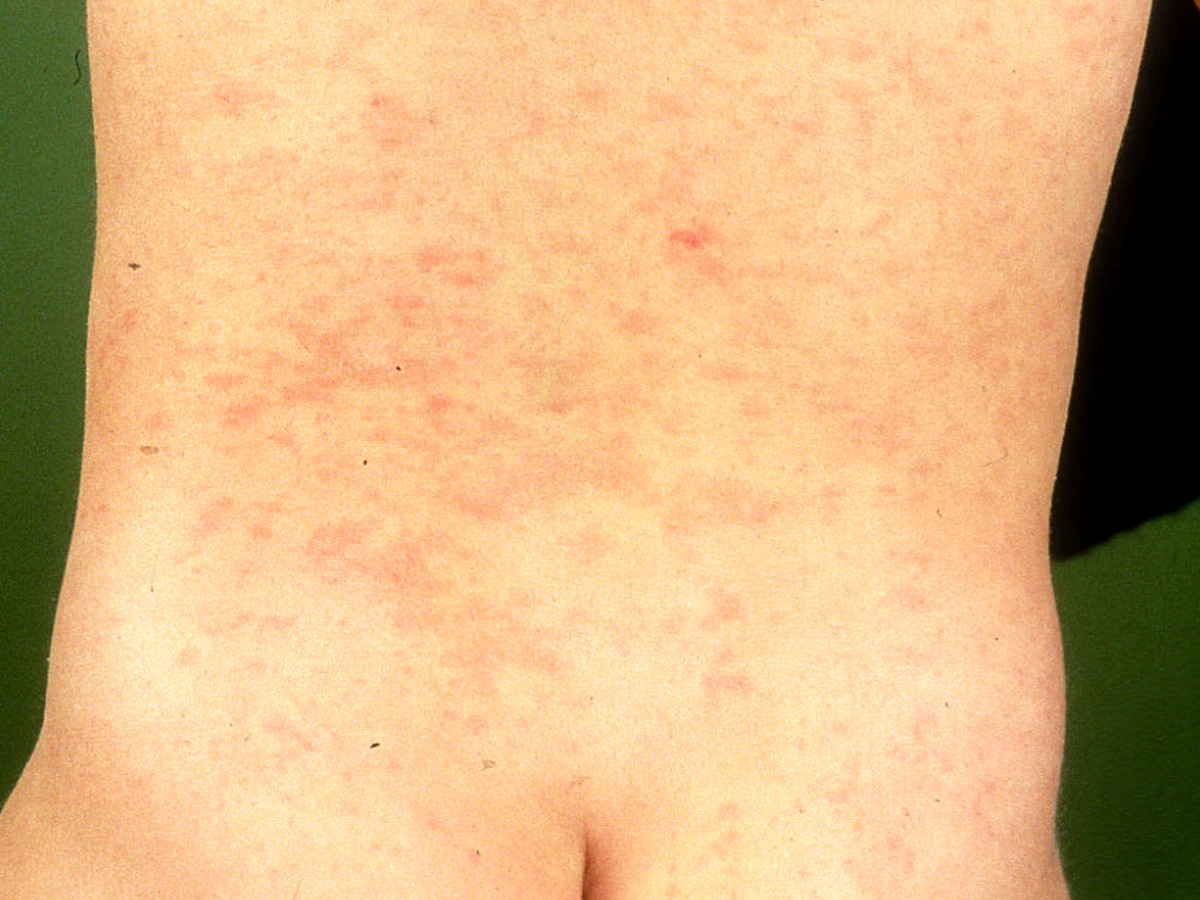
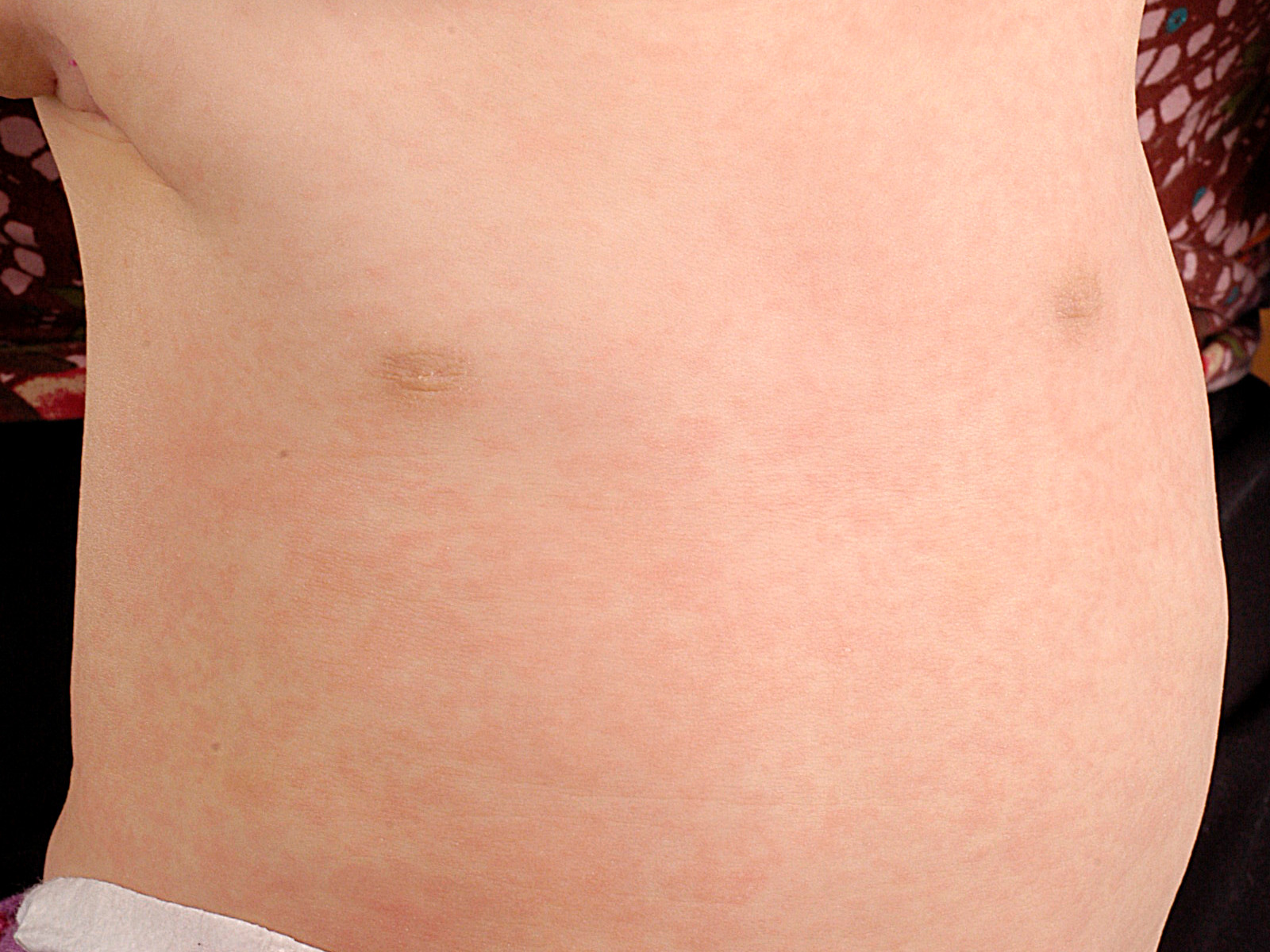
WHAT IS EXANTHEMA SUBITUM (SIXTH DISEASE)?Exanthema subitumis a childhood illness in which a high fever develops for a few days, followed by a sudden rash of pink spots on the body. Children do not become seriously ill from it. Exanthema subitum means "sudden rash," and that is precisely what happens. The disease is also called roseola infantum , or sixth disease . Roseola infantum is the medical name for pink-red spots in children, and it's called sixth disease because five other childhood illnesses were first recognized and described, such as measles, scarlet fever, rubella, chickenpox, and erythema infectiosum (fifth disease).WHAT IS THE CAUSE OF EXANTHEMA SUBITUM (SIXTH DISEASE)Most childhood illnesses with fever and spots are caused by a virus. Only recently was it discovered which virus causes exanthema subitum: it is human herpesvirus type 6 (HHV-6).HOW CAN YOU GET INFECTED WITH THIS VIRUS, WHO GETS EXANTHEMA SUBITUM?The virus that causes exanthema subitum is found worldwide, and almost everyone gets it. It usually occurs at a young age. Most toddlers are infected between 6 months and 2 years of age (range 3 months - 3 years). Infection later in life is rare. By age 2, 90% of toddlers are already infected. The virus spreads easily through contact with an infected person, through coughing, sneezing, or talking, or by touching skin or surfaces where the virus is present.WHAT DOES IT LOOK LIKE, AND WHAT IS THE PROGRESSION OF THE DISEASE?About 9 to 10 days after the child is infected with the virus, a fever suddenly develops. Sometimes it's high, above 39.5°C (103.4°F). The fever can last 3-5 days and then disappear. Children are often restless and irritable. Loss of appetite and swollen lymph nodes can occur. The fever disappears suddenly, and a rash consisting of small, pinkish-red spots or bumps appears suddenly on the body. This rash usually starts on the trunk and then spreads to the neck, arms, and legs. The spots are non-itchy and disappear after 1-2 days. The infection rarely causes any problems. Sixth disease is not dangerous for pregnant women.
 |
 |
 |
| exanthema subitum |
exanthema subitum |
exanthema subitum |
HOW IS THE DIAGNOSIS MADE?The GP usually recognizes the symptoms based on their progression and appearance (initially a high fever for a few days, then suddenly pinkish-red spots). The difference from other childhood illnesses is that the children are not very ill, and the spots do not damage the skin, as can happen with chickenpox. It is sometimes difficult to distinguish the disease from rubella or measles, but these children are usually sicker, have additional symptoms such as coughing and red eyes, and have a facial rash that lasts for several days. It is possible to detect the virus with a blood test, but this is rarely necessary.HOW IS EXANTHEMA SUBITUM TREATED?The infection will clear up on its own; no treatment is necessary. However, the symptoms can be alleviated. If the child has a high fever, they can take antipyretic painkillers such as paracetamol or NSAIDs (not aspirin). For high fevers, the body temperature can also be lowered by sponging the child with lukewarm water or showering them. It is also important to drink plenty of fluids. Staying home from school is not necessary if the child is not ill: the other children are already infected or will become so quickly. |