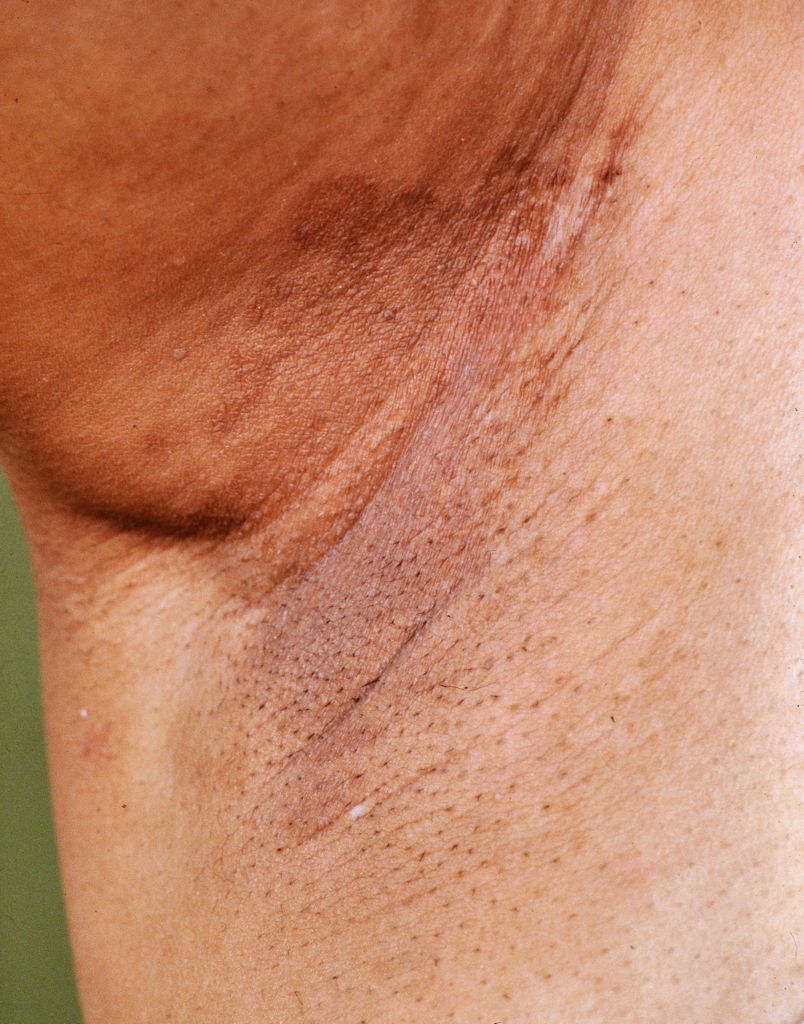
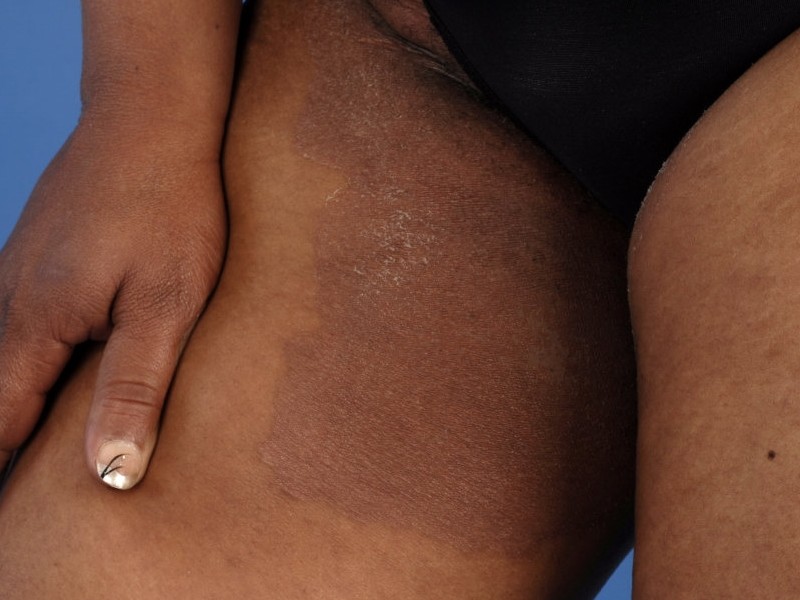
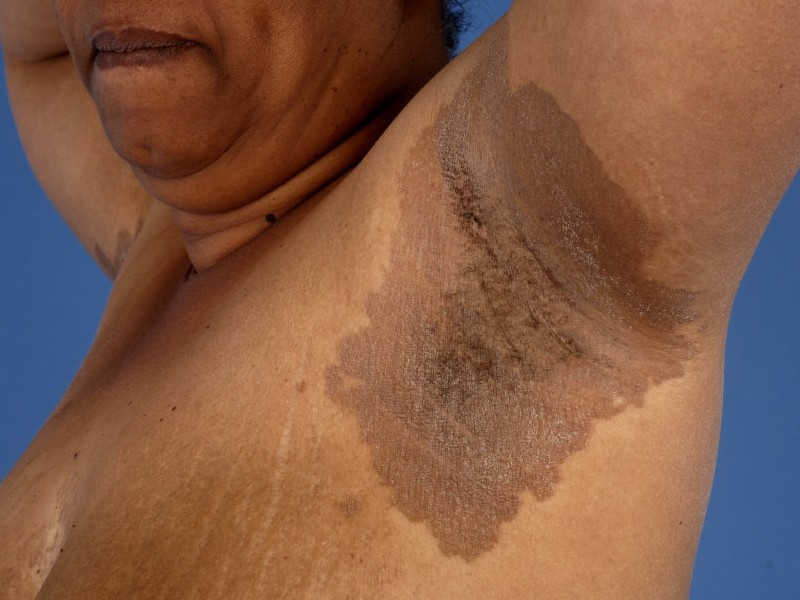
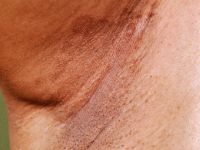
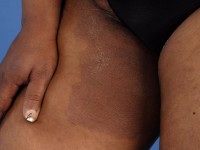
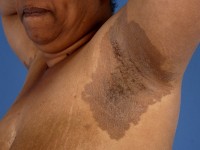
WHAT IS ERYTHRASMA?Erythrasma is a red or reddish-brown discoloration of the skin caused by bacteria. Erythrasma occurs only in the folds of the body (groin and armpits), where the skin is moist. It is a common and harmless condition, easily treated with creams or antibiotics.
 |
 |
 |
| erythrasma |
erythrasma |
erythrasma |
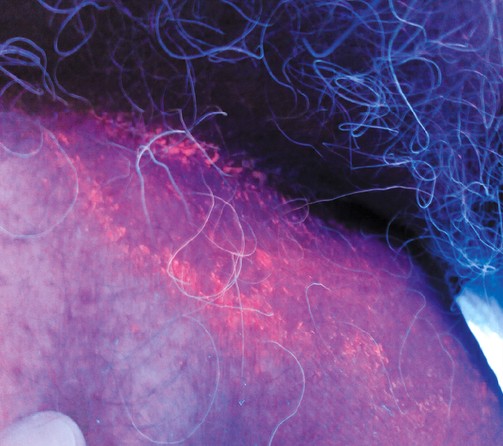
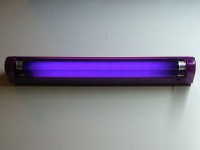
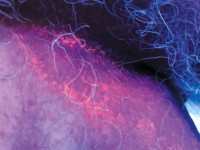
HOW DOES ERYTHRASMA OCCUR?Erythrasma is caused by a bacterium called Corynebacterium minutissimum . This bacterium is found on everyone's skin; it's a normal resident. However, under certain conditions, such as in a warm and moist skin fold, the bacteria proliferate, resulting in so many on the skin that irritation develops, resulting in redness and a brown discoloration.WHAT ARE THE COMPLAINTS?Erythrasma causes few symptoms. The most noticeable symptom is the red discoloration, and sometimes brown discoloration. Brown discoloration is particularly common in people with darker skin. The skin may also itch, feel slightly burning or irritated, or flake slightly. Cracks may also develop. Erythrasma always occurs in the folds of the body, where the skin is moist and lies together. It is most common in the groin, on the inner thighs, and on the scrotum. It can also occur in the armpits. In women, it can appear under the breasts. Sometimes it occurs in the fold of the buttocks.WHO CAN GET ERYTHRASMA?In principle, everyone. But it's slightly more common in older people. Obese people are more likely to develop erythrasma because they have more skin folds that are touching each other. Patients with diabetes also suffer from it more often, as they are more susceptible to skin infections. Patients who suffer from excessive sweating are also more likely to experience it, and erythrasma is also more common in warm and humid conditions, such as working in greenhouses or living in the tropics. It's also seen more often in people who don't take much care with their personal hygiene.HOW IS THE DIAGNOSIS MADE?The diagnosis is based on the clinical picture and its appearance. There's a test to determine whether the bacteria that cause erythrasma ( Corynebacterium minutissimum ) are present in excessive numbers on the skin. By illuminating the skin with ultraviolet light (UVA, black light), an orange color is created. It's the bacteria that glow orange. The UVA lamp used for this is also called a Wood's lamp, after its inventor. The room must be darkened to see clearly.
 |
 |
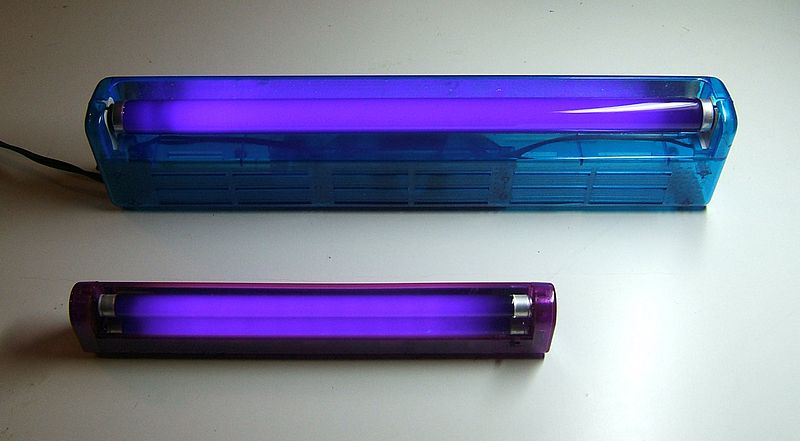
| UVA lamp (Woods lamp) |
orange-red in Woods light |
IS ERYTHRASMA CONTAGIOUS?No. Everyone has these bacteria on their skin, and that's normal. Only under certain circumstances does the bacteria multiply excessively.HOW IS ERYTHRASMA TREATED?Erythrasma can be treated by applying antibacterial creams or lotions such as:
- Erythromycin lotion
- Clindamycin lotion
- Miconazole cream (this is an antifungal cream, but miconazole also kills Corynebacterium)
- Fusidine cream
Erythrasma can also be treated with antibiotics , for example by taking 4 tablets of 250 mg Klacid (clarithromycin) at the same time.
You should also ensure that the folds remain clean and dry.
The infection is usually cured after 2-3 weeks of treatment. It can, however, return, after all, everyone has this bacteria on their skin.WHAT CAN YOU STILL DO YOURSELF?Make sure the folds stay clean and dry. If necessary, you can occasionally use an antibacterial soap such as povidone-iodine (Betadine) scrub or shampoo. Always dry thoroughly with clean towels and allow the skin to dry thoroughly, including the folds. You can also use talcum powder in the folds.WHAT ARE THE OUTLOOK?Erythrasma does require treatment; it doesn't go away on its own. It can also recur after treatment. The brown spots caused by erythrasma can persist for a long time, especially on darker skin. |