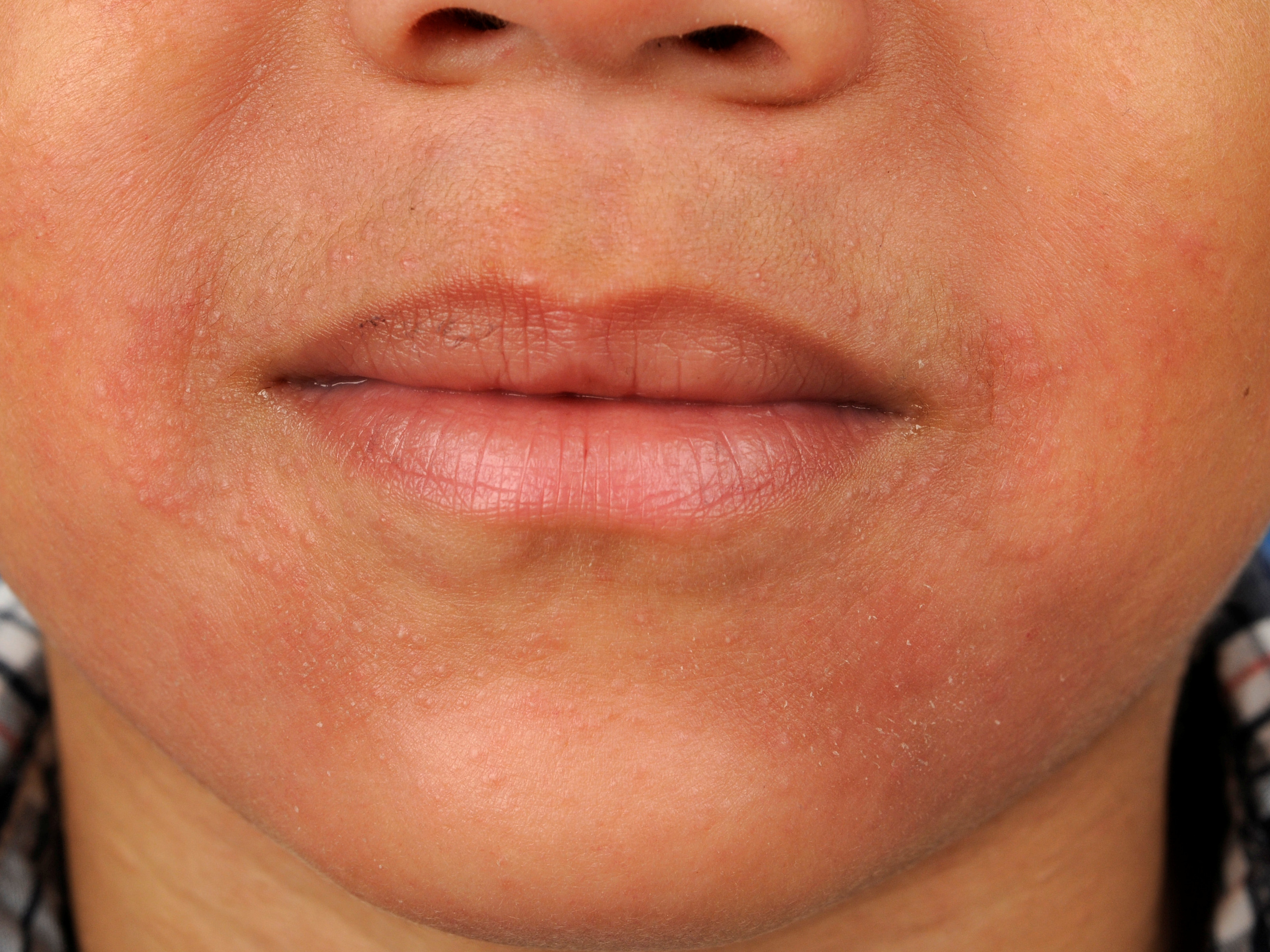
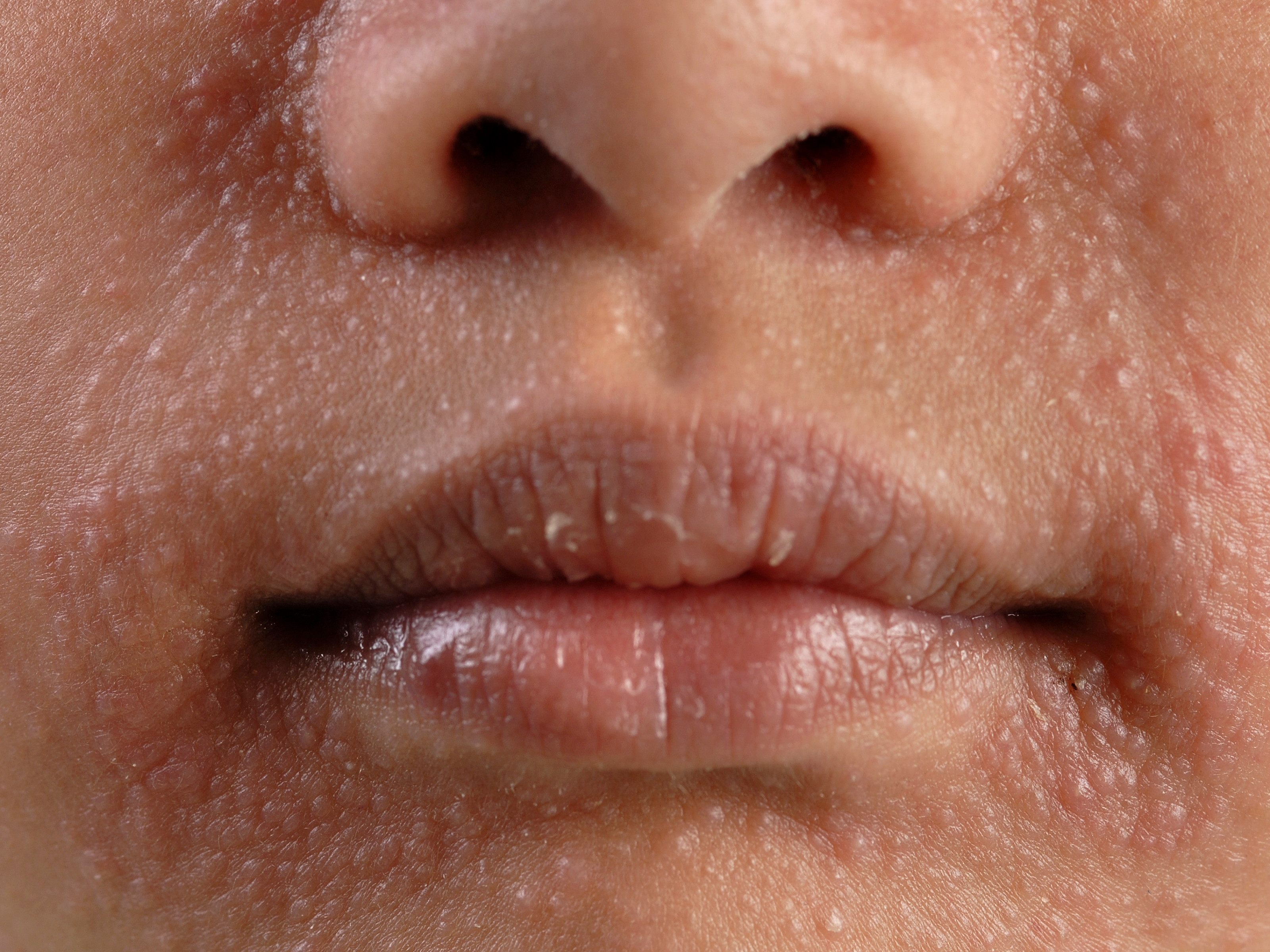
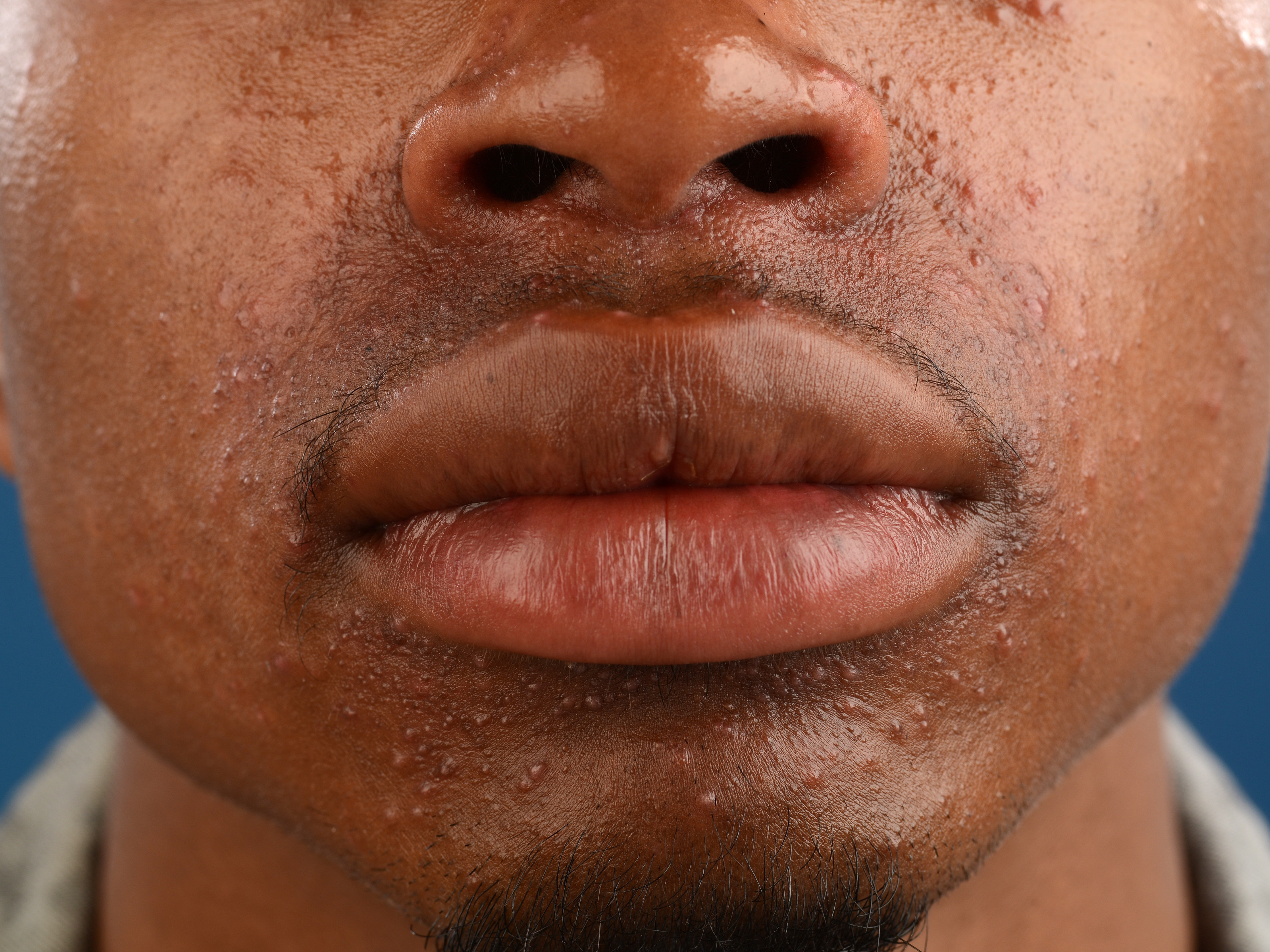
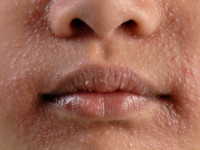
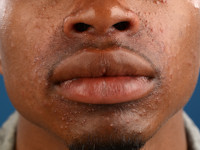
WHAT IS PERIORAL DERMATITIS?With perioral dermatitis, small pimples and pustules appear around the mouth. The skin can also be somewhat red and flaky. Itching and burning are also possible symptoms. It occurs primarily around the mouth, hence the name (dermatitis means inflammation of the skin, and perioral means around the mouth). Occasionally, the same rash can appear around the eyes, in which case it is called peri-ocular dermatitis (around the eyes). The bumps are not true pimples; they are eczema bumps, filled with fluid.
 |
 |
 |
| perioral dermatitis |
perioral dermatitis |
perioral dermatitis |
HOW DOES IT COME ABOUT?Perioral dermatitis is usually caused by the use of hormone creams or ointments (corticosteroids) on the face. Strong corticosteroid creams are particularly likely to cause this. These creams also suppress the rash, so the rash worsens after stopping. Therefore, most patients persist in using them.
It can also develop in people who haven't used hormone creams on their face. Sometimes it develops spontaneously, without an obvious cause, and sometimes it's a reaction to various cosmetics applied to the face. This is especially common with foundation and other greasy or oily makeup or other skincare products.WHAT ARE THE PHENOMENA?Perioral dermatitis usually begins on the chin, next to the nose, and on the upper lip. Often, the entire area around the mouth is affected, with only a small rim of skin along the lips remaining free of pimples. Numerous small red pimples and pustules are visible on the affected skin. The skin may also be red and flaky and may feel slightly itchy or burning.HOW IS THE DIAGNOSIS MADE?The diagnosis is generally based on the clinical picture and its appearance. Perioral dermatitis can resemble other skin conditions involving small bumps and pimples around the mouth, such as rosacea and acne .HOW IS PERIORAL DERMATITIS TREATED?The most important thing is to immediately stop using the corticosteroid cream or ointment. The same applies to makeup. Instead of all kinds of cosmetics, you can use a simple, basic moisturizing cream, such as cetomacrogol cream. After stopping the corticosteroids, the symptoms will initially worsen, but this is a phase you have to go through. Eventually, they will disappear.
The withdrawal period can be eased by temporarily using other products that do reduce inflammation but do not contain corticosteroids. For example, Elidel cream or Protopic ointment, which are hormone-free creams also used for eczema.
Perioral dermatitis can also be treated with a gel or cream containing metronidazole or erythromycin. These are both antibiotics, but they also have a unique side effect: they can also reduce inflammation and make the skin calmer and less red.
These types of anti-inflammatory antibiotics can also be prescribed in tablet form. Examples of these antibiotics include tetracycline, doxycycline, Efracea (doxycycline), minocycline, Klacid (clarithromycin), and erythromycin. They are prescribed for a few weeks (4-6), after which you can stop taking them.WHAT ARE THE OUTLOOK?If you follow the advice, the condition should subside within a few weeks. In persistent cases, it can take 2-3 months for it to disappear completely. After that, it usually doesn't return, provided you don't use corticosteroids or cosmetics containing fat or oil on your face again.WHAT CAN I STILL DO MYSELF?Avoid using cosmetics that "occlude" the skin.
Cleanse your skin thoroughly daily with water and a skin-friendly soap.
Use good-quality, hypoallergenic skincare products.
Avoid using strong hormone creams on your face. |