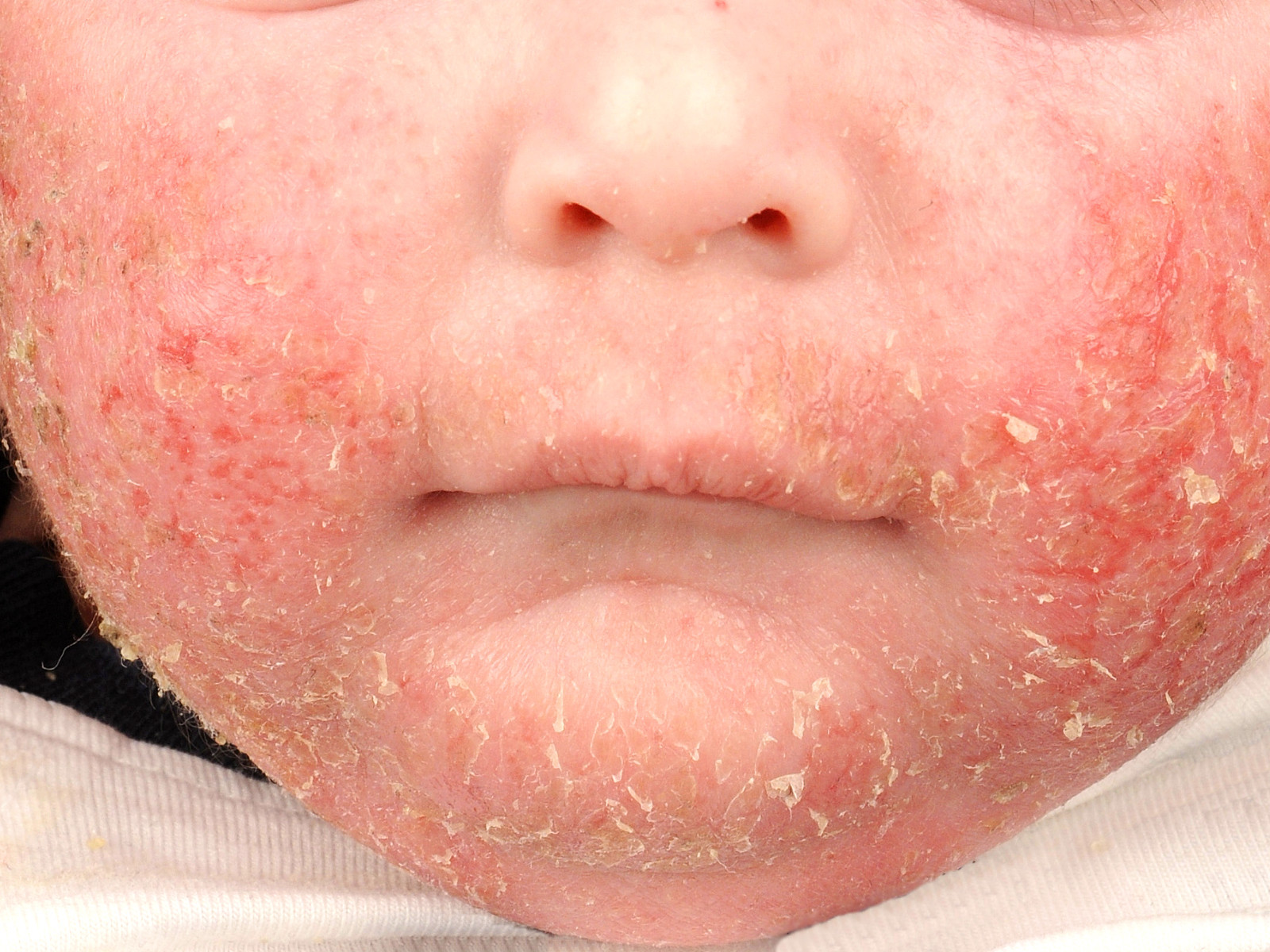
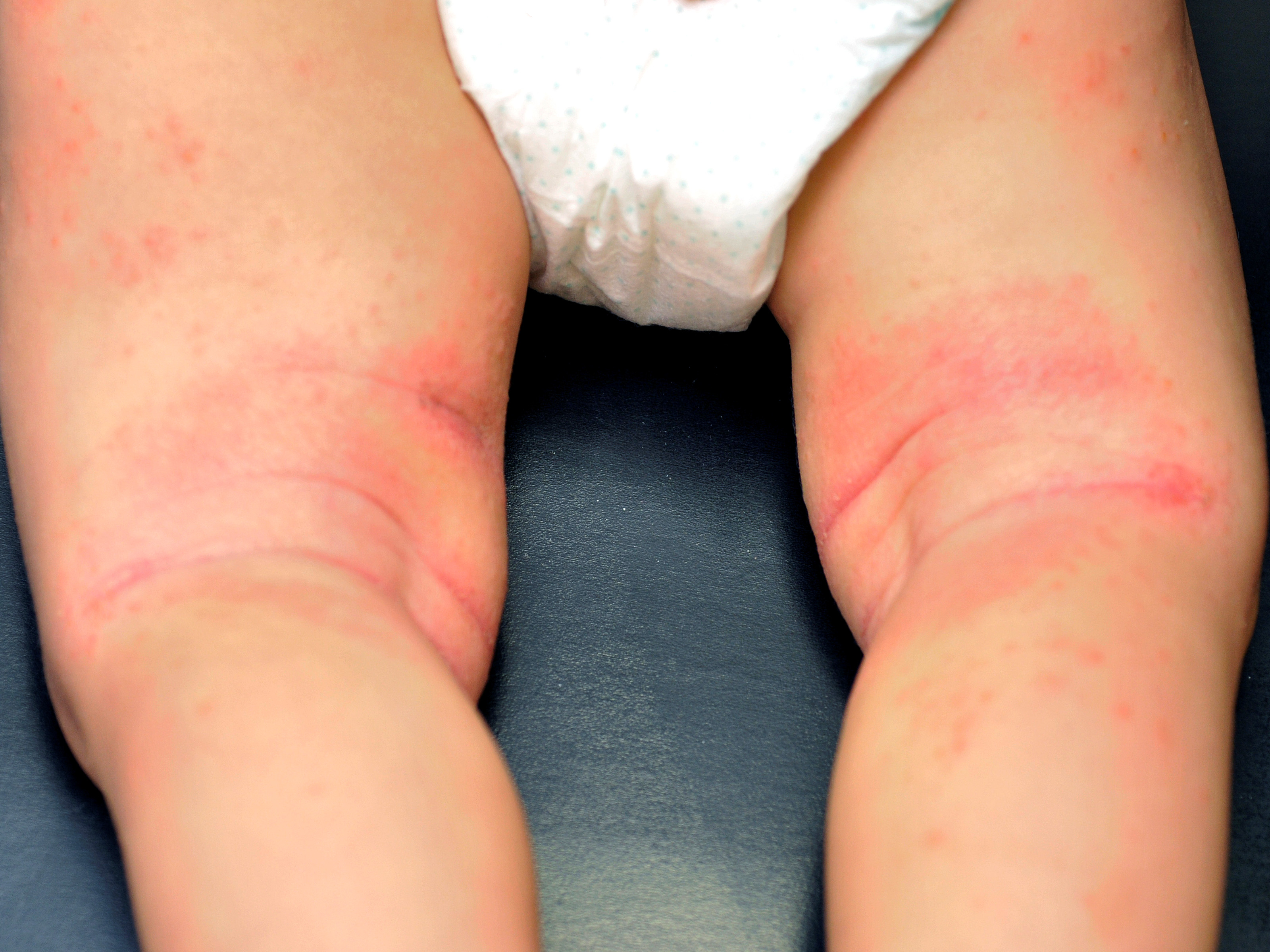
WHAT IS THE DEW WORM?Atopic dermatitis is a skin condition that can cause considerable discomfort, but fortunately, is usually easily treated. This skin disease affects 5% of infants and toddlers. The disease is also known as atopic eczema and constitutional eczema. "Atopic dermatitis" is an old Dutch word. "Dauw" indicates that the rash is moist; "worm" means that the rash is often ring-shaped. Therefore, atopic dermatitis has nothing to do with worms.
Atopic dermatitis is not contagious! It cannot be transmitted from one person to another through physical contact. This form of eczema also has nothing to do with poor skin care. Whether a child develops atopic dermatitis is determined by a hereditary predisposition, which is already present at birth. This is the predisposition to react allergically to certain environmental stimuli. This hereditary constitution also plays a role in the development of conditions such as asthma, asthmatic bronchitis, and hay fever. These conditions often occur together or alternate with pinworm.HOW DOES DEW WORM OCCUR?The cause of ringworm is still unknown. It involves an interaction between bodily factors (the predisposition to allergic reactions) and environmental stimuli. The skin reacts to these stimuli: the small blood vessels in the skin release moisture, causing redness, swelling, and itching. The child scratches due to the itching, which worsens the eczema and can also lead to infections.STIMULI FROM THE ENVIRONMENTVarious environmental stimuli can influence eczema, for example: temperature changes, house dust and dust mites, animal dander and saliva, pollen, exercise, and sometimes emotional events. Every child with dermatitis has their own unique reactions to these stimuli. It's not always easy to determine which ones. For many children, this remains unclear. After the age of two, dust mites can play a role. Dust mites are small, spider-like creatures that are invisible to the naked eye. They are found in all homes. In animals (dogs and cats are the most common), the pollen is primarily dander, hair, and feathers (including hamsters, birds, and rabbits).
Pollen that triggers an allergic reaction usually comes from grass but can also come from other plants and trees (for example, birch).
If your child comes into contact with these substances, the eczema can worsen. It's best to try to avoid contact with these substances, even if the allergy to a particular substance isn't (yet) detectable. You and your doctor can determine together whether it's important for your child to take certain measures at home. Often, a few simple measures can reduce contact.FOODIn a small number of children, especially young ones, food allergies can be a contributing factor to ringworm. If you suspect that certain foods aggravate your eczema, it's a good idea to discuss this with your doctor. However, a diet is usually not necessary. Even if nutrition plays a role, diet alone is almost never sufficient treatment. Breastfeeding offers some protection against ringworm, but it cannot prevent it. Breastfeeding is only recommended for severely allergic mothers/families and food allergies in immediate family members (where the mother must follow a diet).OTHER FACTORSFor some children, the season has an influence. Eczema becomes more severe in autumn and winter. For other children, however, this occurs in spring. Soap and water, clothing, swimming, and temperature fluctuations can also aggravate eczema. A beach holiday can have a beneficial effect. It's important to assess how your eczema reacts to these factors. However, it's important to know that eczema can also worsen and improve spontaneously (i.e., without any apparent cause).WHAT ARE THE PHENOMENA?Atopic dermatitis usually begins about 1 to 4 months after birth. A red, itchy, often moist rash with blisters develops on the face and between the hairs. The itching is particularly bothersome. The baby tries to relieve the itching by rubbing, scratching, and scratching. This worsens the eczema. The children are often restless and cry a lot, even at night.
Atopic dermatitis is unrelated to another common skin condition in babies, cradle cap. Cradle cap is characterized by increased sebum secretion between the hairs. Diaper rash, so common in babies, is also unrelated to atopic dermatitis.
Atopic dermatitis develops in waves: periods with severe symptoms alternate with periods with few or no symptoms. More than half of children no longer have any symptoms by the age of three. However, the predisposition to allergic reactions remains.
 |
 |
| dew worm |
atopic eczema |
HOW IS THE DIAGNOSIS MADE?The most important thing is the physical examination by the doctor. It's also crucial that you tell us what you've noticed (seasonal influences, reactions to food, etc.). The so-called RAST test, a blood test that can detect allergies, isn't very useful in young children with only eczema. Only if there are other signs of an allergy, such as diarrhea or asthma, can the RAST test provide more information about the type of irritant causing the allergy.WHAT IS THE BEST TREATMENT?The predisposition to ringworm cannot be changed. This means that ringworm itself cannot be cured. Treatment is aimed at suppressing the eczema and itching as much as possible. This can be achieved in several ways:
Topical treatment:
To suppress the eczema, there are two options: ointments or creams containing tar (pix liquida) and ointments or creams containing corticosteroids. Ointments are quite greasy and are used for dry skin. Creams are much less greasy.
The tar products inhibit inflammation and reduce itching. They have a characteristic odor. Sensitivity to sunlight can occur as a side effect.
Corticosteroids also suppress the inflammatory response (see the "Corticosteroids for the skin" page). Your doctor will tell you which corticosteroid ointment or cream to apply and how many days per week you should do this.
It is very important that you follow this prescription carefully. Weak corticosteroid ointments and creams, such as hydrocortisone ointment or FNA cream, are preferred for the treatment of ringworm. Corticosteroid ointment or cream is usually used for a maximum number of days per week. Even if this is done for a longer period, side effects are rarely seen. On the other days, you can use a non-medicated cream or ointment to keep the skin as supple as possible.
Ointments or creams containing corticosteroids should always be applied as thinly as possible. You can simply do this with your hands. Make applying the ointment enjoyable for you and your child by, for example, playing with it and cuddling frequently.
Systemic treatment
There are also medications that reduce itching. These medications often cause: They also cause drowsiness, so they are especially effective in the evening. Consult your doctor if your child needs a specific medication.
Sometimes a diet is necessary. If you have any indication that certain foods aggravate your child's eczema, consult your doctor and dietitian. Further testing is then necessary.
Frequent scratching makes your child's skin more susceptible to infection. If an infection is present, your child will sometimes need an antibiotic, either in the form of an ointment or cream, or taken orally.WHAT CAN YOU STILL DO?- Avoid contact with stimuli to which your child is sensitive as much as possible. This generally means keeping your home as dust-free and dry as possible and keeping pets out. This is especially important for your child's bedroom. Discuss with your doctor which of these measures is most effective for your child.
- Avoid wearing wool clothing for your child, as it itches and can aggravate the eczema. Pure cotton clothing is recommended. Synthetic clothing can also be used, provided the child doesn't get too warm.
- Because your child has dry skin, it's important to add a bath oil to the bathwater. These bath oils are available at drugstores. You can also apply a thin layer of a moisturizing cream or ointment to your child's skin before and/or after bathing—and as often as needed—that retains water and oil (for example, the Vaseline in Lanette cream). This will reduce itching and reduce scratching. Bathing more than once a day is not recommended (for some, it even seems excessive). Soap removes water and oil from the skin and should be used as sparingly as possible. Bath oil can replace soap.
- To limit damage from scratching, it's best to keep your child's nails as short as possible. Sometimes, to prevent scratching, it's necessary to put socks on their hands at night. Make sure your child isn't too warm at night. The bedroom temperature should be comfortable. You should also ensure good ventilation. It's best to keep the bed light. Thick, warm clothing during the day is also not recommended.
- Skin contact is very important for babies for their later development. Therefore, touch your child as much as possible, even if your child has ringworm and their skin feels less soft and comfortable. There can be intense skin contact between you and your child, especially during the application of the ointment. Sometimes family or friends may hesitate to touch your child because their skin is a bit chapped, red, or flaky. If you notice this, explain immediately that the skin isn't dirty or contagious. You'll be helping your child, yourself, and family members or acquaintances!
- You'll often receive advice from others. It's best to discuss whether this advice is important for you and your child with your doctor. Assume that this advice is well-intentioned. Some mothers are embarrassed by their baby's unsightly skin and therefore hardly go outside anymore. Just go outside with your child. It's good for both you and your child. If you're struggling, it's better to talk about it than to keep it to yourself. You can always contact your doctor or community nurse.WHAT ARE THE OUTLOOK?If the eczema hasn't gone away after the second year, or if it reappears, it often appears in places other than the face: on the inside of the elbows, behind the knees, on the wrists, on the insteps of the feet, and on the neck. The skin in these areas is thickened and red. Scratching and rubbing often cause sores and scabs. In addition, the skin all over the body is dry and flaky, and cracks easily develop.
Eczema often tends to clear up during periods when respiratory problems occur; however, it is just as common for the eczema to worsen at that time. It is incorrect to assume that local treatment of eczema worsens or triggers respiratory problems. |