Taking a bath in chlorinated bathwater two to three times a week can reduce the number of bacteria on the skin. This has a beneficial effect on eczema. Bathing and showering are not harmful for patients with atopic eczema, as long as the skin is moisturized immediately afterward. This leaflet explains how much chlorine to add to the bathwater.
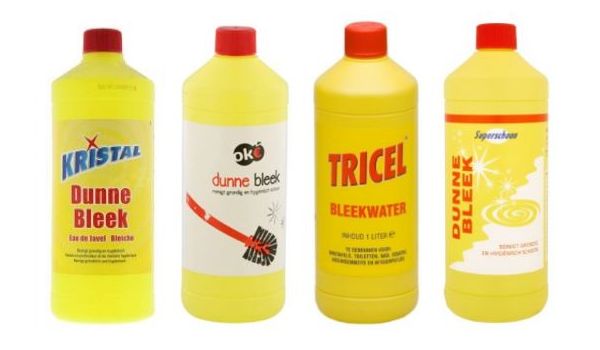
A chlorine bath is made by adding a cup of regular household bleach to the bathwater. Buy a bottle of thin bleach at the supermarket . Do not buy thick bleach. Thick bleach is not stronger but contains unnecessary and potentially harmful ingredients that make the chlorine viscous, causing it to adhere to toilet bowls.
The chlorine concentration in bathwater should be 0.005%. Household bleach sold in the Netherlands contains 5% chlorine. A 0.005% chlorine concentration is achieved by adding 100 ml of chlorine to 100 liters of bathwater, or 120 ml to 120 liters of bathwater. An average bath in the Netherlands contains 100-120 liters of water.
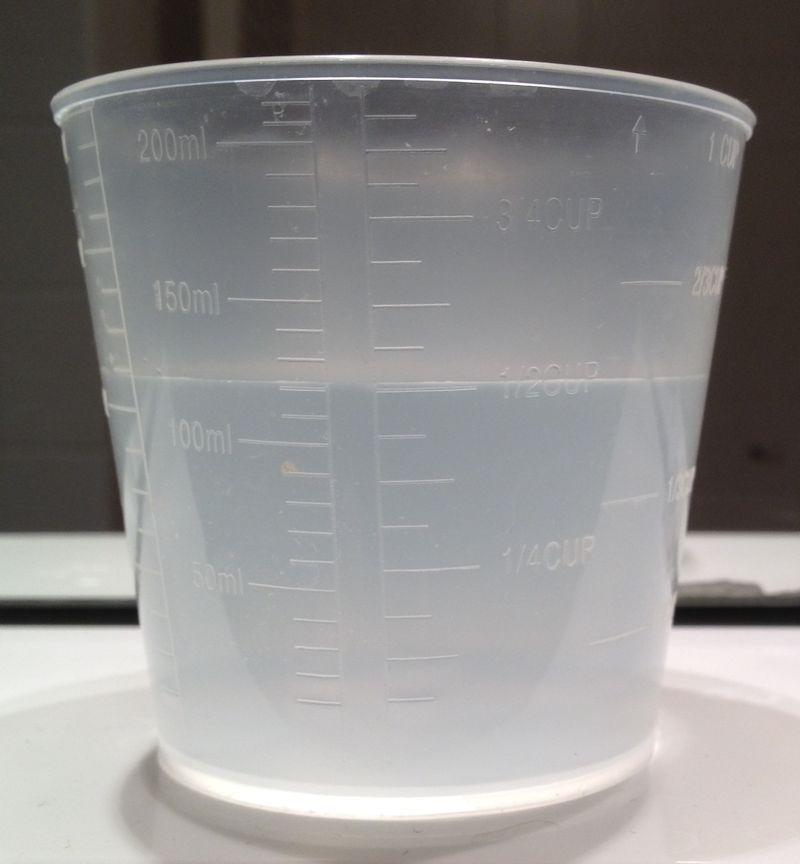
Don't use unreliable measurements like "half a cup," but buy a measuring cup and add exactly 120 ml of chlorine to a 120-liter bath to achieve the desired 0.005% chlorine concentration.
| Amount of water |
Amount of 5% chlorine |
| bath 100 liters |
100 ml |
| bath 120 liters |
120 ml |
| bath 140 liters |
140 ml |
| children's pool 15 liters |
15 ml |
Instructions for chlorine bath:
| • |
Use a thin household bleach solution with a 5% concentration. Do not use a thick bleach. |
| • |
Use a measuring cup and add 100 ml of chlorine to 100 liters of bath water (see the table). |
| • |
Fill the bath with warm water and add the chlorine while the bath is filling, stirring the water. |
| • |
Don't use too much chlorine, as it can irritate the skin. Too little is also not good, as it won't be effective. |
| • |
Do not allow undiluted chlorine to come into contact with skin. |
| • |
Do not take a bath until the bath is filled. |
| • |
Stay in the bath for 5 to 10 minutes. |
| • |
Then rinse the skin and immediately apply a nourishing ointment, such as paraffin-vaseline or cooling ointment. |
| • |
Dry by gently patting dry, do not scrub with towels. |
| • |
Use white towels to prevent discoloration from chlorine. |
| • |
Use the chlorine pools 2-3 times a week. |
Instructions for chlorine shower:
| • |
Use a thin household bleach solution with a 5% concentration. Do not use a thick bleach. |
| • |
Use a measuring cup and add 50 ml of chlorine to a bucket containing 10 liters of warm water. |
| • |
At the end of your shower, wipe the bleach off of a washcloth over your entire skin a few times. |
| • |
Then rinse the skin and immediately apply a nourishing ointment, such as paraffin-vaseline or cooling ointment. |
| • |
Dry by gently patting dry, do not scrub with towels. |
| • |
Use white towels to prevent discoloration from chlorine. |
| • |
Use the chlorine showers 2-3 times a week. |
|