CAMOUFLAGEYour doctor has recommended camouflage therapy for your skin condition. This brochure provides information about what camouflage therapy entails for you. Please read this information carefully.WHAT IS CAMOUFLAGE?Some skin conditions cause discoloration in the skin. For example, vitiligo, melasma, post-inflammatory hyperpigmentation, and port-wine stains. Camouflage can offer a solution for these skin conditions. Camouflage makes the condition less noticeable. It does not improve or cure the condition. Camouflage creams are used for this purpose. These camouflage creams contain much more pigment than the foundations available at perfumeries and drugstores. This creates a covering effect. The camouflage can also be made water-resistant and smudge-proof. For camouflage, consult a dermatologist.HOW DOES A VISIT TO THE SKIN THERAPIST WORK?During your appointment, the skin therapist will explain camouflage products. What are the available options? What are the advantages and disadvantages of each product? You will also work with the skin therapist to determine which color and texture suits you best. A light base layer may be necessary, or the entire area may need to be camouflaged. However, this varies from person to person. Once the right color has been found, you will receive one, two, or three jars of camouflage cream. The skin therapist will explain how to apply the product and how to make it waterproof and smudge-proof. Camouflage isn't suitable for everyone. An alternative is self-tanning.
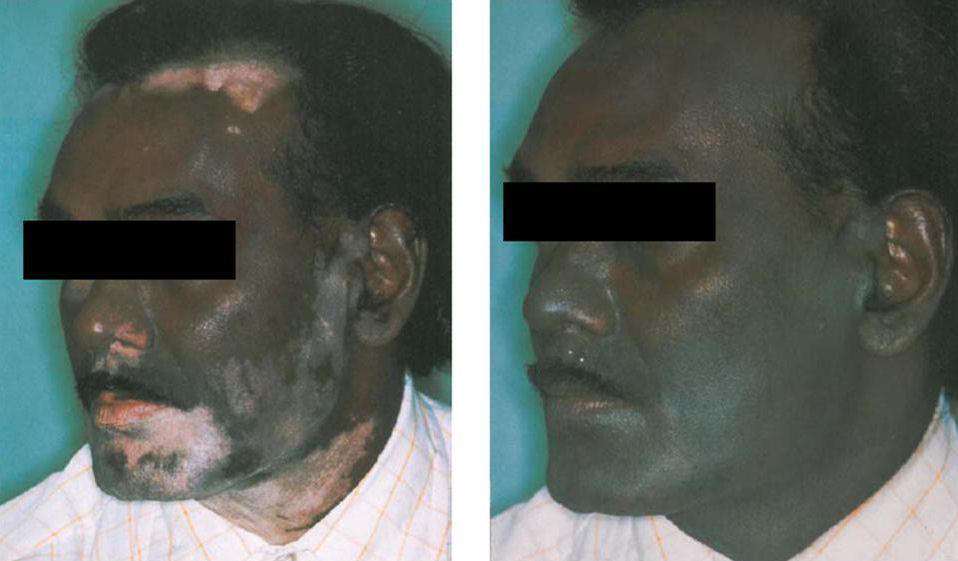
Vitiligo before and after camouflage
Source: Cosmetic camouflage and cosmetic scar treatment.
SELF-TANNING PRODUCTSHow does it work?
If you have vitiligo or other light spots, a self-tanning product might be helpful. Self-tanning products are especially effective on the hands and neck when camouflage or makeup isn't practical. Self-tanning products are creams that give the skin a gradual tan. This is because the cream penetrates the stratum corneum (the horny layer of the skin). This has no side effects and is not harmful to the skin. The resulting tan cannot be lost through perspiration or washing with soap, and therefore the color doesn't transfer to clothing. Prolonged swimming or bathing, and on chafed areas, can cause the tan to fade more quickly. Because the stratum corneum (the horny layer of the skin) continuously flakes off, the product will need to be reapplied from time to time.
Where can I get it?
Self-tanning products are available over the counter at drugstores. We recommend a product for normal to dark skin. This will give you the closest match to your normal skin color.
Are there any side effects?
The ingredients in self-tanning products and camouflage are harmless. Very rarely, allergic reactions such as itching and redness are observed. In such cases, you should contact your dermatologist or doctor.
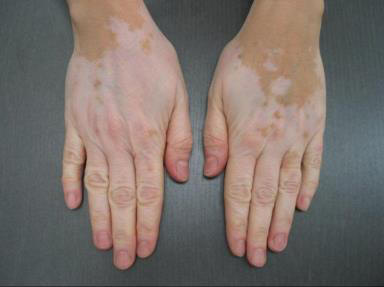
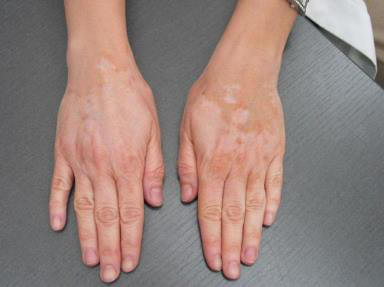
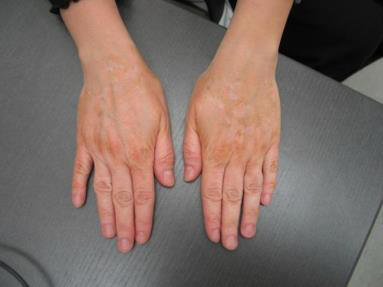
Before and after photos of using a sunless tanning product:
HOW MUCH DOES CAMOUFLAGE COST?For prices for instructions, please see the quote. You must pay the treatment costs after the treatment. You may be (partially) reimbursed for camouflage therapy and products through your supplementary insurance package. Reimbursement for camouflage varies by insurance company. Please inquire with your insurer. A camouflage application may be necessary to receive reimbursement. If this is the case, please contact the skin therapist. |