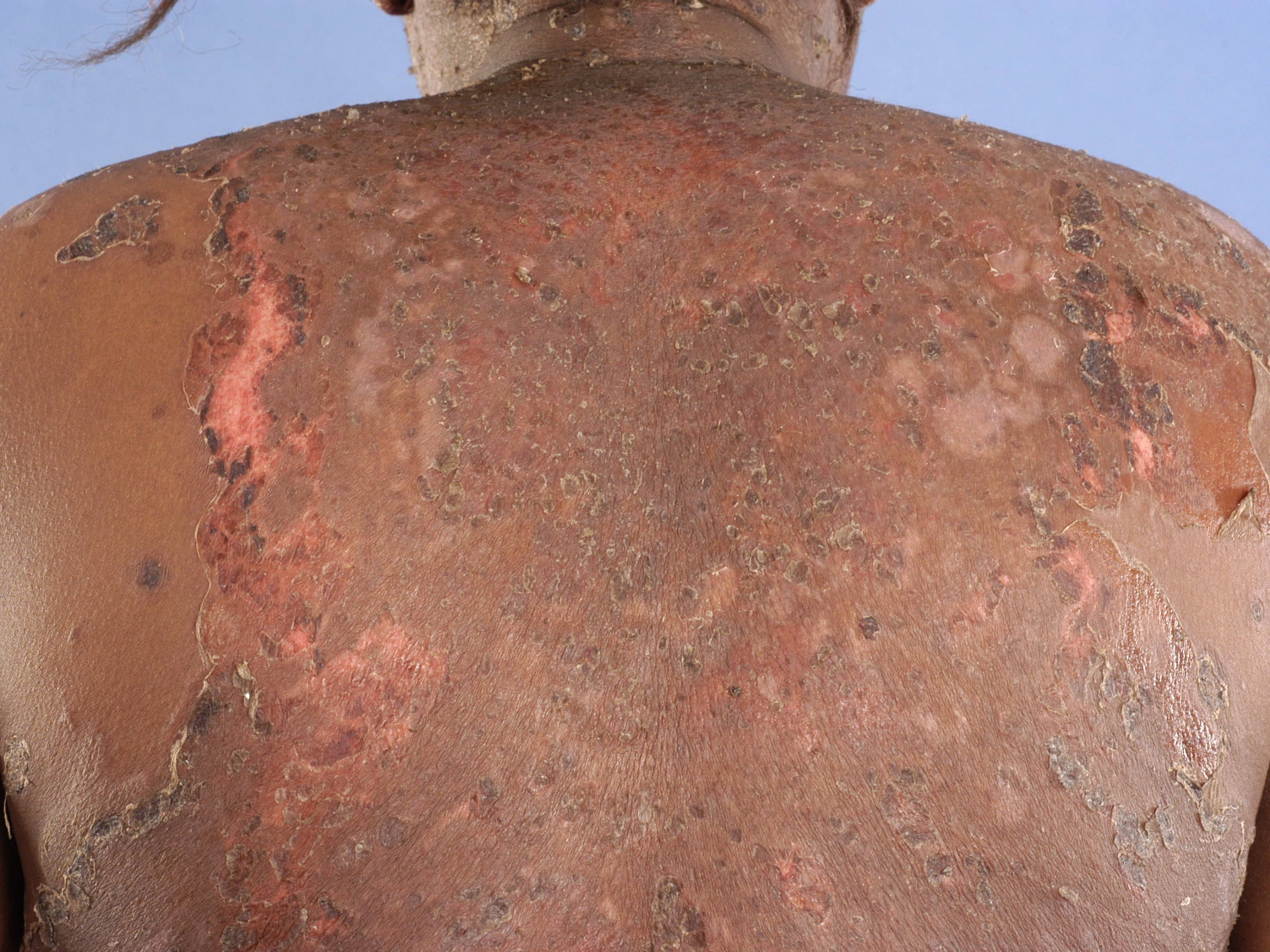
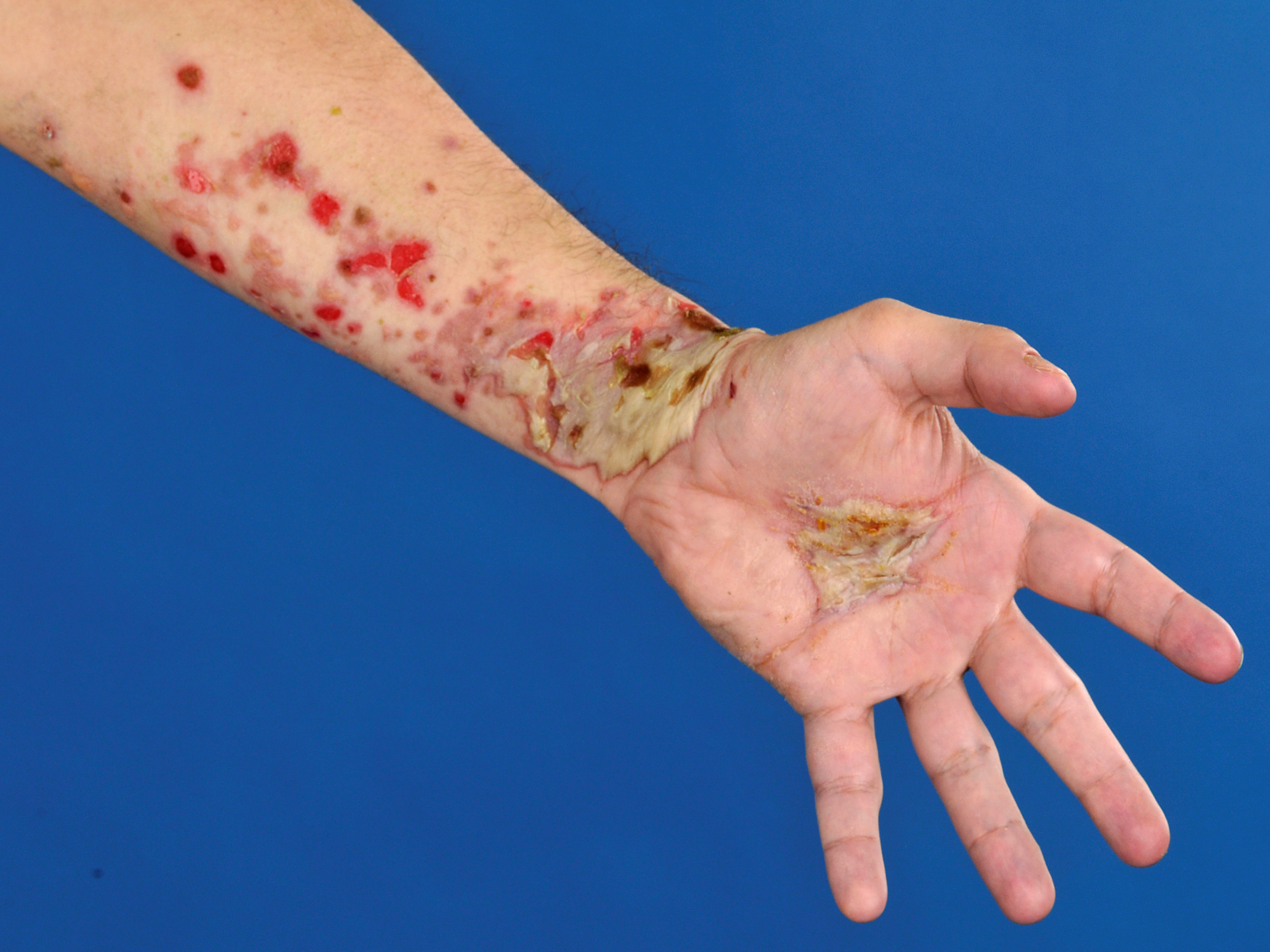
| BLISTERING
DISEASES
(BULLOUS PEMPHIGOID AND PEMPHIGUS) |
 |
 WHAT ARE BLISTERING DISEASES? WHAT ARE BLISTERING DISEASES?
There are skin diseases that can cause blisters. These diseases are rare. The cause is unknown. The two most common forms of blistering diseases are
bullous pemphigoid (also called parapemphigus) and
pemphigus. Both blistering diseases occur primarily in older adults. Pemphigus is sometimes seen at a younger age.
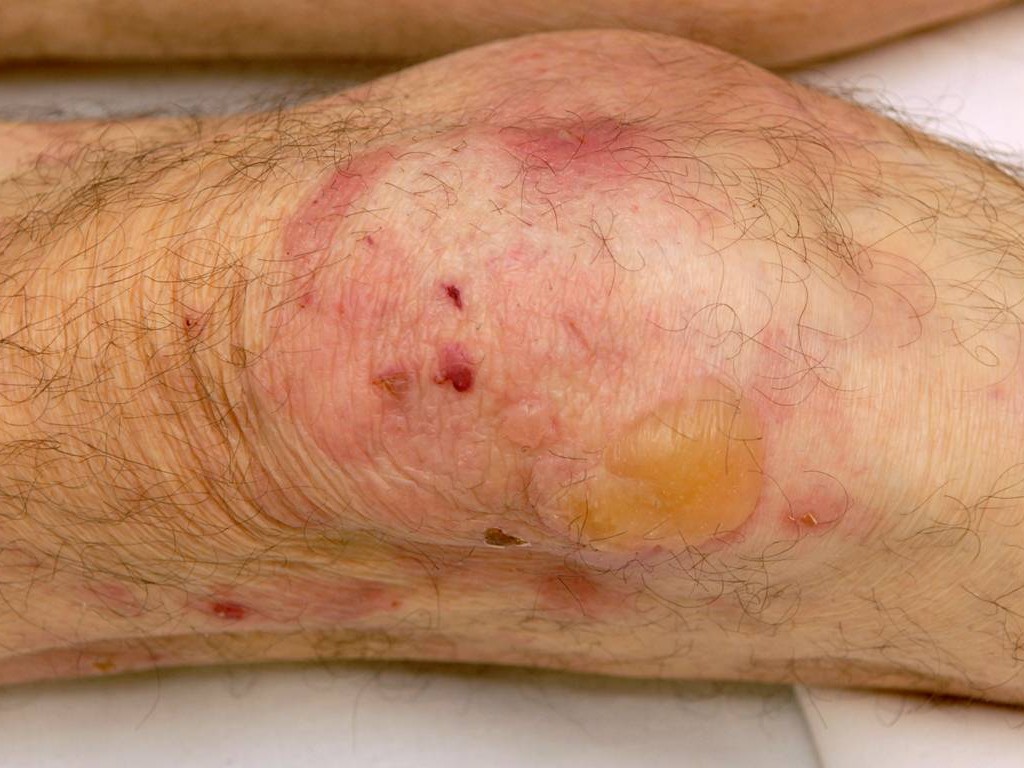
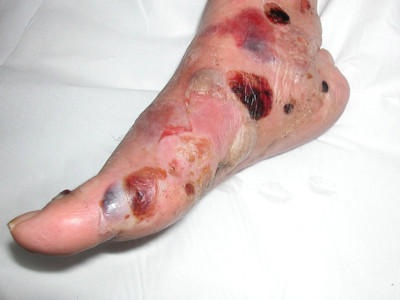
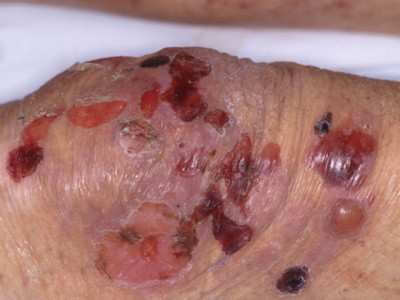
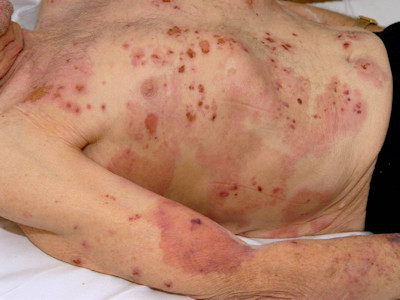
In bullous pemphigoid, the blisters are firm and remain intact for a long time.
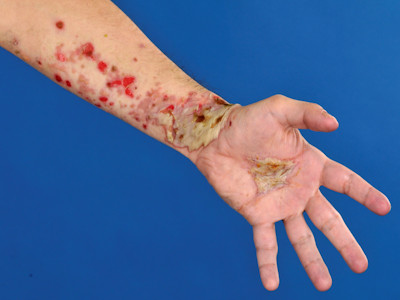
In pemphigus, the blisters are vulnerable and break easily. Pemphigus is more difficult to treat than bullous pemphigoid; higher doses of medication are required.
 |
 |
|
bullous pemphigoid |
pemphigus |
WHAT IS THE CAUSE OF BLISTERING IN
bullous pemphigoid AND PEMPHIGUS?
In these two blistering diseases, antibodies are formed against parts of the skin. This is not normal. Antibodies are normally only formed against things that don't belong in our body, such as bacteria or medications. When antibodies are formed against parts of the body itself, it is called an
autoimmune disease. In
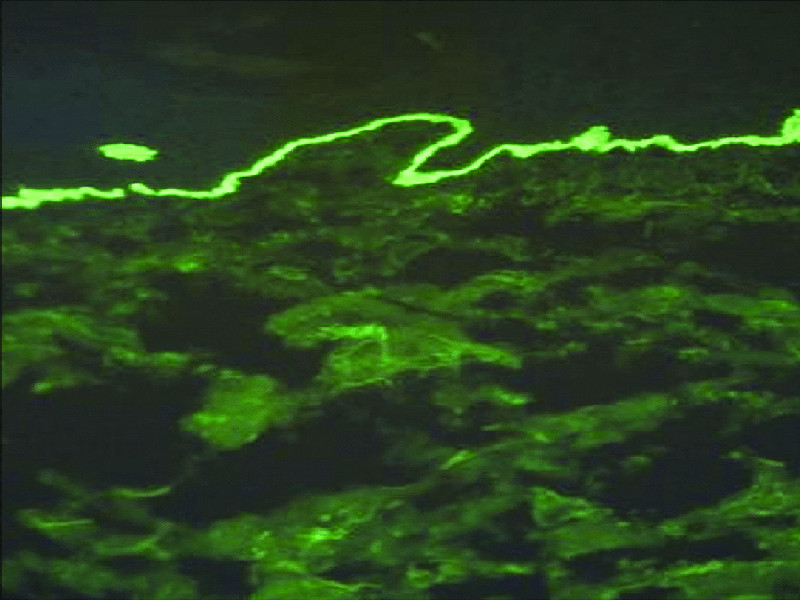
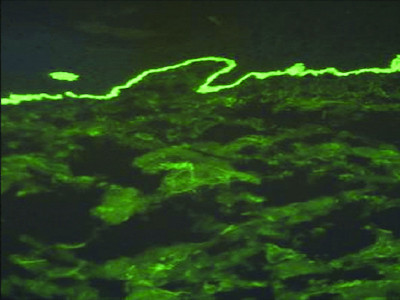
bullous pemphigoid, the antibodies are formed against the proteins that attach the top layer of skin (the epidermis) to the bottom layer of skin (the dermis). The antibodies cause inflammation, and the inflammation causes the skin to loosen. The entire epidermis peels off completely, forming a firm blister. In
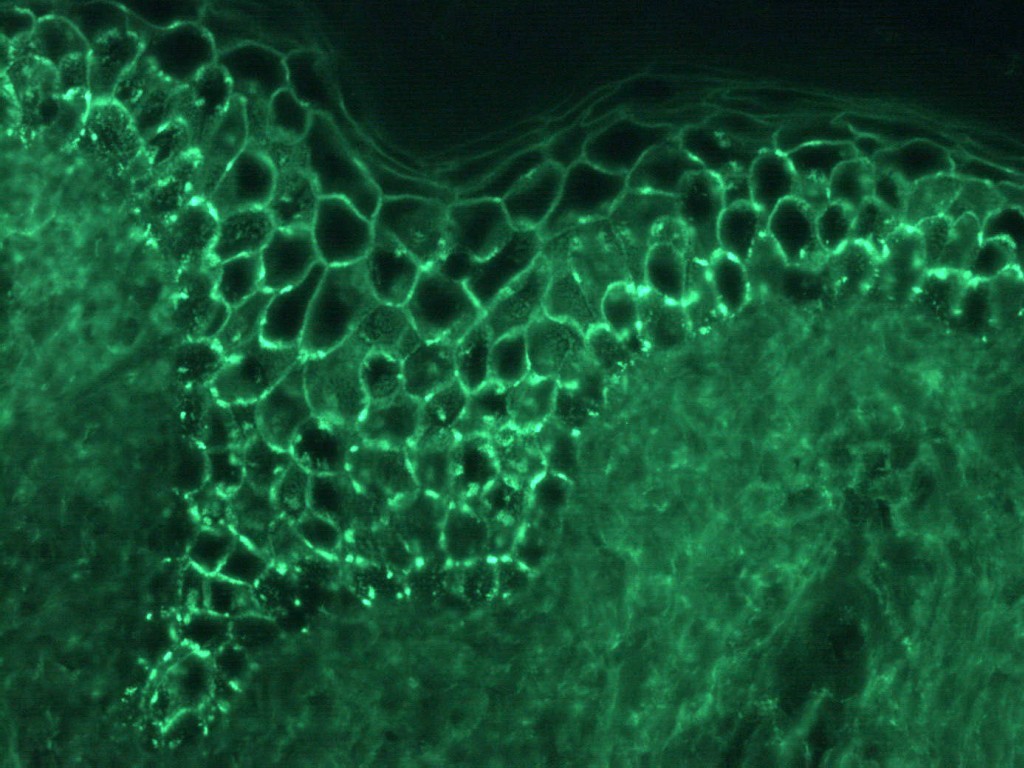
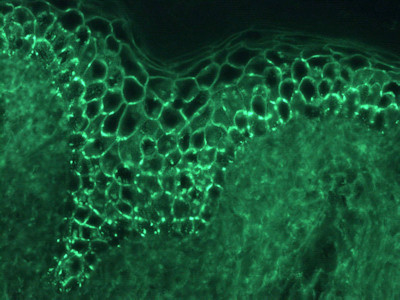
pemphigus, the antibodies are formed against parts of the epidermis itself. The level of blistering is higher in the skin, so thinner blisters form.
The antibodies can be made visible in the skin with a special stain (called immunofluorescence). They are visible as green lines.
 |
 |
|
IF pemphigus |
IF bullous pemphigoid |
Foto right: Mohapatra L. et al. Indian Dermatology
Online Journal 2019;10(6):692-694 (Creative
Commons License
4.0 - Public Access Journal).
In bullous pemphigoid, the blistering is sometimes caused by a medication. This could be a medication that has just been started, or one that
is being used for a long time. Stopping suspected medications can quickly resolve the disease. In pemphigus, the antibodies can sometimes develop as a result of a blood disorder (lymphoma). Fortunately, this is very rare.
ARE BLISTER DISEASES DANGEROUS?
Yes, these are serious illnesses. If a large portion of the skin is peeled off due to blistering, the situation is similar to that of a burn patient: the damaged skin leaks fluid and protein, and bacteria can easily enter and cause blood poisoning. Treatment usually consists of powerful anti-inflammatory drugs like prednisone, and it can take a very long time for the disease to clear up (months to years). The side effects of these medications can also cause problems. Blistering diseases are not contagious, not hereditary, and not malignant.
HOW IS THE DIAGNOSIS MADE?
A blistering disease is easy to recognize when
blisters suddenly appear everywhere. But that's not
always the case; initially, only red, itchy, scaly
patches may appear, and then it looks like eczema or
a drug reaction. With pemphigus, the blisters don't
last long and are sometimes invisible. Once a
blistering disease is suspected,
skin biopsies should be taken. Under a microscope, the type of blistering disease can be determined. Two biopsies should be taken: one for standard microscopy and one to visualize the antibodies. Sometimes a blood sample is also taken to test for antibodies directed against the skin.
HOE DOES IT LOOK LIKE?
BULLOUS PEMPHIGOID
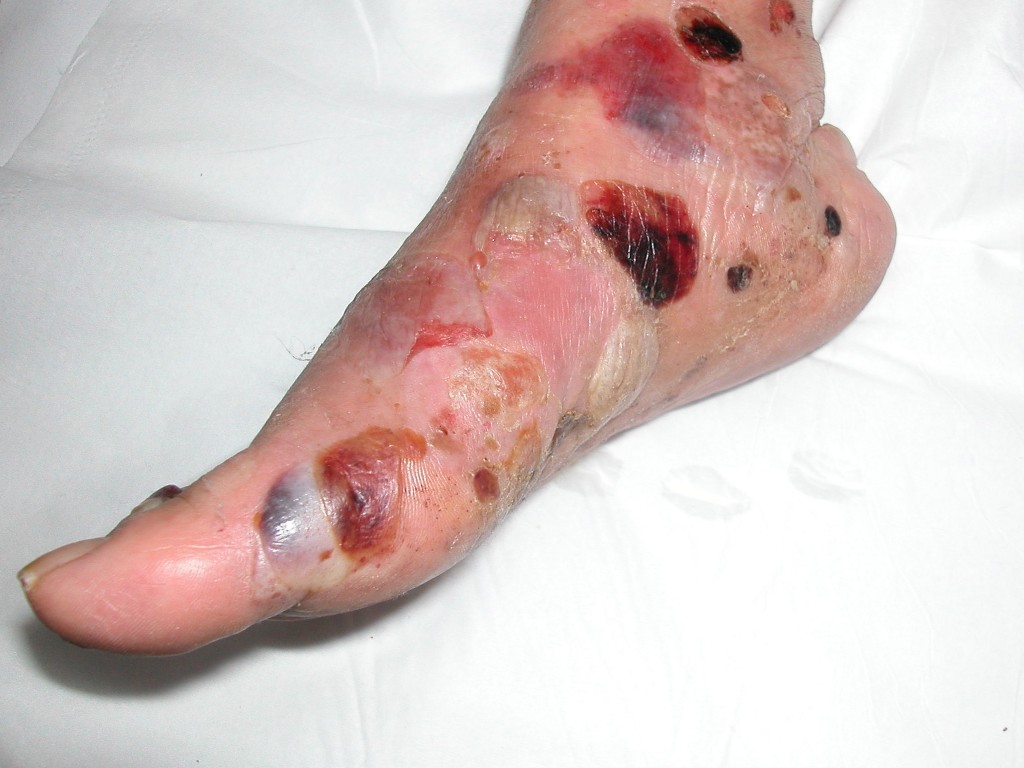
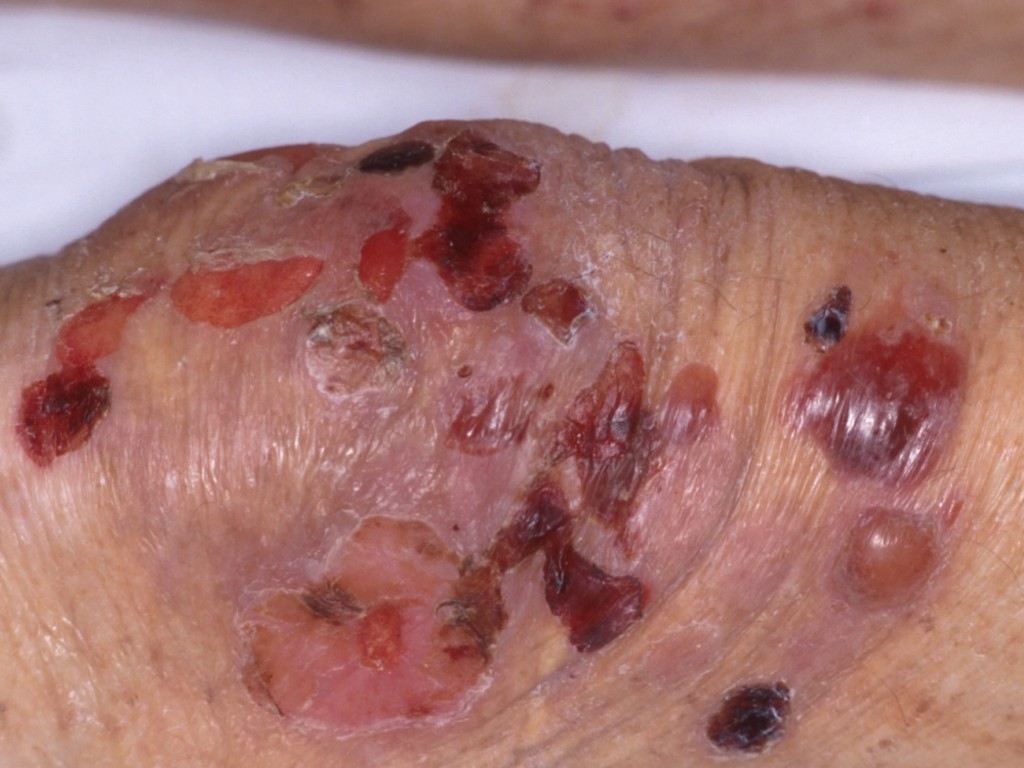
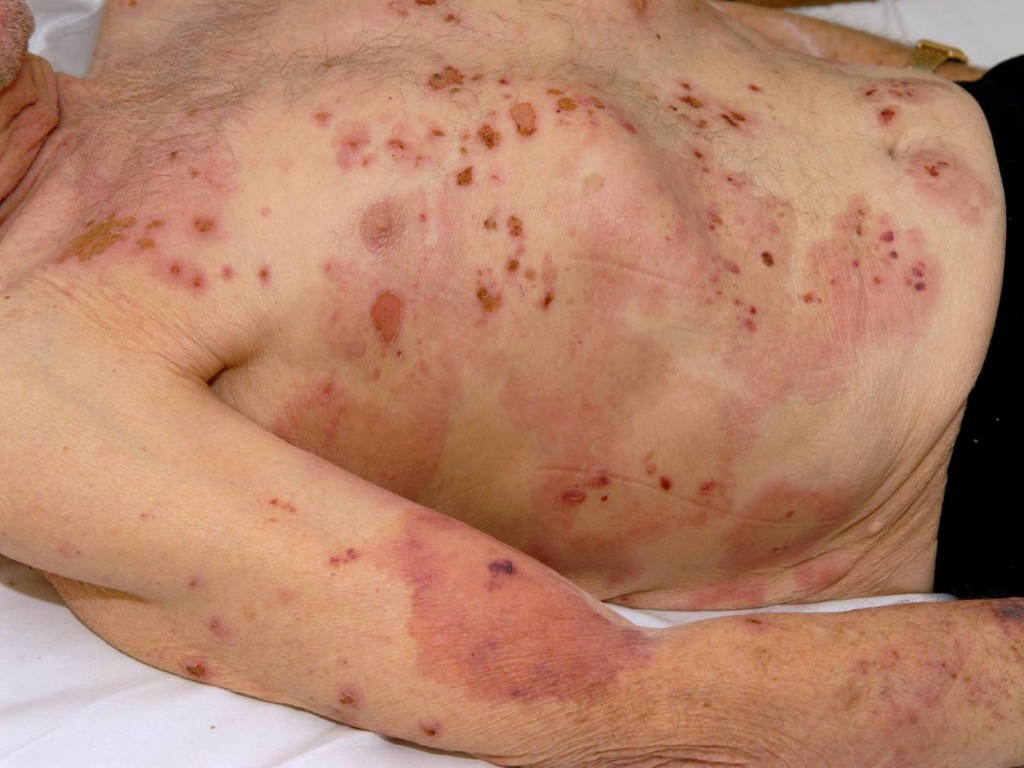
Bullous pemphigoid initially causes red, itchy patches, which later develop into blisters. These are usually firm blisters and can occur all over the body. There is also a variant of bullous pemphigoid in which the mucous membranes are affected. This form is called mucosal pemphigoid or cicatricial pemphigoid. This form can cause scarring and damage to the eyes, oral mucosa (lips, cheeks), esophagus, and genitals.
|
|
 |
|
bullous pemphigoid |
bullous pemphigoid |
 |
 |
|
bullous pemphigoid |
bullous pemphigoid |
PEMPHIGUS
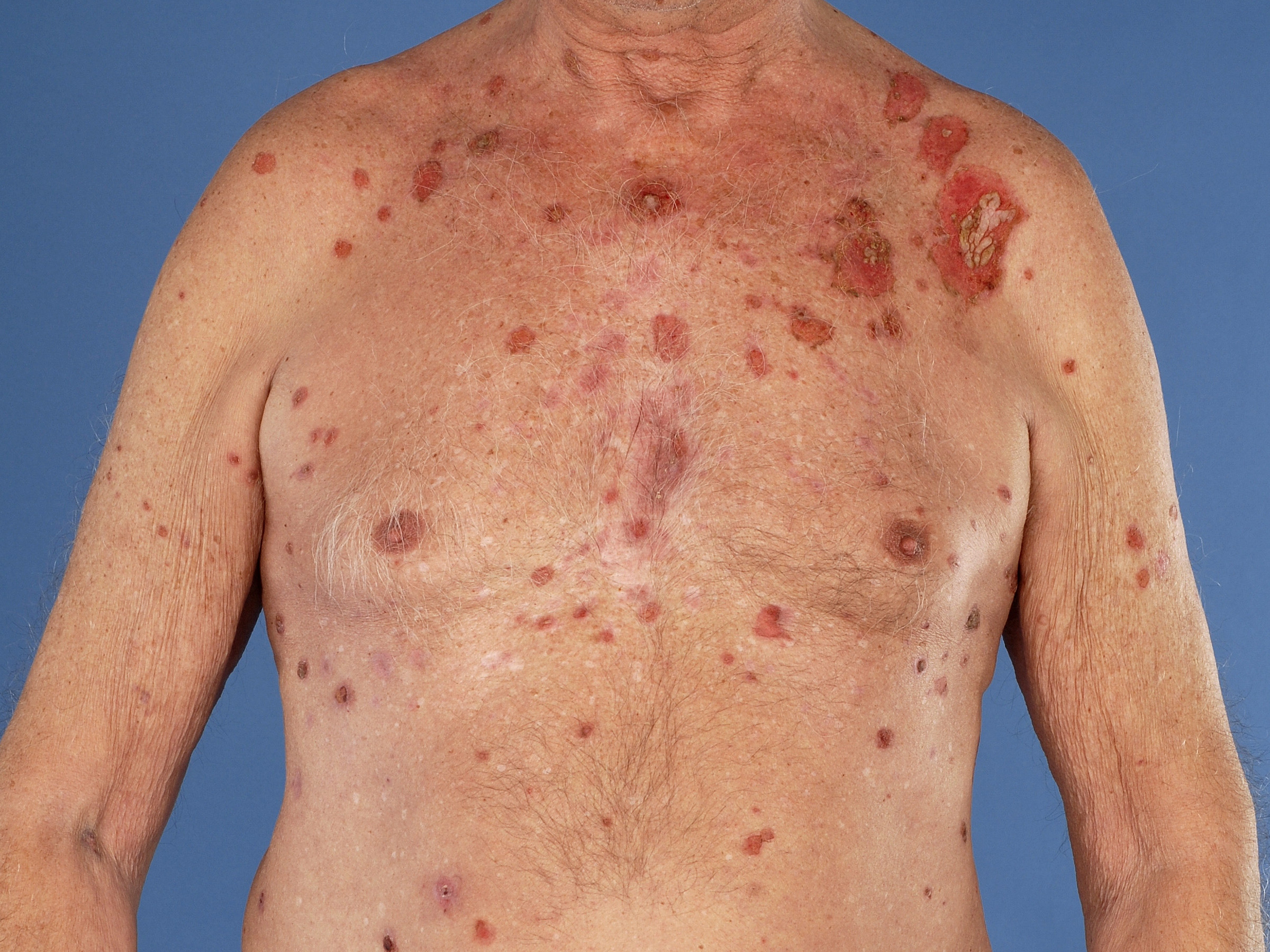
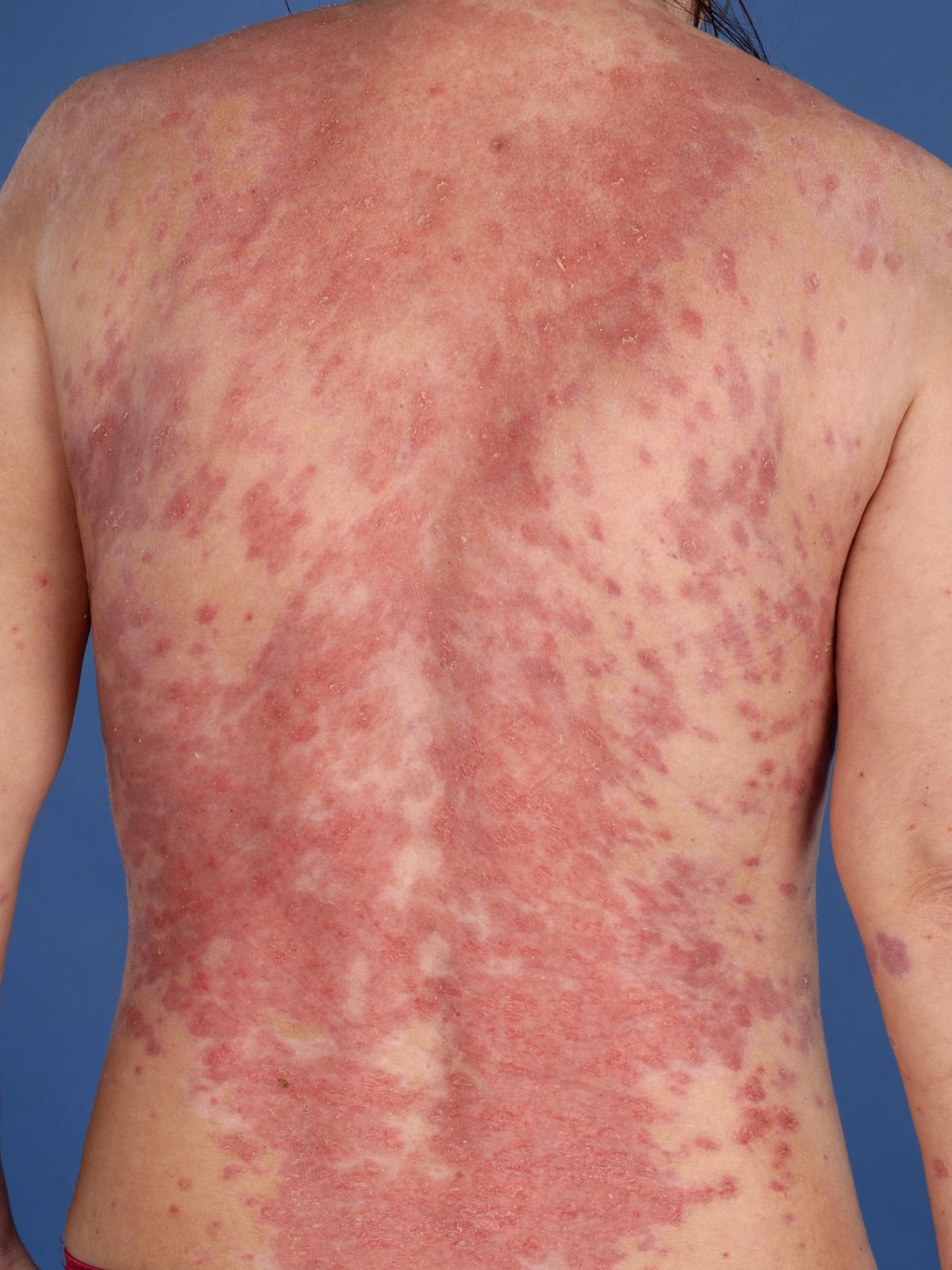
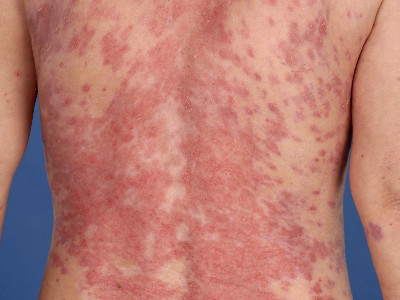
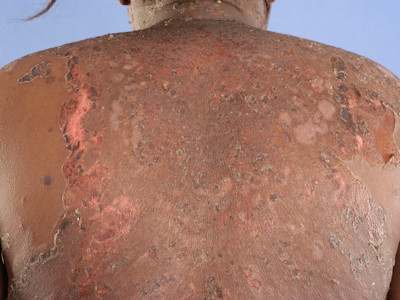
Pemphigus also causes red patches with superficial abrasions and soft blisters. The skin appears to be loose in places, and rubbing can cause blisters to form. Sometimes, no blisters are visible at all, only abrasions or superficial sores. These sores can also appear on the lips and in the oral cavity. In the common form of pemphigus (pemphigus vulgaris), it often begins in the mouth and later spreads to the body. There are also other variants of the blistering disease, such as
pemphigus foliaceus, in which only superficial abrasions or blisters appear on the body, often on the chest and back, and sometimes on the face. Another variant is
pemphigus vegetans, in which thick crusts form at the bases of the blisters.
 |
|
|
pemphigus vulgaris |
pemphigus vulgaris |
 |
 |
|
pemphigus vulgaris |
pemphigus vegetans |
HOW IS IT TREATED?
Blister diseases are treated with anti-inflammatory drugs such as prednisone. These drugs reduce inflammation and limit damage to the skin and mucous membranes. They often need to be administered for extended periods, from months to years. The antibodies that cause the disease do not simply disappear; they continue to be produced by the body.
Topical corticosteroids:
Mild forms of blister diseases can also be treated with strong corticosteroid creams. These are applied to the blister or red areas. Fluid-filled blisters must first be lanced, otherwise the cream will not reach the bottom of the blister.
Prednisone tablets:
For extensive blister diseases, corticosteroid tablets (prednisone, prednisolone) are used. Prednisone can cause serious side effects such as weight gain, diabetes, high blood pressure, infections, and osteoporosis. However, the use of this medication is often unavoidable. If it's not used, it can cause large-scale abrasions, which is more dangerous than the side effects of prednisone.
Other drugs that suppress the immune system:
Besides prednisone, there are several other drugs that suppress the immune system, such as azathioprine, mycophenolate mofetil, methotrexate, and ciclophosphamide. Due to the potential side effects of these medications, regular (blood) monitoring is necessary.
Drugs that suppress antibody production:
There are new, expensive drugs that suppress antibody production. One such drug is rituximab. This is sometimes used for pemphigus if it doesn't respond to prednisone.
Antibiotics:
There are antibiotics such as tetracyclines (tetracycline, doxycycline, minocycline) and macrolides (erythromycin, clarithromycin, azithromycin) that have an anti-inflammatory effect. So, in addition to their antibacterial properties, they also affect the immune system. In bullous pemphigoid, some patients can successfully control the disease with a combination of an antibiotic (tetracycline) and a vitamin preparation (nicotinamide).
WHAT IS THE PROGNOSIS?
Pemphigus and bullous pemphigoid are chronic diseases. If a medication has triggered the blistering disease, recovery may occur quickly after discontinuing the medication. However, if not, it can take years for the diseases to finally resolve. Especially with pemphigus, one should be aware that the blistering disease can persist for years, perhaps even lifelong. For bullous pemphigoid, it takes an average of about five years for recovery to occur. The mucosal variant is usually more difficult to treat and usually lasts longer. If the disease develops in childhood, the prognosis is somewhat better; in most children, new blisters no longer develop after several years.
WHAT CAN YOU STILL DO YOURSELF?
Be careful with the skin; rubbing, bumping,
vigorous drying, and other damage can cause blisters
and wounds. Showering is allowed, but be careful
with damaged skin areas, especially when drying. If
blisters develop, it's best to leave them intact for
as long as possible, unless they are very large.
Large blisters can be punctured at the side to allow
the fluid to drain. Do not remove the blister cap,
as it provides good protection. However, if there is
pus under a blister, that is a reason to remove the
blister cap. If wounds have developed, you can cover
them with a non-adherent gauze. This can be a grease-soaked cotton gauze (e.g., Jelonet) or a silicone bandage (e.g., Mepitel). Avoid using gauze that will stick to the wound. Place a regular gauze compress over the non-adherent gauze and secure it with a bandage (avoid applying
adhesive plasters to the skin, as removing them can cause new blisters).
Be aware of the risk of infection. You may notice this by redness, pain, and purulent discharge. Symptoms of infection can be treated with an antibiotic ointment or tablets.
|