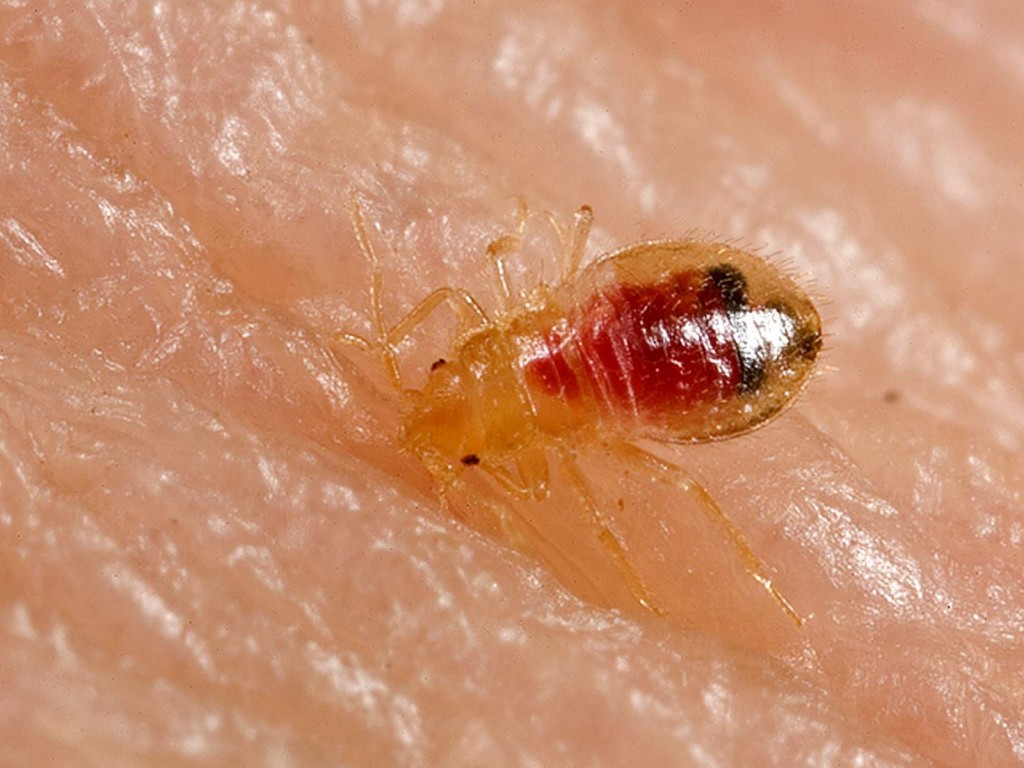
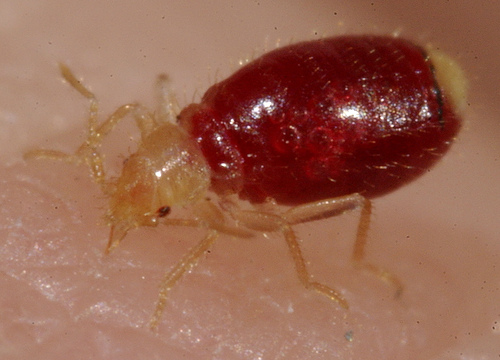
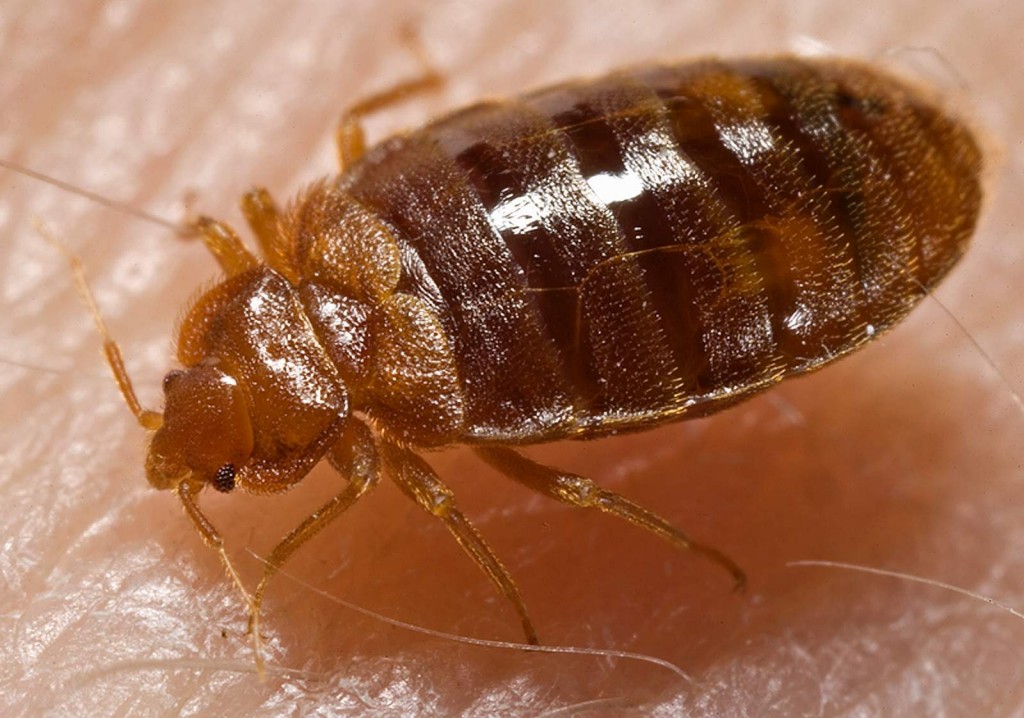
WHAT ARE BED BUGS?Bed bugs ( Cimex lectularius , bed bug, wall louse) are insects belonging to the bug family ( Heteroptera , Cimicidae ) . They are 5 to 6 millimeters long, reddish-brown to brown insects with a broad, flattened body. Bed bugs live in and around beds. During the day, they hide in and behind the bed and in the mattress; at night, they emerge and sting the sleeping person and feed on blood. The stings can cause intensely itchy bumps.DO BED BUGS ALSO OCCUR IN THE NETHERLANDS?Unfortunately, they are back again. Bedbugs were no longer present in the Netherlands until recently; they were eradicated by the use of insecticides (DDT) in the 1950s. They are widespread in the rest of the world, particularly in poor and tropical countries. These days, bedbugs are spreading again worldwide. Bedbugs are now found in New York and in hotels in major European cities, and since 2007, in Amsterdam as well. Bedbugs travel with tourists, hiding in suitcases and backpacks and later emerging. They are becoming a plague and are becoming increasingly difficult to control because they have become resistant to insecticides.
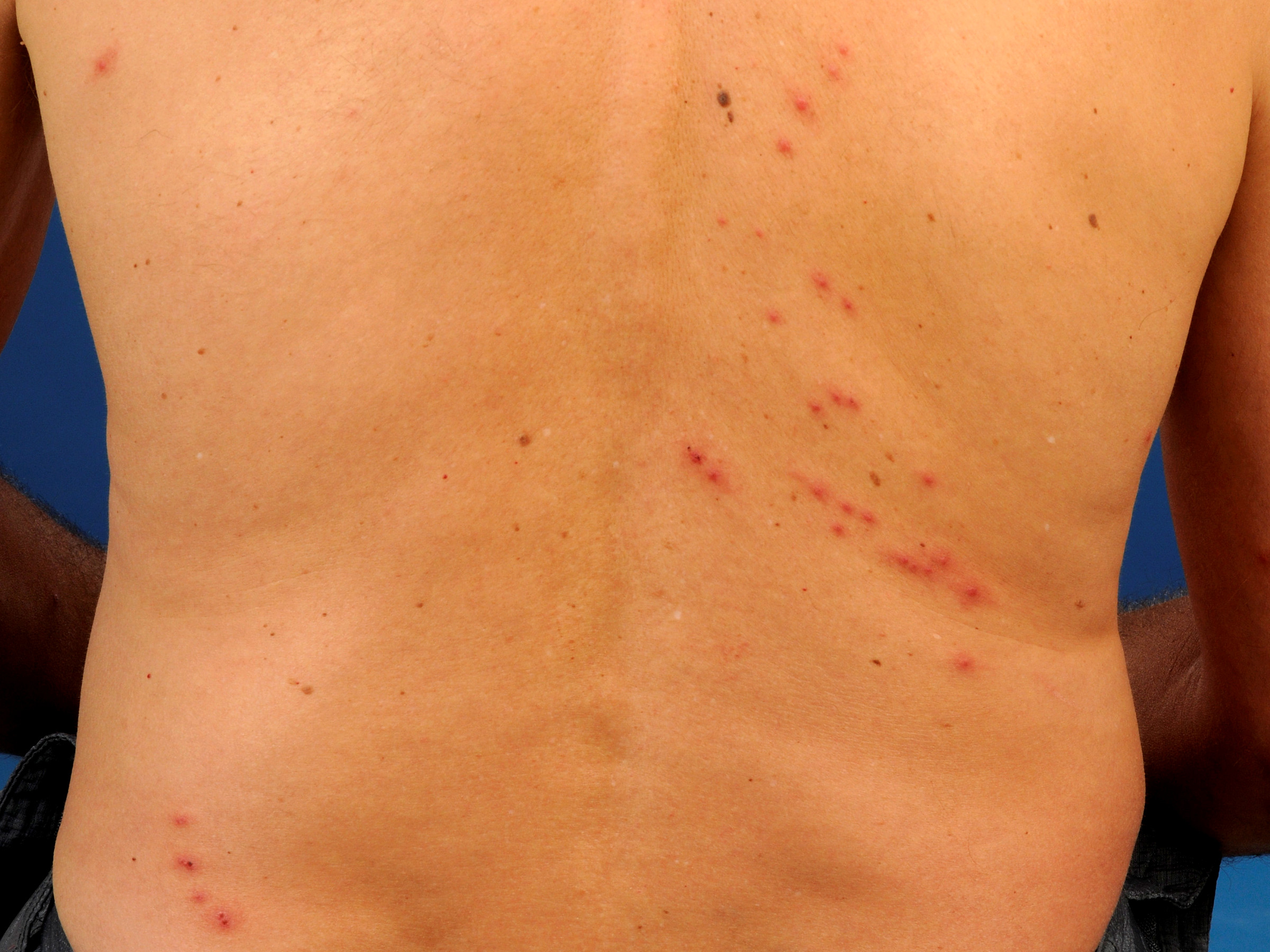
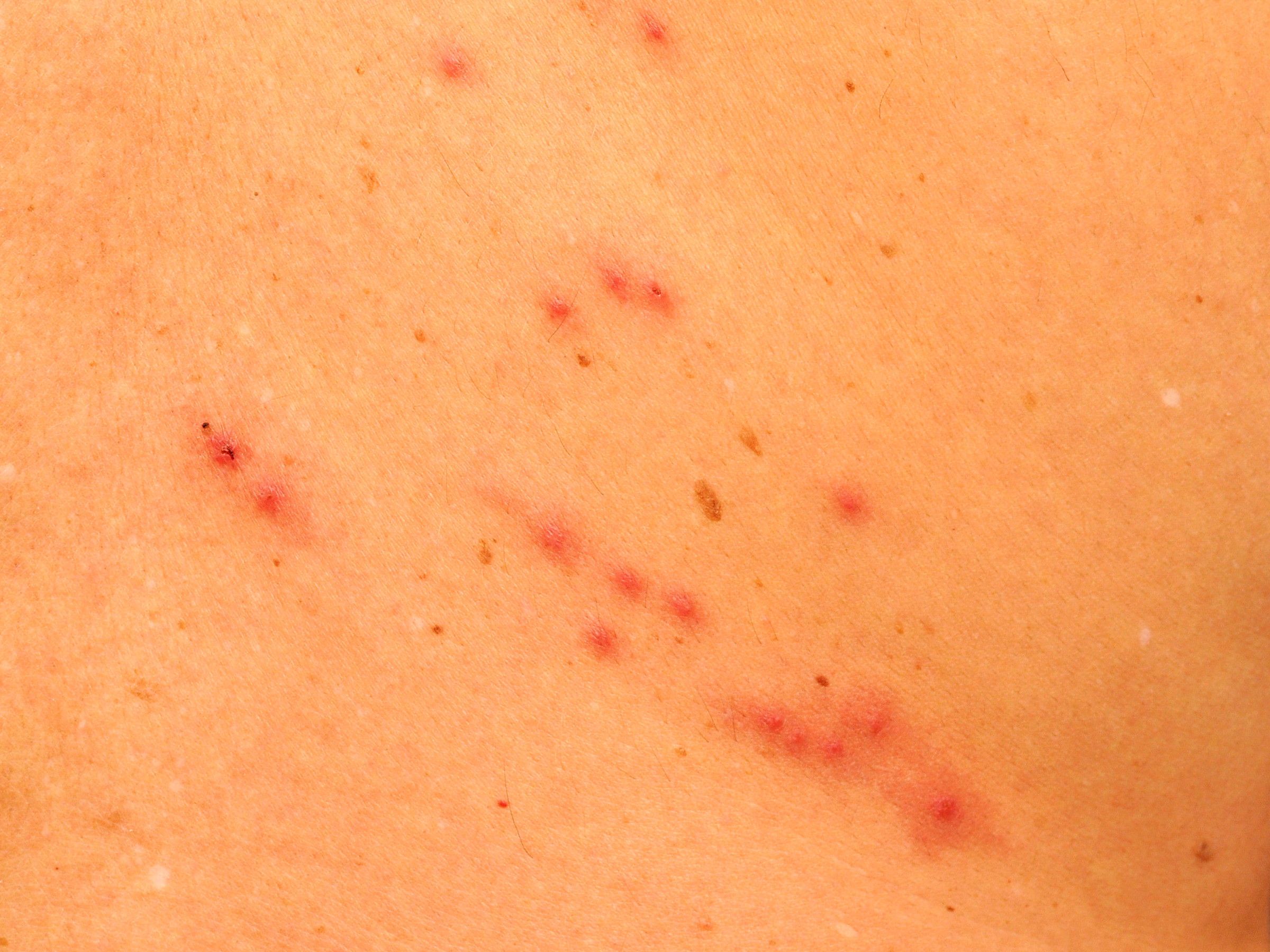
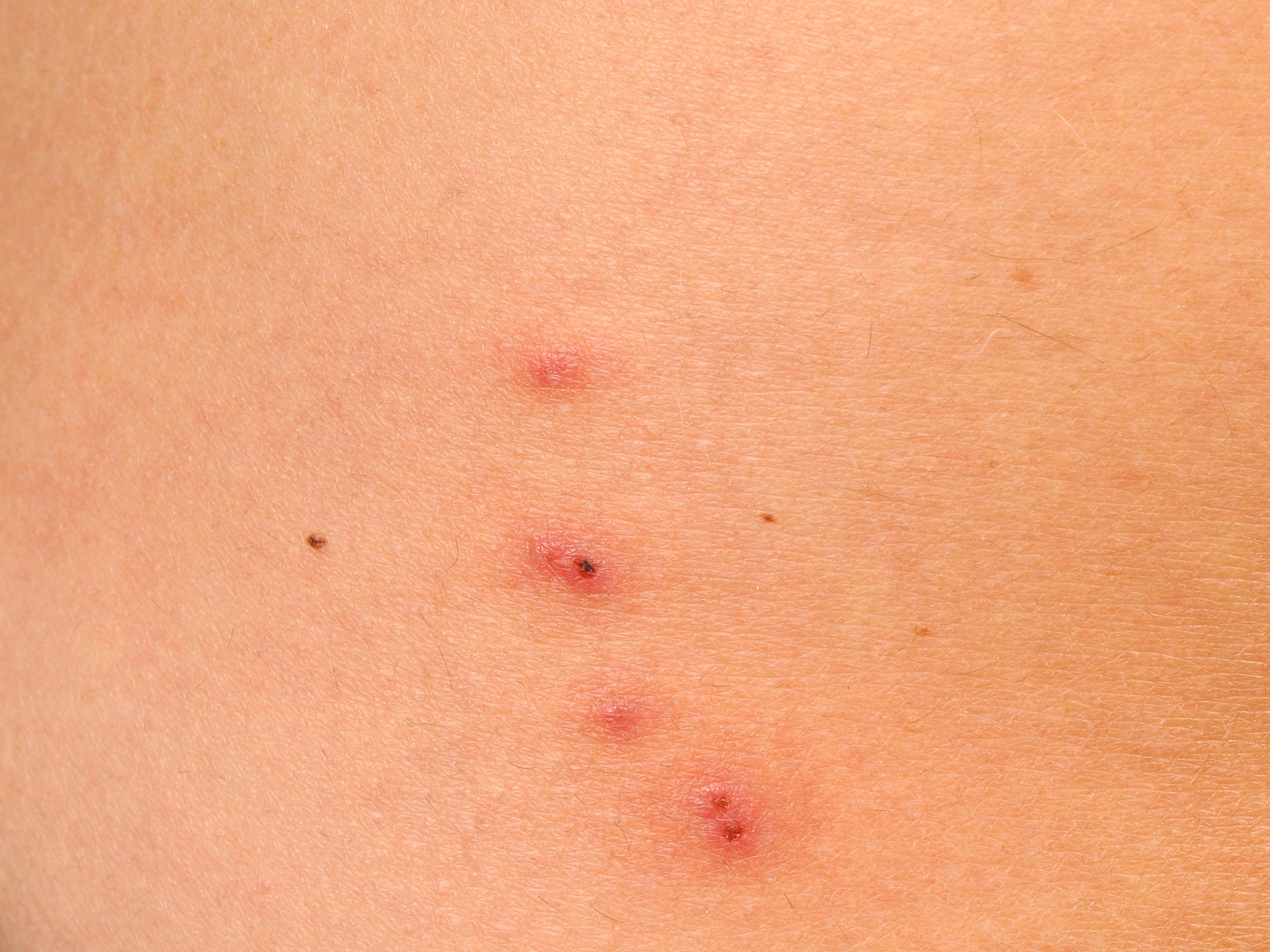
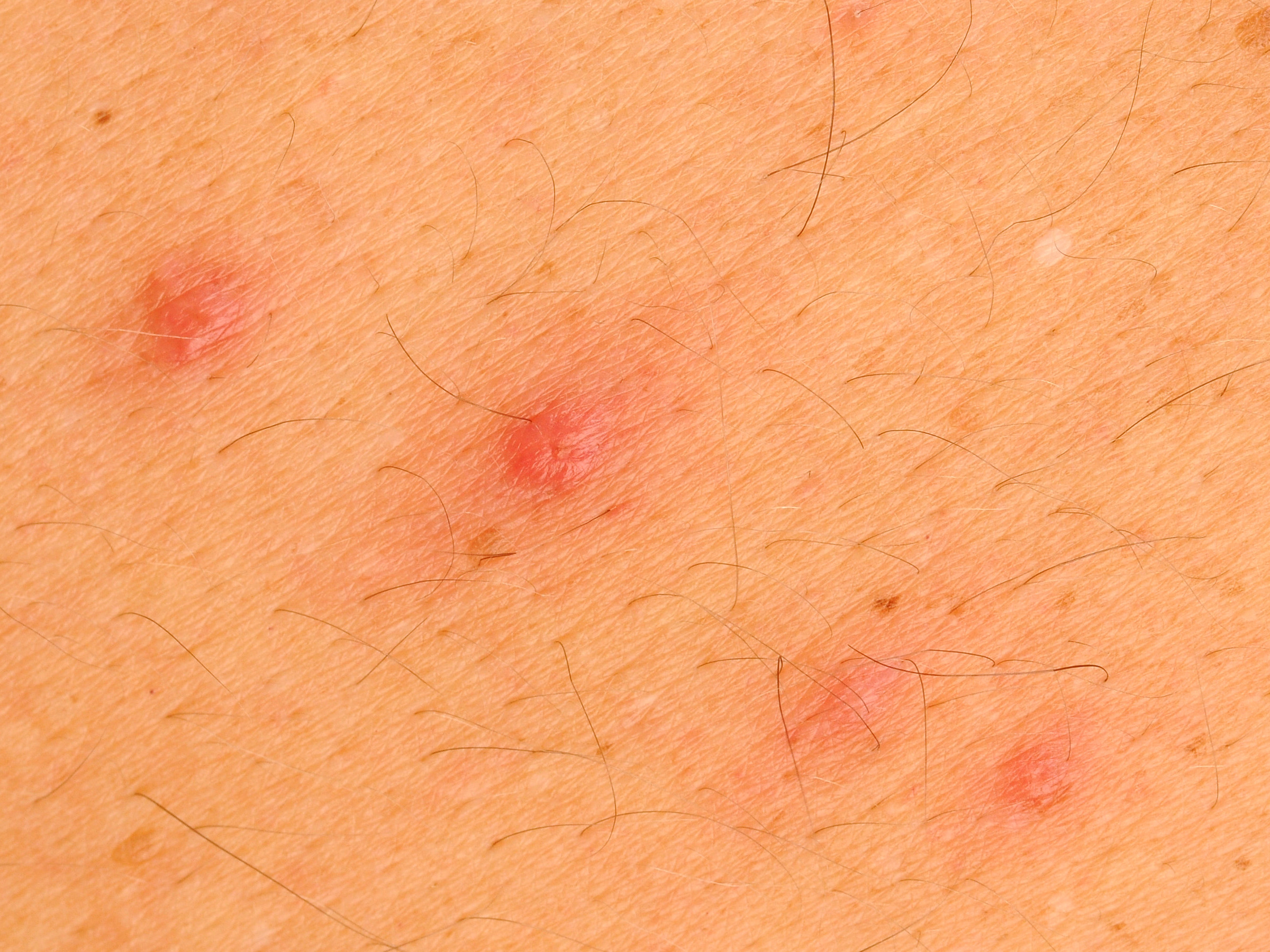
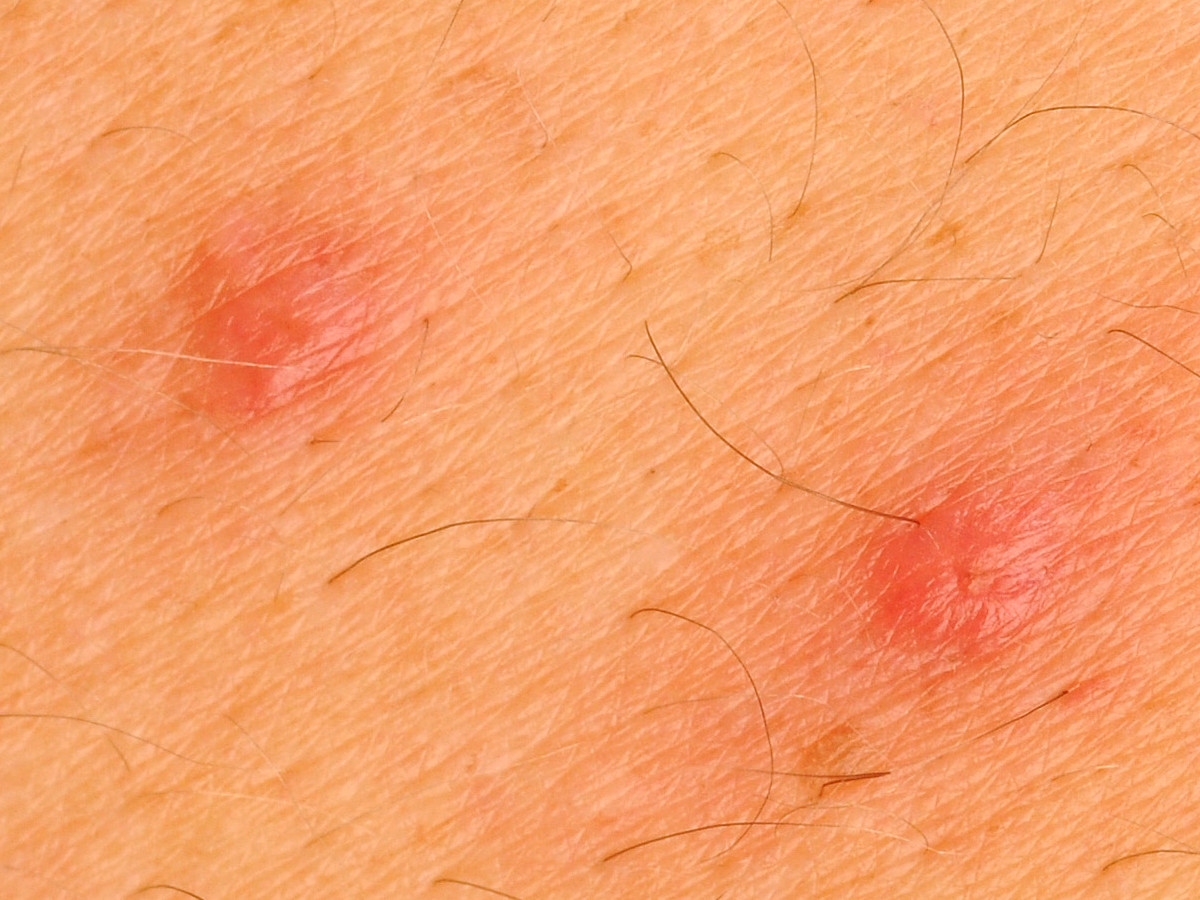
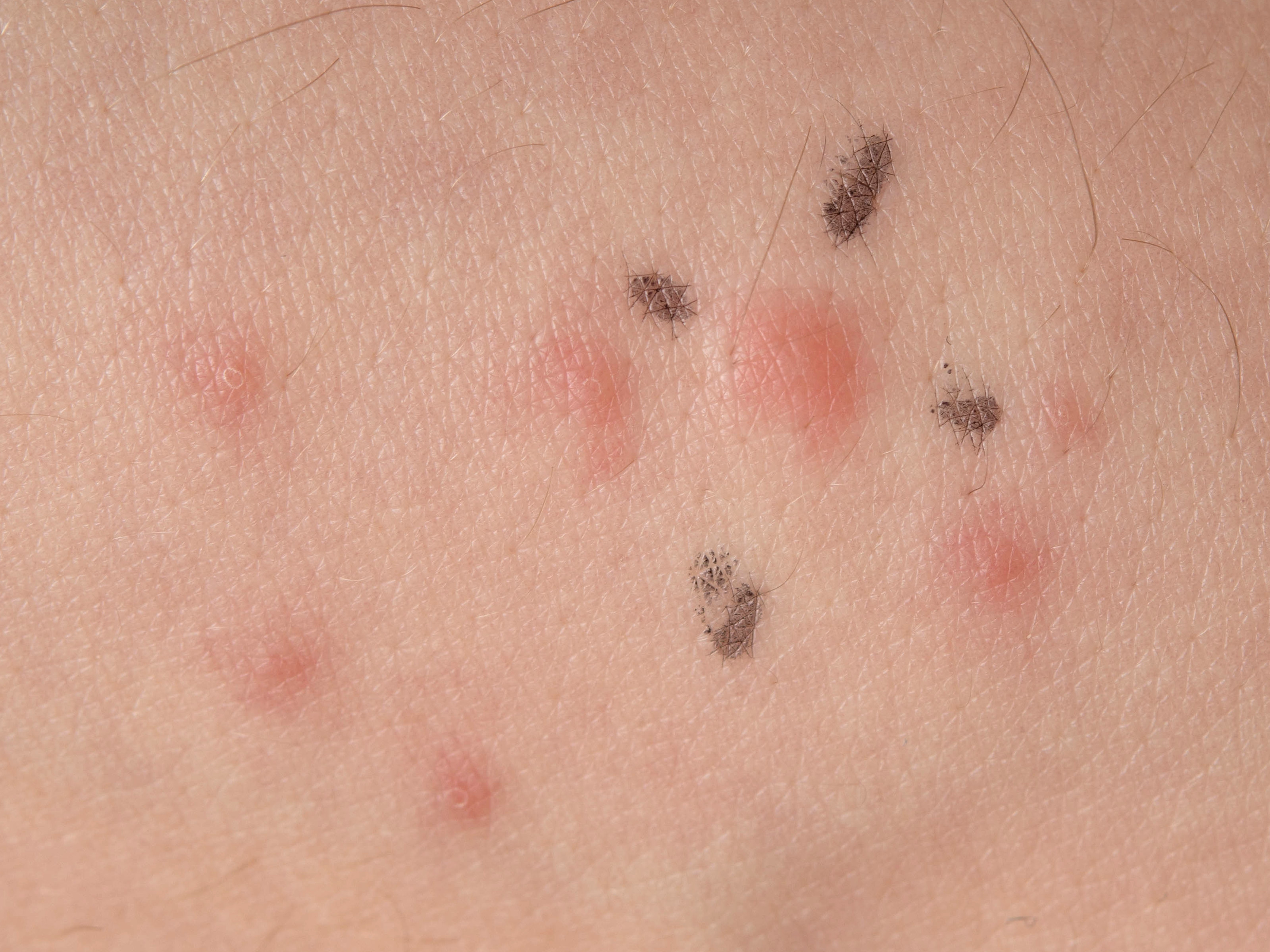
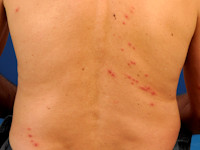
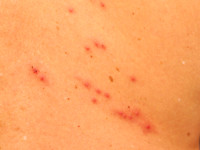
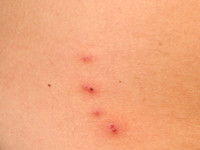
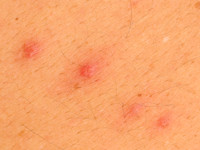
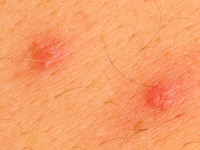
WHAT KIND OF SYMPTOMS DO BED BUGS CAUSE?Bed bugs emerge at night and search for a blood meal. They are attracted to exhaled CO2 and body heat. Bed bugs can sting anywhere, but favor the legs and arms, as well as the neck and back. The bed bug has a piercing proboscis that pierces the skin. Inside this proboscis is a tube through which the bed bug injects anesthetic and anticoagulant substances. This prevents the bite from being felt, slowing down the blood clotting process, making it easier for the bed bug to suck the blood. However, these substances can cause severe itching, more so in some patients than in others. Bed bug bites resemble mosquito bites. They are small, red, itchy bumps. Sometimes they are in a row: these rows are caused by a bed bug that was disturbed while sucking blood and bit several times in quick succession. This is typical of bed bugs. Another difference from mosquito bites is that mosquito bites occur in places that weren't under the covers and were accessible to mosquitoes, while bedbug bites occur under the covers.
Bedbug bites can be extremely itchy, often scratched open, and sometimes skin infections and scarring develop. It can take up to a week for the bites to stop itching. After a few weeks, there's usually nothing left to see. Bedbugs can transmit diseases, but this is rare. The presence of bedbugs in a home causes severe stress, disturbed sleep, and psychological problems. They are also very frustrating because they are very difficult to eradicate.
 |
 |
 |
| stitches, in a row |
bed bug bites |
bed bug bites |
 |
 |
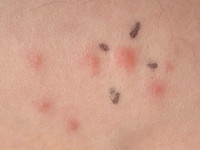 |
| bed bug bites |
bed bug bites |
bed bug bites |
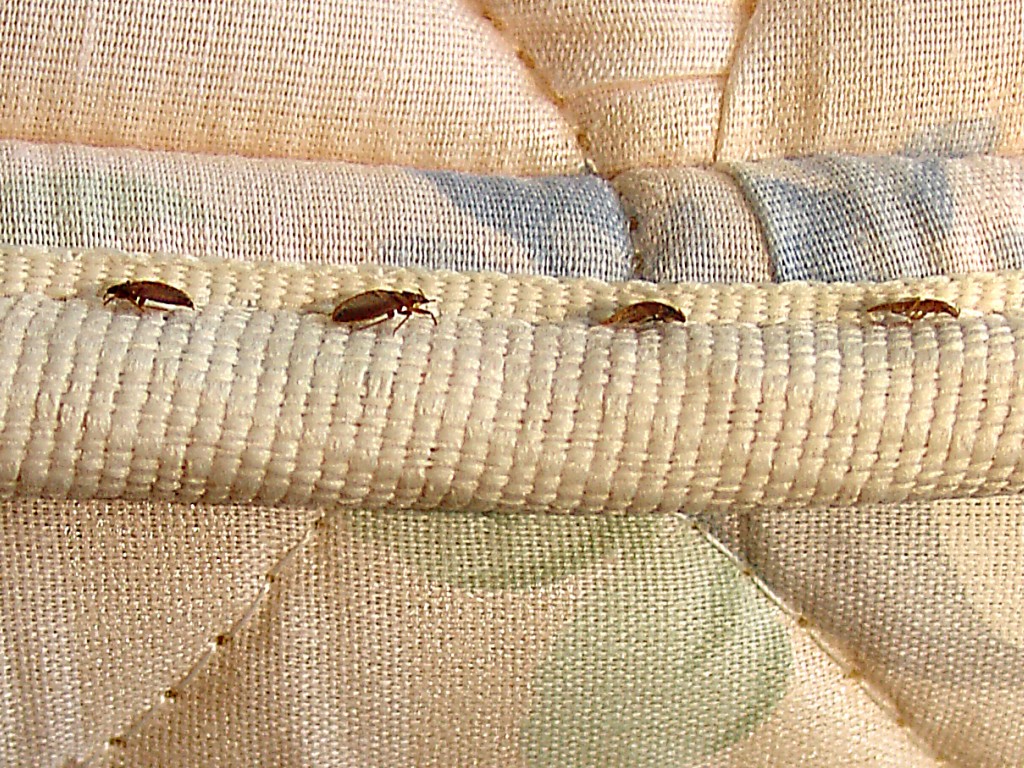
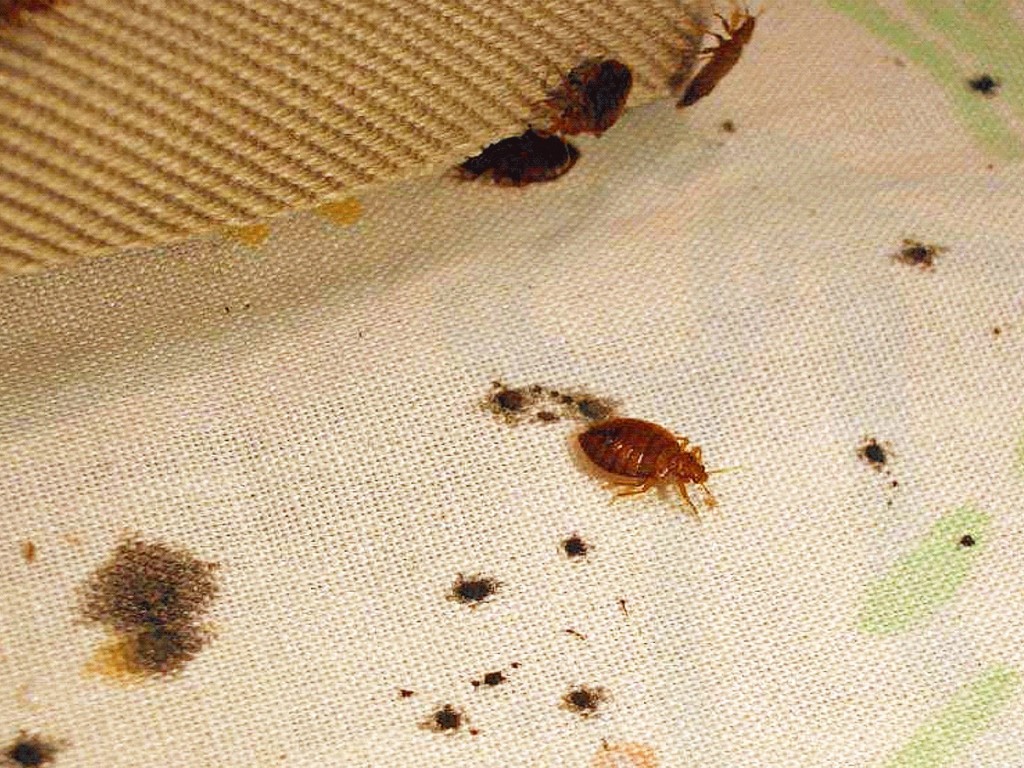
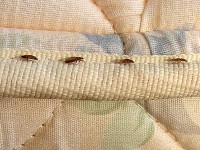
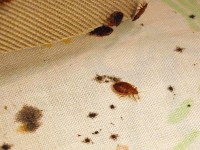
HOW DO I KNOW IF I HAVE BED BUGS IN THE HOUSE?Bedbugs are suspected when rows of insect bites appear, but it's only certain if they can be found in the bed or bedroom. Bedbugs are masters of hiding and are almost impossible to find during the day. Their flattened shape allows them to hide in small crevices and under fabric edges. They crawl under baseboards, hide in folds of bed linens, behind and under the bed, behind wallpaper, in electrical outlets, and in closets and drawers. Search under folds and in seams, and look for bloodstains. Box spring mattresses (often found in hotels and apartments) are an ideal hiding place.
 |
 |
| bed bugs in seam |
bed bugs and blood stains |
Photos: Harold Harlan - National Pest Management Association.
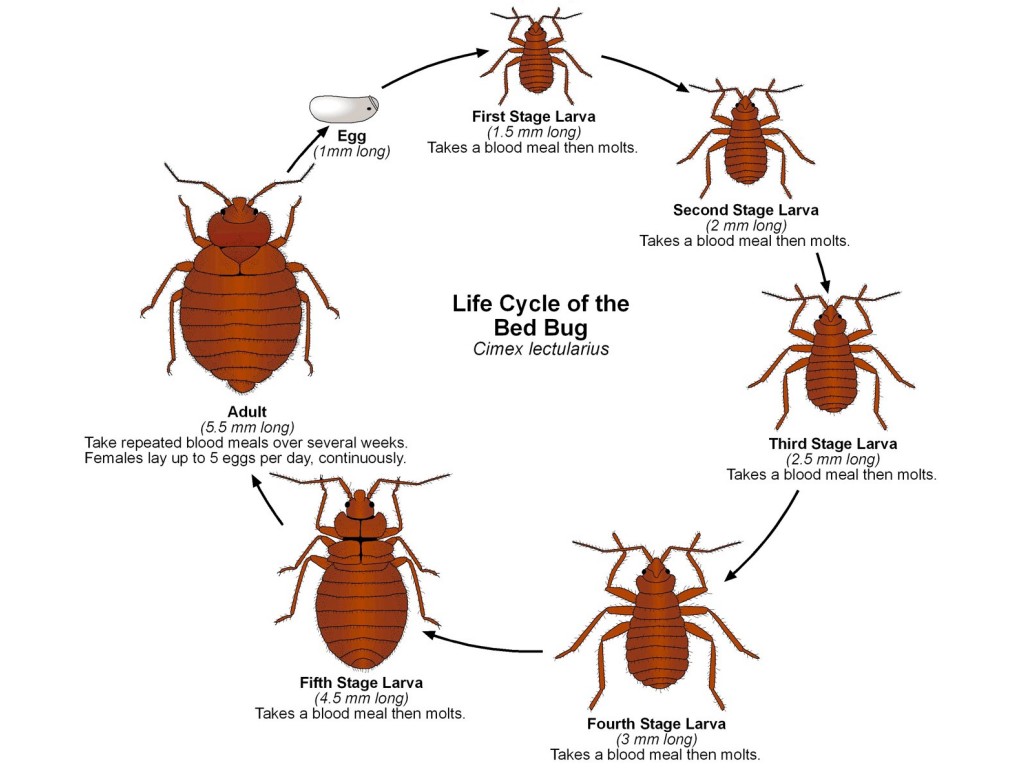
LIFE CYCLE OF THE BED BUG (CIMEX LECTULARIUS)Bed bug fertilization isn't gentle: the male drills a hole into the female to fertilize the eggs. Females lay anywhere from a few to about 10 eggs per day, totaling around 200 during their lifetime. After about two weeks, a nymph emerges from an egg, a miniature version of the bed bug that already resembles its parents. This nymph molts several times and reaches adulthood after six weeks.
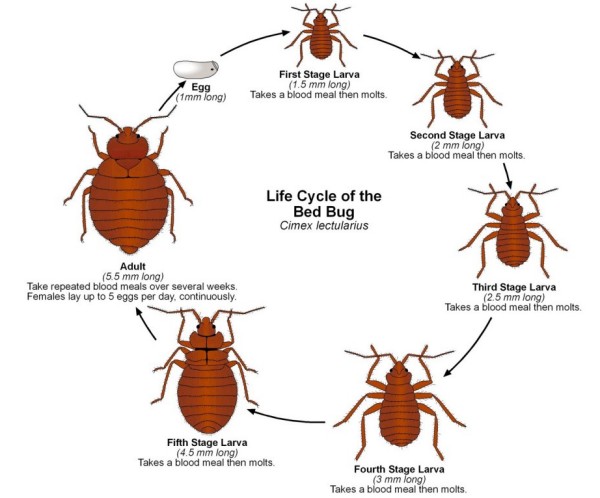
Illustration: Scott Charlesworth, Purdue University.
Besides Cimex lectularius , other bed bug species occur. Cimex hemipterus , which also feeds on the blood of bats and birds, is the most common in the tropics. Leptocimex boueti , which also feeds on the blood of humans and bats, is also found in West Africa and South America .WHAT CAN I DO ABOUT THE ITCHING?Talk to your doctor about what to do to relieve the itching. Rinsing with warm water helps. Topical anti-itch products (menthol, mosquito repellents) are also helpful. You can use a strong anti-inflammatory cream (corticosteroid) for a short period of time. The itching will eventually subside on its own. If you experience severe itching or shortness of breath (allergic reaction), contact a doctor immediately. Sometimes medication is necessary (anti-itch tablets, antihistamines, prednisone).HOW CAN I FIGHT BED BUGS?Bedbugs are very difficult to control. They are master hiders and can survive for a long time (1-1.5 years) without needing a blood meal. They are becoming increasingly resistant to insecticides. They can nest in floors, closets, behind baseboards, in furniture, and so on.
To control bedbugs, all clothing and bedding should be washed at 60 degrees Celsius or hotter. Then, use insecticide to kill all nests and living parasites hiding in furniture, cracks in floors, and the like. For this, contact a specialized pest control company. Reputable companies are affiliated with one of two trade associations: Platform Pest Control Netherlands ( www.platformplaagdierbeheersing.nl ) and the Dutch Association of Pest Control Companies ( www.nvpb.org ). Both organizations list their members on their websites. If necessary, contact your municipality or the Municipal Health Service (GGD) for advice. Heating the entire room to 50-55 degrees Celsius with construction heaters is also an option.
All cracks in the house should be sealed, surfaces should be smooth and clean, and loose wallpaper should be removed. Blankets, pillows, and mattresses may need to be replaced. Carpeting should be removed or cleaned. Hot steam equipment can be used, provided it is hot enough to reach a temperature above 45 degrees Celsius in the hiding places.
Treat all objects (except children's toys) with a pest control spray suitable for killing bed bugs (available at specialty stores). Treat all cracks and crevices. If
necessary, use adhesive sheets or containers filled with water around the bed legs to check for the presence of bed bugs.
It may be helpful to repeat the treatment after a certain period. Carefully read the instructions on the packaging.
Do not move infested objects from the house before treatment to prevent the spread.
Prevention is also important. Bed bugs travel from other parts of the world in clothing, suitcases, bags, gifts, and so on. If you travel frequently, check your suitcase carefully upon returning home. Keep the suitcase closed and separate, wash the contents at 60 degrees if possible. |