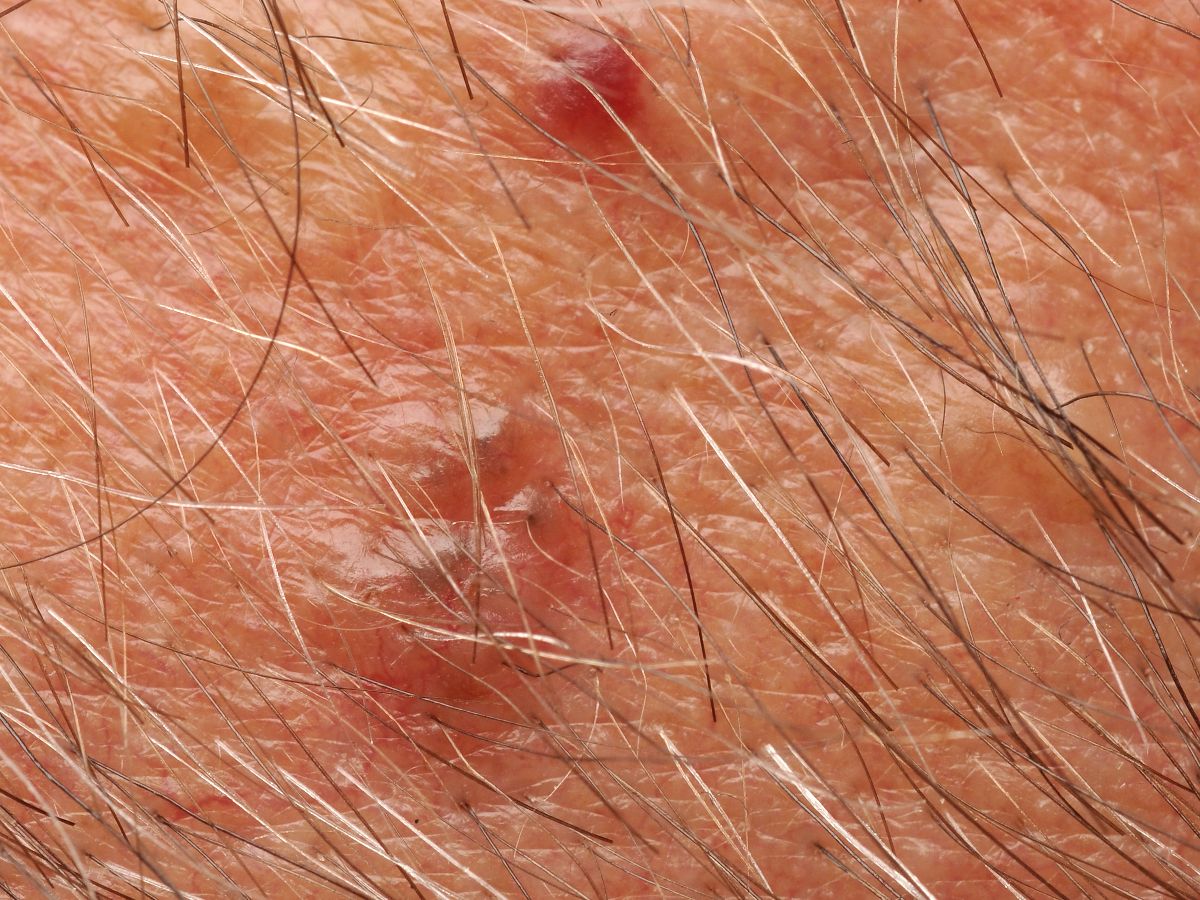
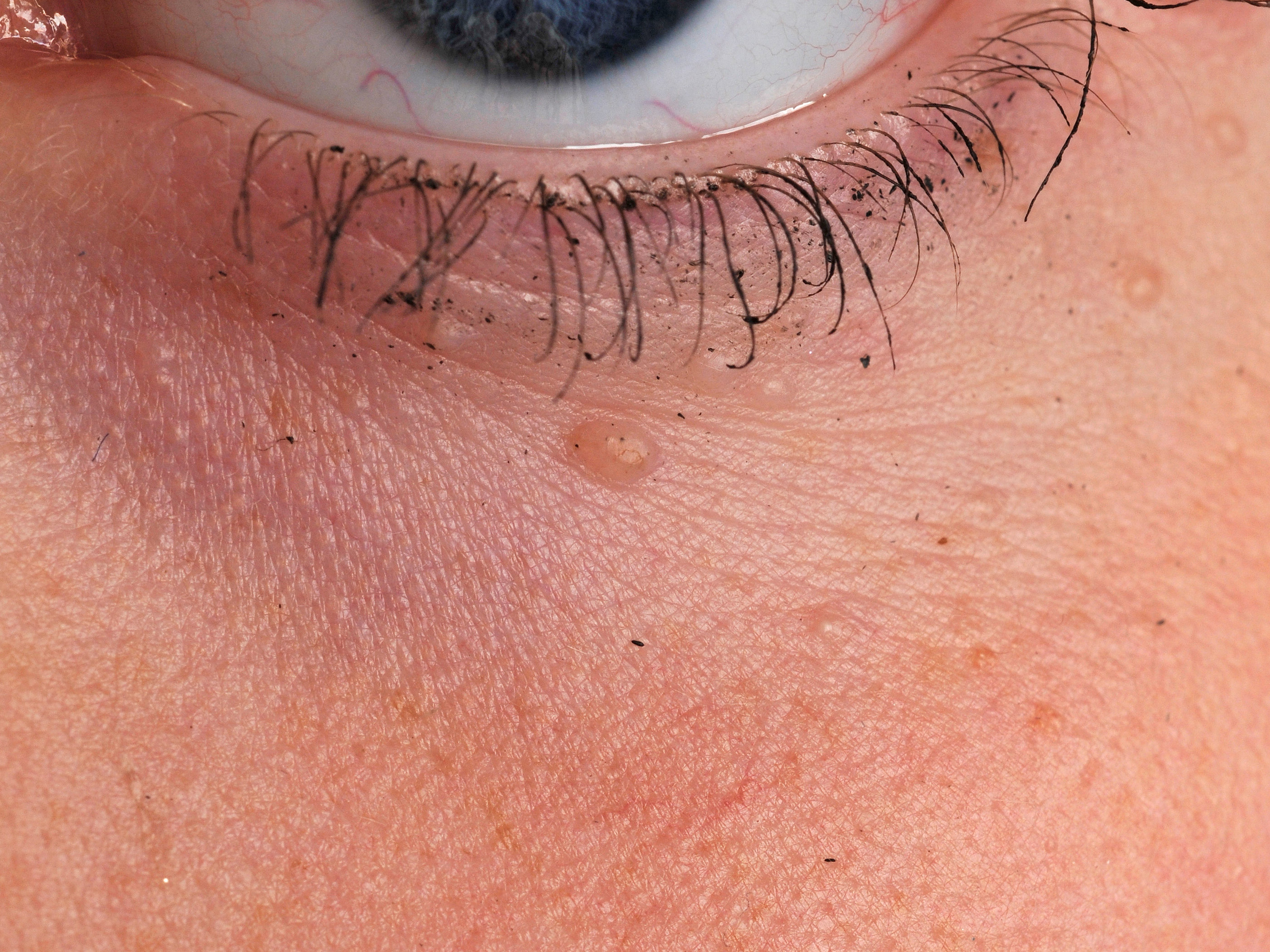
WHAT IS BASAL CELL NAEVUS SYNDROME?Basal cell nevus syndrome , also known as Gorlin syndrome , is a rare hereditary condition in which multiple basal cell carcinomas (a form of skin cancer) can develop at a young age. It is estimated that it affects 1 in 40,000 to 60,000 people. Basal cell carcinomas typically occur in later life. They primarily develop in areas exposed to sunlight, such as the face.
Basal cell carcinomas are not a dangerous form of skin cancer. They grow slowly and do not spread deeply, to lymph nodes, or to other organs. They are easily removed with minor surgery. However, if there are many, or if they develop at a young age, this can be very distressing. Patients with basal cell nevus syndrome may also experience other symptoms, such as cysts (cavities) in the bone of the upper or lower jaw. These cysts are sometimes discovered by chance by a dentist when taking a dental X-ray. In patients with basal cell nevus syndrome, the first skin tumors can develop at a young age, between 10 and 15 years.HOW DOES BASAL CELL NAEVUS SYNDROME DEVELOP?Basal cell nevus syndrome is a hereditary (genetic) condition. There is an abnormality (mutation) in a gene (a segment of DNA containing the code for producing a body protein) called the patched homolog gene (PTCH). This abnormal gene can be inherited from either the father's or mother's side. It is inherited autosomal dominantly, meaning that if one parent has the gene, there is a 50% chance their child will also have it. It is also possible to be a carrier of the gene without experiencing any symptoms. In approximately 30% of patients, it is not inherited but a spontaneous mutation has arisen. The PTCH gene contains the DNA code for a protein that prevents cells from growing uncontrollably. If this protein malfunctions, multiple basal cell carcinomas can develop. Sunlight-induced DNA damage often triggers basal cell carcinomas, but when the cell growth-inhibiting protein malfunctions, many tumors develop, often at a young age. This usually involves a mutation in the PTCH1 gene, less often in the PTCH2 gene, or in another gene called SUFU. These genetic abnormalities can be detected through blood tests (DNA analysis).WHAT ABNORMALITIES CAN OCCUR WITH BASAL CELL NAEVUS SYNDROME?Basal Cell Carcinomas:
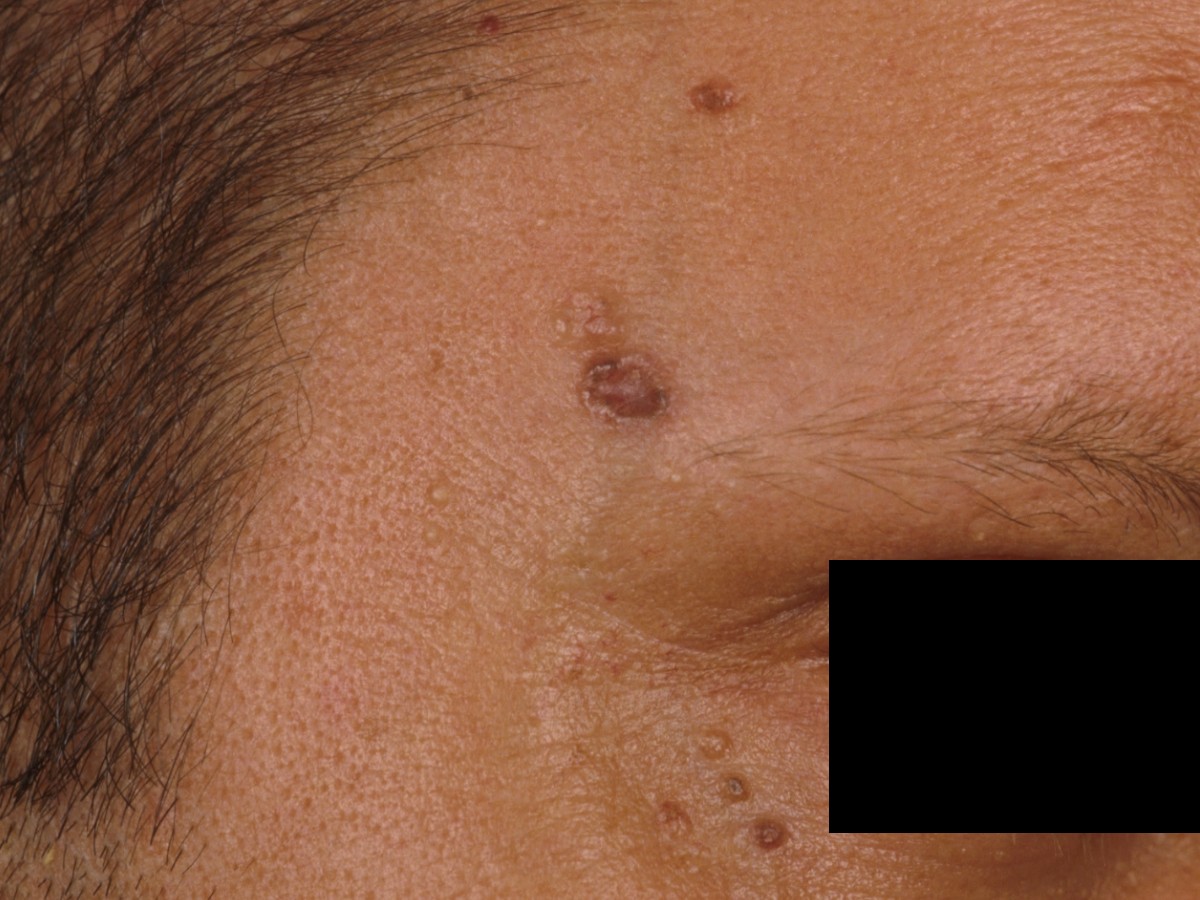
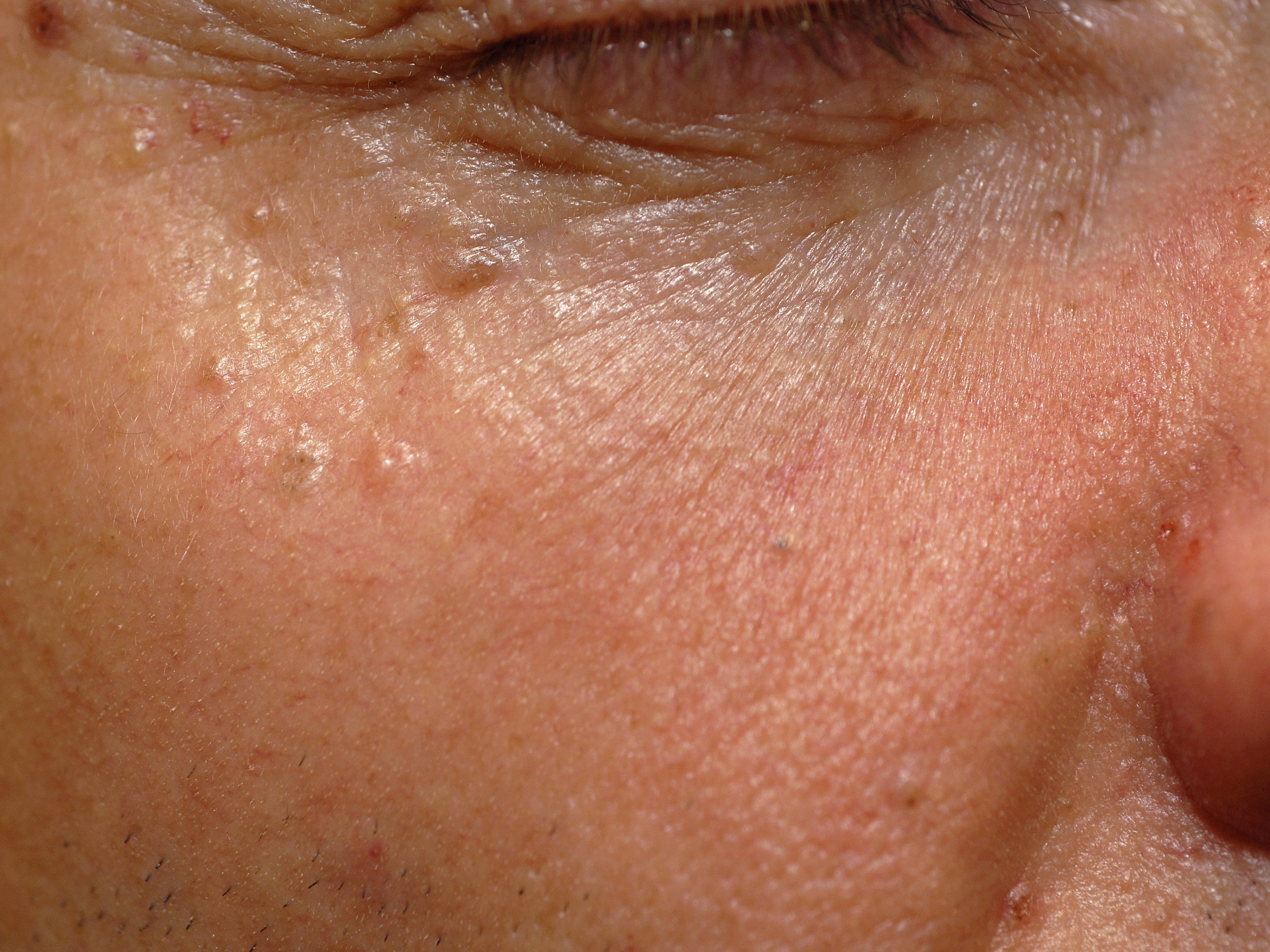
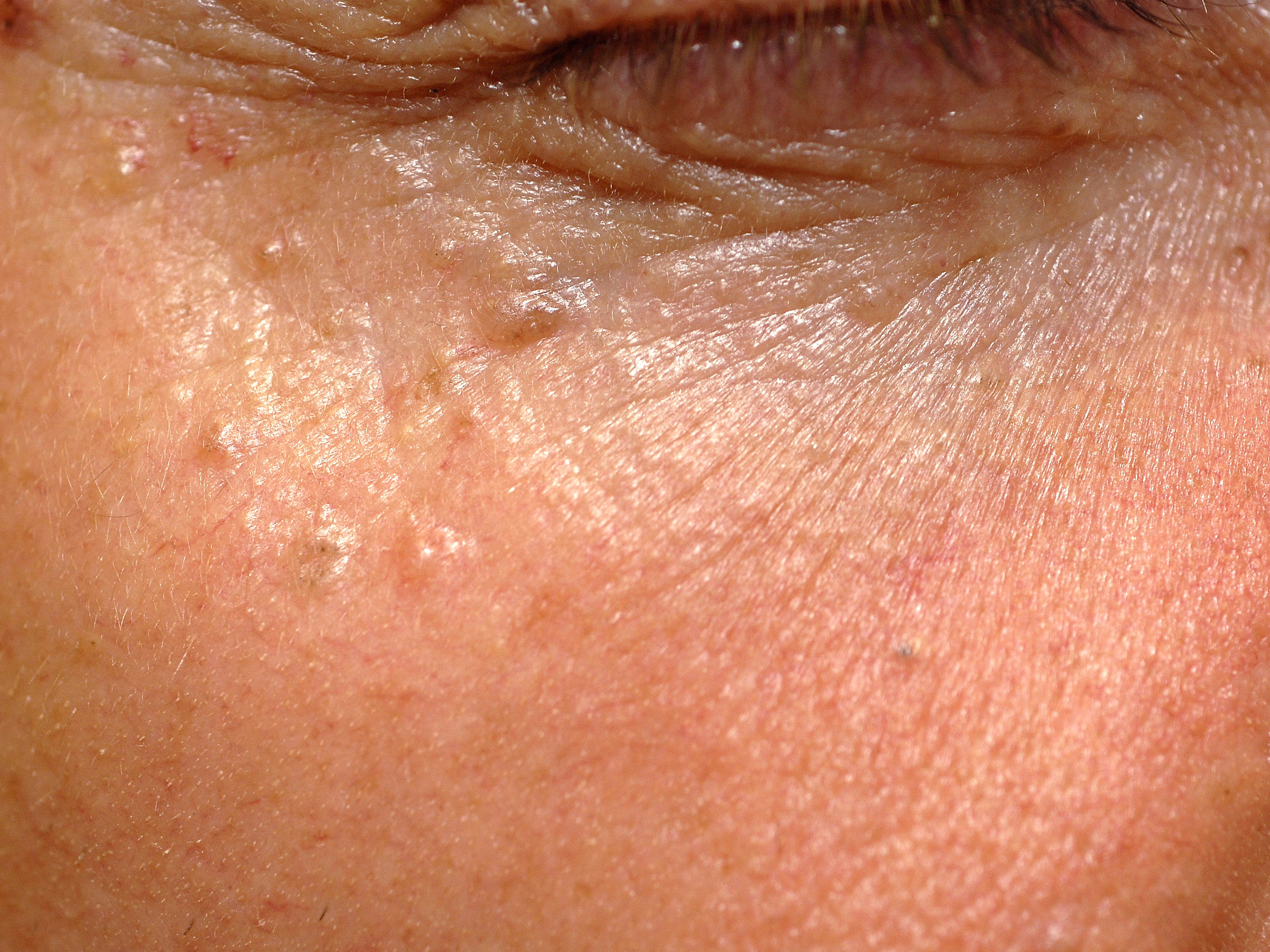
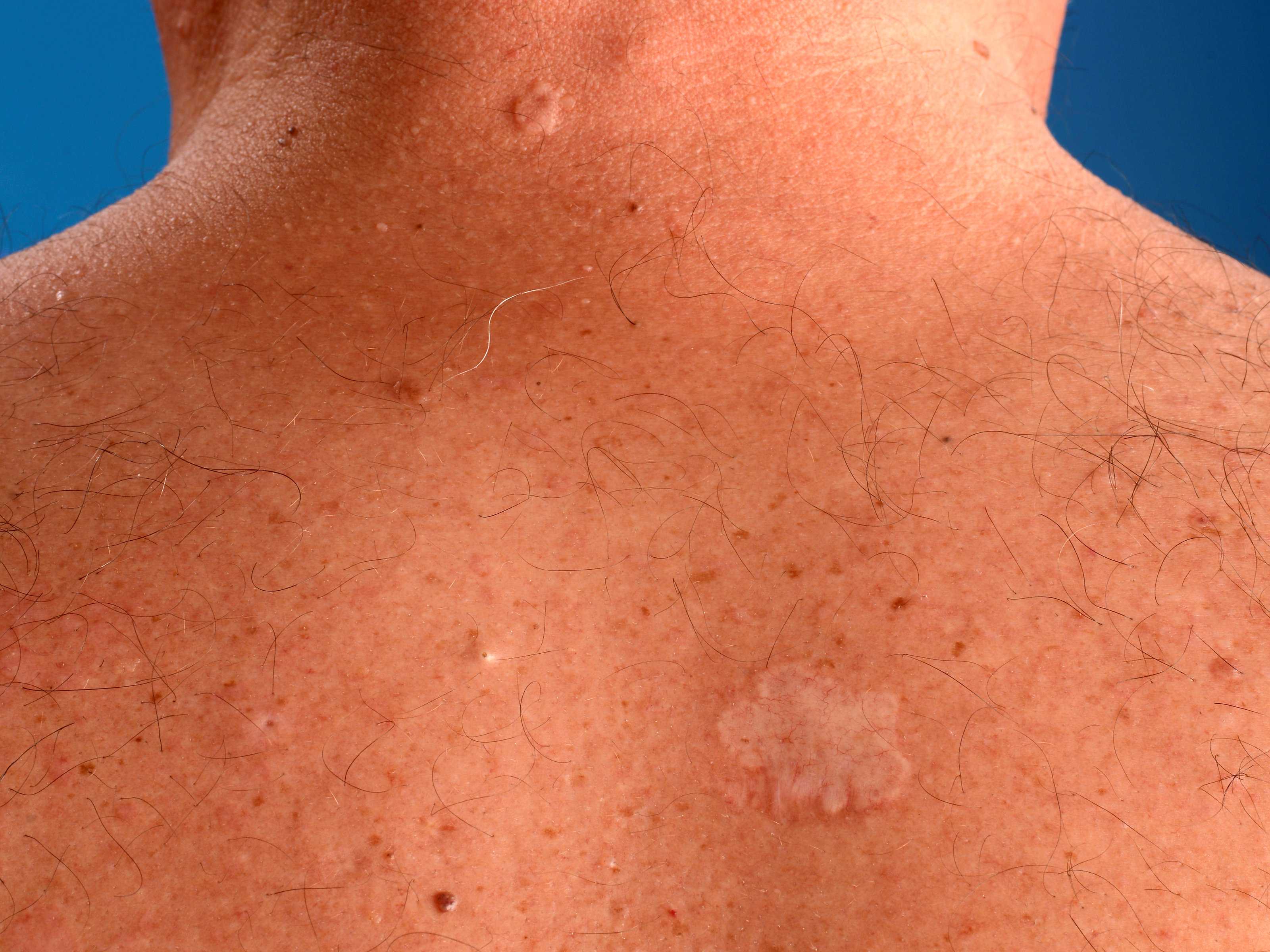
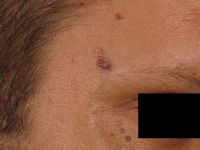
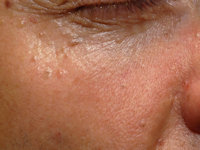
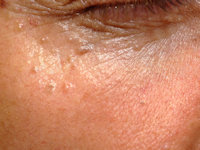
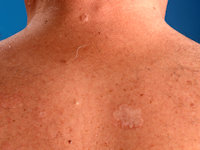
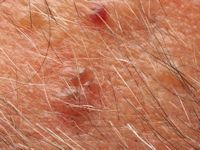
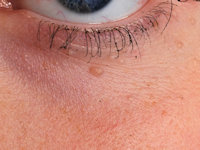
People with basal cell nevus syndrome develop many basal cell carcinomas (a relatively harmless form of skin cancer), and these develop at a young age. Basal cell carcinomas normally don't develop until around age 40, but with basal cell nevus syndrome, they can develop as early as age 10-15. Basal cell carcinomas also look different: they begin as small, skin-colored or light brown bumps that resemble moles. That's why it's called basal cell nevus syndrome (nevus is the medical term for a mole). Basal cell carcinomas can develop anywhere on the body, but are most commonly found on the head, neck, or shoulders. They gradually enlarge and are then easier to recognize as basal cell carcinomas. They develop into small, shiny tumors, skin-colored, red, or brown, and sometimes develop lesions.
 |
 |
 |
| basal cell carcinomas |
basal cell carcinomas |
basal cell carcinomas |
 |
 |
 |
| basal cell carcinomas |
basal cell carcinomas |
basal cell carcinomas |
Other skin abnormalities:
Sometimes small pits develop on the palms of the hands or the soles of the feet. Cysts (small, round swellings under the skin, consisting of sealed cavities filled with sebum or skin flakes) can also develop, varying in size from milia to large.
Jaw cysts:
Cysts (cavities) can develop in the bone of the upper or lower jaw. These cysts are called keratocystic odontogenic tumors. They are benign, but they can grow and damage the bone, and teeth can become crooked. Therefore, they must be removed. This is done by an oral surgeon. The cysts are visible on an X-ray of the jaw.
Other possible symptoms:
A large head, especially a large, prominent forehead, a large lower jaw, and widely spaced eyes.
Rare abnormalities:
| • |
Bone abnormalities in the ribs (widened ribs, chicken chest), the vertebrae (deformities), sometimes abnormalities in the cranial bones, fingers (deformities, short thumbs). |
| • |
Cysts in the skeleton and other organs. |
| • |
Calcifications in the brain. |
| • |
Cleft lip or palate. |
| • |
Eye abnormalities such as strabismus, small eyes, widely spaced eyes, cataracts, involuntary rapid eye movements (nystagmus), abnormalities of the retina or iris |
| • |
Benign connective tissue tumors (fibroids) in the uterus or heart. Fibroids in the heart can cause the heart rate to become dangerously low during surgery under general anesthesia. |
| • |
Brain tumors such as meningioma or medulloblastoma. Medulloblastoma occurs in approximately 5% of patients and can begin as early as age 2. Possible symptoms include epilepsy, decreased intelligence, and other neurological problems. |
HOW DO YOU KNOW IF YOU HAVE BASAL CELL NAEVUS SYNDROME?The diagnosis can be made based on the clinical picture, i.e., the appearance. The diagnosis of basal cell nevus syndrome is very likely if two or more of the following abnormalities are present:
- more than two basal cell carcinomas or one basal cell carcinoma under the age of 20
- odontogenic jaw cysts
- three or more pits in the palms of the hands or soles of the feet
- typical calcifications in the brain
- rib abnormalities
- someone in the immediate family with basal cell nevus syndrome
. The diagnosis can also be made with DNA testing (blood tests). A referral to a clinical geneticist is usually required for this, as they know exactly which tests to order and can also map the family and provide advice.HOW IS BASAL CELL NAEVUS SYNDROME TREATED?The syndrome itself cannot be treated, but basal cell carcinomas can be removed. There are several methods for this. The most common treatment is surgery, which involves cutting out the basal cell carcinoma and then suturing the wound. Other techniques include freezing (cryotherapy), burning (electrocoagulation), and Mohs surgery, in which the basal cell carcinoma is removed as narrowly as possible, in stages, with the edges immediately examined microscopically to ensure that everything has been removed. Superficial basal cell carcinomas can be treated with creams that destroy the tumor cells, such as Efudix cream (5-fluorouracil), Aldara cream (imiquimod), or photodynamic therapy (cream plus light exposure). In very extensive cases, treatment can be performed with tumor-inhibiting drugs (vismodegib and sonidegib). Radiation therapy (radiotherapy) is not recommended, as radiation can cause new skin tumors to develop in patients with basal cell nevus syndrome.
Surgery:
Surgical removal is the most common procedure. The skin is locally anesthetized, and the basal cell carcinoma is excised. A 3mm margin of healthy tissue is also left around the area to ensure complete removal. For large basal cell carcinomas or those that may have spread (spiked growth), a 5mm margin is maintained. The wound is then sutured. The removed tissue is usually sent to a pathology lab to ensure complete removal.
Mohs surgery:
In Mohs surgery, the basal cell carcinoma is first thinly excised, and then the margins of the removed tissue are examined immediately under a microscope. If tumor cells are still present in a margin, this portion is excised more widely, and that tissue is also examined immediately. This procedure is repeated until no tumor cells are visible in the margins. Sometimes multiple rounds are necessary; this removal method can take several hours.
Freezing (cryotherapy)
This method involves freezing the basal cell carcinoma with liquid nitrogen. This is a simple treatment that can be performed without anesthesia. For very large basal cell carcinomas, anesthesia can be administered first if necessary. After freezing, a blister or wound may develop, which can be painful and may result in a scar. No tissue is sent to the pathology lab, so there is no way to check for complete removal. The success rate depends on the depth of the freezing and the doctor's experience with this technique.
Scraping and burning (curettage and electrocoagulation)
With this method, the basal cell carcinoma is first scraped away with a sharp instrument after local anesthesia, after which the base is electrically cauterized using an electrocoagulation device. The heat from the electrocoagulation kills all tumor cells and simultaneously acts as a hemostatic barrier. A wound may develop after treatment, which can be painful and may result in a scar. No tissue is sent to the pathology lab, so there is no way to check whether it has been completely removed. The success rate depends on the depth of the scraping and cauterization, and the doctor's experience with this technique.
Photodynamic therapy (PDT):
Superficial forms of basal cell carcinoma can be effectively treated with photodynamic therapy. In this treatment, the area is treated with a special ointment that makes the malignant cells extremely sensitive to visible light. After this ointment has been in place for several hours, the area is illuminated with a special lamp. This kills the malignant cells, but leaves the healthy cells intact. This results in a beautiful cosmetic result. It can be painful, and sometimes the skin needs to be numbed with injections first.
Imiquimod cream:
Superficial basal cell carcinomas can also be treated with imiquimod cream. Imiquimod cream (Aldara) stimulates the immune system. The immune system cells then eliminate the malignant cells. The cream must be applied to the basal cell carcinoma five times a week for six weeks. Redness, swelling, and flaking of the skin may occur at the application site, and sometimes the skin may also break. These inflammatory symptoms are part of the treatment, but they can sometimes make it difficult to continue for six weeks.
Fluorouracil cream:
Superficial basal cell carcinomas can also be treated with 5-fluorouracil cream (Efudix). This is a cell growth-inhibiting cream. The cream must be applied twice a day for four weeks. The cream causes skin irritation (redness and flaking) and often a superficial wound. Try to continue for the full four weeks. It will get worse at first, but then it will heal.
Treatment with medication
There are medications that can slow the growth of basal cell carcinomas, such as vismodegib (Erivedge) and sonidegib (Odomzo). These medications are used for very large basal cell carcinomas that are difficult to treat by other means. They also work for basal cell nevus syndrome. However, in the Netherlands, they are not registered for this treatment, meaning reimbursement is not regulated. Furthermore, they are very expensive medications, costing approximately €5,000 per month. Another problem is that these medications have many side effects, such as loss of taste, and many patients cannot tolerate them due to these side effects. They cannot be used during pregnancy or before puberty, as bone growth is inhibited. Furthermore, after stopping the medication, the basal cell carcinomas grow back.WHAT IS THE PROGNOSIS OF BASAL CELL NAEVUS SYNDROME?Basal cell nevus syndrome cannot be cured, but the basal cell carcinomas that develop are usually very treatable. Because basal cell carcinomas do not grow very aggressively and do not metastasize to lymph nodes or other organs, the risk of death is very small. However, because so many basal cell carcinomas develop, they gradually enlarge and can grow back after removal, treatment becomes increasingly difficult and burdensome. Nevertheless, it is important to persevere, despite the many painful procedures, and to have all the tumors removed as early as possible, while they are still small.CHECKS FOR BASAL CELL NAEVUS SYNDROMERegular checkups with a dermatologist, for example, every 3 to 6 months, are recommended. This also depends on the rate at which new basal cell carcinomas develop. Keep a close eye on your skin yourself and request an earlier appointment if new spots appear. Children diagnosed with basal cell nevus syndrome at a young age are monitored by a neurologist until the age of 7 due to brain abnormalities that can develop in rare cases. From the age of 8, annual x-rays can be taken by a dentist or oral surgeon to detect jaw cysts. Depending on the other abnormalities that may accompany this syndrome, it may be necessary to consult other specialists, such as an orthopedic surgeon, ophthalmologist, cardiologist, or gynecologist.WHAT CAN YOU STILL DO YOURSELF?Protect yourself well from the sun, as sunlight (UVB radiation) is a major cause of basal cell carcinomas. Avoid sunburn. Use good sunscreen, protective clothing, wear a hat, avoid direct sunlight, and don't use a tanning bed.
Monitor your skin closely and schedule an appointment if new basal cell carcinomas develop.
If you have children: there is a high (50%) chance that they also have basal cell nevus syndrome. Be alert to any associated symptoms and, if necessary, schedule an appointment with a dermatologist or pediatrician. Or have your children tested for DNA. |