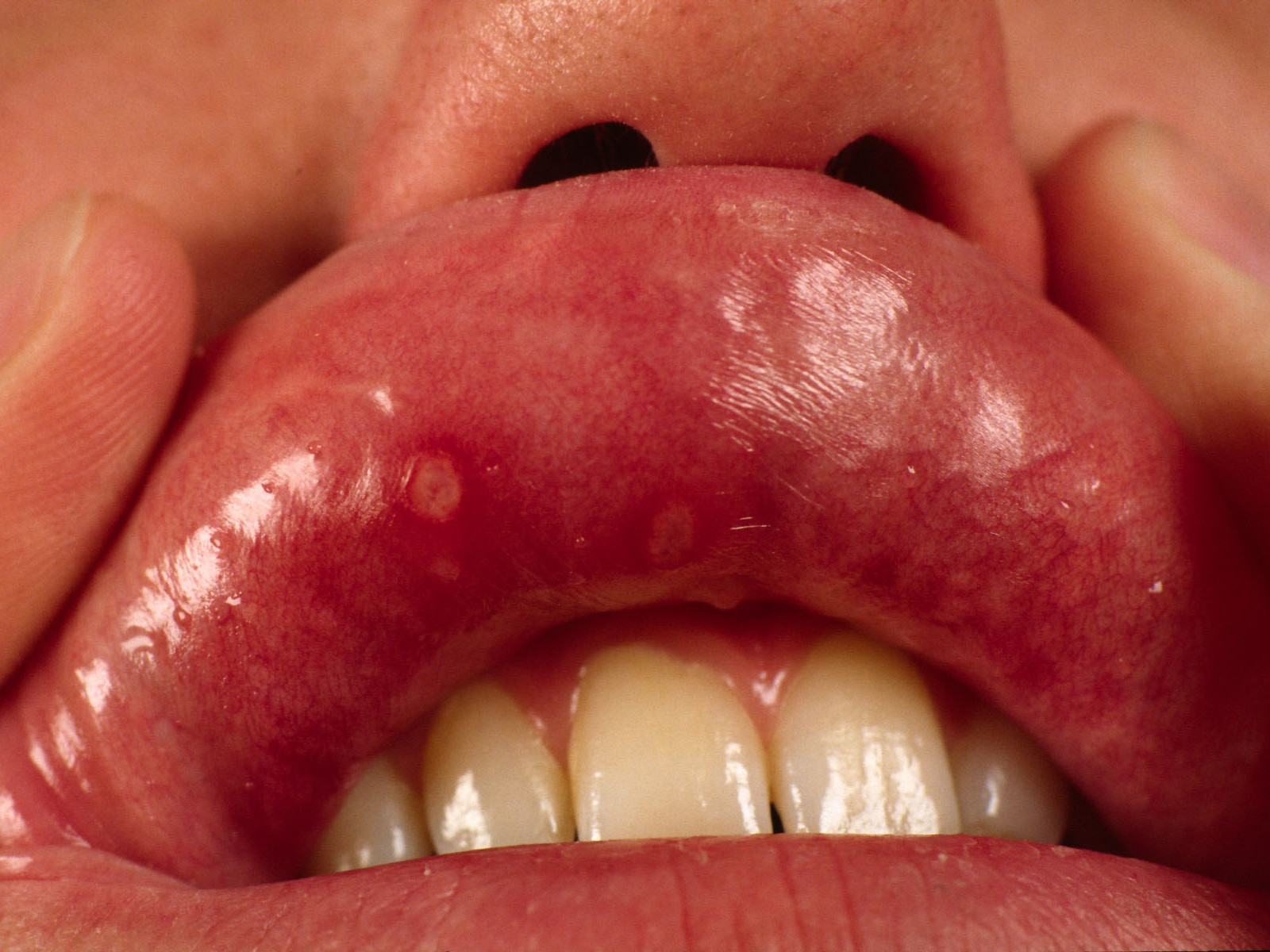
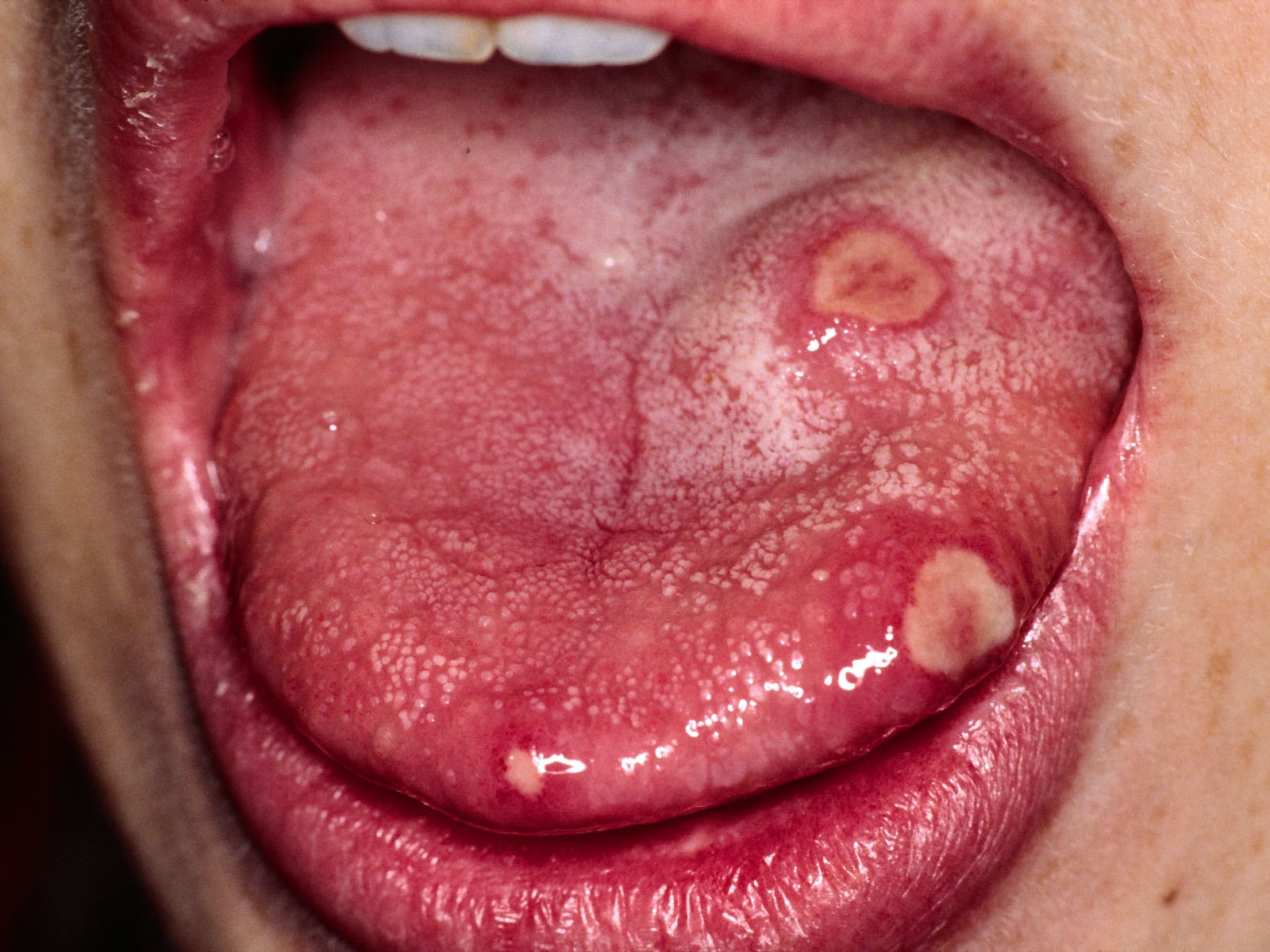
WHAT ARE APHOTHS?Canker sores are small, painful ulcers in the oral cavity, usually with a grayish-white surface and a red border. They can occur in almost any area of the oral cavity, such as the inside of the lip, the cheeks, under the tongue, on the tongue, and on the gums. Canker sores are common, with approximately one in five adults experiencing them. They usually involve one or a few ulcers, ranging in diameter from 3 to 10 millimeters. However, there are also variants where dozens of ulcers can develop simultaneously, or larger ulcers. Canker sores usually disappear spontaneously within one to two weeks, without the need for treatment. In some cases, the ulcers can recur repeatedly, becoming very bothersome.
 |
 |
| canker sore |
canker sores on the tongue |
HOW DO CANKER HEAT DEVELOP?The exact cause is unknown. It is known that superficial mucosal damage (for example, caused by biting the cheek, brushing with a brush that is too hard, sharp edges on teeth or dentures, or eating hard toast or overly spicy food) can develop into an ulcer. However, why an ulcer develops in such cases is unclear. Bacteria in the oral cavity may play a role. There also appears to be a genetic predisposition; in any case, it occurs more frequently in some families. Other possible causes include iron deficiency, vitamin deficiencies (vitamin B12, folic acid), food allergies, infections, and a weakened immune system. In most cases, however, no underlying cause is found.
Ulcers are more common in a number of diseases, including Behçet's disease, which can cause ulcers on the genitals in addition to ulcers in the oral cavity, and in a number of intestinal diseases such as celiac disease (gluten sensitivity), Crohn's disease, and ulcerative colitis.WHAT IS THE BEST TREATMENT FOR APHOTHS?In most cases, no treatment is necessary: the ulcers will go away on their own. Only if there are a large number of ulcers or if they recur frequently does it make sense to try treatment. Various products are available for ulcers, including those available over-the-counter at pharmacies and drugstores, as well as medications that require a doctor's prescription. Not all products have been conclusively proven to speed up ulcer healing or prevent recurrence. The most commonly used products are topical analgesics, antibacterial mouthwashes, and anti-inflammatory agents (corticosteroids).Local analgesicsIf the pain is severe, you can dab the ulcer 4-6 times a day with a cotton swab soaked in an anesthetic liquid or gel (e.g., lidocaine gel). You can also use regular painkillers like paracetamol. Rinsing with an anesthetic liquid just before meals is also an option.Bactericidal/disinfectant mouthwashesDisinfecting mouthwashes reduce the number of bacteria in the mouth. Examples include chlorhexidine mouthwash (Corsodyl, chlorhexidine mouthwash 0.2% FNA), chlorhexidine lozenges (Hibitane), hydrogen peroxide, sodium perborate (Bocasan), and tetracycline mouthwash 5% FNA.Anti-inflammatory drugs (corticosteroids)These agents suppress the inflammatory response in and around the ulcer, thereby reducing pain.
Special corticosteroid ointments, gels, and sprays are available for use in the oral cavity, in various strengths. They can have side effects (for example, overuse can lead to fungal overgrowth in the oral cavity) and are available by prescription only.Other resourcesOther remedies include Pyralvex, a topical solution containing salicylic acid, and Zendium, an enzyme-based toothpaste that has been shown to be beneficial for canker sores.
In rare cases, where many painful ulcers are present, it may be necessary to take powerful anti-inflammatory medications for a short period, such as prednisone, colchicine, or cyclosporine.WHAT CAN I STILL DO MYSELF?It's best to wait patiently for spontaneous healing. You can use a painkiller such as paracetamol if necessary. Avoid touching the ulcers as much as possible; biting or scraping them only slows healing.
If you notice that small wounds or mucous membrane injuries are turning into ulcers, you can take measures to prevent them, such as adjusting your diet and not biting your cheek (Note: if you've used a local painkiller, the sensation in your mouth will also change, making it easier to accidentally bite your cheek or tongue). Avoid hard toast or spicy foods. Brush your teeth gently.
Furthermore, maintain good general health and oral hygiene. A visit to the dentist can be helpful. They can thoroughly examine your mouth for any abnormalities, remove sharp edges on teeth, adjust ill-fitting dentures, and advise you on which techniques and products you might try (hard or soft toothbrushes, regular toothpaste or special toothpaste, such as Zendium). |