| ACANTHOSIS
NIGRICANS |
 |
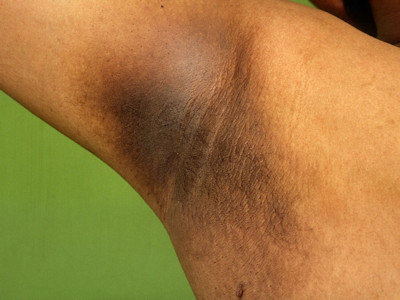
 WHAT IS ACANTHOSIS NIGRICANS? WHAT IS ACANTHOSIS NIGRICANS?
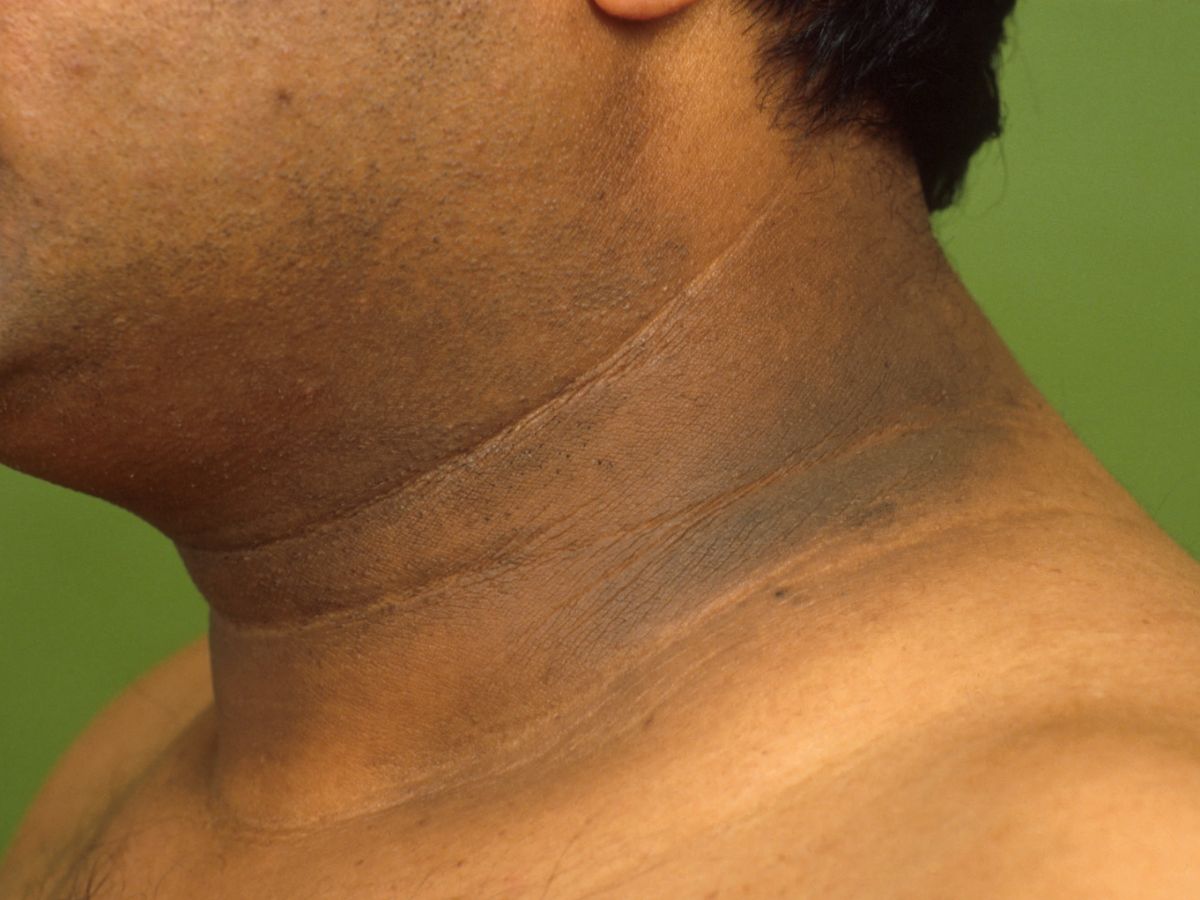
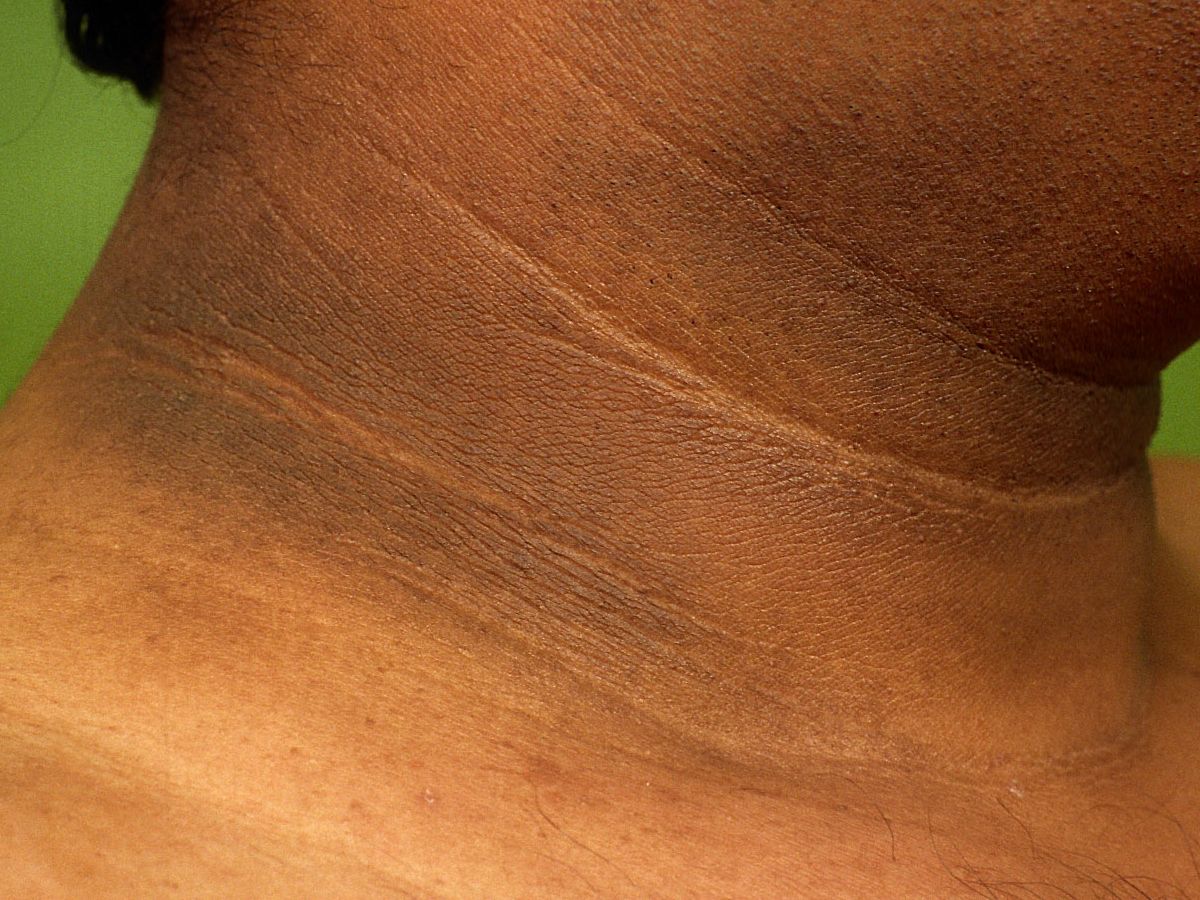
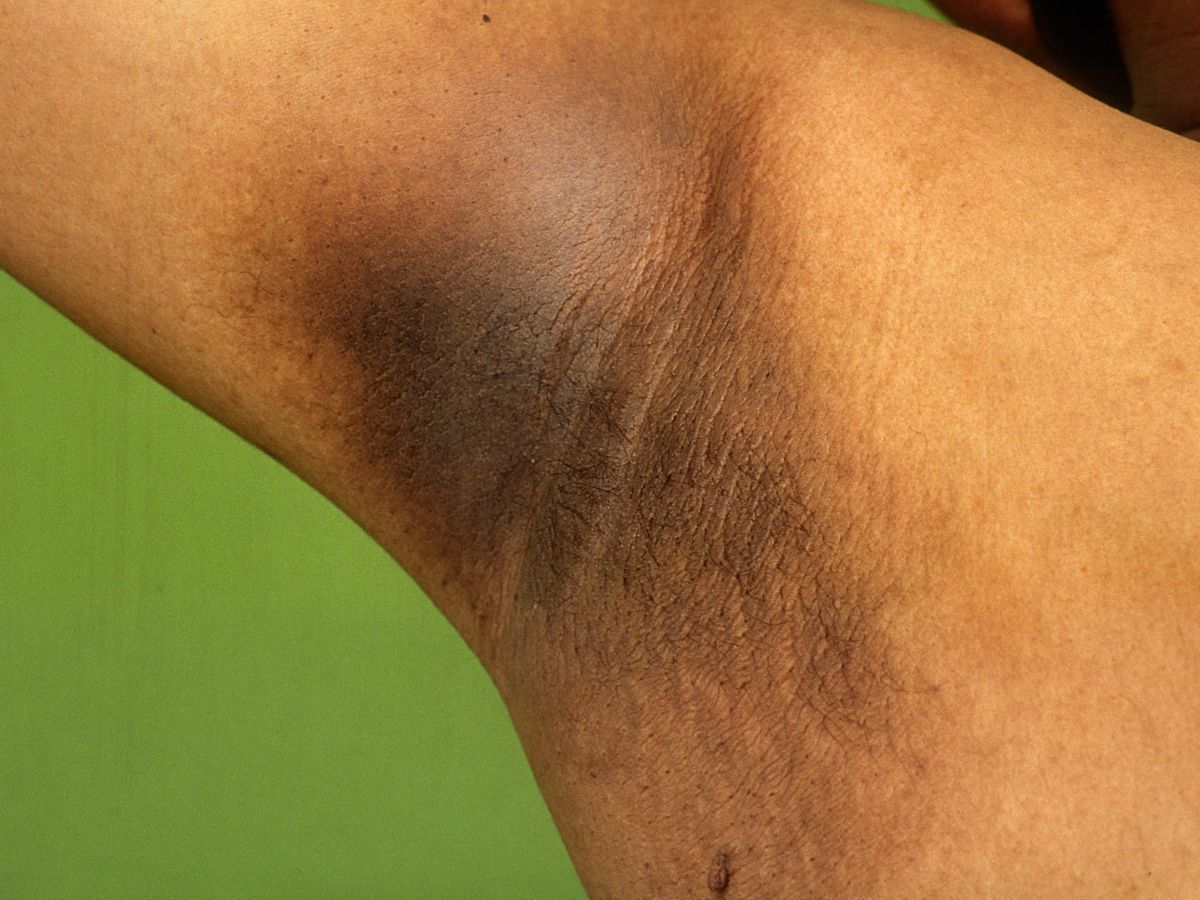
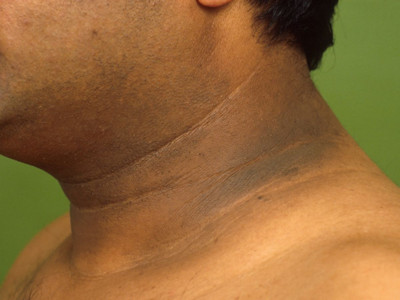
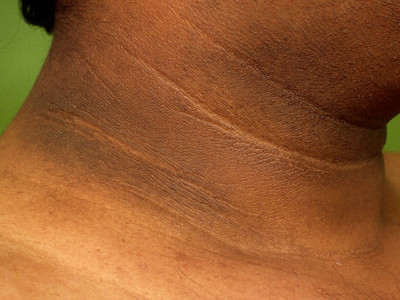
Acanthosis nigricans is a change in the texture
and color of the skin (darkening and
thickening) in the skin folds. The skin feels velvety and
is discolored brown to grayish-brown. It is most
commonly found on the neck and armpits, the groin,
and other skin folds. It is more common in darker
skin tones and is primarily seen in people who are
overweight or have diabetes. It is a harmless
condition, but cosmetically disturbing. It usually
does not cause any symptoms. Sometimes it is itchy.
It can have an unpleasant odor, especially if the
skin is very thick and bacteria accumulate in the
folds. Acanthosis nigricans occurs equally in men
and women and can begin at any age, but usually
after puberty.
 |
 |
 |
|
acanthosis nigricans |
acanthosis nigricans |
acanthosis nigricans |
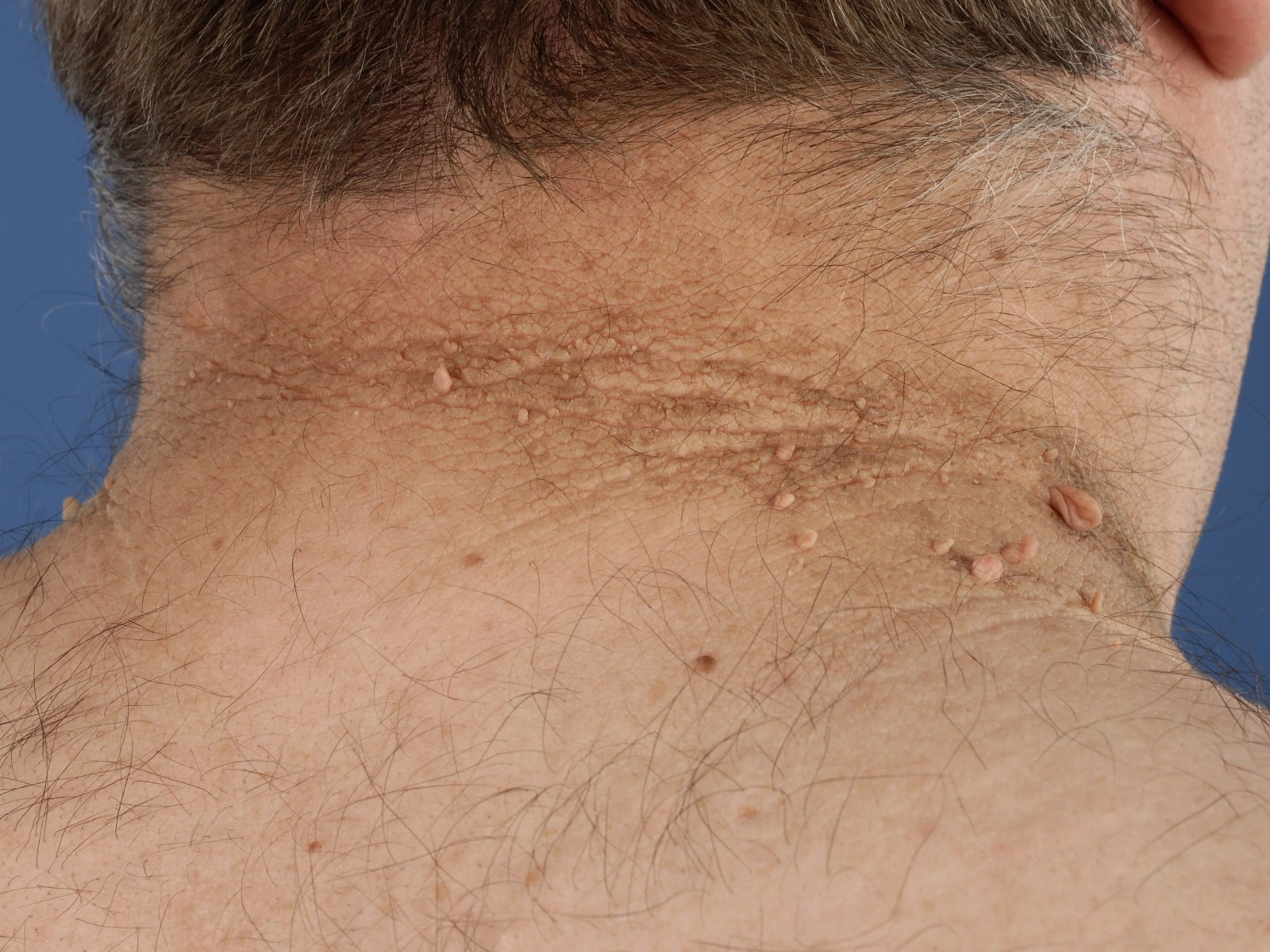
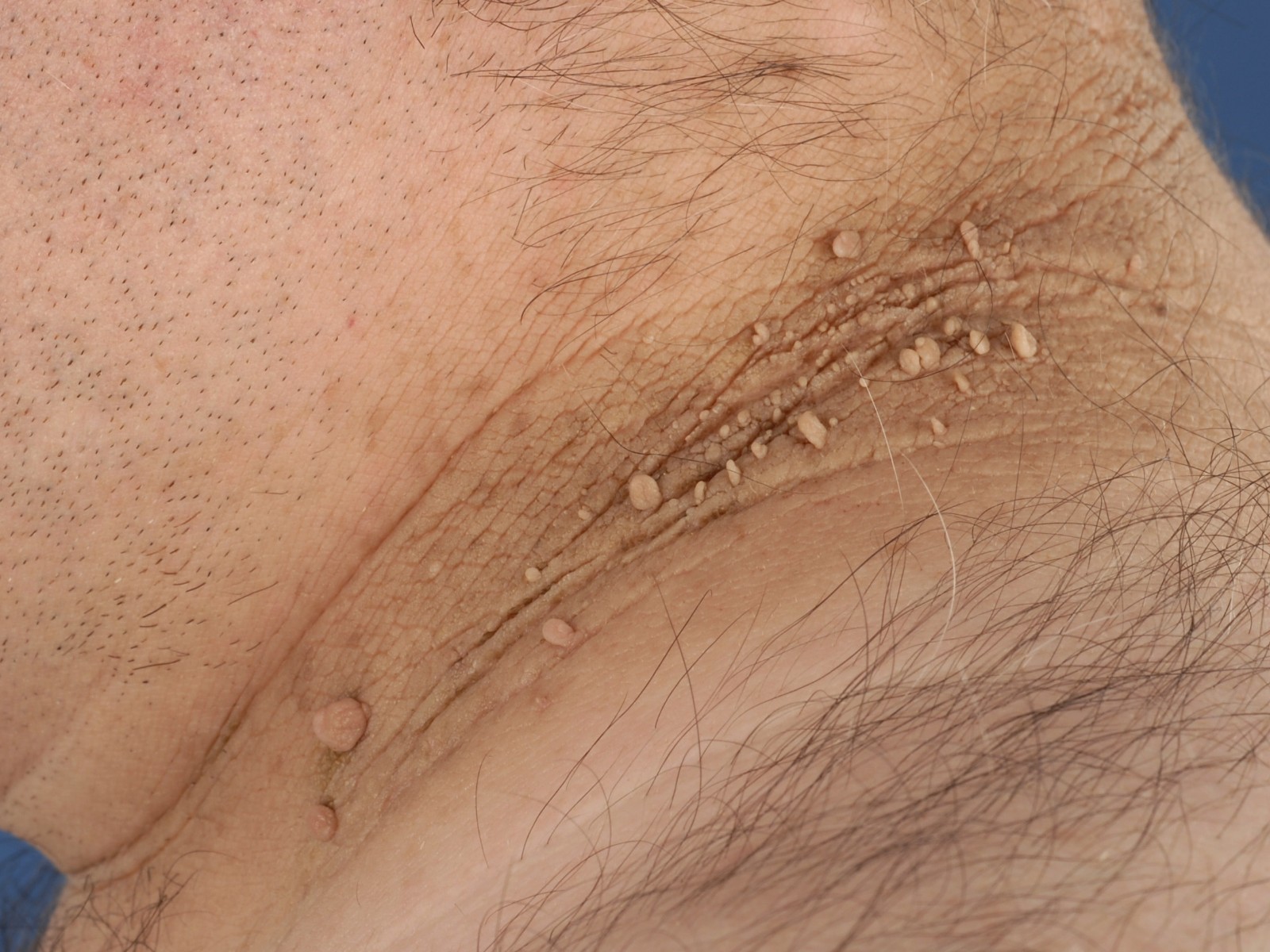
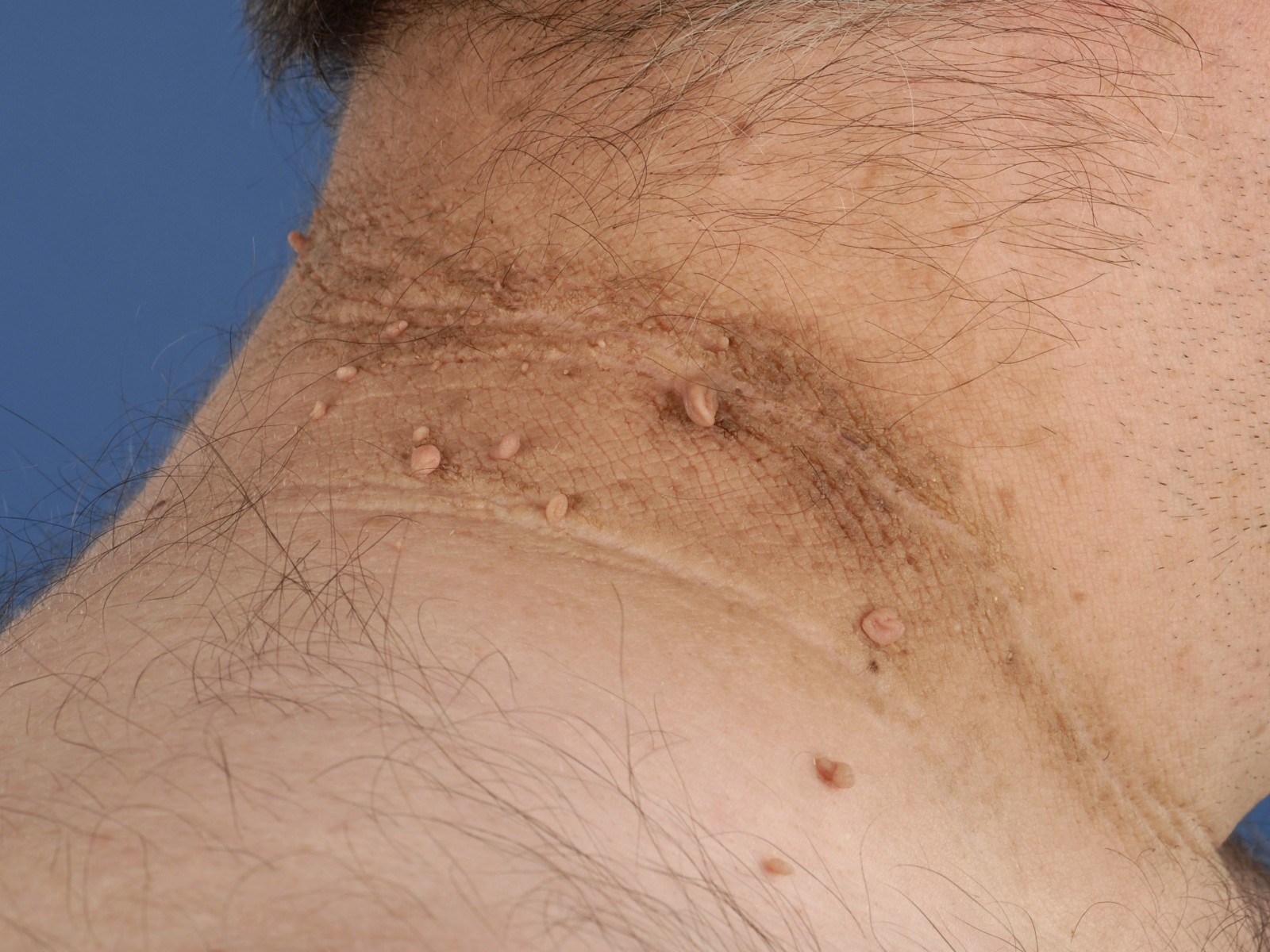
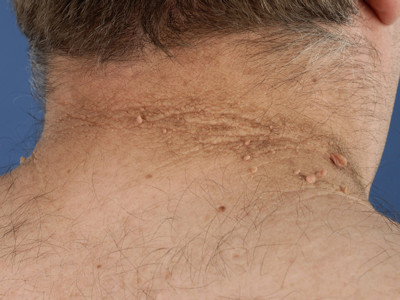
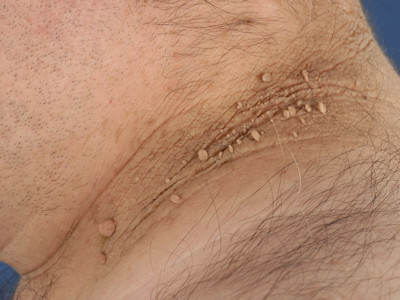
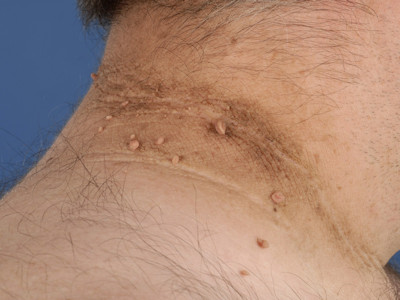
The skin lesions are symmetrically distributed over the body. Sometimes, stalked warts are also present in the acanthosis nigricans areas. These are called skin tags, acrochordons, or fibroma molle. They are small, soft, skin-colored, spherical, or stalked warts.
 |
 |
 |
|
skin tags |
skin tags |
skin tags |
HOW DOES ACANTHOSIS NIGRICANS DEVELOP?
It is believed that skin cells and pigment cells grow under the influence of hormonal changes that occur with obesity and diabetes. Skin cells can be stimulated to grow by growth factors such as insulin-like growth factor (IGF). These growth factors circulate in the blood at elevated levels in people who are overweight and in diseases such as diabetes, metabolic disorders, polycystic ovary syndrome, Cushing's syndrome, acromegaly, metabolic syndrome, and hereditary conditions. Acanthosis nigricans can be hereditary. Acanthosis nigricans can also be caused by medication (usually hormone therapy).
HOW IS IT DIAGNOSED?
The diagnosis of acanthosis nigricans is based on the clinical picture and its appearance. It is a fairly typical condition, and additional testing is rarely necessary. Blood glucose levels can be determined if this has not been done before.
HOW IS ACANTHOSIS NIGRICANS TREATED?
Because acanthosis nigricans is a benign condition with few symptoms, treatment is usually not necessary. Sometimes, for cosmetic reasons, the doctor may ask if something can be done about it. One option is to address the underlying cause. If you are overweight, this means trying to lose weight (this may resolve the abnormalities). In the case of diabetes, glucose levels should be properly regulated. If the condition is caused by medication, discontinue or replace it (if possible).
The stalked warts can be cut off under local anesthesia or treated with electrocoagulation.
The thickened and darkened skin can be treated with topical creams such as vitamin A (tretinoin) cream. This improves the skin's structure and has a mild abrasive effect. It can also cause irritation, in which case it is counterproductive, especially for darker skin, which may react to irritation by darkening.
Another cream that can be used is calcipotriol cream. Calcipotriol is a vitamin D-derived substance that inhibits epidermal cell division.
For significantly thickened skin, scraping off the top layer with a dermabrasion device or removing it with a laser (CO2 laser) can be attempted. This can, however, cause discoloration and scarring.
Scrubbing and abrading the skin is usually counterproductive, only causing the skin to thicken over time.
WHAT ARE THE PROSPECTS FOR ACANTHOSIS NIGRICANS?
Acanthosis nigricans is a chronic skin condition that usually doesn't go away on its own and is difficult to treat. If the underlying cause can be addressed, for example, by losing weight, the condition may disappear. Acanthosis nigricans causes few symptoms. It can be cosmetically disturbing, however. Sometimes it's a symptom of an underlying disease.
|