GENERAL INFORMATION ABOUT THE VNUS TREATMENTYour doctor has suggested treatment for your varicose veins using the VNUS procedure. This procedure involves cauterizing the varicose vein from the inside out. This is a new technique performed under local anesthesia. VNUS is the name of the device used for this procedure, and the full name of the technique is the VNUS Closure Fast procedure . A wealth of information about this procedure is available online, including videos demonstrating the procedure.
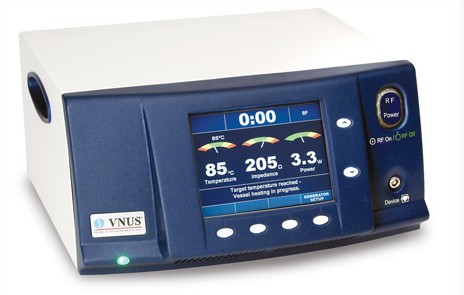
VNUS device that cauterizes varicose veins from the inside.
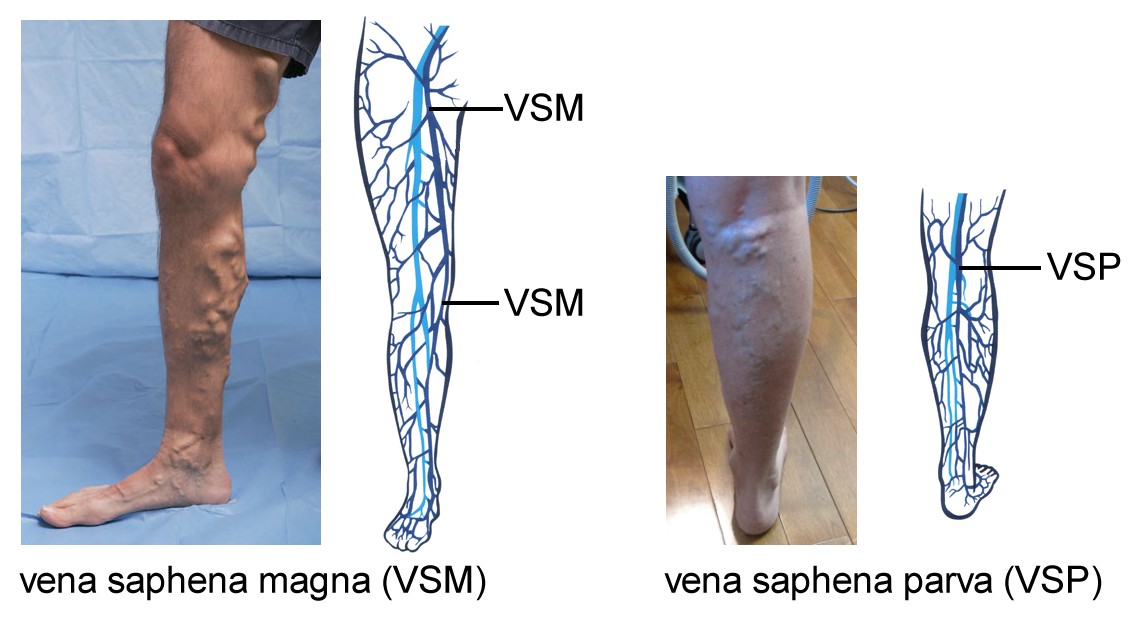
The VNUS procedure is intended for large varicose veins, the so-called cardinal veins. There are two of these: one that runs along the inside of the thigh from the knee to the groin (the great saphenous vein), and one that runs along the back of the calf to the back of the knee (the small saphenous vein).
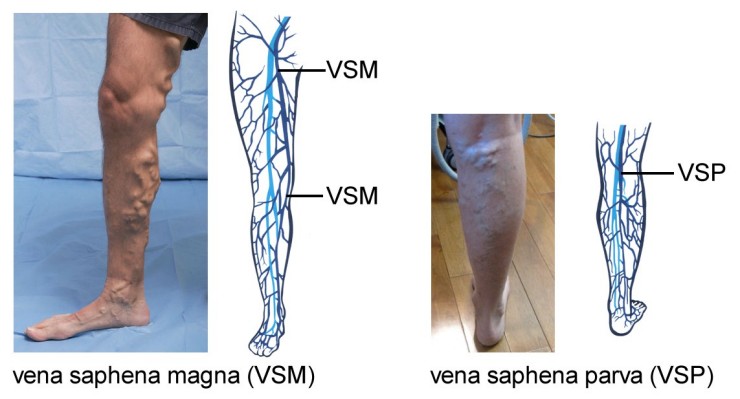
Previously, these veins could only be removed under general anesthesia. They were then pulled out, a process called stripping. The VNUS procedure is the latest technique in varicose vein treatment. The advantage over surgery is that you don't need general anesthesia, there are no major bruises, and you recover much faster after the procedure.
This treatment is suitable for large, straight-line varicose veins. During the VNUS procedure, a wire is inserted into the varicose vein after local anesthesia of the puncture site. Heat is generated within the varicose vein using high-frequency radio waves. This damages the vessel wall, causes the vessel to contract, and in the days/weeks that follow, the leaking blood vessel will completely close.
The VNUS procedure is an outpatient procedure performed at the dermatology outpatient clinic of the Academic Medical Center. Therefore, you do not need to be admitted to the hospital. The treatment is performed under local anesthesia. Proper anesthesia is important. A diluted anesthetic is used for this procedure, a generous amount of which is injected around the varicose vein. This not only provides pain relief but also protects the surrounding tissues in the leg. You will need to wear a bandage day and night for three days after the procedure.
BEFORE THE TREATMENT: Some important points to note beforehand:
| - |
In case of any cancellation, please cancel your appointment as soon as possible! |
| - |
On the day of treatment, you should wear loose-fitting shoes and clothing. Because you'll need to wear a bandage for three days after treatment, tight pants or shoes may not fit. |
| - |
Wear underwear that easily exposes the entire groin. |
| - |
The treatment will be sterile. Sterile drapes will be attached to your leg and groin with adhesive strips. Removing these strips may be painful if you have hair. We recommend shaving the leg to be treated beforehand. |
| - |
On the day of the treatment, you should not apply any cream or ointment to your legs. |
| - |
If you have difficulty lying still, please let us know. We will work with you to find the most comfortable position possible. |
| - |
Driving immediately after the procedure may be difficult due to the bandage. It's best to bring someone with you who can drive you home. |
Pre-treatment examination:
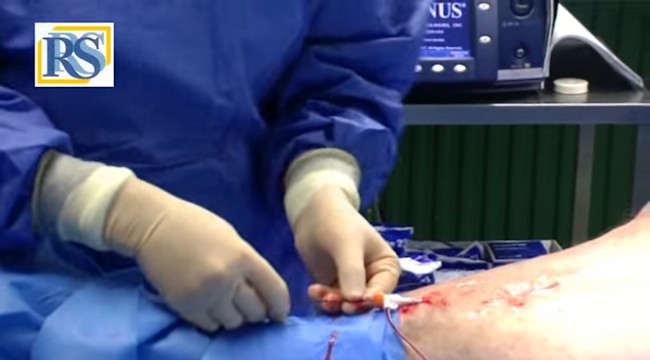
The blood vessel to be treated will be re-evaluated using the duplex ultrasound device (the same ultrasound device used in the previous examination of your legs). It is possible that changes have occurred between the previous assessment and the treatment date, making the VNUS procedure less suitable or even impossible. In that case, we will discuss alternative treatment options or postponing the planned VNUS procedure.THE TREATMENT ITSELFsign offBeforehand, the area to be treated is examined with the Duplex device and marked with a marker. This is done while you are standing. Afterward, you can take a seat on the treatment table. For treatment of the main vein on the inner thigh, you will lie on your back on the operating table in the outpatient treatment room; for treatment of the vein at the back of the calf, you will lie on your stomach. Expect to remain in the same position for at least half an hour, so it is important that you are positioned correctly! The leg to be treated will then be disinfected and covered with sterile drapes.to punctureThe doctor will administer a small injection of pre-anesthetizing sedation at the site where the vein will be accessed: for the internal vein (VSM), near the knee, and for the posterior vein (VSP), low in the calf. The vein is then punctured with a needle while the doctor monitors the vein on the Duplex. This is often the most difficult part of the procedure for the doctor, especially if the vein is narrow. The puncture can sometimes be a little sensitive.Inserting a VNUS wire into the varicose veinOnce the vein is punctured, a guide wire is inserted. A thicker tube is then threaded over this, and the treatment catheter is then inserted through this tube, either from the knee to the groin, or from the calf to the back of the knee.Inject anesthetic fluid around the barrelNext, the entire area around the treatment catheter in the vein is locally anesthetized. This means you will receive a series of injections along the inside of your leg (VSM) or across your calf (VSP). These injections are generally not considered very painful. The fluid that is generously injected with this injection not only provides anesthesia, but also acts as a kind of coolant around the vein, protecting the surrounding tissue from the heat of the treatment catheter. The leg is only locally anesthetized and is not temporarily paralyzed. You will be able to walk normally after the procedure.Cauterizing varicose veins from the insideAfter the injections are administered, the treatment actually begins: the treatment catheter is turned on. Using radio waves, the tip of the catheter is heated to 120 degrees Celsius, effectively sealing the vein from the inside out. You should not feel any pain or heat at this point. If you do experience pain or heat during the treatment, it is crucial that you report it immediately so the doctor can interrupt the procedure to inject some more anesthetic. The catheter is gradually withdrawn, and the treatment is completed a few minutes later.Video of the VNUS procedureSeveral videos about the VNUS method can be found on YouTube. Below is a link to a good video from the Refaja Hospital in Stadskanaal, which explains the procedure in Dutch:
film: VNUS closure procedure (endovascular radiofrequency ablation of varicose veins)
AFTER THE TREATMENTThe puncture wound will be covered with a bandage, which will remain in place for three days. After the procedure, you will receive an anti-thrombosis injection to reduce the risk of a thrombosis in your leg.
You may dress and walk out of the treatment room after the procedure. It is advisable not to drive yourself after the procedure, so please bring someone with you to drive you home. The anesthetic may leak back from the leg after the procedure, causing the bandage to become slightly moist, sometimes with a spot of blood. This is harmless.
You must wear the bandage day and night for three days. Please do not shower with the bandage on.Move:After the procedure, try to walk a few times a day. Exercise is good, but "everything in moderation." Avoid strenuous sports such as cycling or running for the first week after the procedure. Afterward, you can resume your normal activities. Also, avoid swimming, prolonged baths, or saunas for the first week, due to the risk of wound infection.Pain:You may experience a pulling sensation in the treated area for 1 to 2 weeks. Pain after the VNUS procedure is rare. However, if you do experience pain, you may take 500 mg of paracetamol four times a day as needed.
If you experience persistent leg pain despite taking paracetamol, or if there is redness and/or swelling in the treated leg, please contact the AMC Dermatology Department immediately: tel: (020) 566 2530.Check-up appointment:After the treatment, you will make a follow-up appointment at the appointment desk.
Follow-up appointments are scheduled two weeks after the procedure, and only as needed afterward.
Possible side effects/complications of the VNUS procedure:
| - |
Bruising (a bruise) around the injection site. This will disappear on its own. |
| - |
Pain and/or redness at the treated vein in the 1st week after treatment. |
| - |
Sometimes (rarely) a small nerve branch of the skin can be heated by the catheter, causing a (temporary) numbness or tingling sensation. This usually subsides on its own, but in very rare cases it is permanent. |
| - |
Superficial thrombosis. Approximately 5 to 10% of people may experience an inflammatory reaction (thrombophlebitis) in the treated vein or a branch of it after treatment. The leg will feel warm and painful and may be slightly red. This inflammatory reaction is painful but not dangerous and will subside on its own over the course of days or weeks. To relieve the symptoms, you may use painkillers (preferably NSAIDs such as diclofenac or ibuprofen, due to their anti-inflammatory effect). |
Are varicose veins still visible?
The large veins treated with the VNUS method are not on the surface of the leg, but slightly deeper. If you have visible varicose veins on the outside of your leg, the treatment will not completely eliminate them, but they will become less swollen because there is less pressure on them. If varicose veins remain after 3-6 months, additional treatment is necessary, for example, sclerosing or removing the veins under local anesthesia through small incisions (Muller procedure, phlebectomy/convolutectomy).
If you have a predisposition to developing varicose veins, new varicose veins can unfortunately sometimes reappear after several years, despite treatment. |