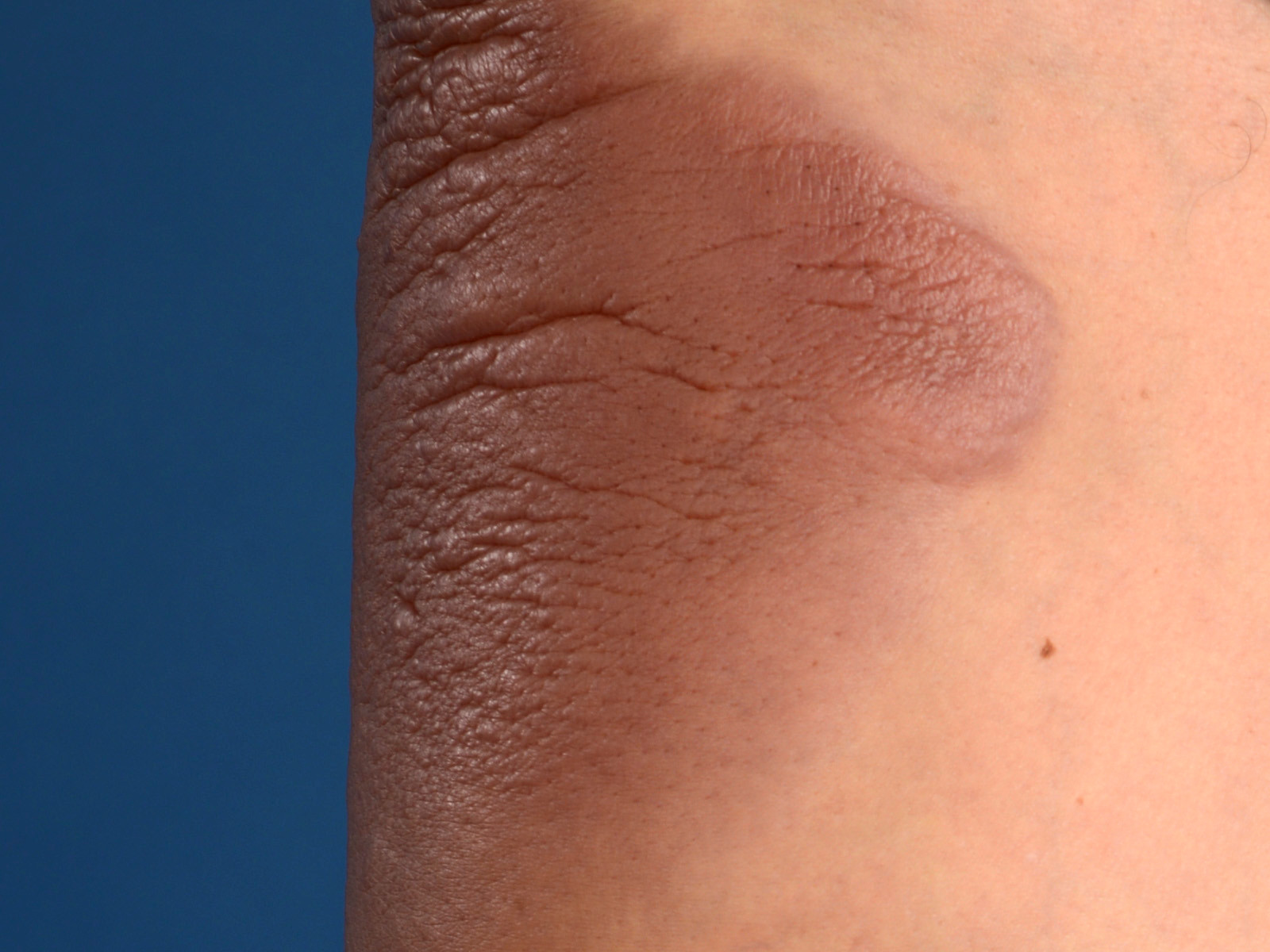
A
lipogranuloma is a less commonly used term for a
granulomatous inflammatory reaction around fat or fatty substances. This can be exogenously introduced fat such as mineral oils, fats (paraffin), or silicone (
silicone granuloma, siliconoma) injected during cosmetic treatments (filling, lipofilling), but also endogenous fat damaged by trauma, inflammation, or ischemia. Lipogranulomas can sometimes develop years after the injection of the material. There are case reports of sclerosing lipogranulomas (paraffinomas) of the penis arising after injection of paraffin, wax, silicone, or oil in an attempt to enlarge the penis.
Clinical picture:Firm, painless subcutaneous
nodules and swellings. Sometimes erythematous. If the material provokes a
severe reaction, an extensive inflammatory reaction can develop with
swelling, redness, warmth, and pain. The skin may show secondary changes,
and sometimes ulcerations or dents can develop because the subcutaneous fat
has been destroyed by the inflammatory reaction.
 |
|
lipogranuloma |
Diagnosis:Biopsy. Sometimes imaging is
necessary.
Therapy:If possible, surgical or
plastic surgery should remove the material. Intralesional corticosteroids
may be administered.
Author(s):

dr. Jan R. Mekkes. Dermatologist, Amsterdam UMC.
 ICD10: L92.8