|
SEBACEOUS CYST
(EPIDERMOID CYST) |
 |
 WHAT IS A SEBACEOUS
CYST? WHAT IS A SEBACEOUS
CYST?
A sebaceous cyst
(epidermoid cyst, epidermal cyst, pilar cyst) is a
dome-shaped swelling, partly located under the skin,
that develops when the opening of a hair follicle
becomes blocked. A small sac then forms under the
skin filled with debris that cannot escape. This sac
(also called a cyst) gradually grows larger. These
types of sebaceous cysts are very common. They are
harmless, but they can become very large.
 |
 |
|
sebaceous cyst |
sebaceous cyst |
 |
 |
|
sebaceous cyst |
sebaceous cyst |
WHAT DOES IT LOOK LIKE?
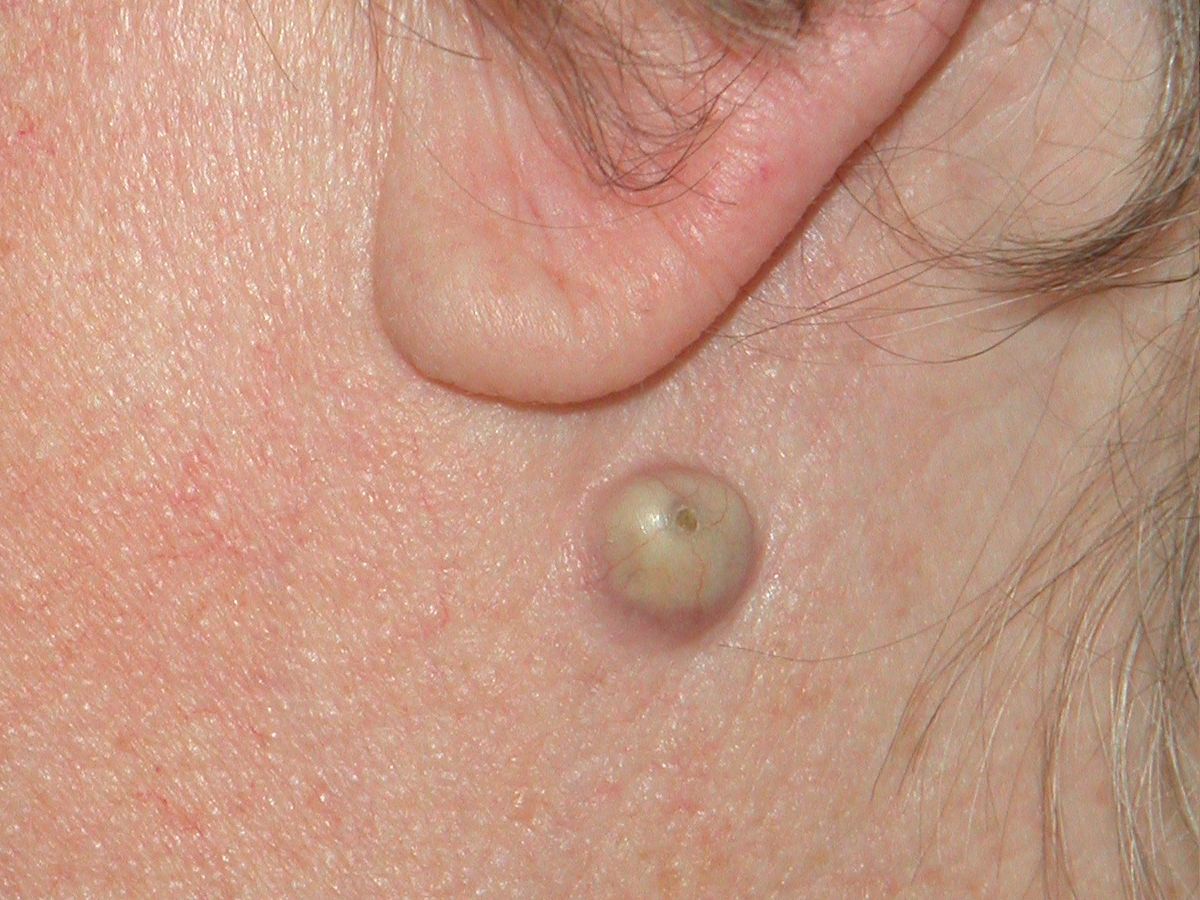
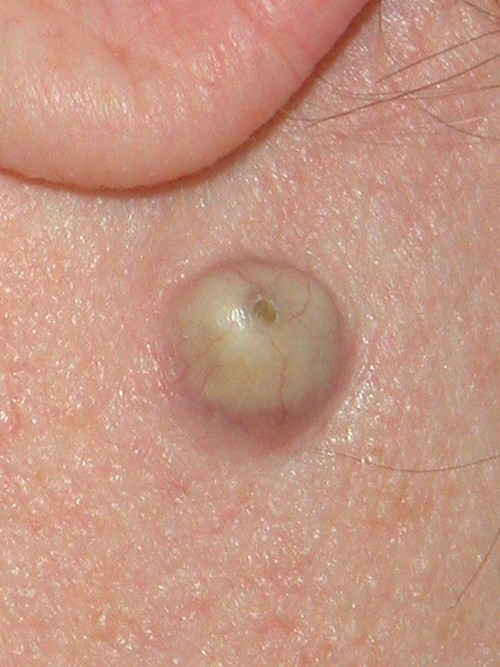
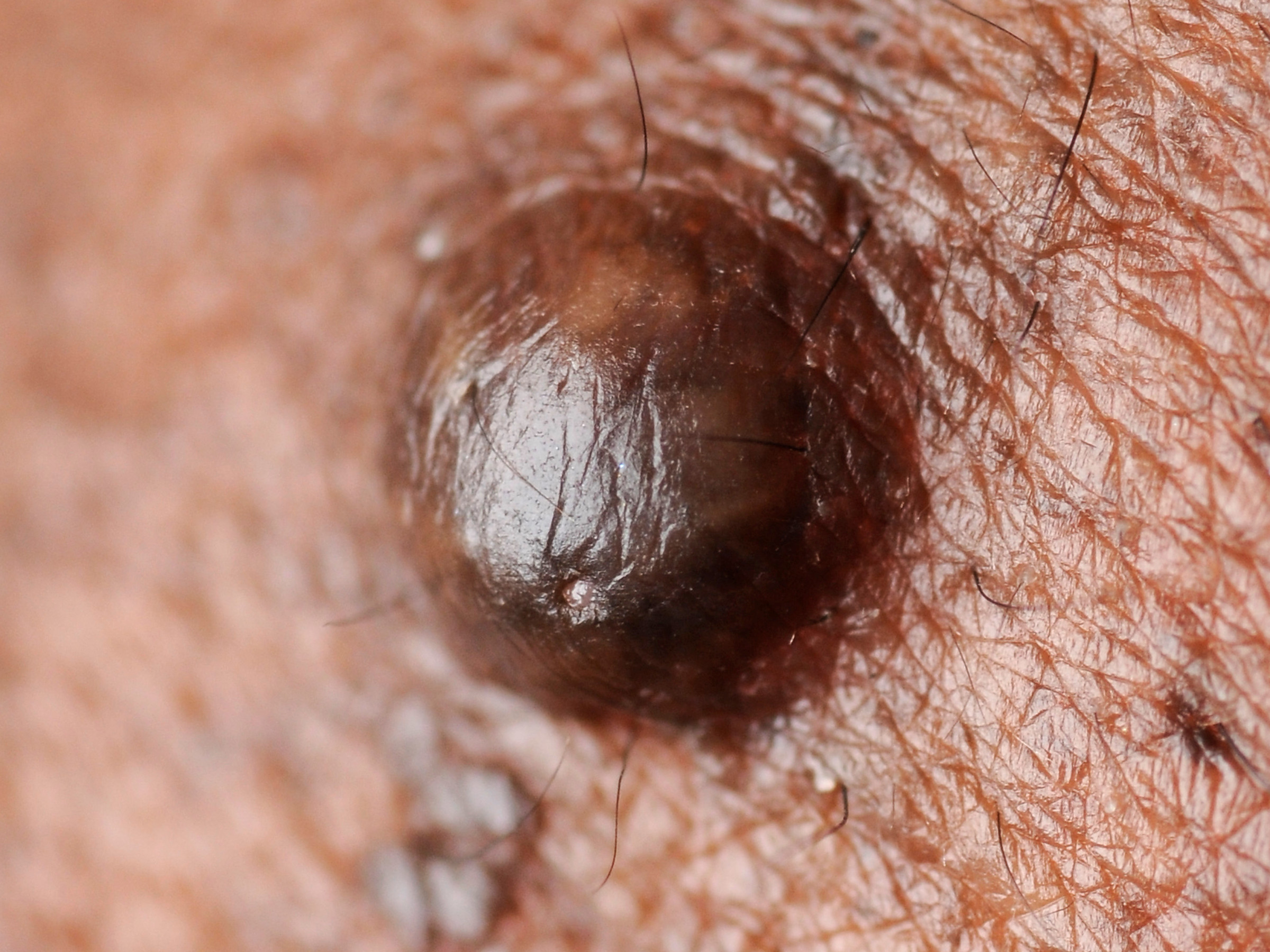
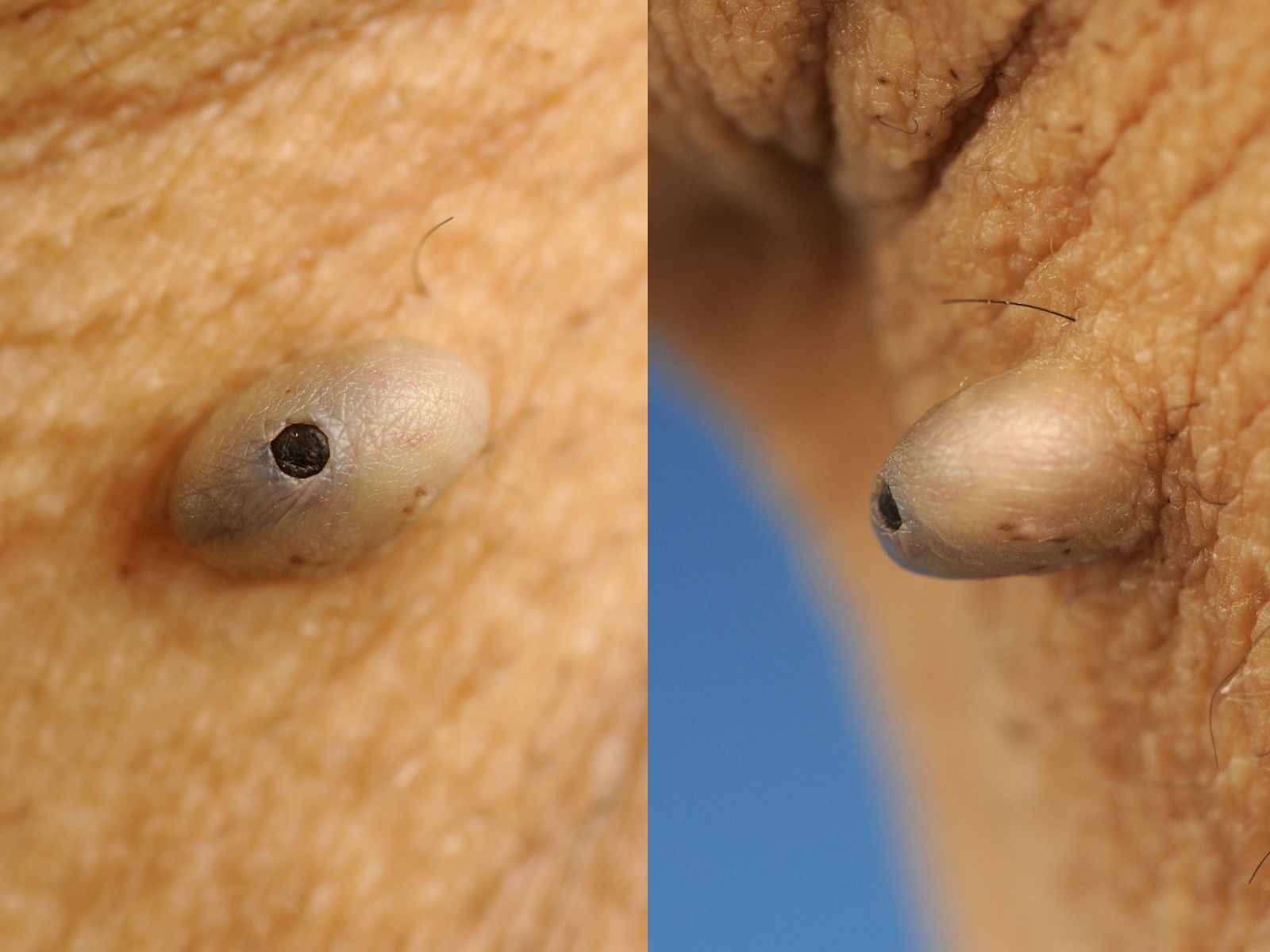
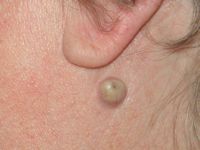
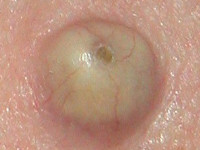
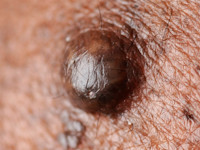
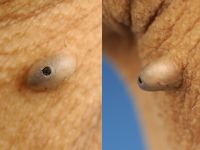
A sebaceous cyst is a round, hard swelling,
skin-colored, sometimes yellow-colored, part of
which is under the skin. Sometimes a central point
is visible, the original opening of the hair
follicle that has become blocked. Some patients have
multiple cysts. The size varies from 0.5 cm to
centimeters. They can occur anywhere on the body
where hairs grow, even on the scrotum. But they
are most commonly found on the face, scalp, neck,
chest, and back, and sometimes on the arms and legs.
The cysts mainly develop around the age of 30-40 and
are approximately twice as common in men as in
women. Usually, the cysts do not cause any symptoms.
However, if they become very large, they can cause
pain or be cosmetically unsightly. A sebaceous cyst
can also become inflamed due to bacteria entering
it. The skin then becomes red, swollen, and painful.
Pus may leak, and sometimes the infection is so
severe that fever occurs. If they rupture, either
spontaneously or through an incision, a large amount
of sebum and scales escape, a cheesy substance that
can smell very bad. They can also burst in the wrong
direction, under the skin, and cause a painful
inflammation.
HOW DOES A SEBACEOUS CYST DEVELOP?
A sebaceous cyst develops when the duct of a
hair follicle becomes blocked. This can happen
spontaneously, but also after an infection (a
pimple) or due to skin damage. Hair follicles are
connected with a sebaceous gland. This gland
produces sebum, a type of oil that lubricates the
skin. The sebum cannot escape and accumulates. The
inside of the hair follicle is lined with skin
cells. Skin cells divide and die over time. They
then become a skin flake that falls off. But if the
hair follicle's duct is blocked, these skin flakes
can't escape. The blocked hair follicle then fills
with more and more skin flakes and sebum. The sac
grows larger and larger. It doesn't break easily
because its wall is strong. This is how a cyst
develops. Besides sebum and skin flakes, it can also
contain bacteria, and pus if it becomes inflamed.
HOW IS THE DIAGNOSIS MADE?
The
diagnosis is made on the clinical picture.
HOW ARE SEBACEOUS CYSTS TREATED?
Small cysts that do not cause any symptoms do not require treatment.
Cysts that are very large, cosmetically disturbing, or inflamed can be removed with a minor operation under local anesthesia. First, an anesthetic (lidocaine) is injected into the skin around the blocked opening. Then, a small incision is made (or a round hole is punched) over the swelling, just large enough to remove the sac. Sometimes,
especially on the scalp, the sac comes out very easily, as an intact, firm ball. However, it can also be difficult to remove the entire sac.
Often the sac ruptures, releasing a large amount of sebum and other debris, and has to be pulled out in pieces.
The doctor always tries to remove the entire cyst. If a piece of the cyst wall remains under the skin, it can sometimes develop into a new cyst later, or cause an infection. Removing the entire cyst wall can be difficult, especially if the cyst has been infected before. After the procedure, the wound can be left open or closed slightly with a few stitches.
A small scar may remain from the incision. A wound infection can also develop after the procedure.
For severely inflamed atheroma cysts, a course of antibiotics is sometimes given. If there is a lot of pus in the cyst, an incision can be made to drain the cyst. This relieves the pain. Later, when the condition has subsided, surgery can be attempted to remove the sac completely.
WHAT IS THE PROGNOSIS?
Atheroma cysts usually don't disappear spontaneously. Opening and
draining them has a temporary effect; the only truly effective treatment is surgical removal. One surgery is usually sufficient; occasionally, an atheroma cyst can return in the same location. If the cyst is completely removed, it will not return. New cysts can, of course, develop in other locations. Surgery may leave a scar, or a dent in the skin if it was a very large cyst.
WHAT CAN I DO ABOUT IT?
Don't try to squeeze the sebaceous cyst yourself. There's a risk that the cyst will rupture under the skin and cause inflammation.
|