|
ROSACEA |
 |
 WHAT IS ROSACEA? WHAT IS ROSACEA?
Rosacea is a common chronic skin condition that
affects the face. The main characteristic of rosacea
is redness in the middle of the face. Rosacea
literally means 'red as a rose'. Often, small
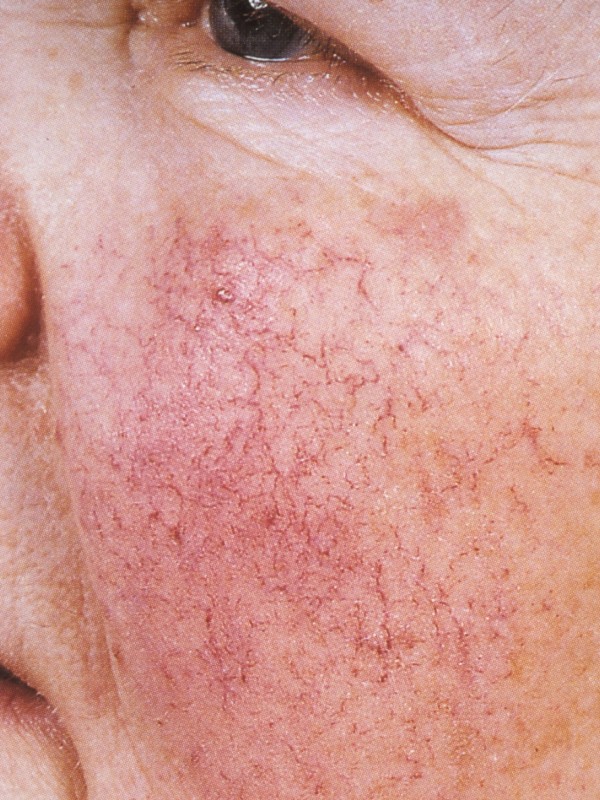
dilated blood vessels are visible (this is also known as couperose), as well as bumps and pimples.
Rosacea can resemble acne, the well-known teenage pimples. However, rosacea occurs at a later age than acne, usually around the age of 30. Sometimes it develops as early as childhood. It occurs equally often in men and women.
Eye disorders are common in rosacea and can range from mild to severe. Rosacea is a persistent condition that can be treated effectively. However, after discontinuing treatment, it often slowly returns. It is not a serious condition, but it is cosmetically disturbing. Rosacea is not contagious.
 |
 |
|
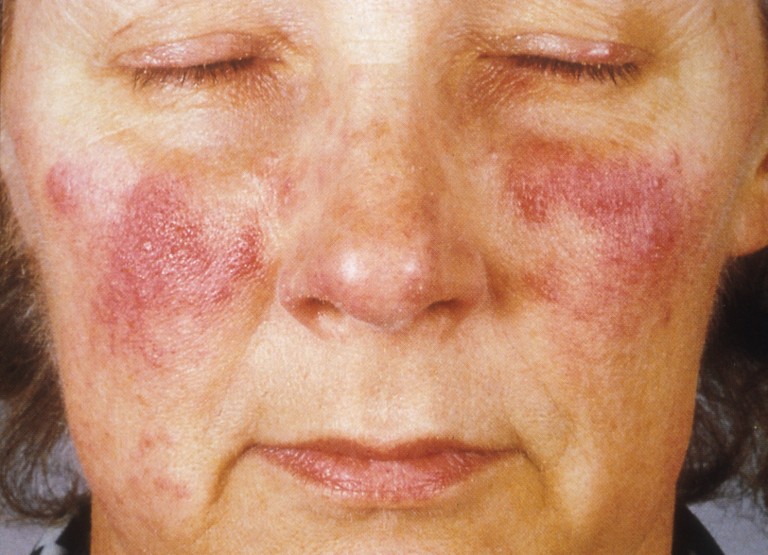
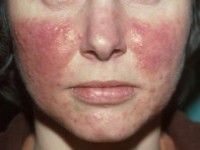
redness |
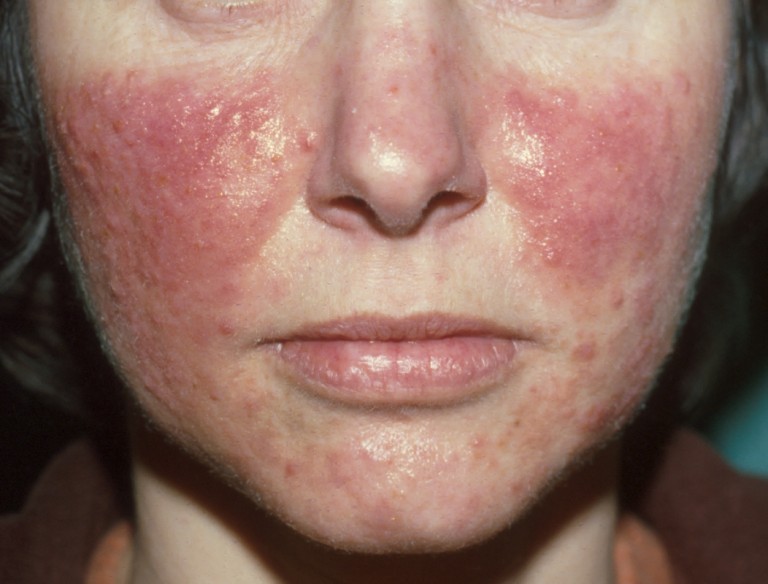
lumps |
 |
 |
|
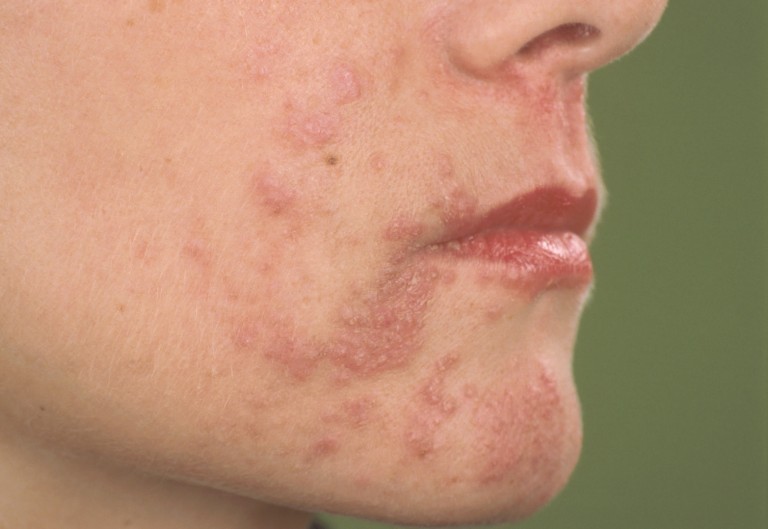
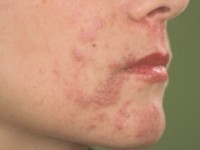
pustules |
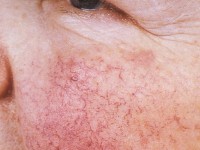
enlarged vessels |
WHAT ARE THE SYMPTOMS OF ROSACEA?
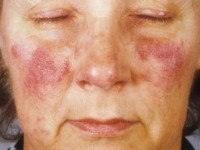
Rosacea mainly affects the cheeks, nose, forehead, and chin. The main symptoms are excessive blushing (temporary redness) with a feeling of warmth, occurring in episodes, persistent redness, bumps, pimples, dilated blood vessels (couperose), a burning sensation, and sometimes itching. The color is usually pinkish red, sometimes slightly purplish red. Blushing can be triggered by emotions, heat, sunlight, hot or alcoholic drinks, hot or strongly spiced foods, and menopause.
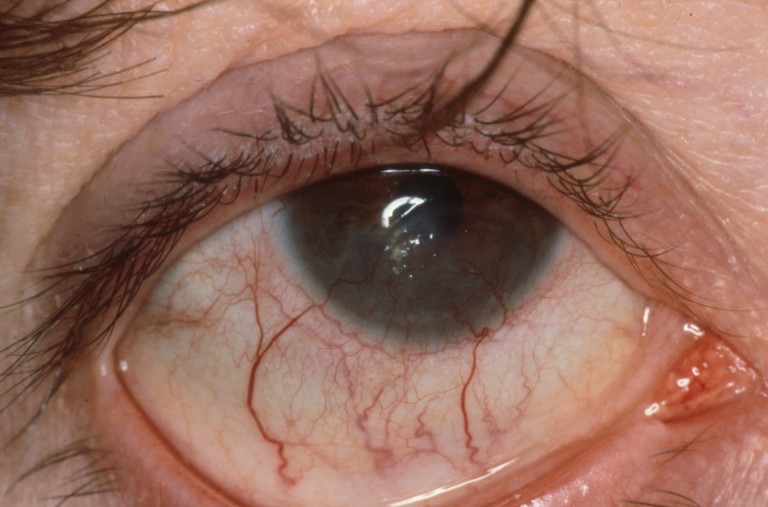
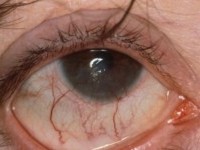
Eye complaints such as dry eyes, a burning or stinging sensation, watery eyes, and a feeling as if there is something in the eye (gritty feeling) are also common. Inflammation of the eyelids (blepharitis) and of the cornea and conjunctiva (keratoconjunctivitis) can also occur.
Sometimes swelling occurs due to fluid accumulation (edema), especially on the cheeks and under the eyes. This usually resolves on its own, but in rare cases the swelling is permanent due to blockage of the lymph vessels (lymphedema). This is also known as Morbihan's disease.
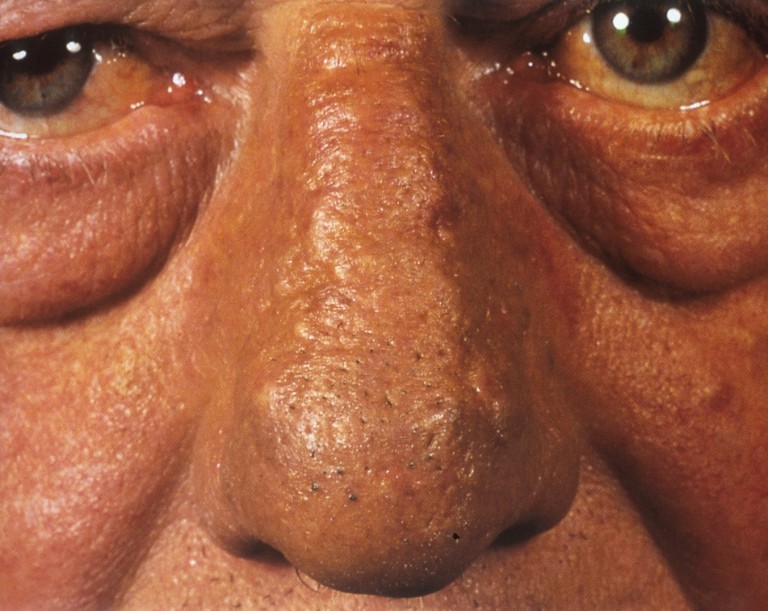
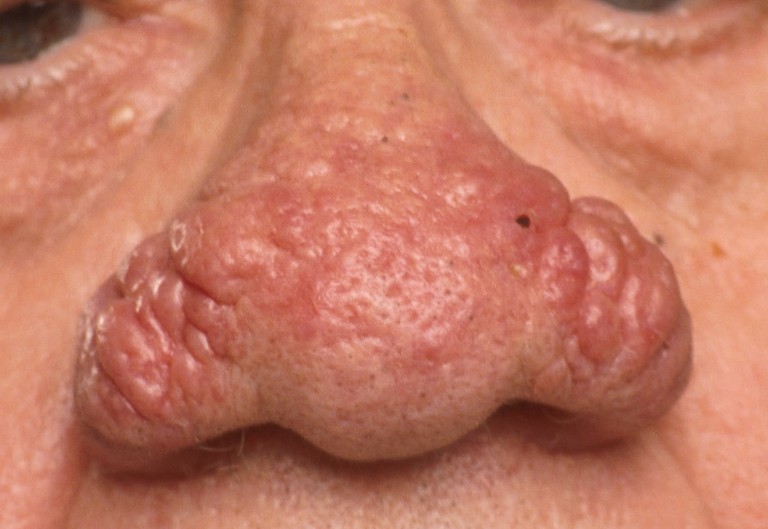
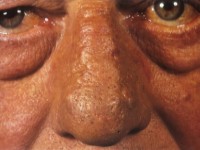
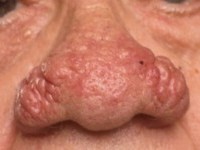
After prolonged rosacea, the nose may change shape, with significant thickening of the skin and lumpy growths. This is called rhinophyma. Rhinophyma is caused by enlargement of the sebaceous glands on the nose and an increase in connective tissue. Rhinophyma occurs almost exclusively in older men. In everyday language, it is also referred to as cauliflower nose or drinker's nose, which is incorrect, as rhinophyma is not caused by alcohol consumption.
 |
 |
 |
| swelling (edema) |
rhinophyma |
rosacea
of the eye |
HOW DOES IT DEVELOP?
The cause of rosacea is unknown. The severity of rosacea can be influenced by external factors, which can increase the symptoms. Examples include heat, sunlight, emotions, cosmetics, skin care products, and certain medications. Medications containing corticosteroids (adrenal cortex hormones) can cause or worsen rosacea, both when taken internally and when applied to the skin. A causal role of nutrition has never been demonstrated; however, (temporary) worsening of the redness can occur due to drinking alcohol and eating strongly spiced foods.
HOW IS THE DIAGNOSIS MADE?
The diagnosis can usually be made on the basis of the symptoms and visible skin abnormalities. Sometimes it is difficult; there are other skin disorders that can cause redness in the face. If there is any doubt, it may be necessary to take a skin biopsy for microscopic tissue examination. A skin biopsy involves removing a small piece of skin, a few millimeters in diameter, under local anesthesia. In rare cases, the dermatologist will perform allergy tests to rule out any additional allergies, for example to cosmetics.
WHAT TREATMENTS ARE AVAILABLE FOR ROSACEA?
Rosacea is easy to treat, but cannot be permanently cured. Within six months of stopping therapy, half of all people experience a recurrence of the condition. For mild rosacea, a cream or gel is the first choice of treatment. If this does not help sufficiently, treatment with tablets or capsules is added. Severe rosacea is treated immediately with both tablets or capsules and cream or gel.
Treatment with a cream or gel
Rosacea can be treated with anti-inflammatory creams such as ivermectin cream, metronidazole cream or gel, or azelaic acid cream. Ivermectin cream is applied once a day. Metronidazole cream or gel and azelaic acid cream are applied twice a day. To combat facial redness, you can try brimonidine gel (Mirvaso® gel). This causes the blood vessels to constrict, which temporarily reduces facial redness. The effect occurs after about thirty minutes, peaks after three to six hours, and then gradually wears off. If you are planning to have children or are pregnant: metronidazole can be used safely during pregnancy, but the other products mentioned above cannot.
Treatment with tablets or capsules
Antibiotics such as doxycycline, minocycline, or tetracycline have a positive effect on the skin and eye abnormalities associated with rosacea. Rosacea is not an infection, but these special antibiotics have an anti-inflammatory effect in addition to their effect on bacteria. Usually, after one to two months, a reduction in redness and the number of pimples/spots is seen. This treatment is often given for two or three months. These antibiotics are suitable for long-term use and have few side effects. They should not be used during pregnancy. There are other antibiotics that can be used if you cannot or should not use the above-mentioned drugs. For example, azithromycin, which can be used during pregnancy. If antibiotics are not effective, isotretinoin can be tried. This is used for acne, but also works against rosacea. Isotretinoin must not be used during pregnancy and must even be stopped at least one month before a possible pregnancy.
Treatment of redness (couperose)
The dilated capillaries on the face can be treated with laser therapy or a flash lamp. The treatment often gives good results, but is not covered by insurance. Two to three treatments are usually sufficient. In the long term, new capillaries may appear.
Treatment of eye disorders
For dry eyes and irritation, artificial tears such as Systane or OptiFree Pro can be used to prevent the eyes from drying out. These are not covered by insurance. Artificial tears based on hypromellose, methylcellulose, or carbomer are also used and are covered by insurance, but they are generally less effective for rosacea of the eyes. Treatment with antibiotics in the form of tablets or capsules such as doxycycline, minocycline, or tetracycline can also improve eye disorders. If the eye problems persist, it is advisable to consult an ophthalmologist. They may prescribe ciclosporin eye drops.
Treatment of rhinophyma
Thickening of the nose (rhinophyma) can be treated in various ways. Plastic surgery, burning away (electrosurgery), freezing (cryosurgery), and laser therapy are among the options.
WHAT IS THE OUTLOOK?
The symptoms of rosacea are very unpleasant and cosmetically disturbing. As a result, they can affect your quality of life, such as your social and professional functioning. It is important to be open about this with your healthcare provider so that the best therapy can be chosen. Rosacea is treatable, but cannot be permanently cured with current methods. After stopping treatment, the symptoms may return. Maintenance treatment with a cream or gel can delay a flare-up or worsening of symptoms.
WHAT ELSE CAN YOU DO?
Certain circumstances, foods, irritants, and medications can exacerbate the symptoms of rosacea (see below). This can vary from person to person. It may be helpful to keep a diary to identify the factors that exacerbate your rosacea symptoms so that you can avoid them as much as possible. The use of camouflaging cosmetics that hide the redness can be very helpful for those who are embarrassed by their red face.
Triggers for rosacea
Circumstances: exertion, climatic conditions (cold, heat, humidity, UV, wind), fever, hot flashes, stress, and emotions (anger, fear, embarrassment).
Food and drinks: alcohol, eggplant, avocado, vinegar, chili (peppers) and curry, chocolate, citrus fruits, coffee, tea, soy, spinach, tomatoes, dairy products.
Irritants: cleaning products containing alcohol, menthol, perfume, aftershave, exfoliating products, cleansing wipes, shaving cream, waterproof cosmetics, soap.
Medications: capsaicin, corticosteroids, doxorubicin, dupilumab, infliximab, niacin, nifedipine, nitroglycerin, prostaglandin E, rifampicin, tacrolimus.
Skin care
The facial skin of people with rosacea is fragile and sensitive. Therefore, the following measures and advice apply to skin care.
Sun protection
| - |
|
Avoid exposure of the face
to sunlight as much as possible. |
| - |
|
Use sunscreen daily that
protects against UVB and UVA rays with a sun
protection factor (SPF) of 15 or higher. |
| - |
|
Products containing
titanium dioxide or zinc oxide cause the
least irritation. |
Skin care
| - |
|
Clean your face at least
once a day with a mild/soap-free cleanser,
and rinse it off thoroughly with lukewarm
water. Do not use a rough washcloth;
instead, use a soft cotton pad or your
hands. |
| - |
|
Gently pat the skin dry
with a soft towel or tissue. |
| - |
|
Depending on personal
preference, a good moisturizing, non-greasy
cream can be used as a day cream. |
Avoid the following skin care products:
| - |
|
Waterproof makeup. |
| - |
|
Skin tonics, toners, and
so-called astringents (which may contain
alcohol, menthol, peppermint, camphor, witch
hazel, lavender, or eucalyptus oil). |
| - |
|
Cosmetics containing sodium
lauryl sulfate, perfume, fruit acids, or
glycolic acid. |
| - |
|
Exfoliating creams
(so-called scrub creams), scrubs, and
cleansing brushes. |
|