|
PYOGENIC GRANULOMA (GRANULOMA PYOGENICUM) |
 |
 WHAT IS A PYOGENIC GRANULOMA? WHAT IS A PYOGENIC GRANULOMA?
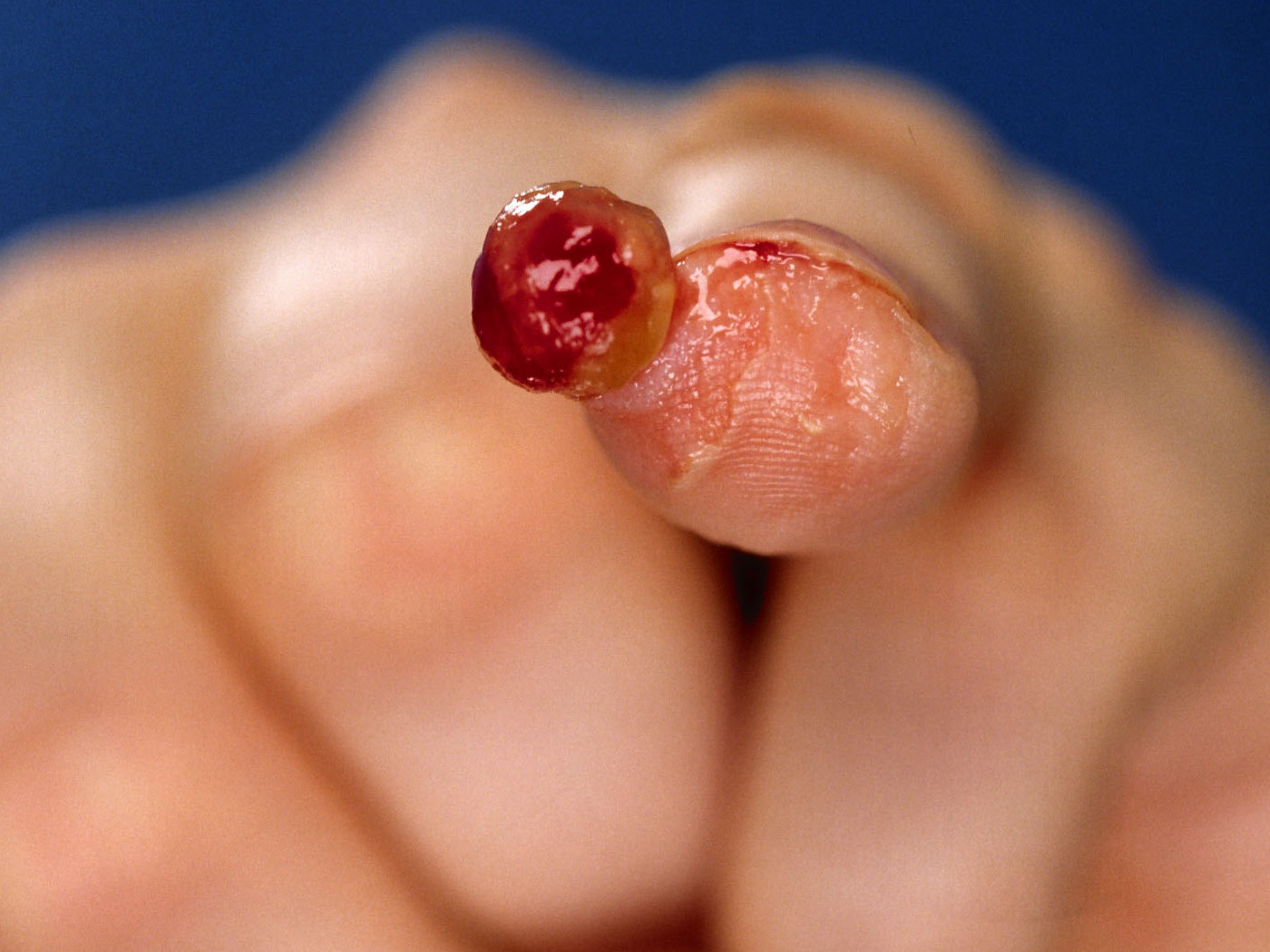
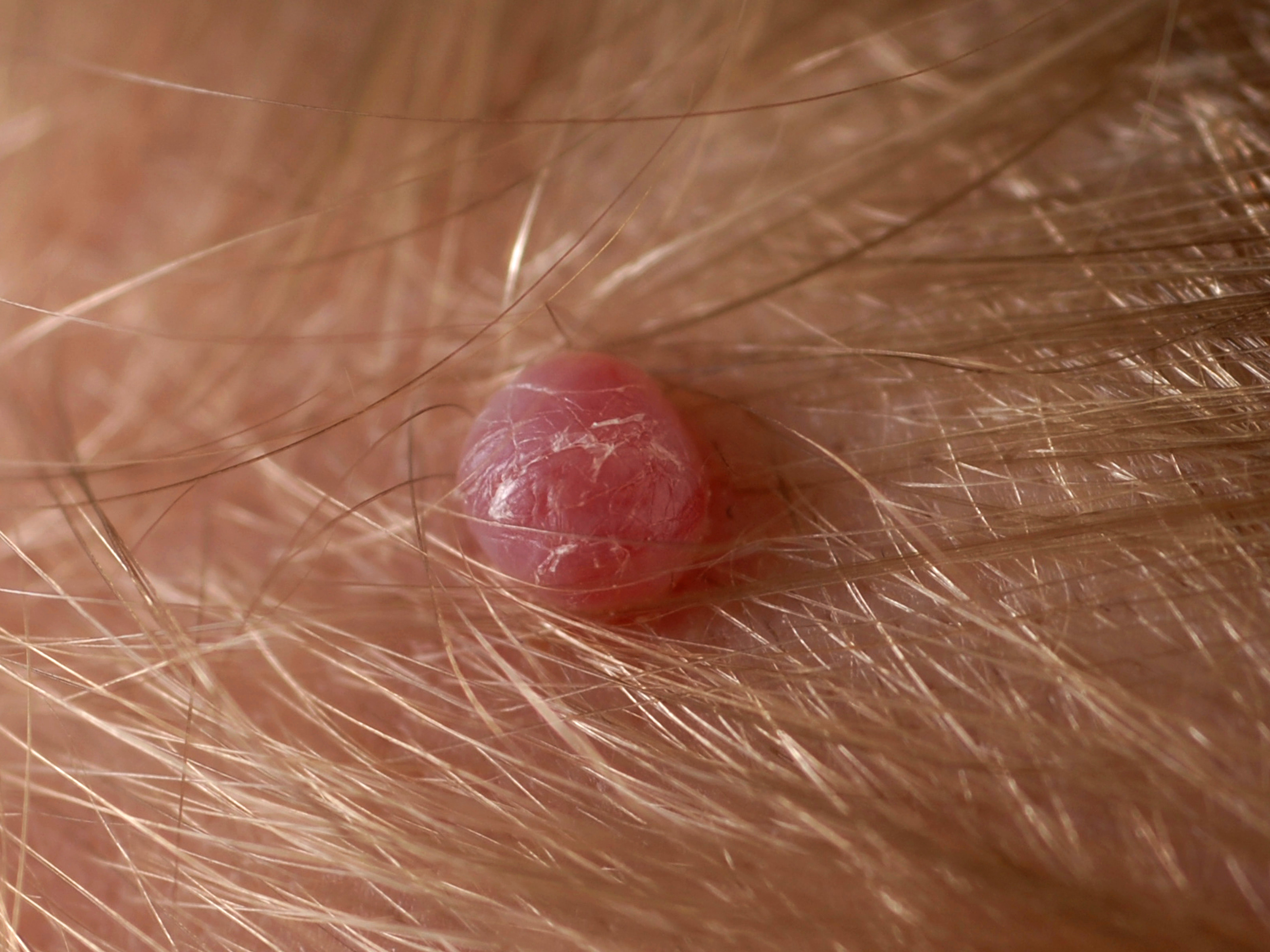
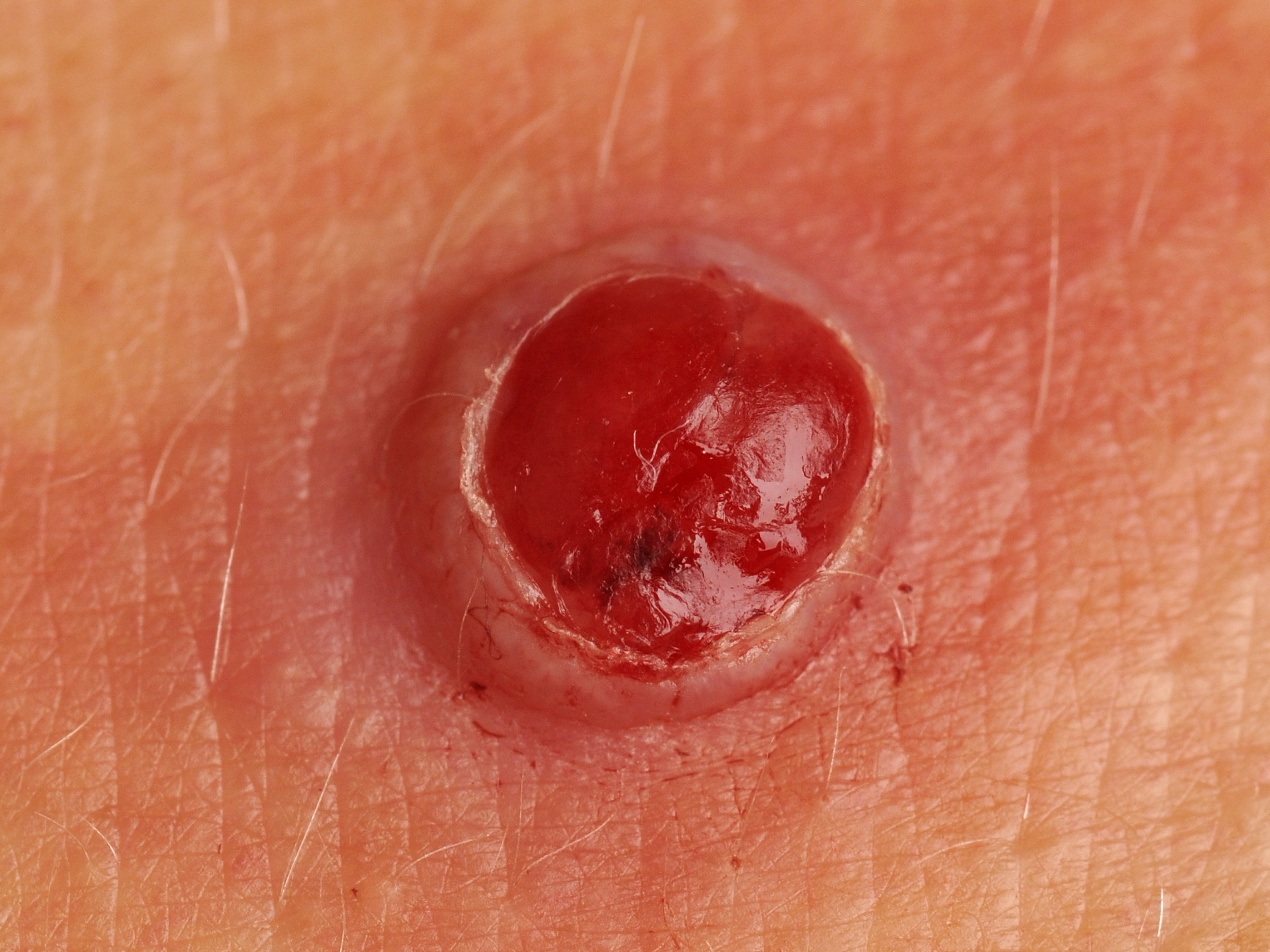
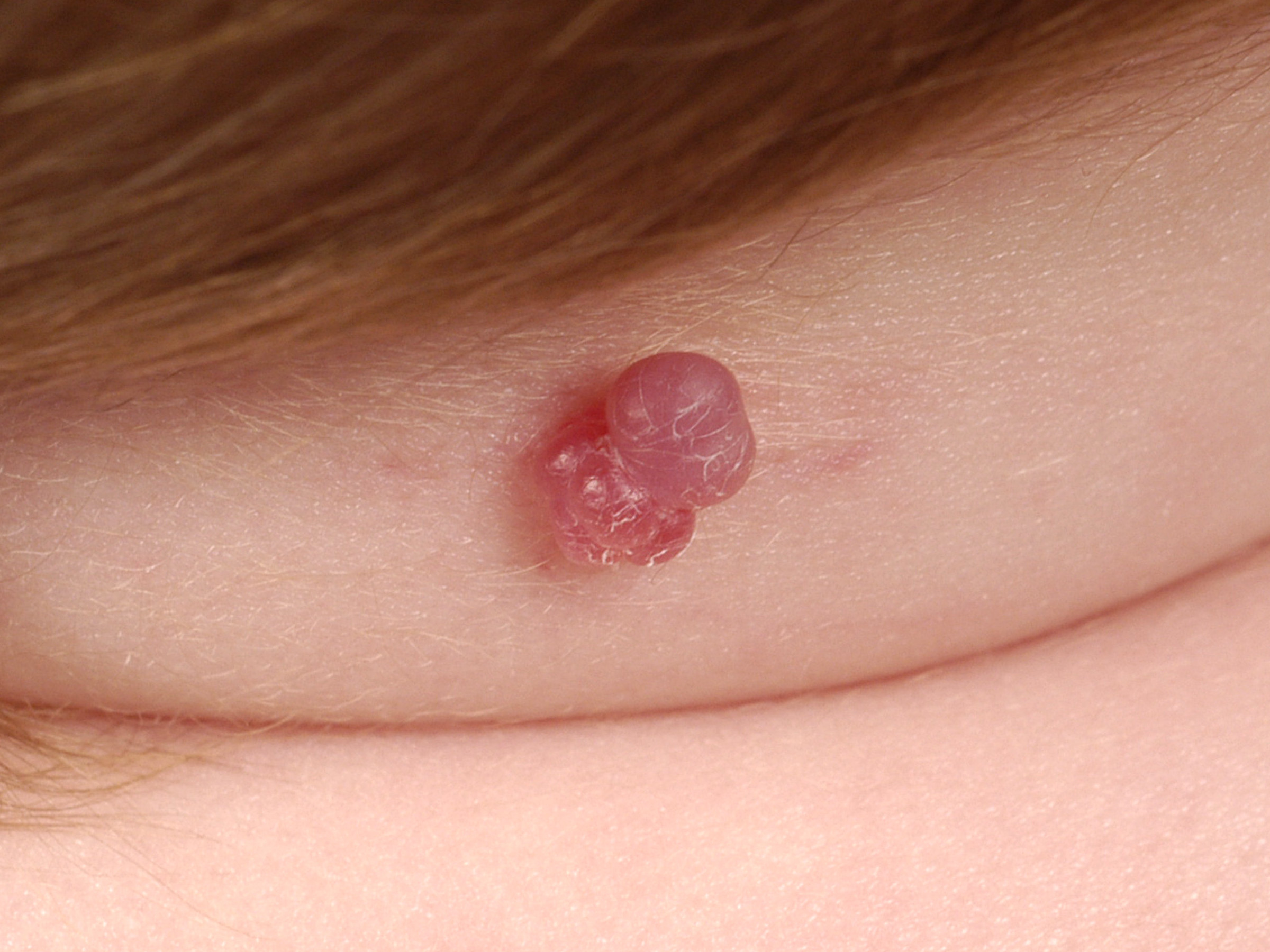
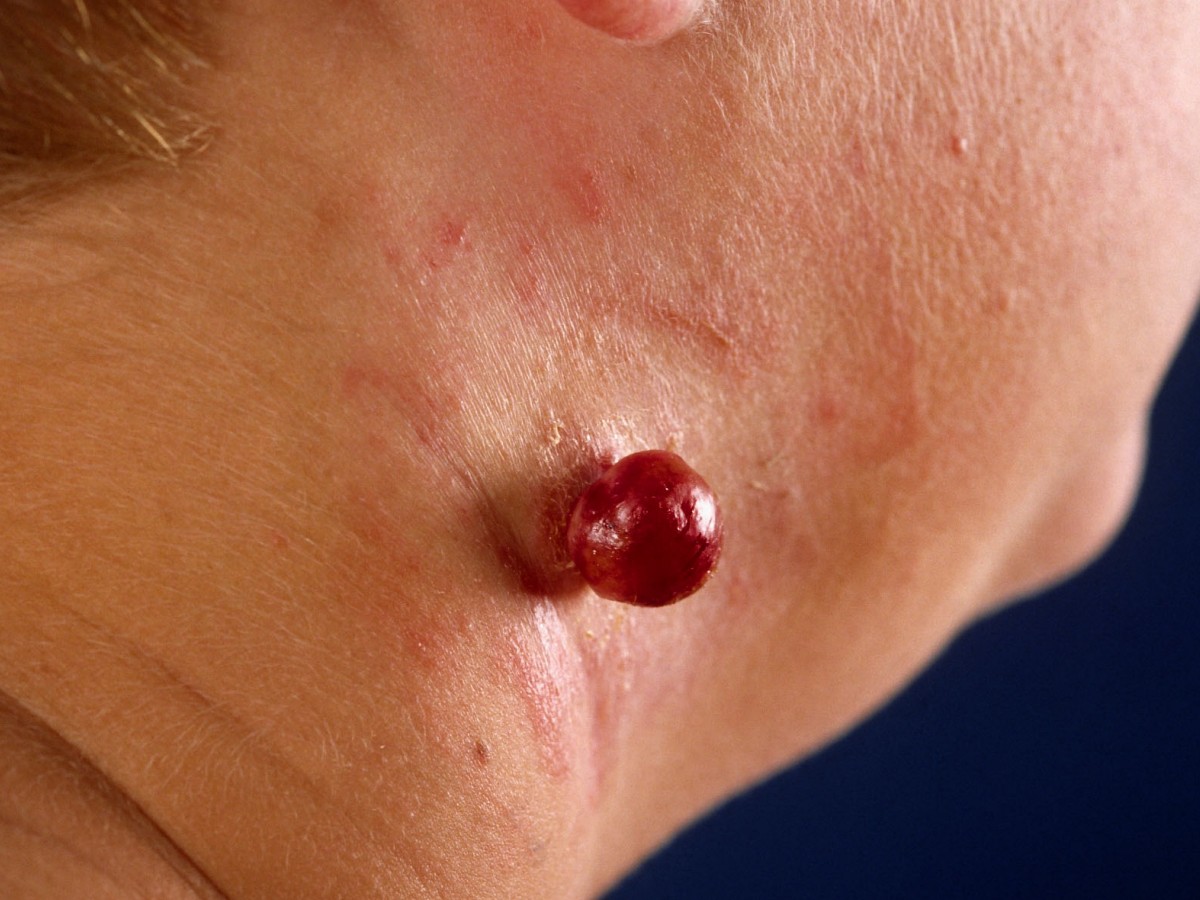
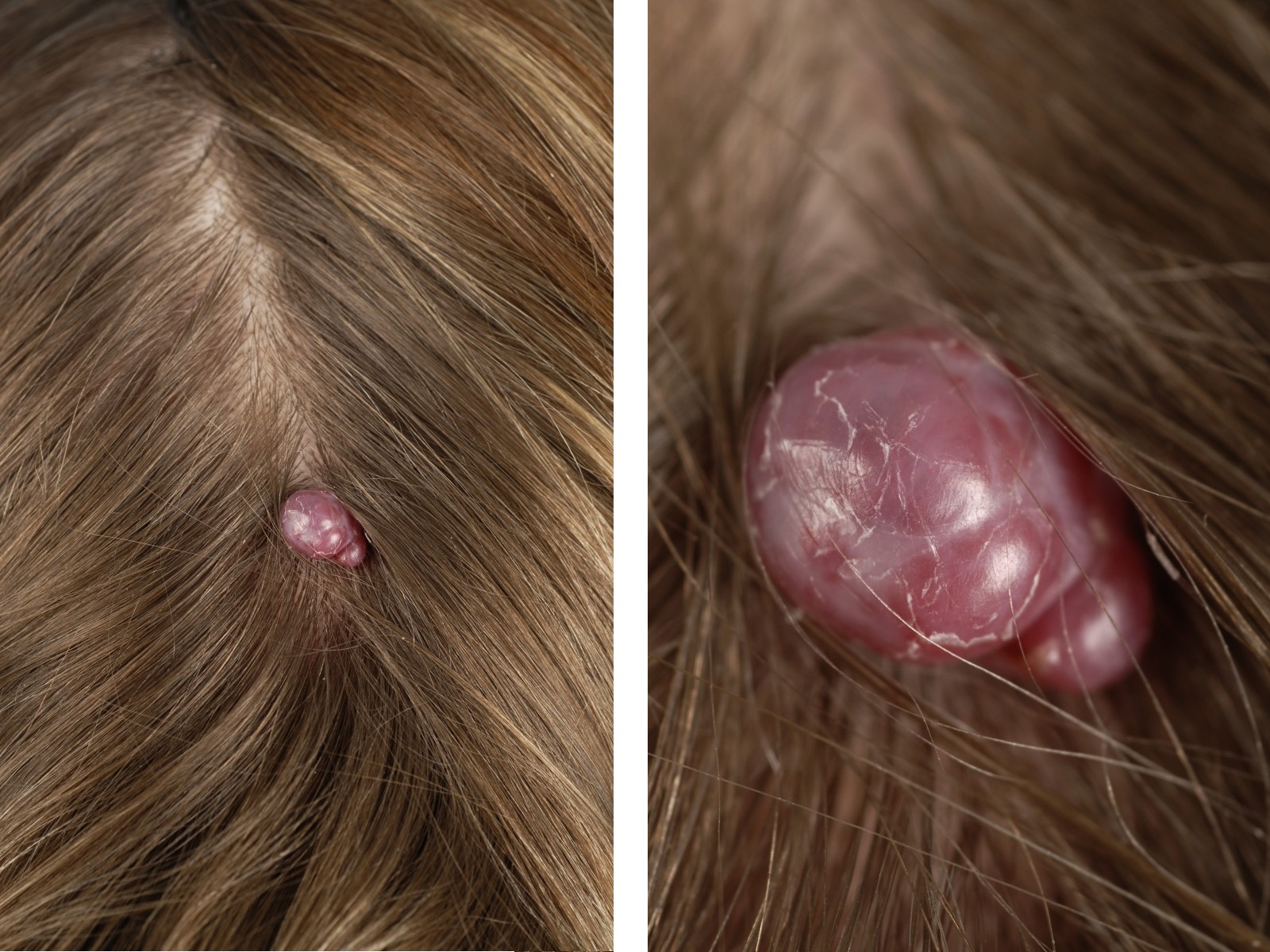
A pyogenic granuloma is a red, shiny, and easily bleeding bump that appears anywhere on the skin. It is benign and consists almost entirely of blood vessels. It can grow rapidly, within a few weeks. Its size ranges from half a centimeter to several centimeters. Other names for pyogenic granuloma are
granuloma pyogenocum,
granuloma telangiectaticum
or lobular capillary hemangioma.
WHAT IS THE CAUSE OF GRANULOMA PYOGENICUM?
It's unknown how a pyogenic granuloma develops.
It is a benign vascular tumor, but no one knows why the blood vessels suddenly start growing. It
is thought to be a reaction to local skin damage. It was previously thought to be caused by an infection, but no bacteria or virus has ever been found.
Pyogenic granulomas can develop during pregnancy, so there appears to be a hormonal influence. A pyogenic granuloma that develops during pregnancy is also called a "pregnancy tumor." These are usually found in the oral cavity, on the gums. Certain medications can also cause pyogenic granulomas.
 |
 |
 |
|
granuloma pyogenicum |
granuloma pyogenicum |
granuloma pyogenicum |
 |
 |
 |
|
granuloma pyogenicum |
granuloma pyogenicum |
granuloma pyogenicum |
WHAT DOES IT LOOK LIKE?
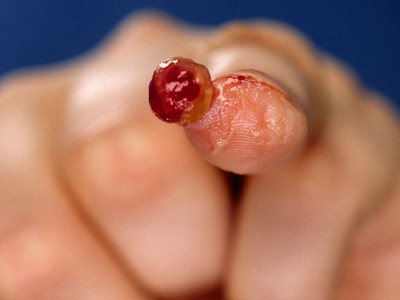
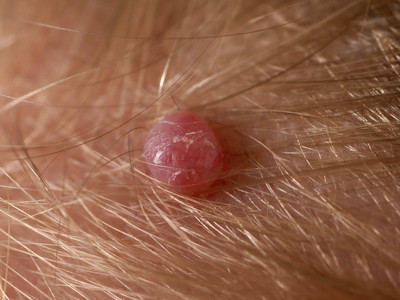
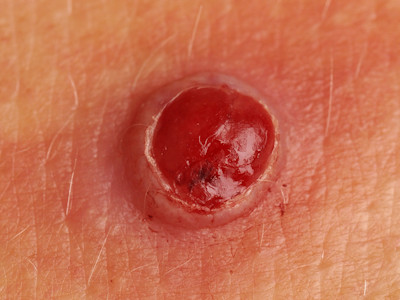
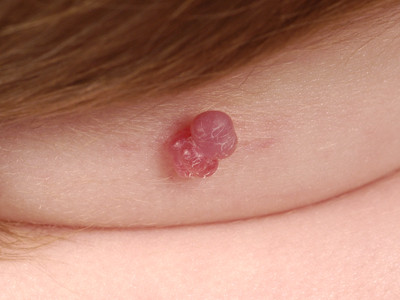
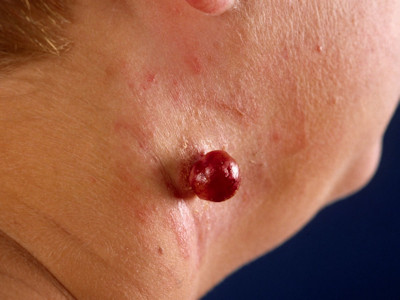
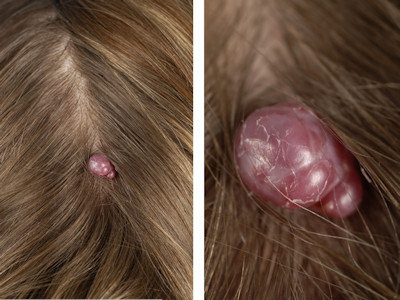
A pyogenic granuloma or telangiectatic granuloma is a small, red, round tumor that develops quickly. It bleeds easily. Ulcers or scabs may form on the surface. A raised collar (a raised edge) of normal skin may surround it. They are often found on the head and neck, arms and legs, fingers and toes, or the upper body. They can also occur in the oral cavity, on the gums, or on the tongue, lips, or buccal mucosa. It is common in children and young adults, but in principle, anyone can get it.
HOW IS A GRANULOMA PYOGENICUM TREATED?
The simplest treatment is removal. This is done under local anesthesia. A small amount of anesthetic is injected, and then the tumor is
removed with a sharp curette or cut away
horizontally with a lancet. The base must be cauterized, as there are still bleeding vessels there. This cauterization also destroys the last remnants, preventing regrowth. An alternative is to cut out the tumor in
the shape of an oval, and then suturing it. This leaves a small
linear scar. Alternatives to surgery are application
of silver nitrate, or cryotherapy (freezing). Strong, locally applied corticosteroids are also sometimes helpful.
IS FURTHER EXAMINATION NECESSARY?
An experienced dermatologist can recognize a pyogenic granuloma based on its clinical appearance. If it's a classic case, no further examination is necessary. If there's any doubt about whether it's a pyogenic granuloma,
a skin biopsy will be taken and send to the
pathologist for further examination.
WHAT ARE THE PROSPECTS?
Usually, it stays away
after removal. But if not all of it is removed, if a remnant remains
in the deeper layers of the skin, it can return after a few weeks. In that case, it must be removed again, a little deeper. Cutting it out completely and suturing it is
also an option. Granuloma pyogenicum is not dangerous, it doesn't grow deeply, and it's not contagious. It must be removed, however, because it doesn't go away on its own and can grow very large or bleed.
WHAT CAN I DO ABOUT IT MYSELF?
Not much. Don't touch it, try not to scratch it. Make an appointment with your dermatologist to have it removed.
|