|
PINWORMS (ENTEROBIUS VERMICULARIS,
OXYURIS) |
 |
 WHAT ARE PINWORMS? WHAT ARE PINWORMS?
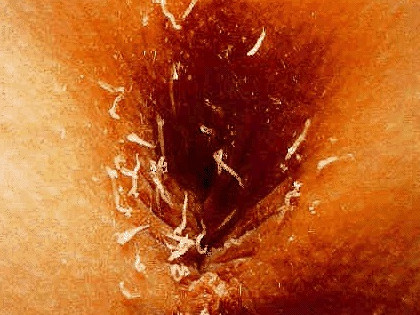
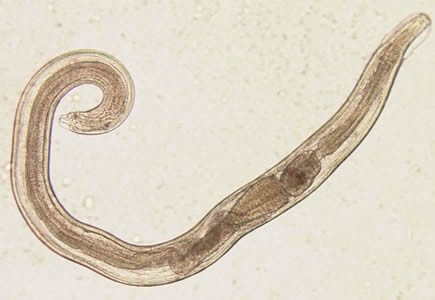
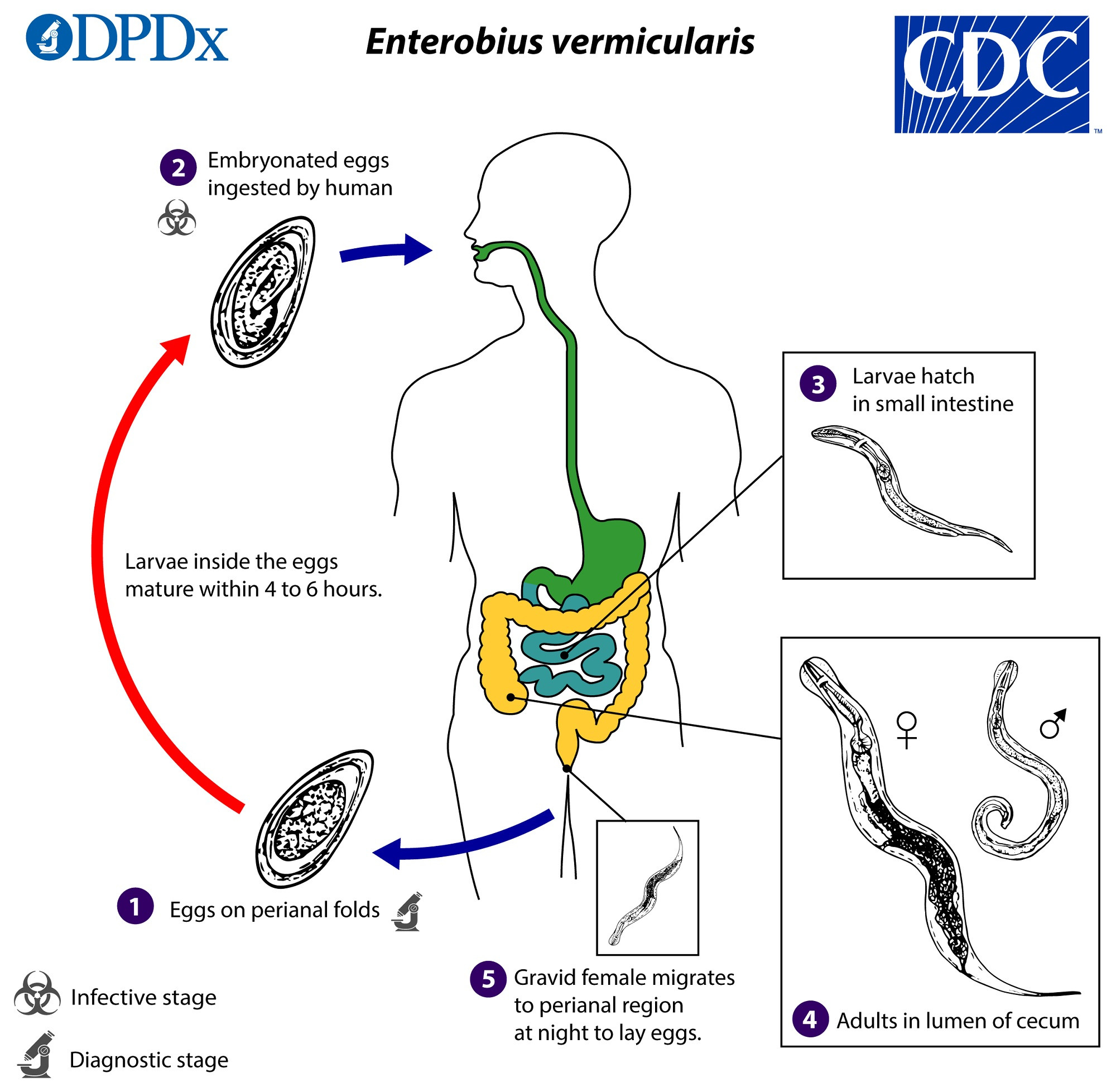
Pinworms (Enterobius vermicularis) are small white to yellowish-white worms (approx. 5-10 mm long)
that can live in the human intestines. Pinworms belong to the roundworm family and are intestinal
parasites. They are very common, and many children become infected with them, especially when
they first start going to daycare or school. Older people can also have them. The medical name for
the condition is enterobiasis or oxyuris.
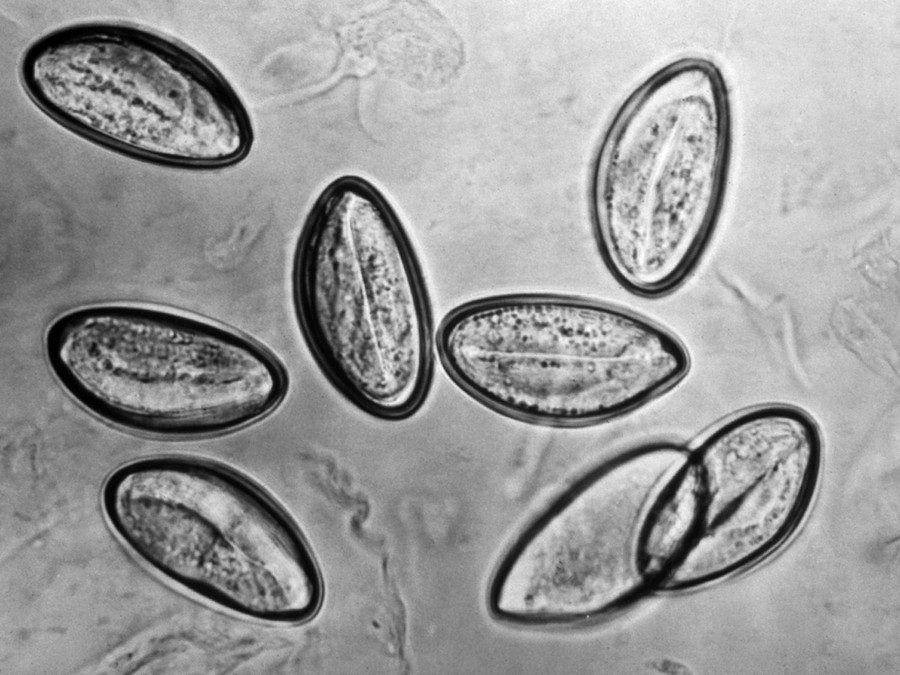
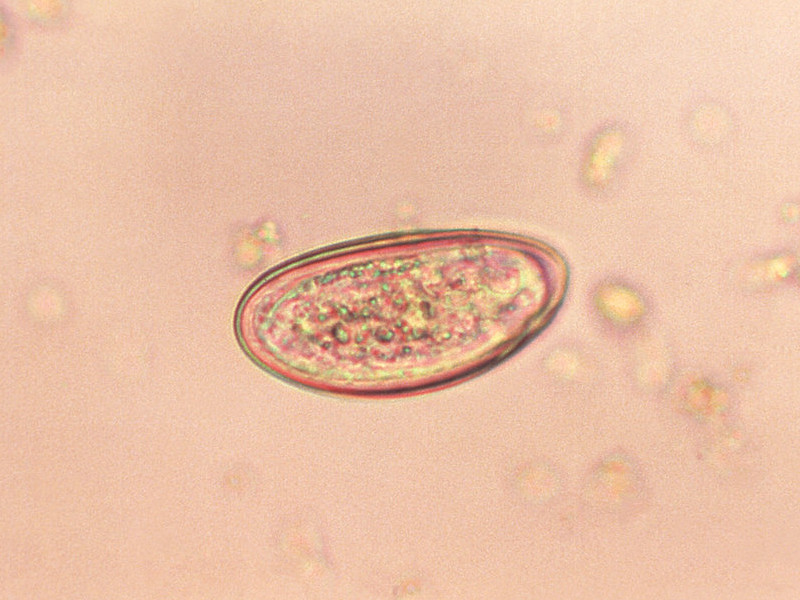
Pinworms mainly come out at night, crawling out of the anus to lay eggs. This can cause itching. The
eggs are spread via hands and all kinds of objects, and can then infect other children or people via
the mouth. Infection only occurs from person to person; pinworms cannot survive in pets.
Pinworms live in the lower part of the large intestine and in the cecum. They live for about 8 weeks
and lay their eggs on the skin around the anus. Outside the body, the eggs can remain alive for a long
time (10-14 days), so that they can infect another person via toys, furniture, clothing, bedding,
utensils, or hands, among other things.
Pinworms mainly come out at night to lay eggs. They cause itching around the anus and labia. They
can also be found in the stool. In severe infections, they also occur in the vagina, where they cannot
reproduce. The worms are harmless and only cause itching and some vague intestinal and abdominal
complaints. However, the itching can keep some people awake at night. Scratching can cause
inflammation and broken skin.
HOW ARE PINWORMS TREATED?
Treatment consists of taking one 100 mg tablet of mebendazole, which is a parasite treatment. After
two weeks, you must take another tablet. This medicine is available without a prescription at
pharmacies and drugstores.
The 100 mg dosage applies to both adults and children. Use in children younger than 2 years of age is
not recommended.
Because several people within the family may be infected, all family members should be treated,
preferably at the same time.
In addition, hygienic measures must be taken
to prevent reinfection:
| - |
Everyone should wash
their hands thoroughly and keep their nails
short. |
| - |
Wash all bedding and
clothes at 60 °C; steam clean or air out
anything that cannot be washed. |
| - |
Clean everything
thoroughly, air out bedding, vacuum daily. |
| - |
Dress small children
in tight-fitting underwear or closed pyjamas
so that they do not re-infect themselves by
scratching with their hands. |
|