| INTERTRIGO |
 |
 WHAT IS INTERTRIGO? WHAT IS INTERTRIGO?
Intertrigo (intertriginous
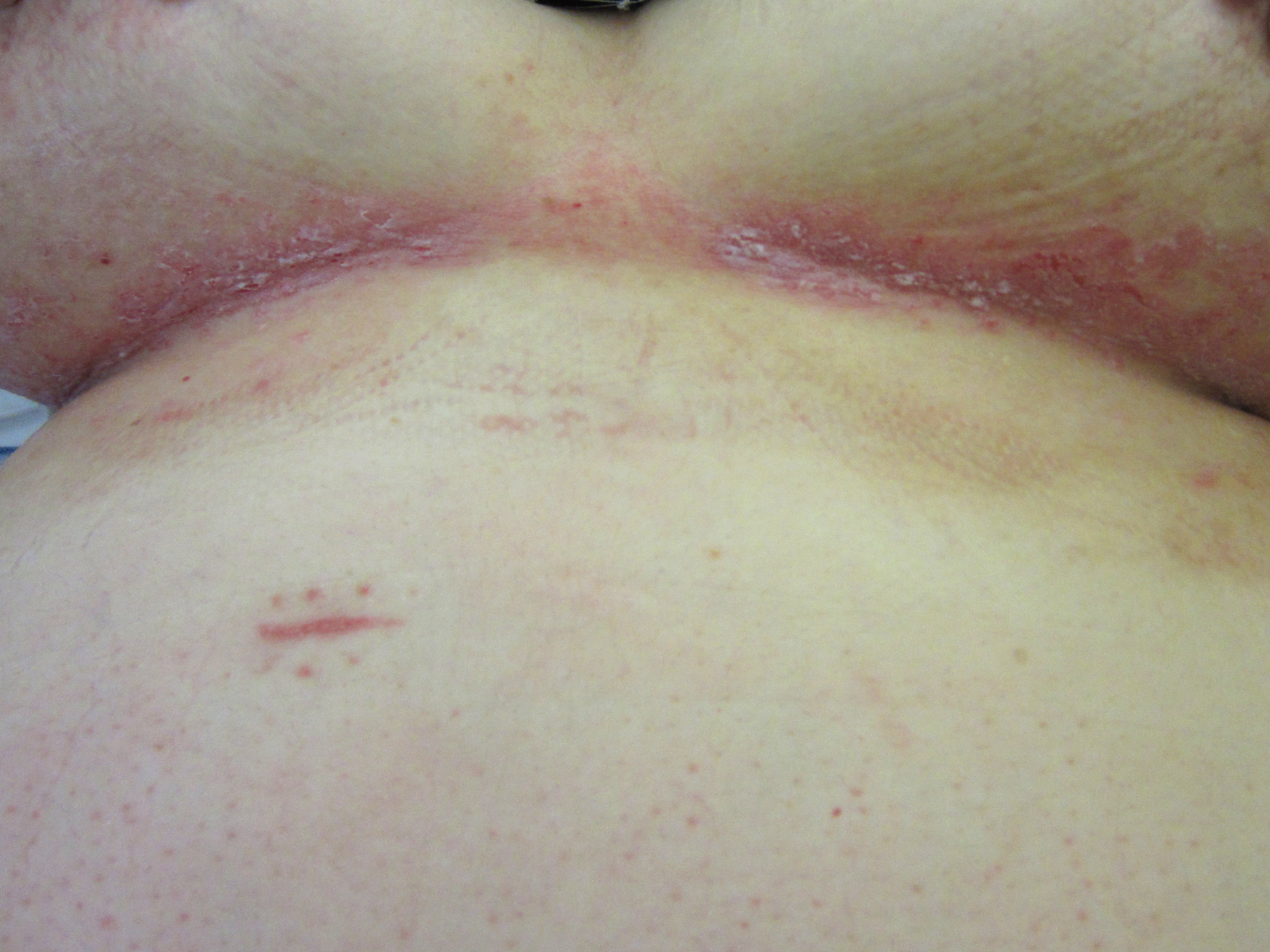
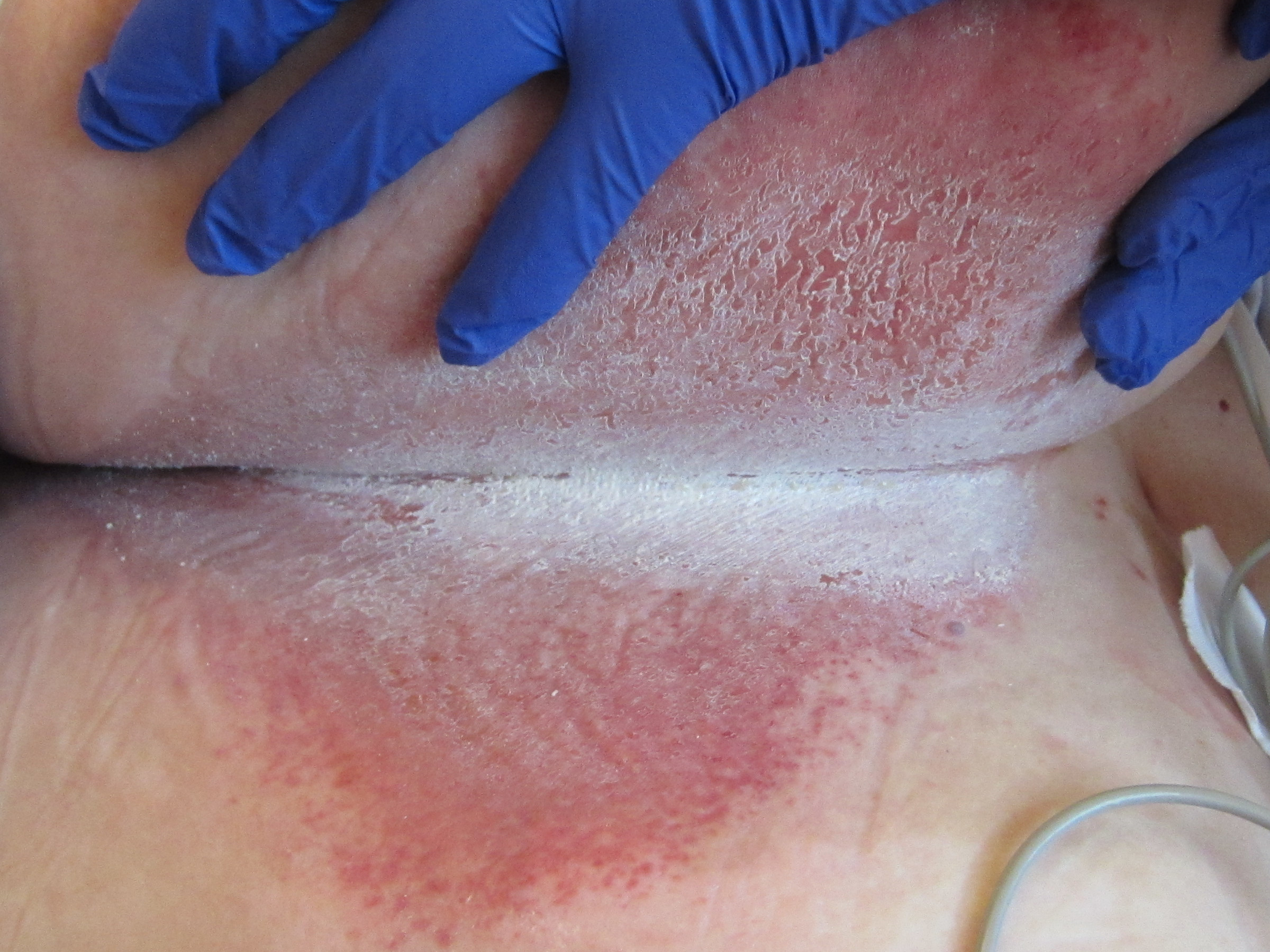
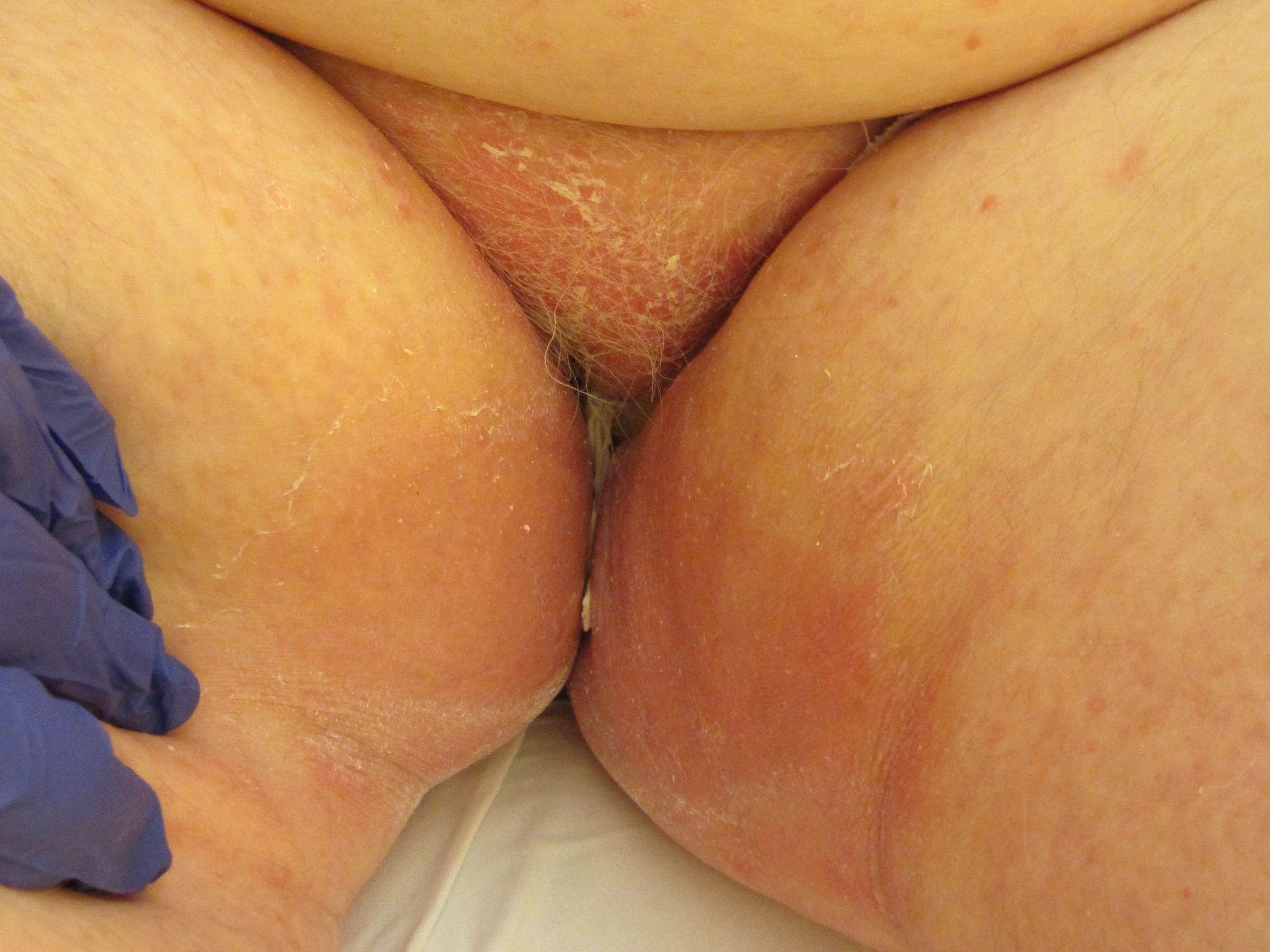
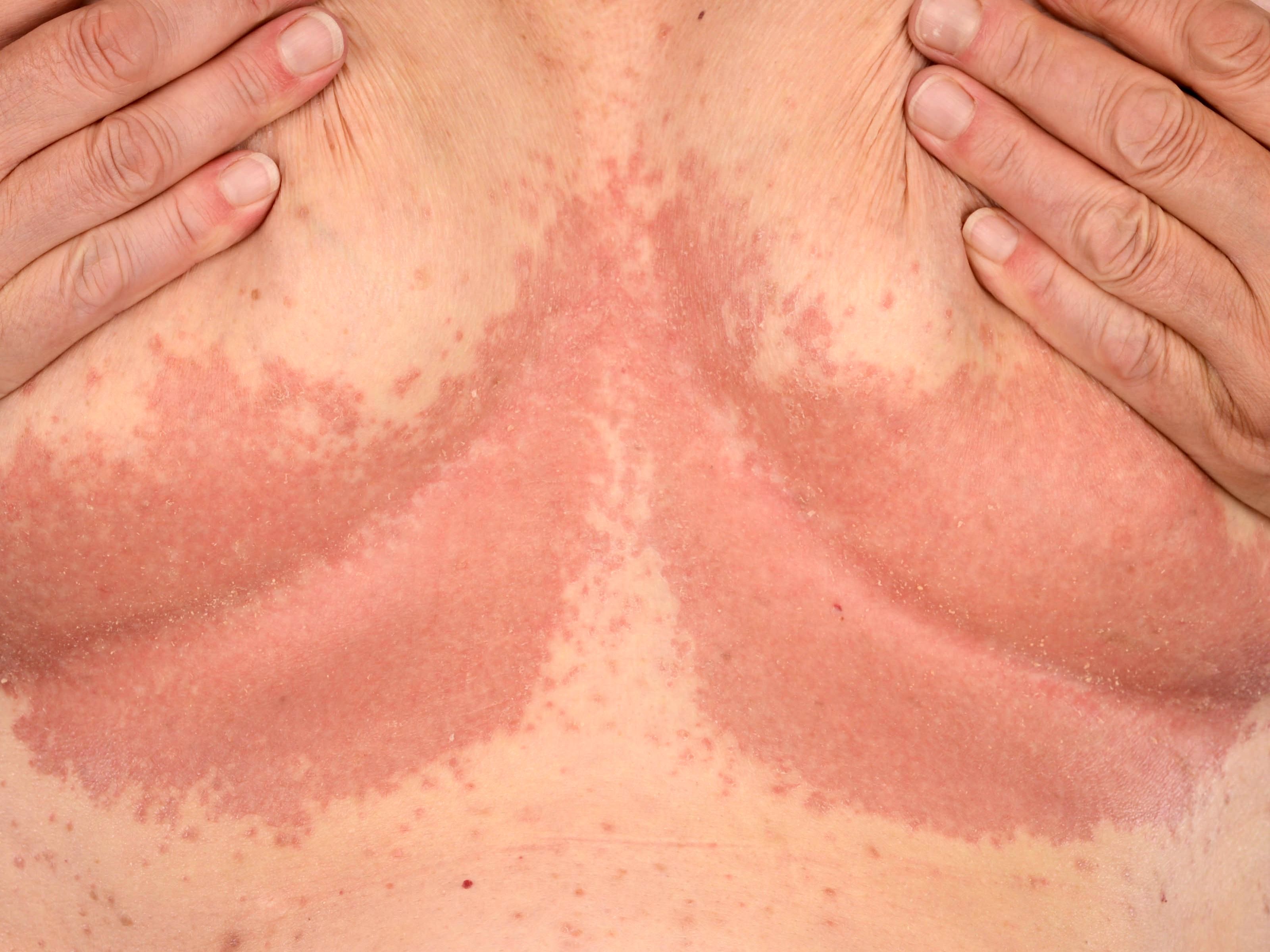
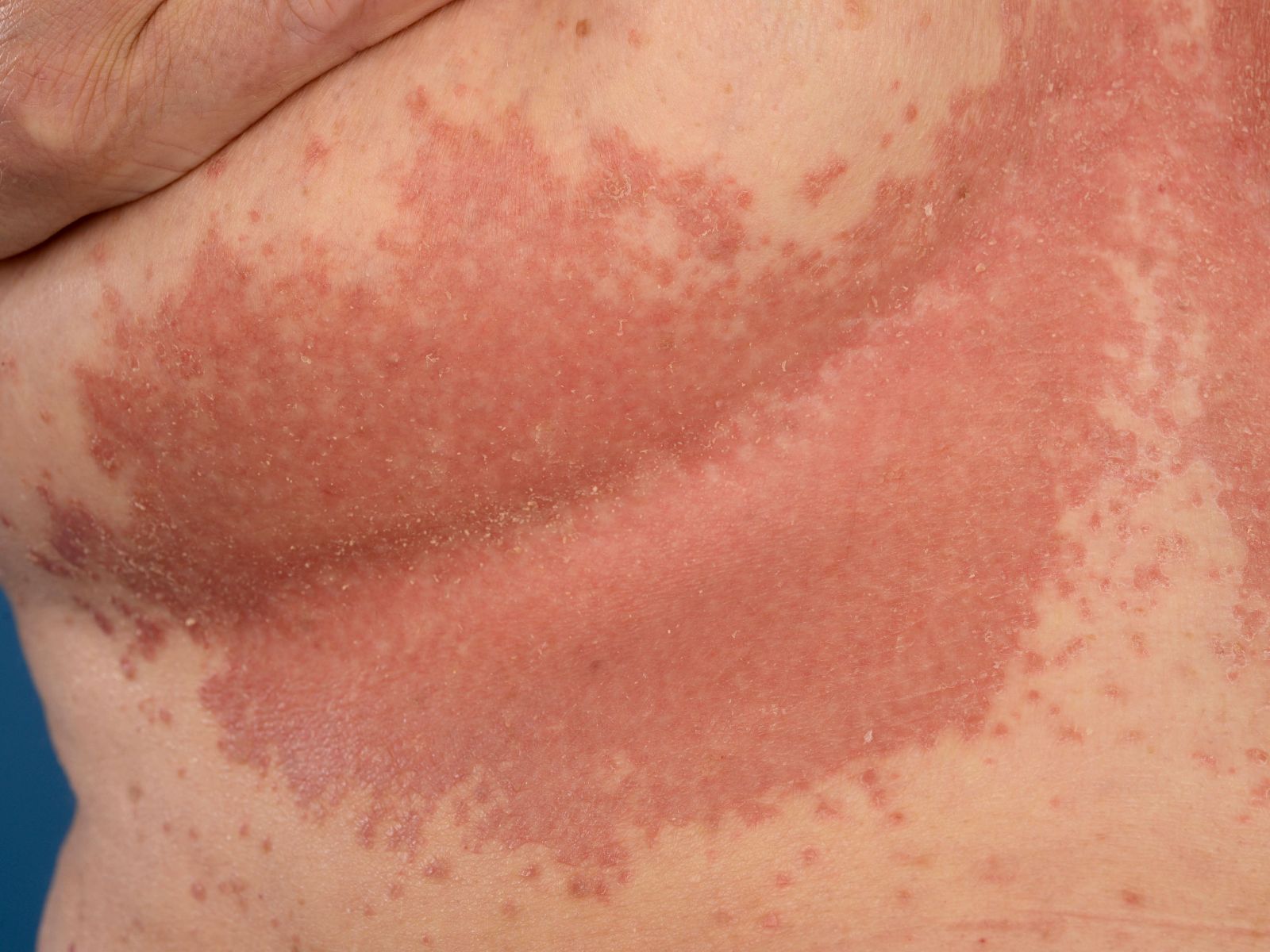
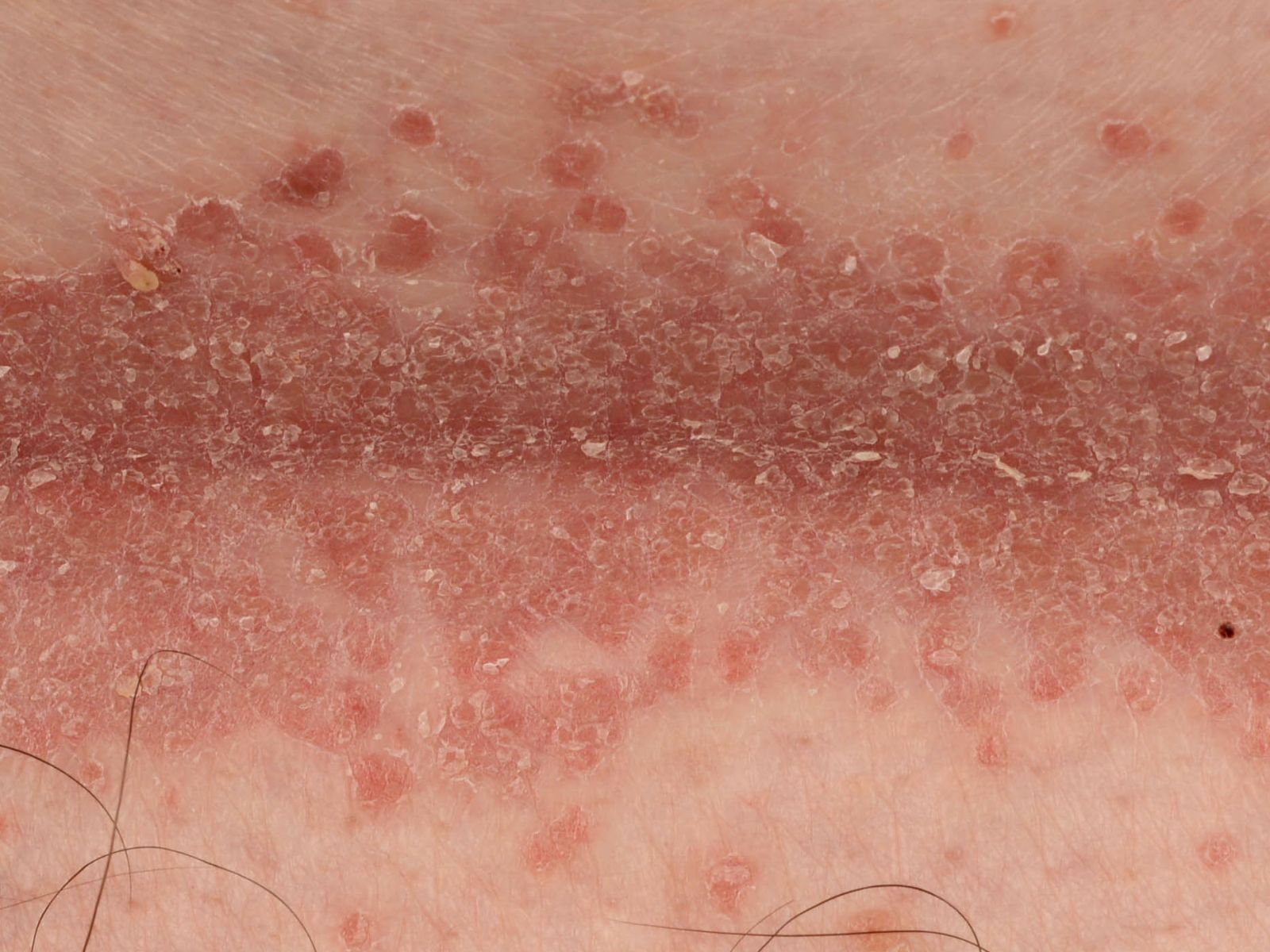
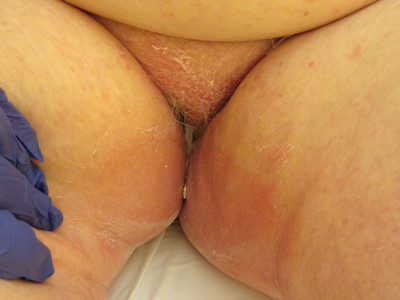
dermatitis, skin fold dermatitis) are areas of eczema, red, inflamed, moist skin with cracks and wounds, in the skin folds (groin, under the breasts, abdominal folds, buttocks). Intertrigo is caused by a combination of moisture and heat (sweating), and skin-to-skin friction may also play a role. Deep skin folds can become very moist for long periods of time due to sweating. The effect of moisture causes the skin to break down at some point. In the moist and warm climate of the fold, bacteria and fungi can grow in large numbers. The fungus Candida albicans in particular is often found in skin folds, and it also breaks down the skin. Overgrowth of bacteria can cause intertrigo to emit an unpleasant odor.
WHO CAN GET SKIN INTERTRIGO?
Intertrigo mainly occurs in people who are overweight.
It also occurs in cases of excessive sweating, warm temperatures, prolonged bed rest, poor hygiene, urine or stool leakage, and in women with heavy breasts. Overgrowth of the fungus Candida is often seen in the elderly, in patients with diabetes, and after
treatment with antibiotics. Babies can also get intertrigo in the diaper area due to the irritating effects of urine. This is called diaper rash, but it is actually also a form of intertrigo.
WHAT ARE THE SYMPTOMS?
Intertriginous eczema can occur in all body folds. Under the breasts, in the groin folds, in the buttocks, in abdominal folds, in the genital area, under the armpits, in the
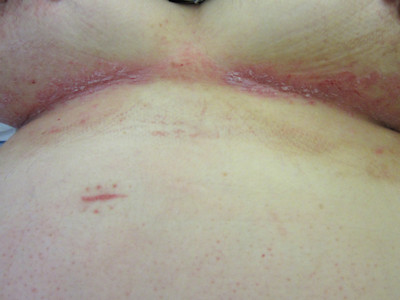
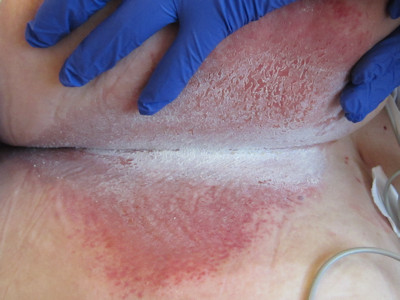
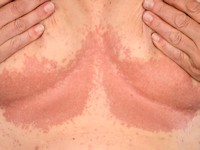
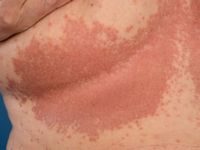
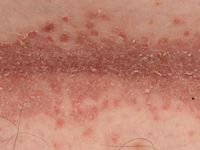
belly button, and also on the inside of the upper legs if they are constantly rubbing against each other due to excess weight. In the beginning, there is only slight flaking, redness, and itching. Later, the skin becomes redder, sometimes bright red if there is a lot of bacterial growth, very moist (weeping), and cracks and wounds develop. With a Candida infection, small flaky collars can be seen at the edges, and the infection spreads beyond the fold in the form of small bumps that later also start to flake. The symptoms are itching, pain, and an unpleasant odor.
 |
 |
 |
|
intertrigo |
intertrigo |
intertrigo |
 |
 |
 |
|
candida infection |
candida infection |
candida infection |
HOW CAN INTERTRIGO BE TREATED?
Good skin care is important in the treatment of
intertrigo. It is also important to combat the causes of
the intertriginous dermatitis. Moisture on the skin can be combated with creams. There are treatments available for excessive sweating. Urine or stool leakage can be managed with good incontinence materials, which should be changed frequently. Fungal overgrowth can be treated with antifungal cream, bacterial overgrowth with local antibiotic cream or with antibiotics in tablet form. If excess weight is a factor, you can try to lose weight. The redness, pain, and itching can be reduced by applying anti-inflammatory creams (corticosteroids).
Skin care
| - |
|
Clean the skin folds
thoroughly every day; then allow them to dry
thoroughly. |
| - |
|
Gently pat dry, do not rub,
as this will damage the delicate skin. Use a
hair dryer if necessary. |
| - |
|
Apply drying products, such
as talcum powder or zinc oxide ointment.
Remove zinc ointment carefully, preferably
with cotton wool or gauze soaked in oil,
such as olive oil. |
| - |
|
Barrier spray or cream can
also be used as an alternative to zinc. |
| - |
|
Prevent skin-to-skin
contact, as this promotes sweating in the
folds. This can be done by placing something
between the skin folds, such as gauze, linen
strips, or cotton wool. Use strips of cotton
fabric, for example from a handkerchief or
old sheet. Replace the tear linen or gauze
in the skin fold if it becomes damp. |
| - |
|
Wear clean and
well-absorbent cotton clothing and
underwear. |
| - |
|
Combat incontinence if this
is an issue. |
Local creams for skin irritation:
Zinc oxide ointment (zinc oil, 60% zinc oxide in peanut oil).
Zinc oxide vaseline cream 10% (10% zinc oxide in vaseline cetomacrogol cream).
Zinc oxide ointment 10% (zinc ointment, 10% zinc oxide in white petroleum jelly).
Zinc sulfate vaseline cream 0.5% (zinc sulfate 5% in vaseline cetomacrogol cream).
Local creams against fungi:
Miconazole 2% cream twice daily (available without prescription at drugstores and pharmacies).
Ciclopirox 1% cream, or another antifungal cream (prescription required).
Local creams against bacteria:
Fucidine cream 2% two to three times a day.
Tetracyclin 1% in zinc oxide ointment.
Anti-inflammatory creams and ointments:
Hydrocortisone cream 1% twice daily.
Hydrocortisone vaseline cream 1% (hydrocortisone 1% in vaseline cetomacrogol cream).
Triamcinolone vaseline cream 0.1% (triamcinolone 0.1% in vaseline cetomacrogol cream).
Elidel (pimecrolimus) cream.
Protopic (tacrolimus) ointment.
Combination preparations:
There are various combination preparations available, for example corticosteroid + antifungal, corticosteroid + zinc, antifungal + zinc, corticosteroid + antifungal + zinc.
CAN INTERTRIGO BE CURED?
Intertrigo can be effectively treated with the above measures and medications. However, it may recur.
|